The Battle of Alcatraz

Today in History, May 4, 1946:

Call in the Marines! The Battle of Alcatraz.

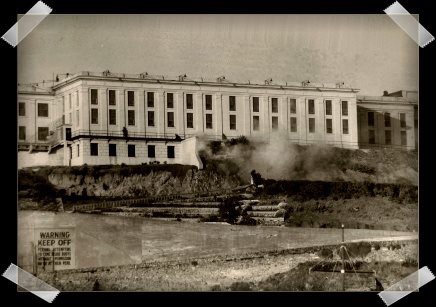
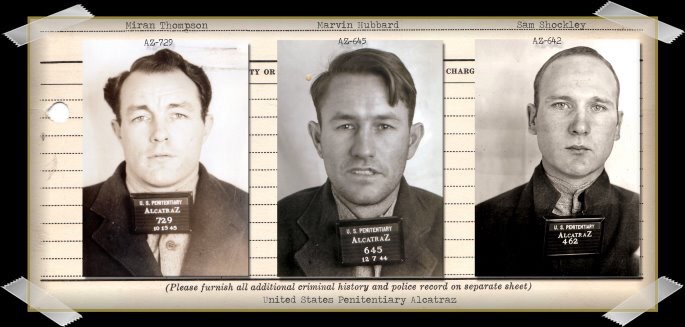
On May 2nd, three inmates on D Block of Alcatraz prison managed to overtake the block of cells. One of them managed to expand and crawl between bars leading to the catwalk above the cells and overpower the guard there.

Soon they had imprisoned the guards in two cells and taken their weapons. Now they only needed to find the key to the “yard” and they could steal the island’s launch to escape. However by the time they found the key, they had tampered with the lock so much that a security feature kicked in and they were sealed inside.

Over the next couple of days they fired on guards outside and on the guards they had imprisoned inside, killing 3 and injuring 14.

The Warden called for help from Marines stationed at the nearby Treasure Island Naval Base, many of whom were fresh from fighting Japanese hidden in caves in the Pacific. The Marines assaulted D Block with machine gun fire, grenades and mortars. When the guards went to secure the building, they found the three ringleaders dead in a utility corridor to which they had retreated. Two more inmates would later be executed for their role in the attempted escape.
Living Where You Please – Shelley v. Kraemer

Today in History, May 3, 1948:

The US Supreme Court hands down a decision in Shelley v Kraemer, asserting housing rights for minorities.

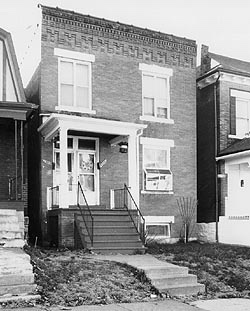
In 1906 a nice two-story home was built in the 4600 block of Labadie Street in a neighborhood of St. Louis, Missouri. In 1911 residents of the neighborhood established a covenant which was common in America in the early Twentieth Century; the agreement ensured their neighborhood would remain “white only.” Home owners agreed not to sell to African-Americans or Asian-Americans.

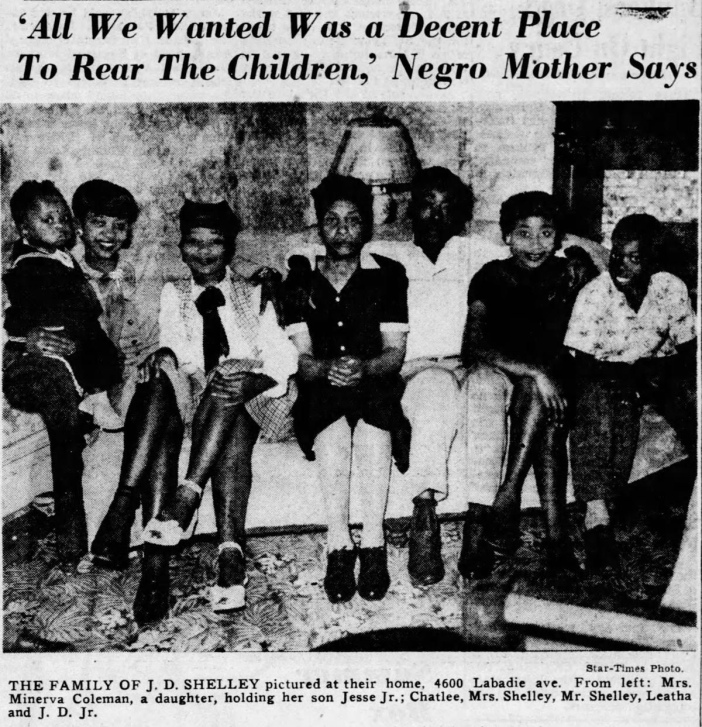
In 1930 the Shelley family moved to St. Louis from Mississippi to escape pervasive racial bias. They were raising their six children when in 1945 a home owner agreed to break the covenant and sell them the house on Lebadie Street.

Another owner, Kraemer, filed suit to prevent the sale. The local court ruled in favor of the Shelleys, the Missouri state court against them. The case was then appealed to the US Supreme Court.

In a decision reminiscent of Chief Justice John Marshall, the Court set things right. The covenant was a private, not a state agreement. Therefore, the court system did not have the authority to prevent the covenants. This also meant the courts could not ENFORCE them. The Fourteenth Amendment protections of equal enforcement of laws and property rights had been been upheld.

How to Live Life with Honor; How to Die with Grace. Lou Gehrig Taught Us All

Today in History, April 30, 1939:

“The Luckiest Man on the Face of the Earth.”

Lou Gehrig played his 2,130th consecutive game in major league baseball, and his last.

A member of the original New York Yankees “Murderer’s Row” (1927), by ’39 Gehrig’s health was obviously failing and in his last game he failed to hit a single ball.

Two days later he walked up to the coach Joe McCarthy, “I’m benching myself, Joe.”

The fans were in shock when it was announced that Gehrig would not be playing. Two weeks later he was diagnosed with ALS, a disease that slowly degraded the body, but fiendishly left the mind entirely in tact, now know as Lou Gehrig’s Disease.

1939 was an eventful year…Hitler’s Nazi party was preparing to take over Europe, war raged in the Orient, Gone with the Wind took to the silver screen.

But after the news about Lou Gehrig spread, July 4th was designated Lou Gehrig Appreciation Day.

Fans, dignitaries, teammates and the press filled Yankee Stadium beyond capacity and the country watched. After Babe Ruth and many others gave their tributes, Lou stepped to the microphone and announced that he was the Luckiest Man on the Face of the Earth, in spite of “catching a bad break”. There wasn’t a dry eye in stadium, likely few in the country.

New Orleans Surrenders

Today in History, April 29, 1862:

The surrender of New Orleans.

The Confederacy was determined to protect the jewel of the South, it’s largest port and therefore source of supply from abroad.

They were convinced the attack would come from the north, and placed the bulk of their army forces and naval forces in Tennessee and Mississippi. This left New Orleans to be defended by about 3,000 militia and two forts below her on the River, Ft. Jackson and Ft. St. Phillip.

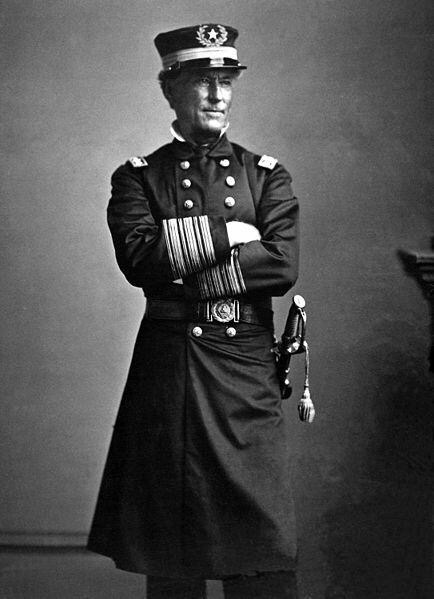
Union Flag Officer David Farragut took his force of Union ships and tried to silence the forts, and failing that decided to run past the batteries in a fierce battle. By the 28th his fleet lay off the city on the Mississippi.

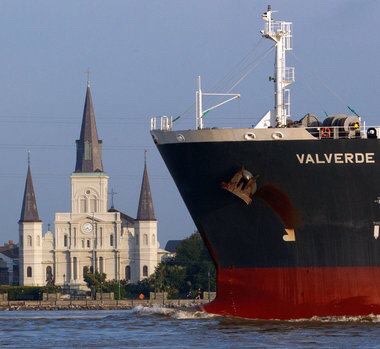
If you’ve ever been to the French Quarter and watched ships move by ABOVE you on the river, you’ll understand why the Confederate commander there told the mayor the battle was already lost and withdrew his forces.

The next day, the 29th, Farragut’s childhood home surrendered to him. David Farragut was adopted by Capt. David Porter after his mother died, and began his naval career at age 9. He would become the first Rear Admiral, the first Vice Admiral, and the first Admiral in the US Navy. His adoptive brothers, David Dixon Porter and William Porter would also be naval heroes that attained flag rank.

The capture of New Orleans by Union forces helped cut off the Confederacy from outside supply, and from their territories in the west.

Magellan Killed

Today in History, April 27, 1521:

Explorer, navigator Ferdinand Magellan is killed by a poison arrow in the Philippines.

The Portuguese Magellan convinced Spanish King Charles I to bankroll an expedition to locate a passage from the Atlantic to the Pacific through the Americas. The Spaniards he led were not loyal to him; at one point he had to put down a mutiny.

He did, however succeed in finding the passage, around the southern tip of South America, now the Strait of Magellan. It took his small fleet 38 days to sail the strait, and 99 days to sail across the vast Pacific (which he named) to Guam. Continuing on towards the Spice Islands,

Magellan stopped in the Philippines, where he allowed himself to become involved in a squabble between tribes…during which he was shot by a poison arrow. His shipmates abandoned him, leaving him to die.

They then continued on to the Spice Islands, filled their cargo holds with spices, and completed the first circumnavigation of the Earth. Guess the lesson is if you’re taking on a big task…stay on task and try to pick people that can be loyal to you.

Lincoln’s Assassin Killed

Today in History, April 26, 1865:

Union Army forces track down John Wilkes Booth 12 days after he assassinated President Lincoln.

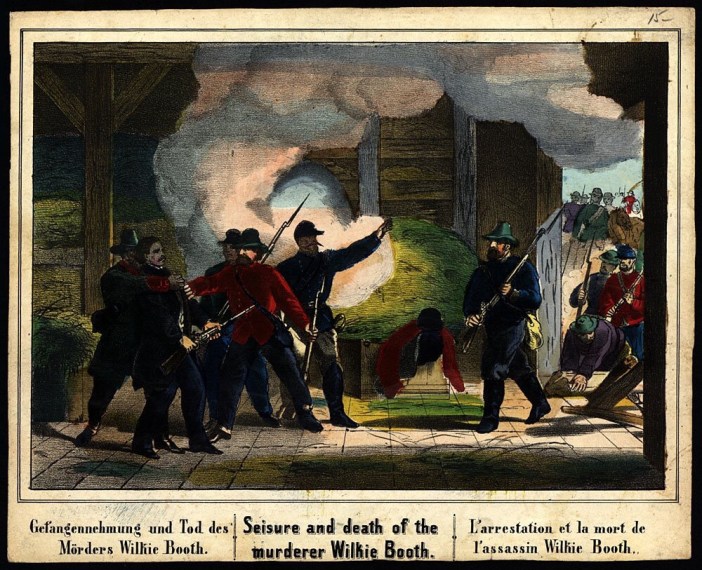
In the meantime, he had been hidden by Confederates, treated by Doctor Samuel Mudd (your name is mud) and hidden in a barn on the Garrett farm in Virginia, where he was found. The barn was set afire and his associate surrendered.

Booth refused…a Union soldier, Boston Corbett, saw Booth inside the barn and fired his Colt revolver…causing a mortal wound to Booth.

Many Confederates saw Booth as a hero. However many Southerners wept openly at Lincoln’s death, and Confederate Generals, including Lee and Johnston, denounced Booth’s actions.

Fortunately, in the interim between his deed and his death, Booth was able to see news accounts that recorded his benefactor’s denunciation of his act. So when he died, he knew what he was.

Free Land! 130 Years Ago

Today in History, April 22, 1889:

The Oklahoma Land Run…each person that managed to stake out a 160 acre area on this date, and promised to improve it, would have that land for free in “Indian Territory”. Many snuck in early…why we are called “Sooners”. Amazingly, before the end of the day…the streets of Guthrie and Oklahoma City would be laid out…and their population would exceed 10,000.

Maryland Toleration Act

Today in History, April 21, 1649:

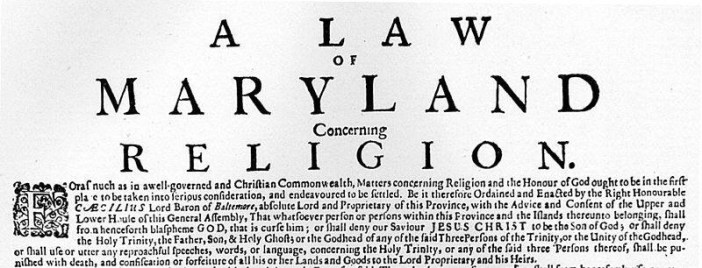
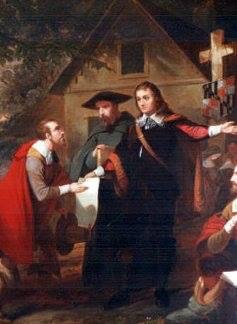
The Maryland assembly passes the Maryland Toleration Act, which set a standard for religious freedom regarding Trinitarian Christians.

Maryland had been established as a haven for English Catholics in a majority Anglican world.

The law would be repealed and reinstated as the colony went from Catholic to Protestant control. This law establishing some rights to religion is considered the inspiration for the First Amendment.

It wasn’t entirely tolerant, however. If someone voiced that they did not believe in the divinity of Jesus, they could be put to death.

“Don’t fire unless fired upon, but if they mean to have a war, let it begin here.” –Militiaman Capt. John Parker, on Lexington Green

Today in History, April 19, 1775:

“Don’t fire unless fired upon, but if they mean to have a war, let it begin here.” –Militiaman Capt. John Parker, to his troops on Lexington Green.

When the 700 British troops reached Lexington, they were confronted with a mere 77 minutemen who had managed to convene there. The British plan was to capture an American armory and arrest Samuel Adams and John Hancock.

Thanks to the “midnight ride”, the armaments had been dispersed, Adams and Hancock sprited awat.

Capt. Parker, knowing that the British mission had already been rendered pointless, was not eager to risk the lives of is men. He had them form in ranks on Lexington Green, where they could give an expression of dissention without blocking the road to Concord.

The British commander decided to confront them anyway. With an expression of great insult, the British commander ordered the “damned rebels” to disperse. Parker directed them to do so as the well trained British regulars approached.

Nobody knows who fired the “shot heard ’round the world”. The Americans, of course, believed it was and over eager British soldier; the British believed it was from a minuteman; some speculation is that it was fired from the safety of a nearby tavern.

Whoever fired that first shot, it resulted in the British cutting down nearly a dozen minutemen, and one injured British soldier. The British then marched past the dead and injured on their way to Concord. 

The Brits, emboldened, marched on Concord. When they got there they were confronted with more than 300 minutemen. The outcome was quite different than at Lexington.

The British were quickly repelled, and decided to return to Boston.

As they completed the long march back to Boston, the minutemen continuously fired upon them from behind trees, rocks, fences, etc. By the time the regulars made it back to Boston, they had lost over 300 men.

Why was it the “shot heard ’round the world”? Not just because of the American Revolution. The acts of the revolutionaries did not affect only the “Colonies”. The French were encouraged to aid the Americans with their fleet eventually.

Other portions of the British Empire were encouraged to revolt. King George didn’t know it, but on this date, thanks to a few farmer and merchant “peasants”, the sun had begun to set on the British Empire.

A Fight to the Death

Today in History, April 16, 1945:

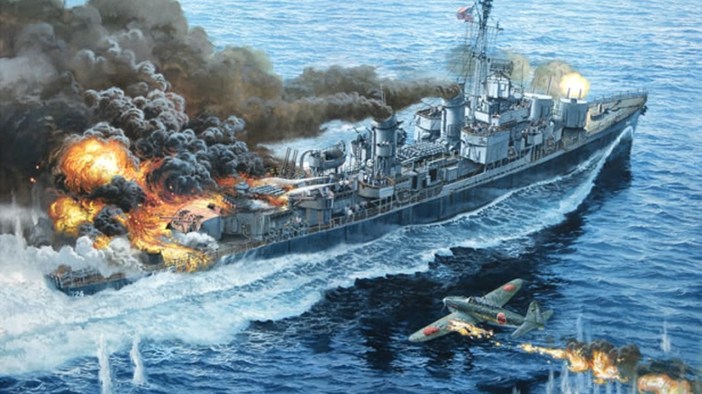
Picket duty in the seas off of Okinawa was a very dangerous place.  Destroyers were stationed in exterior positions from the US fleet to provide radar warnings for the carriers, bombardment and landing groups.  That also made them the first targets for Japanese Kamikaze aircraft inbound.

The USS Laffey (DD 724) was on picket duty.  She was already a veteran of D-Day where she served with Pearl Harbor survivor USS Nevada, and then several other actions in the Pacific.

A flight of approximately 50 Japanese suicide planes attacked the fleet, and many of them chose to target the tiny destroyer.  Val diver bombers and others repeatedly dove on the desperately maneuvering ship while the Laffey’s gun crews kept up a killing fire.  The crew kept fighting, shooting down several of the bombers, taking numerous bomb hits and being impacted by six of the Kamikazes.

A flight of 4 Grumman Wildcat F4F’s and a squadron of 12 F4U Corsairs from nearby carriers raced in the help, shooting down some of the attackers.  A couple of the fighters went down in the melee, including one Corsair which clipped the destroyer’s antennas before crashing into the sea.  Fortunately all of the flyers were rescued.

The Navy’s most notable Historian, Samuel Eliot Morrison, said, “Probably no ship has ever survived an attack of the intensity she experienced.”

The Presidential Unit Citation awarded to the Laffey’s crew read:

CITATION:  “For extraordinary heroism in action as a Picket Ship on Radar Picket Station Number One during an attack by approximately thirty enemy Japanese planes, thirty miles northwest of the northern tip of Okinawa, April 16, 1945. Fighting her guns valiantly against waves of hostile suicide planes plunging toward her from all directions, the U.S.S. LAFFEY set up relentless barrages of antiaircraft fire during an extremely heavy and concentrated air attack. Repeatedly finding her targets, she shot down eight enemy planes clear of the ship and damaged six more before they crashed on board. Struck by two bombs, crash-dived by suicide planes and frequently strafed, she withstood the devastating blows unflinchingly and, despite severe damage and heavy casualties, continued to fight effectively until the last plane had been driven off. The courage, superb seamanship and indomitable determination of her officers and men enabled the LAFFEY to defeat the enemy against almost insurmountable odds, and her brilliant performance in this action, reflects the highest credit upon herself and the United States Naval Service.”

For the President,

/s/ James Forrestal
Secretary of the Navy

You can still walk the decks where these brave men fought and several died aboard the Laffey at Patriot’s Point in Charleston Harbor, South Carolina.  Her museum location is significant as she was named for US Navy Seaman Bartlett Laffey, who earned the Medal of Honor during the Civil War, which began in Charleston Harbor.