SOS!

Today in History, August 11, 1909:

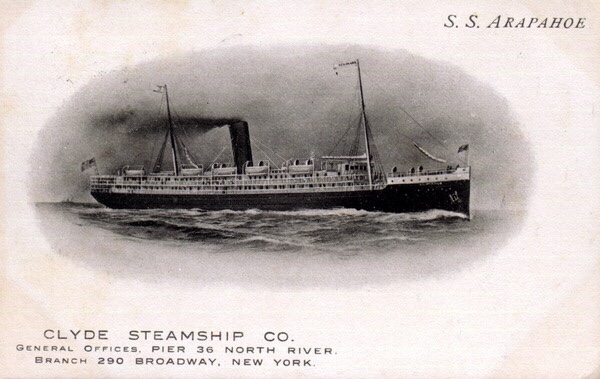
The first American use of “SOS” to call for assistance at sea. Diamond Shoals extends many miles into the Atlantic Ocean from Cape Hatteras, North Carolina, and are considered to be the “Graveyard of the Atlantic”, one of the most dangerous areas of the east coast.

On today’s date the SS Arapahoe was off the shoals when the ship lost it’s screw (propeller). Wireless operator T. D. Haubner sent the SOS

signal and help was dispatched from Hatteras.

A few months later the Arapahoe was the first to respond to the second use of SOS by the SS Iroquois…so that Haubner and the Arapahoe are the first to have sent and the first to have responded to the signal (ship-wise).

Many (including me until today) believe the signal stands for “Save our Ship” or “Save our Souls”. Neither is true. After using several other codes to signal distress, the international sailing community settled on SOS because the code for the letters in Morse code are easy to send under stress and easily understood, and some of the previous signals weren’t. …—… dot dot dot, dash dash dash, dot dot dot.

Iron Bottom Sound Receives Its First Occupants

Today in History, August 9: 1942 – Two days after the US Marines had made an amphibious landing on Guadalcanal seized what would become Henderson Field, the transports that brought them still stood off the coast, protected by 8 American and Australian Cruisers and 14 destroyers. In the early morning hours a force of Japanese Heavy and Light Cruisers moved silently into the waters between Guadalcanal and Savo Island and opened fire on the American and Australian warships, which they caught, quite literally, napping. The British commander of the Allied force, Admiral Crutchley had taken his flagship to a conference with the amphibious force commander, Admiral Richmond Kelly Turner and Marine Gen. Alexander Vandergrift, leaving a subordinate in command. The Japanese Navy had been practicing and perfecting night time combat tactics for years, a fact the USN was not aware of, so they weren’t really expecting an assault. The Japanese also had very effective torpedoes. Several of the Allied ships managed to get off some shots that caused minor damage to the IJN cruisers, but the experienced, practiced Japanese crews poured withering torpedo and gunfire into the American and Australian ships, whose crews were exhausted from 2 days of shelling the enemy ashore in humid high temperatures.

Within an hour the USS Astoria, USS Quincy and USS Vincennes were on their way to the sea floor, making the first of many deposits that would give this passage the name “Iron Bottom Sound” because of all of the Allied and Japanese ships that now rest there with their crews. The next day, Admiral Turner would order the HMAS Canberra scuttled due to her damage. The US aircraft carriers that had been providing air cover for the landings had been ordered out of the area by their commander, Adm. Frank “Black Jack” Fletcher. The transports and their covering surface ships could not remain with range of Japanese aircraft without air cover of their own, so they too left the area, leaving the Marines to their own devices for quite some time. Numerous battles would be fought in the waters of Guadalcanal, Savo and Tulagi Islands, and in “The Slot” leading from Guadalcanal to the enemy bases in the Solomons.

Masons and Presidents

Today in History, August 4, 1752:

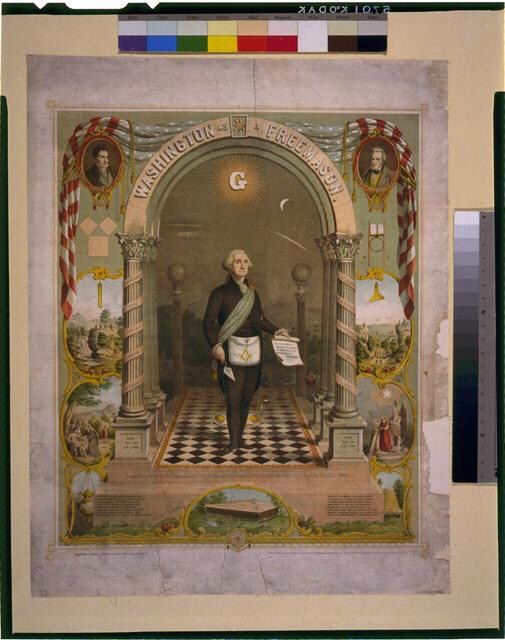
21-year-old George Washington becomes a Master Mason, the highest rank of Freemason in Fredericksburg, Virginia. Rather than an evil conspiracy, the Freemasons were (are) a fraternity based on the medieval guild system, thus “masons”.

Their requirements were (are) public service and high moral standards. 14 US Presidents were Freemasons.

PT-109

Today in History, August 1-2, 1943:

PT-109 (Patrol Torpedo) is patrolling Blackett Strait in the Solomon Islands when it is rammed and cut in half by Japanese Destroyer Amagiri.

Two of the crew are killed outright, but 11 others survive, although some are badly injured/burned. Their very young commander carried one of the injured on his back in the mile + swim to a nearby island. He then took turns with the boat’s exec swimming back out into the channel attempting to signal other PT’s at night while avoiding Japanese patrols.

Finally they were rescued thanks to natives working for an Australian coast watcher. Lt. John Fitzgerald Kennedy, who could have easily sat out the war due to his wealth, displayed incredible courage and loyalty to his crew.

One question not asked in the propaganda of his Presidential campaign was, how does a craft that is basically a speedboat, navigated by an experienced sailor, get rammed by a slow moving man-of-war? That aside, nobody can deny President Kennedy’s courage.

Courage and Sacrifice in Paradise

Today in History, July 31, 1976:

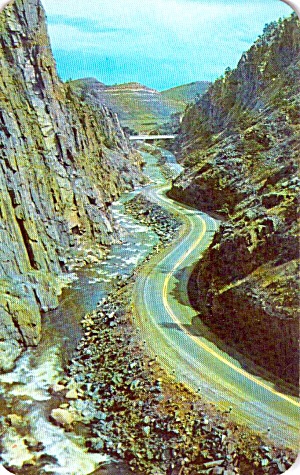
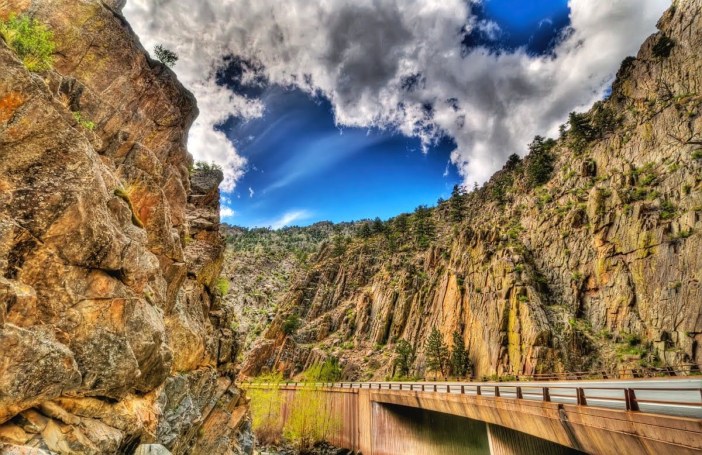
The Big Thompson Canyon Flood.

While Colorado was celebrating its Centennial, a highly unusual thunderstorm broke out high in the mountains, near the source of the Big

Thompson Canyon in northern Colorado.

The storm deluged the canyon with the equivalent of 3/4’s of the area’s annual rainfall in a matter of hours. It sent a wall of water 20 feet high racing down the canyon; residents and tourists miles away from the storm near the mouth of the canyon had no idea there was a storm higher up, much less a torrent of flood water headed their way.

144 died.

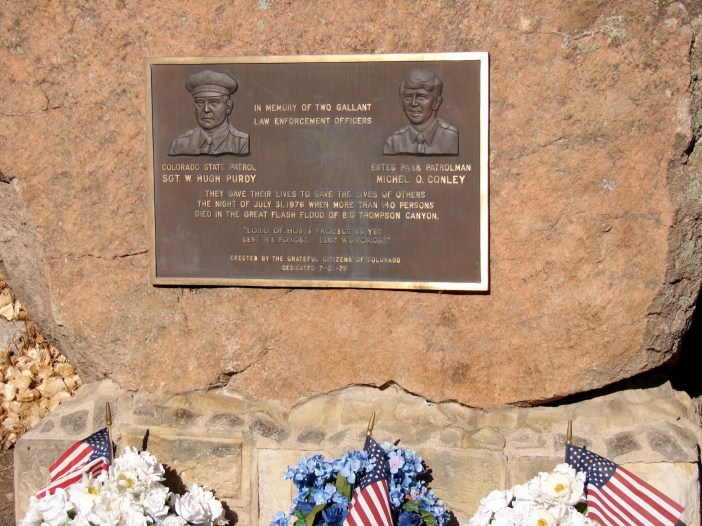
Colorado State Trooper Sgt. W. Hugh Purdy and Estes Park Officer Michel O. Conley were advised of the approaching flood. Remember that this was before cell phones and other mass media, most of which would not have worked in the canyon anyway.

These men drove their patrol cars up the canyon, telling people to flee using their public address systems, with full knowledge of what they were doing….until they met the water and were killed.

I saw this memorial while visiting relatives in Greeley, CO as a teen. These men are part of the reason I’m a cop. God bless them and their families.

Republicans Killed by Democrats

Today in History, July 30, 1866:

The New Orleans Riot.

NOLA had been under Union control for most of the Civil War, although deep South in geography and sentiments.

In 1864, a state convention of mostly Confederate sympathies had tried to enforce “Black Codes” to limit the rights of Freedmen.

Now that the war was over, “Radical” Republicans were holding a state convention in The Mechanic’s Institute in New Orleans in hopes of gaining control of the legislature. A group of black Union veterans formed and marched to the Institute in support of the Republicans, where they were attacked by an armed group of former Confederates, including some authorities (the Mayor and others were Democrat former Confederates). 34-35 black and 3 white Republicans were killed.

Other similar riots in the South occurred, convincing enough voters that more stringent Reconstruction policies were needed. In November Republicans would sweep into both houses of Congress by 77%. The next year they would force through the Fourteenth Amendment protecting citizenship rights and equal protections over the protests of Democrats in Congress. Before it could be ratified, the Reconstruction Acts were passed…requiring former states to ratify if before they could be represented in Congress.

“I don’t mind if you don’t like my manners. They’re pretty bad. I grieve over them during the long winter nights.” – Raymond Chandler, The Big Sleep

Today in History, July 23, 1888:

“Down these mean streets a man must go who is not himself mean, who is neither tarnished nor afraid. The detective must be a complete man and a common man and yet an unusual man. He must be, to use a rather weathered phrase, a man of honor. He talks as the man of his age talks, that is, with rude wit, a lively sense of the grotesque, a disgust for sham, and a contempt for pettiness.”

Raymond Chandler, father of the hard scrabble detectives like Sam Spade among others, is born in Chicago.

“I needed a drink, I needed a lot of life insurance, I needed a vacation, I needed a home in the country. What I had was a coat, a hat and a gun. I put them on and went out of the room.”

Wiley Post Circumnavigates the Earth

Today in History, July 22, 1933:

We all know that Wiley Post died with his more famous Oklahoma brother Will Rogers at Point Barrow, Alaska in a plane crash. Will was a favorite Oklahoma son and a national hero as a humorist.

But on this date in 1933 Will’s friend Wiley, born in Texas but raised in Oklahoma, was the first man to circumnavigate the Earth by air in the Winnie Mae.

He also was an original innovator of the pressurized suit to allow high altitude flight, and made several attempts at cross country high altitude flight. He also discovered the Jet Stream, which has become so important to weather and aviation history.

When “Wild Bill” Says Don’t Wear That Watch…

Today in History, July 21, 1865:

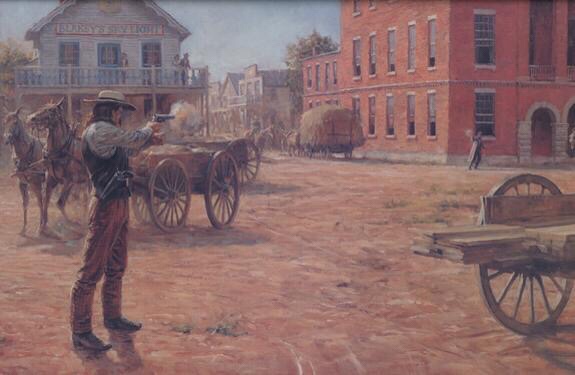
In the first recorded instance of a “quick draw” gunfight, “Wild Bill” Hickok shoots and kills his friend Davis Tutt.

The two had been arguing over a watch that Tutt took as security for a loan. Hickok told him not to wear it…and he did.

So in the town square in Springfield, Missouri, the two stood sideways to each other and drew. Tutt missed, Hickok did not, shooting Tutt through the heart from 75 yards.

“Operation Drumbeat”

Today in History, July 19, 1942:

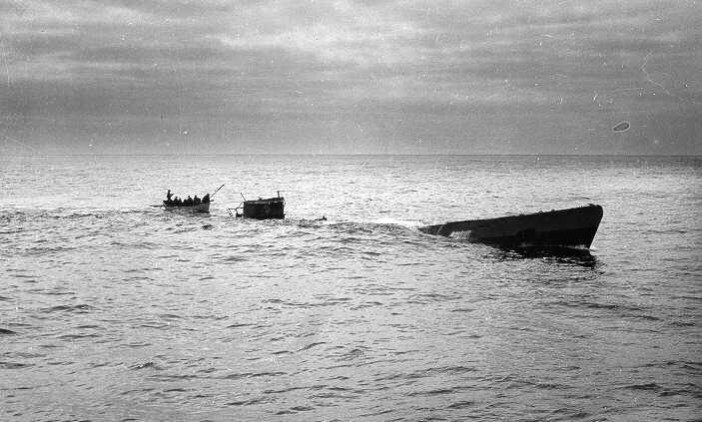
Admiral Karl Donitz is forced to call off “Operation Drumbeat”, recalling Nazi U-Boats assigned to the American coast.

In the months after America’s entry into the war, there were no convoys along the coast and coastal cities did not engage in “black outs”. This meant merchentmen sailing the American coastline were sillouetted by city lights, making them easy targets.

Donitz ordered the long range submarines he had at hand to attack merchant shipping along the coast, and they sank 297 merchantmen by June.

The Americans finally got a convoy system in place, utilizing destroyers and patrol craft. As it became increasingly difficult for U-Boats to prey on US merchants, and as the patrol craft began taking the fight to the Nazis, Donitz called his subs off, sending them back to the North and Mid-Atlantic.