Oldsmobile…End of a Era

Today in History, April 29, 2004:

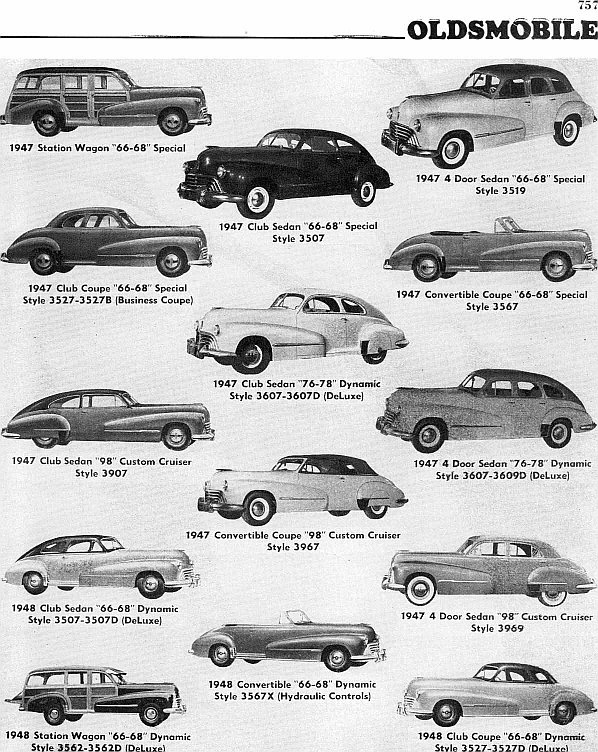
The last Oldsmobile, an “Alero”, rolls off of the assembly line.

The iconic brand was one of the oldest in America, begun by Ransom E. Olds, who would also create REO cars and trucks after he left Oldsmobile.

Oldsmobile would be bought up by General Motors along with Buick, Pontiac and others.

The Cutlass would be the highest selling model in the 70’s and 80’s after being one of the hottest “muscle cars.”

By the late nineties sales had dropped off precipitously and by 2000 GM announced the brand would meet it’s demise in 2004.

The Dawes Commission in Indian Territory

Today in History, April 28: 1897 – The Chickasaw and Choctaw tribes, two of the five civilized tribes, agree to relinquish communal control of their lands after being convinced to do so by the Dawes Commission. The Dawes Act had previously ruled that other tribes must give up their lands and adapt to white customs, but the five civilized tribes were exempt; an 1830 treaty gave them control of their lands as long as the grass grows and the rivers run. Soon after convincing the Chickasaws and the Choctaws to give up the rights to their lands, the other civilized tribes followed suit, resulting in most of their land being given to settlers, including in the Sooner’s land run. In FDR’s administration the five civilized tribes would be given back the control over some of their lands, but the damage had been done.

The Tragedy of the SS Sultana

Today in History, April 27, 1865:

The SS Sultana.

They had left their farms, their jobs and their families, to fight for the Union, some for glory, some for honor. Any glory in the war faded, as it always must, as they fought through terrible battles. They saw their friends die mutilated, many of them suffered irreparable injuries.

Then they were captured by their enemy and sent to horrific prison camps such as the despised Andersonville. Conditions there were unspeakable; even if the Confederates had any sympathy for them, the South didn’t have the resources to care for it’s own, much less it’s prisoners.

Finally after months or years of starvation and brutality, the war was over; they were liberated. They were going home! Can you imagine the joy, the rapture they must have felt? Most had to have believed it would never happen, that they would die in their captivity.

They marched (those that could still walk) to ports on the Mississippi to board steamships for the trip north and home. Desperate to get home as quickly as possible, they begged, cajoled, bartered or simply boarded the overloaded river boats clandestinely. You can take just one more, right?

The steamer SS Sultana was one of those commissioned by the Union Government to get them home. Her capacity was for 376 passengers. 376. By the time she sailed from the captured city of Vicksburg, MS she was loaded down with at least 2,400…mostly those Union prisoners on their way home.

At 2 AM on the 27th of April her decks and quarters were jammed beyond capacity, but their must have been peace amongst the passengers. The ship was top heavy and as she made the turns of the river, the water in her inter-connected boilers sloshed back and forth, lowering the water levels in the boilers opposite the turn. One of the boilers had been hastily patched to allow her use on the trip.

Suddenly, one of the boilers burst, causing at least two more to follow. The ship exploded, the suddenly escaping steam burned hundreds to death in an instant, setting the wooden ship afire to kill hundreds more. Most of those that managed to escape the ship into the water, already emaciated, drowned before they could be rescued; the first ship to reach them was an hour away in the frigid waters.

Of the 2,400, as many as 1,900 perished. 7 to 9 miles above Memphis on the river, even the recently defeated Confederates there responded with compassion, opening their homes to the few survivors.

No one was ever prosecuted for the disaster, however Maj. Gen. Napoleon Jackson Tecumseh Dana, commander of the Department of the Mississippi, was relieved of his command by Lt. Gen. Grant.

Assassin’s Demise

Today in History, April 26, 1865:

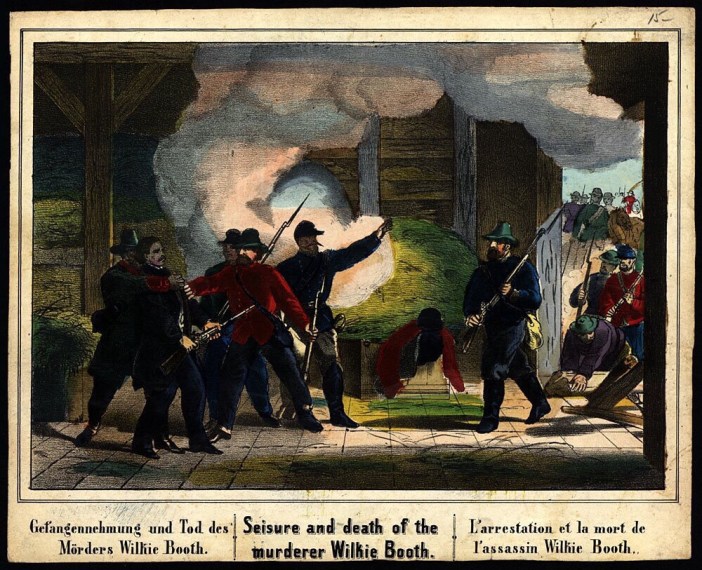
Union Army forces track down John Wilkes Booth 12 days after he assassinated President Lincoln. In the meantime, he had been hidden by Confederates, treated by Doctor Samuel Mudd (your name is mud) and hidden in a barn on the Garrett farm in Virginia, where he was found.

The barn was set afire and his associate surrendered. Booth refused…a Union soldier, Boston Corbett, saw Booth inside the barn and fired his Colt revolver…causing a mortal wound to Booth.

Many Confederates saw Booth as a hero. However many Southerners wept openly at Lincoln’s death, and Confederate Generals, including Lee and Johnston, denounced Booth’s actions.

Fortunately, in the interim between his deed and his death, Booth was able to see news accounts that recorded his hero’s denunciation of his act. So when he died, he knew what he was.

Confederate Big Easy Defenseless

Today in History, April 25, 1862:

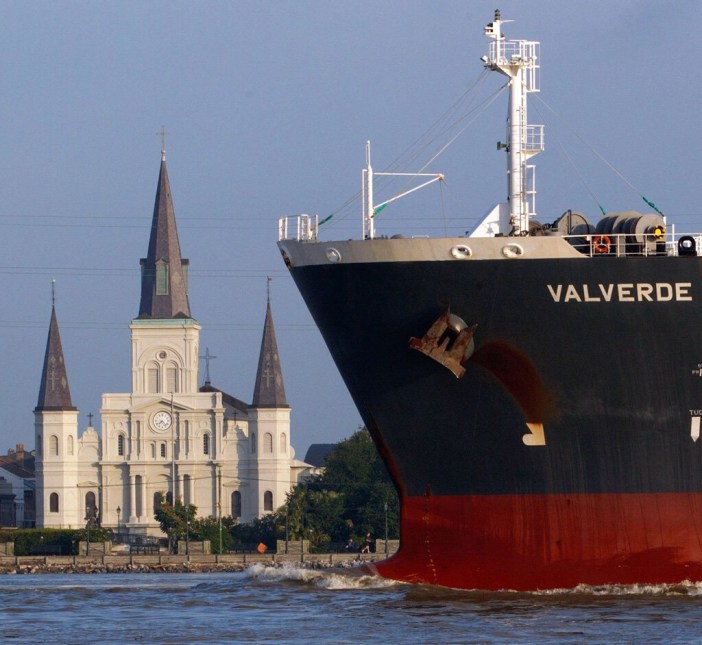
Have you ever walked along the levee in the French Quarter in New Orleans, Louisiana? If you have, it’s difficult not to be awed when you look UP at the top of the levee and see a ship floating across the water…well above you.

The view makes it very obvious how incredibly vulnerable the city is to the Mighty Mississippi and the massive ships sailing her channel.

On this date in 1862 Union Admiral David Farragut had already led his fleet of US Navy ships past Ft. Jackson and Ft. St. Phillips below the Crescent City, he and his crews blew past nascent the Confederate “Navy” and placed their heavy guns off of New Orleans.

The New Orleans military, government and citizens were told…it was obvious…if they didn’t surrender, the US Navy would fire DOWN into the wooden structures of the Quarter….they may, if necessary, blast a hole in the levee and simply let nature flood out the defenders.

Confederate General Mansfield Lovell told Major Moore what would happen if resisted. So they stalled while Lovell shipped his troops and equipment north by rail to Vicksburg.

Finally on April 29 the residents folded. By May 2 the Confederates relinquished the largest, most industrial, cosmopolitan city in the Confederacy. Remember the rivers were the thoroughfares in the 1800’s.

The Union now had control of NOLA’S resources, and now the Union could ship supplies north from the Gulf as far as Vicksburg and north to south.

The War had seen a major change. And the citizens of New Orleans would find peace with General Butler worse than war with Farragut. But thats a different story.

Sir Winston Churchill, Knight of the Garter

Today in History, April 24, 1953:

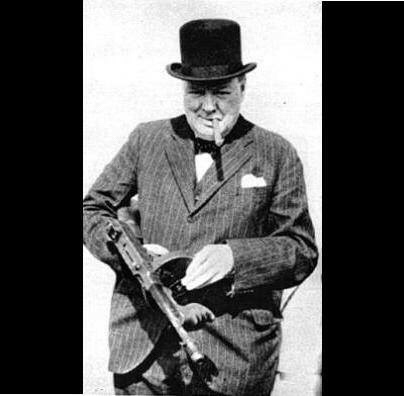
British Prime Minister Winston Spencer Churchill is Knighted by Queen Elizabeth II, making him a Knight of the Garter.

The Queen had wanted to make Churchill a Knight as Duke of London, a new and dynamic position, but he declined since this would require his son and other descendants to live at a certain financial level that they may not be able to sustain.

Born in 1874, Churchill had served with distinction in the Boer War as a young man, been a major player in the First World War as Lord of the Admiralty, and then been banished to the political “wilderness” for ten years leading into WWII. During those years, he constantly preached a message of military preparedness to his contemporaries…acts that made him a laughing stock…the Nazis only wanted peace and he was a militant nut. Once the realities set in with Hitler’s invasion of several European neighbors, Britons turned to Churchill for their salvation, and he proved himself up to the task.

What an amazing amount of History Sir Winston and Queen Elizabeth have been a part of!

Citizenship in a Republic

Today in History, April 23, 1910:

“The Man in the Arena” speech. After his presidency, President Theodore Roosevelt took a tour of Europe and was received with great fanfare and accolades, both from the common man and royalty. On this date he gave a 35 page speech entitled “Citizenship in a Republic” about the responsibilities involved at the Sorbonne in Paris, France. A segment on page 7 became an inspirational and historic passage.

“It is not the critic who counts; not the man who points out how the strong man stumbles, or where the doer of deeds could have done them better. The credit belongs to the man who is actually in the arena, whose face is marred by dust and sweat and blood; who strives valiantly; who errs, who comes short again and again, because there is no effort without error and shortcoming; but who does actually strive to do the deeds; who knows great enthusiasms, the great devotions; who spends himself in a worthy cause; who at the best knows in the end the triumph of high achievement, and who at the worst, if he fails, at least fails while daring greatly, so that his place shall never be with those cold and timid souls who neither know victory nor defeat.”

George Washington Knew How to Fight…And When Not to Fight…

george-washington-portrait

Today in History, April 22, 1793:

President George Washington issues a Proclamation of Neutrality, making it clear to the great powers of Europe, and France in particular, that the newly born United States would not participate in a war then sweeping the old countries.

[Philadelphia, 22 April 1793]

“Whereas it appears that a state of war exists between Austria, Prussia, Sardinia, Great-Britain, and the United Netherlands, of the one part, and France on the other, and the duty and interest of the United States require, that they should with sincerity and good faith adopt and pursue a conduct friendly and impartial toward the belligerent powers:

I have therefore thought fit by these presents to declare the disposition of the United States to observe the conduct aforesaid towards those powers respectively; and to exhort and warn the citizens of the United States carefully to avoid all acts and proceedings whatsover, which may in any manner tend to contravene such disposition.

And I do hereby also make known that whosoever of the citizens of the United States shall render himself liable to punishment or forfeiture under the law of nations, by committing, aiding or abetting hostilities against any of the said powers, or by carrying to any of them those articles, which are deemed contraband by the modern usage of nations, will not receive the protection of the United States, against such punishment or forfeiture: and further, that I have given instructions to those officers, to whom it belongs, to cause prosecutions to be instituted against all persons, who shall, within the cognizance of the courts of the United States, violate the Law of Nations, with respect to the powers at war, or any of them.

In testimony whereof I have caused the Seal of the United States of America to be affixed to these presents, and signed the same with my hand. Done at the city of Philadelphia, the twenty-second day of April, one thousand seven hundred and ninety-three, and of the Independence of the United States of America the seventeenth.”

Go. WASHINGTON.

By the President.
Th: Jefferson.

The assertion of neutrality did not set well with many Americans, and certainly not with the French.  After all, powerful France had been instrumental in the winning of American independence, finalized in the Treaty of Paris only ten years previous in 1783.  Now France had been inspired to undergo their own Revolution, and expected America to reciprocate in support of her war with the other European nations.  French Edmond Genet was then in the United States, appealing directly to the people for support.  President Washington was none too pleased with Genet’s attempts to bypass the American Federal government in his efforts.
Jefferson, Madison and Hamilton debated the subject in the newspapers using aliases, Pacificus and Helivicus.
It wasn’t that President Washington and his cabinet were unfaithful to their first ally.  They were practical.  The French Revolution had taken on a different tone than the American Revolution, with the beheading of King Louis XVI.
Even more importantly, Washington knew America was not yet a world power.  The British did not yet entirely respect American sovereignty, despite the Treaty of Paris.  Washington new the nation needed decades to build it’s resources and to unify politically before playing a meaningful part in world affairs.
America is truly fortunate to have had the guidance and forethought of our Founding Fathers.  The nation would certainly have plenty of opportunities to return the favors France had provided…World War I, World War II most prominent.

Red Baron Downed

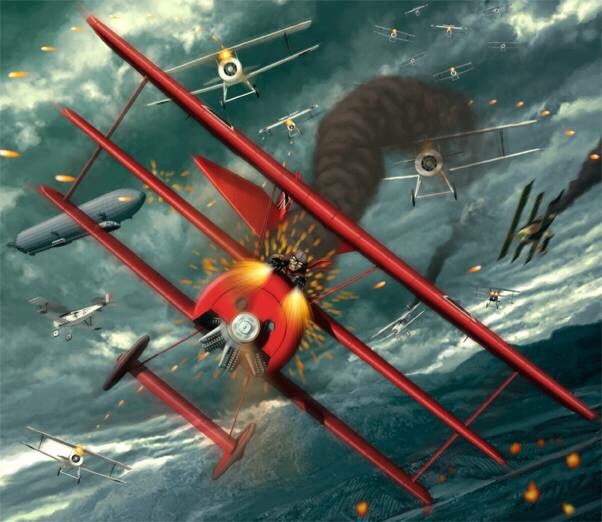
Today in History, April 21: 1918 – Over Morlancourt Ridge, near the Somme River, Manfred Von Richthofen, aka The Red Baron, is fatally wounded and crashes his famous Fokker Dr.I triplane. Richthofen was a hero to Germany and famous world wide after scoring 80 victories in the skies over Europe in WWI. There is still controversy concerning whether he was shot down by Canadian pilot Arthur Brown in his Sopwith Camel, or ground fire.