Life’s Amazing Turns…Jean Baptiste Charbonneau

Today in History, December 23, 1829:

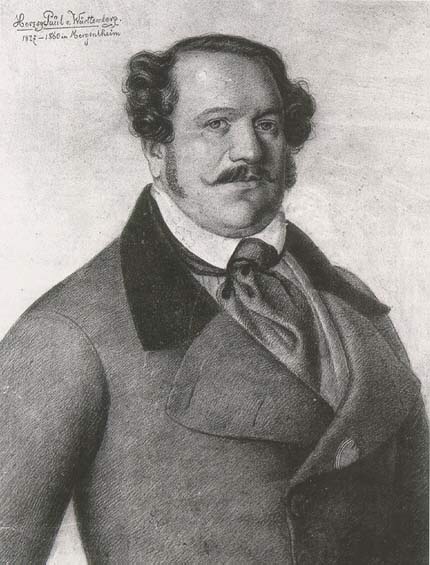
Prince Paul Wilhelm of Wurttemberg leaves St. Louis and heads up the Missouri River. This was actually the second exploration of the American wilderness by the scientifically inclined German prince. But a side note is what I find fascinating.

Several years earlier, in 1822, the Prince had undertaken his first expedition into the west. To do so he needed the permission of the Superintendent of Indian Affairs in St. Louis, William Clark of “Lewis and Clark” fame.

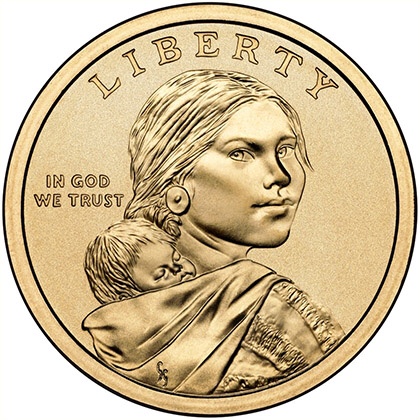
Clark had a foster son, the son of an Indian woman who had greatly assisted the Lewis and Clark Expedition: Sacagawea. Her son, Clark’s foster son, was Jean Baptiste Charbonneau.

Clark was so impressed with the Prince that when the Prince completed his first expedition in 1822, he arranged for Jean (age 16) to accompany the Prince to Europe.

The young Jean was the Prince’s constant companion as they toured Europe and North Africa. Jean learned French, German and Spanish and became quite cosmopolitan.

The trip back to the wilds of America in 1829 was taken in order to bring Jean back to his home with Clark.

An interesting story, and what I take from it is the impact of decisions we make on our fate and the fate of those around us. Sacagawea could have led out her life quietly; but she made a decision that led her son on an odyssey she likely could never have imagined.

The Blackbird Takes Flight

Today in History, December 22, 1964:

The SR-71 “Blackbird” reconnaissance aircraft has it’s first test flight from Air Force Plant 42 in Palmdale, California.

The remarkable first “stealth” aircraft’s defense against missiles fired at it…was to simply outrun the assault from it’s ceiling of 70,000 feet at Mach 3…2,200 miles per hour. The skin of the aircraft was designed to expand with the heat of the speed.

The American Crisis: “These are the Times that Try Men’s Souls…”

Today in History, December 19, 1776:

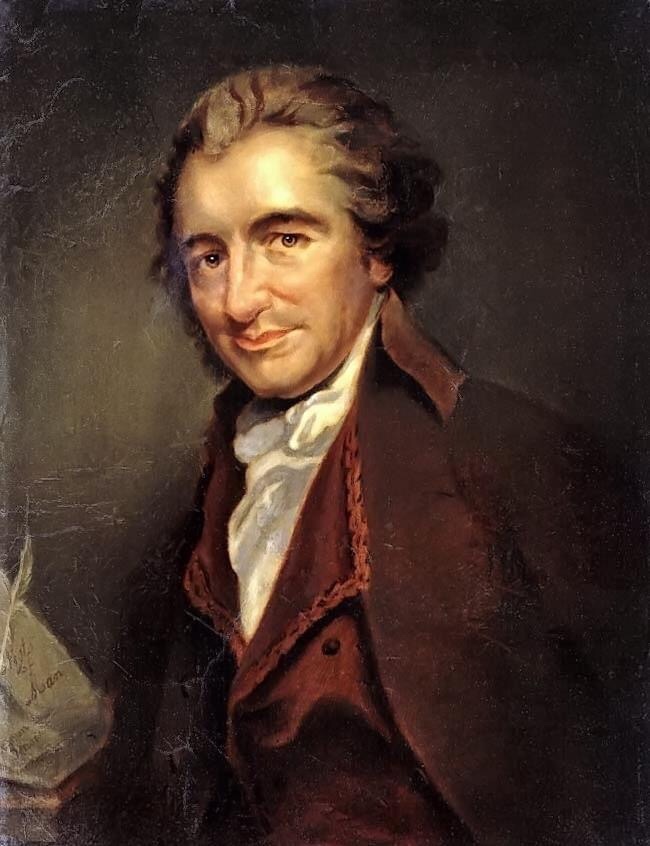
“These are the times that try men’s souls; the summer soldier and the sunshine patriot will, in this crisis, shrink from the service of his country; but he that stands it now, deserves the love and thanks of man and woman.

Tyranny, like hell, is not easily conquered; yet we have this consolation with us, that the harder the conflict, the more glorious the triumph.”

—Thomas Paine in “The American Crisis”, published on this date in 1776.

The fledgeling war for independence had been going badly, and Gen. Washington had already lost 11,000 of his troops to the comfort of their homes, with many more soon to follow when their enlistments were up. He knew the war could easily be lost to poor morale.

Thomas Paine had the same prescience. His “Common Sense” had helped launch the revolution. Now he took to his pen again to bolster the morale and steadfastness of the American people. The result was that most of Gen. Washington’s troops stayed with him and soon won victories that would further inspire them to fight on.

Mesa Verde & The Antiquities Act

Today in History, December 18, 1888:

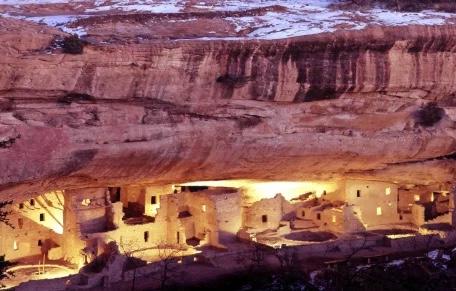
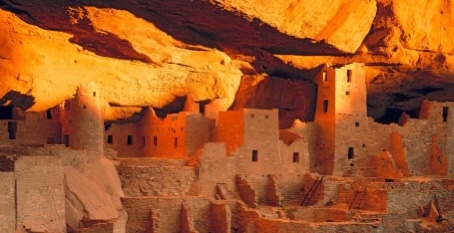
Rancher Richard Wetherill and his brother-in-law Charles Mason, with the help of Ute guide Acowitz “discover” some of the Cliff Dwellings in the canyons of the Mesa Verde area of Southwest Colorado.  The Wetherills were certainly not the first to discover the hundreds of amazing ancient homes built into the protection of the cliffs centuries earlier.  However they did persist in a campaign to institute Federal protection of the sites.  The Wetherills were fearful that tourists and vandals would loot and destroy the sites.

Archaeologists tell us ancient Native Americans made the Cliff Dwellings their home for over seven hundred years before moving away within a two generations in the thirteenth century.  As a reference, elsewhere in the world the Mongols were conquering Asia and the seventh Crusades were occurring.

The Wetherill family spent years exploring the canyon dwellings, collecting hundreds of artifacts which now reside in museums.  Unfortunately much of the vandalism did occur and Swedish scientist  Baron Gustaf E. A. Nordenskiöld mapped and collected many artifacts, taking them back to Sweden before the American government acted to protect the site.

After years of pressure from the Wetherill family and many others, and four unsuccessful attempts, Congress finally passed a bill creating the Mesa Verde National Park, which President Theodore Roosevelt signed into law.

In the same month in 1906, Congress passed and President Roosevelt signed into law “An Act for the Preservation of American Antiquities”, or “The Antiquities Act”, inspired to protect sites such as Mesa Verde and others for generations to come. TR made great use of the Antiquities Act to set aside Historic sites for preservation.

According to the National Parks Conservation Association, the have been 157 National Monuments designated by 16 Presidents since President Theodore Roosevelt enthusiastically named 18 sites during his terms as Chief Executive.

Boston Tea Party – Taxation without Representation

Today in History, December 16, 1773:

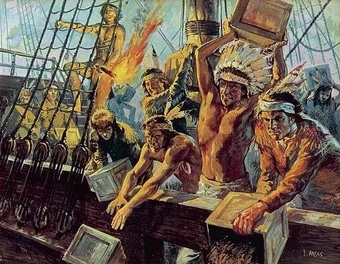
The Boston Tea Party. After the French and Indian War the British government was struggling financially. To bolster their funds they chose to tax the colonies. The American colonials however, refused to pay taxes when they had no representation in Parliament. The Crown came up with a plan.

They lifted the taxes on other goods, but left the tax on tea in place. At the same time they gave the struggling East India Company a monopoly on sales of tea to the colonies, and gave the Company tax breaks so that they could sell the tea to the colonies at the cheapest price…even after the colonies paid their tax on the tea. The Colonists however refused to buy the tea, realizing the real issue was being taxed without representation and not wanting to set a precedent. Ships loaded with tea were turned away from New York and Philadelphia, and the cargo of tea was even impounded in Charleston. Then on this date in 1773 colonists led by Samuel Adams, dressed as Mohawk Indians, made a midnight raid on three tea ships in Boston Harbor, throwing the cargo overboard. The British responded by limiting Colonists rights even further; the stage was set for revolution.

Kristallnacht…The Night Of Broken Glass

Today in History, November 9, 1938:

Kristallnacht…the Night of Broken Glass.

In order to direct Germany in the direction they wanted, the Nazis believed that they had to give the people someone to blame, someone to hate, for their misfortunes. The Jewish people of Germany and Austria were the perfect targets.

The Nazis used the murder of a low level diplomat in Paris as an excuse.

Hitler ordered storm troopers to ACT as if they were citizens angered by the murder and to vandalize and destroy Jewish businesses, thus “The Night of Broken Glass” from the broken windows.

Many Jews were killed and 30,000 men were arrested and sent to concentration camps. They were released if they promised to leave Germany….100,000+ did so. Kristallnacht would eventually lead to the Holocaust, during which 6,000,000+ Jews were killed in the Nazis attempt at genocide.

Familiar?

Canadian-Pacific Railway

Today in History, November 7, 1885:

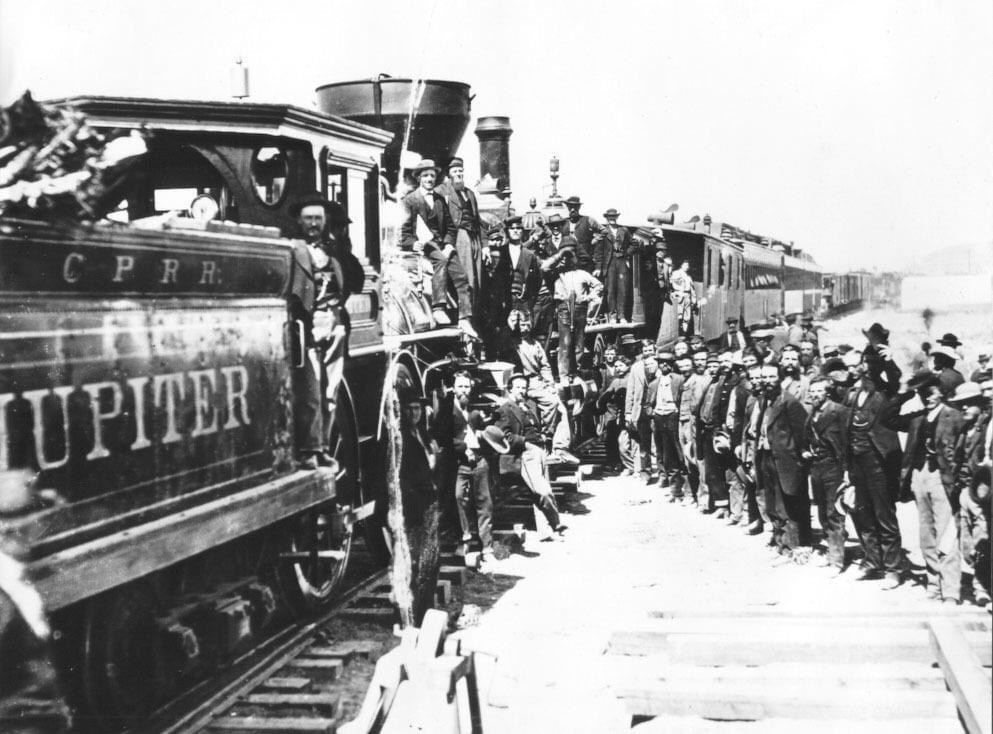
In the mountains of British Columbia, at Craigellachie, the final spike is driven into the Canadian Pacific Railway, completing Canada’s first transcontinental railway.

Like the railroad in America, it brought settlers west, and created a connection between the east and the west that saw new provinces in the Canadian nation.

Remember, remember the 5th of November…

Today in History, November 5, 1605:

The Gunpowder Plot.

Several Catholic conspirators had hatched a plan to blow up the Parliament building in London while the king and parliament met. One of the conspirators told a relative not to attend, and that relative told authorities.

On the night of November 5th, conspirator Guy Fawkes was caught lurking in the basement of the building, and subsequently 20 barrels of gunpowder he had hidden there were located.

Fawkes named his conspirators under torture. Several, including Fawkes, were sentenced to be drawn and quartered. As Fawkes climbed a ladder to the gallows, he jumped to his death. Today is Guy Fawkes day in England, celebrating the failure of the plot.

Gladness and Joy

Today in History, September 3, 1838:

A young slave named Frederick Douglass manages, on his third attempt, to escape slavery by hiding aboard a train headed north.

The future abolitionist leader, author, statesman, marshal, and presidential confidant, after a dangerous trip through several states, finds himself in New York City.

“I have often been asked, how I felt when first I found myself on free soil. And my readers may share the same curiosity.

There is scarcely anything in my experience about which I could not give a more satisfactory answer.

A new world had opened upon me.

If life is more than breath, and the ‘quick round of blood,’ I lived more in one day than in a year of my slave life.

It was a time of joyous excitement which words can but tamely describe.

In a letter written to a friend soon after reaching New York, I said: ‘I felt as one might feel upon escape from a den of hungry lions.’

Anguish and grief, like darkness and rain, may be depicted;

but gladness and joy, like the rainbow, defy the skill of pen or pencil.”

Casus Belli

Today in History, August 31, 1939:

Casus Belli: : an event or action that justifies or allegedly justifies a war or conflict

“I will provide a propagandistic casus belli. Its credibility doesn’t matter. The victor will not be asked whether he told the truth.”

— Adolph Hitler.

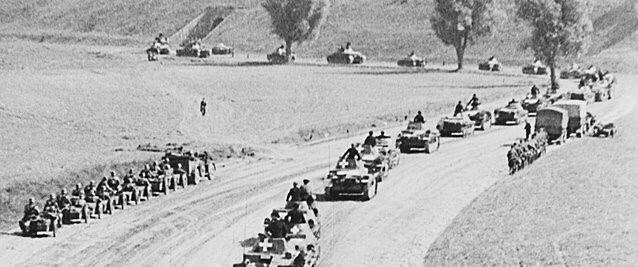
The Gleiwitz incident, an assault on a German radio station near the border with Poland, as part of Operation Himmler, takes place.

The assault was conducted by GERMAN SS troops, posing as Polish troops, upon a German radio station. The ruse went so far as to leave Polish prisoners, captured previously, dead at the station as “proof” of the assault.

The next day, already prepared, German troops invaded Poland in “response” to the atrocity.

Thus began the conflict which would cost millions of military and civilian peoples of many nations their lives. In a real sense, WWII had been raging in Asia and through limited German actions already, but September 1, 1939 is considered the beginning.

The victors will not be asked whether they told the truth. Unfortunately this is usually accurate, similar to “to the victor go the spoils” and “the victors write the history books.”

Either contemporaries are actually trusting, or to fearful the wolf will turn on them, to act.

We should remember our history. We are MERELY human, and always shall be. It is arrogance to believe we will not achieve the same mistakes.