The Mighty Eighth

Today in History, October 14, 1943:

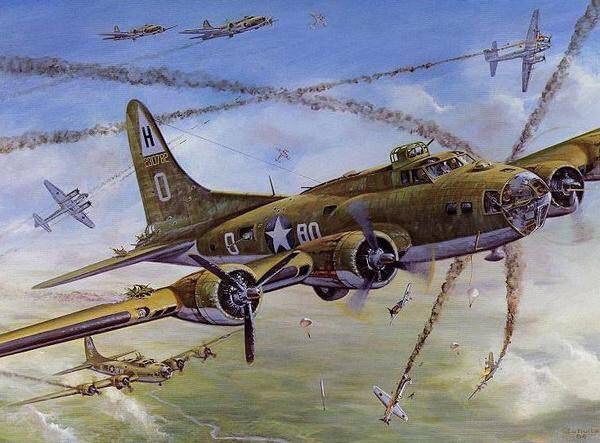
During it’s Second Raid on Schweinfurt, Germany’s ball bearing plants, the Mighty US Eighth Air Force loses SIXTY B-17 Flying Fortress bombers to German fighters and anti-aircraft fire.

That number becomes more ominous when you know that each aircraft had at least a 10 man crew, meaning that 600 airmen either lost their lives or were captured that day. Many don’t realize that the casualties of the Eighth Air Force over Europe accounted for more than half of the losses for the entire US Army Air Corps, and at over 26,000 dead, surpassed the horrific losses of the US Marine Corps during the war by far…the USMC having lost almost 18,000 dead in the bitter battles in Pacific Islands.

Today in History, October 11, 1986:

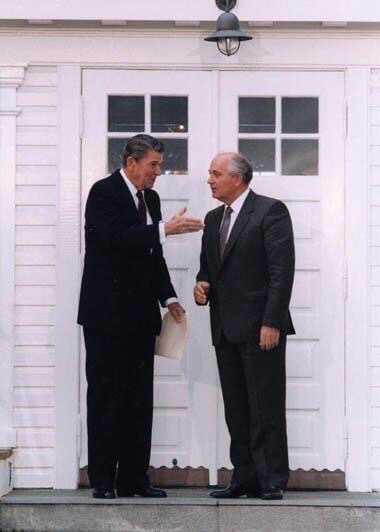
President Reagan meets for the second time with Soviet leader Mikhail Gorbachev at Reykjavik, Iceland to discuss limitations on nuclear missiles. The Russian attempted to add “SDI” or the Strategic Defense Initiative, or “Star Wars” to the discussion. SDI was a planned space based missile shield that would make America impervious to nuclear missile attack.

Reagan, knowing the supposed defense system gave the US an incredible strength in the negotiations, refused. While they came away from Iceland empty handed, Reagan’s poker face worked. The next year in DC the two leaders came to an agreement on missile reduction. The USSR was on it’s way out.

Peace in Space?

Today in History, October 10, 1967:

The Outer Space Treaty between the US, Great Britain, the USSR and others goes into effect. The treaty committed the signatories to not placing weapons of mass destruction in space or on the moon and other celestial bodies, for use or storage. Also that nations would not lay claim to celestial bodies, as they were the property of al mankind. Dr. No or Moonraker, Mr. Bond?

Magellan Sets Sail

Today in History, September 20, 1519:

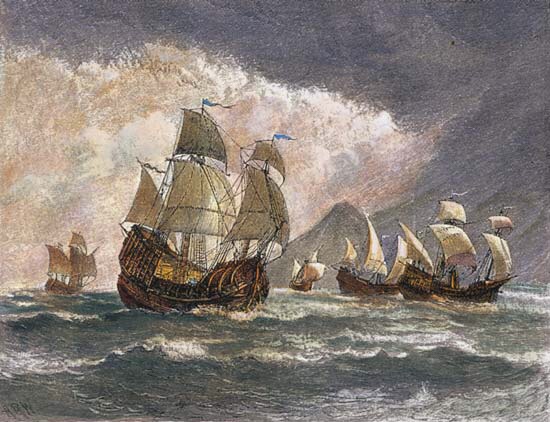
Just shy of 500 years ago, five ships set sail from Spain, led by Portuguese navigator Ferdinand Magellan, seeking a western passage to the “Spice Islands” of Indonesia.

Magellan persevered through lengthy explorations of rivers that did not lead to his destination, a mutiny by the captains of his ships, and finally…the discovery of the passage at the southern tip of South American which bears his name.

After transiting a straight that suffers some of the worst weather on Earth, his small fleet sailed across thousands of miles across an unknown Ocean which he named “Pacific” for its calm waters until they reached the Phillipines. There, Magellan was killed in combat with a native tribe. Two ships remained.

They made it to the Spice Islands and took on cargo. One made a failed attempt to sail back across the Pacific; the other completed the first circumnavigation of the globe to return to Spain.

Garfield’s Potential

Today in History, September 19, 1881:

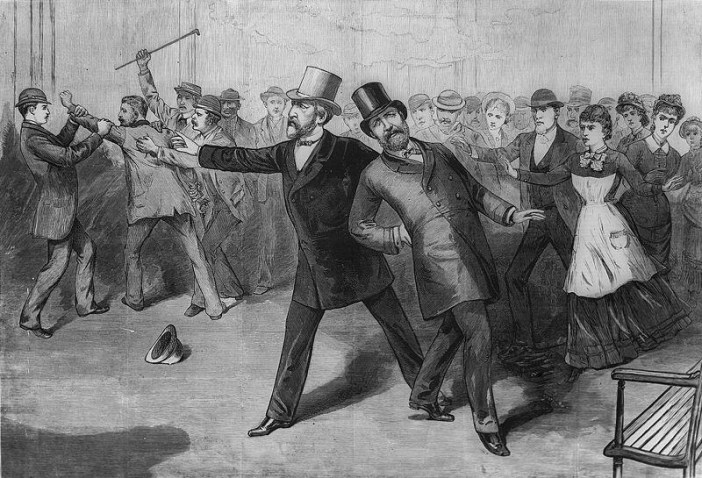
20th President James A. Garfield had been shot by an assassin on July 2. The assassin was a disgruntled man who thought he’d been owed a job in Garfield’s administration.

Doctors including Alexander Graham Bell (a friend) did everything they could to save the President, and he lingered until today’s date before succumbing to his wounds.

He only served as President for four months before being shot down, so the nation will never know what his potential may have been.

And if Garfield had lived, and served one or even two terms, how would it have affected the fortunes of his successors?

Snatching Defeat from the Jaws of Victory

Today in History, September 18: 1862 – Snatching defeat from the jaws of victory…again and for the last time. The Battle of Antietam in Maryland had drawn to a close the previous day. The bloodiest single day battle in American history, it can’t be said that either side “won” the battle, but it was a tactical victory for the Union. Lee had to retreat back to Virginia, Lincoln was able to announce the Emancipation Proclamation, and European powers decided not to recognize the Confederacy as a result. And yet, Union Major General George B. McClellan managed to let go of an advantage that could have ended the war much earlier, saving countless lives….

Lee’s Army of Northern Virginia, arguably the most fierce force the South had at it’s disposal, 43,000 strong, was exhausted, demoralized, and had it’s back to the Potomac River. McClellan, who had 50,000+ in his Union army, a third of which (the portion under his immediate control) had not engaged in the battle, and with thousands of fresh reinforcements arriving by the hour, refused to engage with Lee, allowing the Army of Northern Virginia to escape across the Potomac. He then refused for over a month to give chase. McClellan had an incredible ego, but it was not commensurate with his abilities. He had a persistent knack for overestimating his enemies. He assumed that Lee had 100,000 troops, which was a ridiculous assumption…he had done this several times in his career…if he’d had a million troops, he would have said his enemy had five. President Lincoln and Chief of Staff Henry Halleck implored McClellan repeatedly to use the army he commanded, but he made excuse after excuse and refused. Finally, on November 9th, Lincoln fired him for the final time. McClellan would run against the President in ’64 on a platform calling for an end to the war without achieving victory (a platform he reportedly denounced.)

Happy Constitution Day!

Today in History, September 17: 1787 –

The Constitutional Convention draws to a close with the signing of the final draft of the United States Constitution.

“We the People of the United States, in Order to form a more perfect Union, establish Justice, insure domestic Tranquility, provide for the common defence, promote the general Welfare, and secure the Blessings of Liberty to ourselves and our Posterity, do ordain and establish this Constitution for the United States of America.” We owe so much to our nation’s founders and to this document. We must continue to defend it from it’s detractors.

Stockholm Syndrome

Today in History, August 23, 1973:

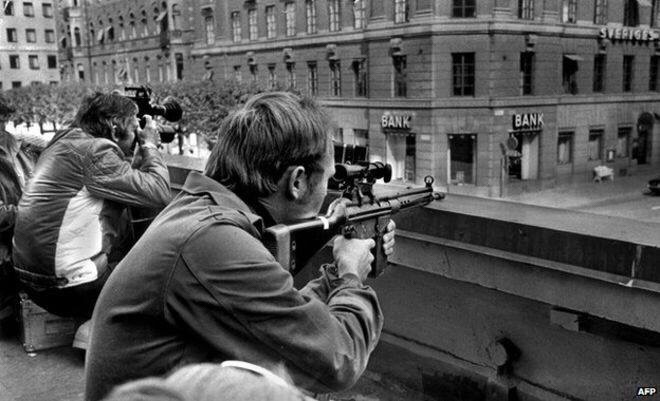
During a hostage situation resulting from a bank robbery of “Kreditbanken” in Normalmstorg, Stockholm, Sweden, the hostages become sympathetic to the robbery/hostage suspects, even defending them once they were taken into custody. Criminologist and psychiatrist Nils Berjerot termed it “Norrmalmstorgssyndromet”, which would be translated as Stockholm Syndrome. The syndrome is related not only to hostage situations, but also domestic violence situations. Freud explained it as a victim relating to the aggressor as a means to protect the ego, bonding with the aggressor to cease feeling like a victim.

Woolaroc Lands in Hawaii

Today in History, August 16, 1927:

“The Dole Air Race” ends in tragedy and glory. Depending on who you were.

James Drummond Dole, heir to the Dole Pineapple industry that had been initiated in the 19th century, sponsored an air race to prove that air travel could be made between the mainland and Honolulu. He had been inspired by Charles Lindbergh’s transatlantic flight. Whoever reached Honolulu first would win $25,000.

Several entrants would drop out before the flight even began, but of the eight that left the mainland, six would be lost without a trace.

Two Army Air Corps Lieutenant’s had already made the flight successfully…but since they landed at Wheeler Field rather than Honolulu, they were disqualified.

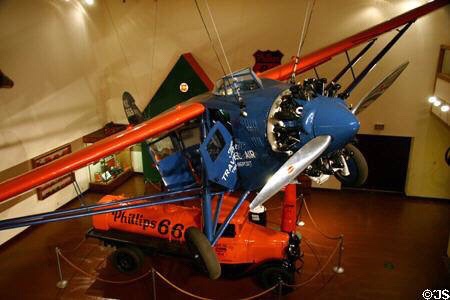
Two Travel Air 5000 monoplanes were sponsored by Oklahoma Oilman Frank Phillips…the “Oklahoma” and the “Woolaroc.” The Oklahoma had to turn back….but the Woolaroc, piloted by Arthur C. Goebel and William V. Davis, Jr. took the prize, being the first to arrive in Honolulu.

Once again, Oklahoma wins. You can visit the “Woolaroc”, at Woolaroc near Bartlesville.