Send in the Marines!

Today in History, May 4, 1946:

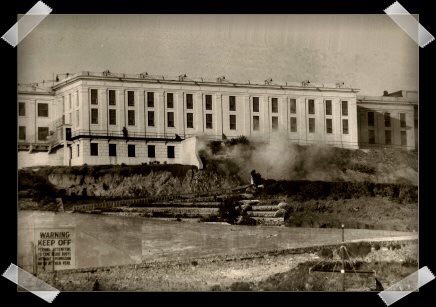
Call in the Marines! The Battle of Alcatraz. On May 2nd, three inmates on D Block of Alcatraz prison managed to overtake the block of cells. One of them managed to expand and crawl between bars leading to the catwalk above the cells and overpower the guard there. Soon they had imprisoned the guards in two cells and taken their weapons. Now they only needed to find the key to the “yard” and they could steal the island’s launch to escape. However by the time they found the key, they had tampered with the lock so much that a security feature kicked in and they were sealed inside. Over the next couple of days they fired on guards outside and on the guards they had imprisoned inside, killing 3 and injuring 14. The Warden called for help from Marines stationed at the nearby Treasure Island Naval Base, many of whom were fresh from fighting Japanese hidden in caves in the Pacific. The Marines assaulted D Block with machine gun fire, grenades and mortars. When the guards went to secure the building, they found the three ringleaders dead in a utility corridor to which they had retreated. Two more inmates would later be executed for their role in the attempted escape.

Friendly Fire Changes History

Today in History, May 2, 1863:

He was, in today’s vernacular, the epitome of a “nerd”. He had an odd, ungainly walk, was very strict in his interpretations of religion, and either ignored or did not see his contemporaries and his students mocking him and laughing at him behind his back for his awkwardness.

He graduated from West Point, served with distinction in the Mexican-American War, and then became a professor at the Virginia Military Institute (VMI). He was a terrible teacher, and mocking him became a tradition amongst the students.

Then the Civil War came. Thomas Jackson didn’t have any particular political views, but he was true to his “country” of Virginia. So he served, proving to be efficient at training brigades at drill and military movements.

While still considered ungainly, Jackson earned the faith of his men by always being at the front, without guile, without fear. At the First Battle of Manassas (Bull Run for the Union, Confederates called it Manassas), he did the same.

One of his contemporaries from the Mexican-American War, Gen. Bernard Bee, rallied his own men by shouting, “There is Jackson standing like a stone wall. Let us determine to die here, and we will conquer. Rally behind the Virginians!” And they did, and the battle was won.

The awkward Thomas J. Jackson had transformed into the legend of “Stonewall” Jackson and he would soon become the right hand man of Gen. Robert E. Lee. After many battles won, on today’s date, during the Battle of Chancellorsville, Jackson was returning to his camp at night when he was taken for a Yankee soldier and accidentally shot by a sentry. Within a few days, one of the South’s greatest heroes would die of his injuries.

Lee in particular would mourn the loss of a valued lieutenant, and would miss him during battles to come, particularly Gettysburg.

History Passes as They Rest at the Top of the World


Today in History, May 1, 1999:

George Leigh Mallory is found after having gone missing on June 8-9, 1924.  Mallory was found within 800 feet of the summit of Mount Everest, the tallest mountain in the world.  He and his climbing partner, Andrew “Sandy” Irvine, were last seen nearing the summit on the Tibetan side of the mountain by another climber.  Irvine is still yet to be found.

Mallory had taken part in three attempts to reach the top of the mountain before he and Irvine went missing.  When an expedition searching for the pair found Mallory, he was at 26,760 feet and remarkably well preserved by the freezing temperatures.  After taking photos (they are online…I did not include them) and collecting evidence, the team respectfully buried the climber.

It is so far unknown whether either or both men reached the summit.  Mallory carried a photo of his wife which he intended to place atop the mountain…it was not found on his body.  A camera the pair took with them to record the event has not yet been found.  If it ever is, Kodak indicated with the right care, the film may be developed.  Even the first person documented to have reached the summit, Sir Edmund Hillary, commented that Mallory may have beaten him to the top.

All of this adventure is fascinating.  Of course, my thoughts turn to the history which passed by while Mallory rested on top of the world.  His wife and children lived their lives.  The Great Depression passed.  Many dignitaries attended a memorial for Mallory and Irvine.  Mallory’s younger brother Trafford Leigh-Mallory fought in the Battle of Britain and became Air Chief Marshall commanding the air forces in the Normandy invasion before being killed in an air crash (along with his wife and 7 others), ironically, in the Alps.

And of course the Jet Age, man’s entry into space and numerous wars all passed in the 75 years before Mallory was discovered.

Ever been to the thin air atop Pike’s Peak?  It is 14,114 feet, not even half of Mount Everest’s 29,029 feet.  Amazing.

Oldsmobile…End of a Era

Today in History, April 29, 2004:

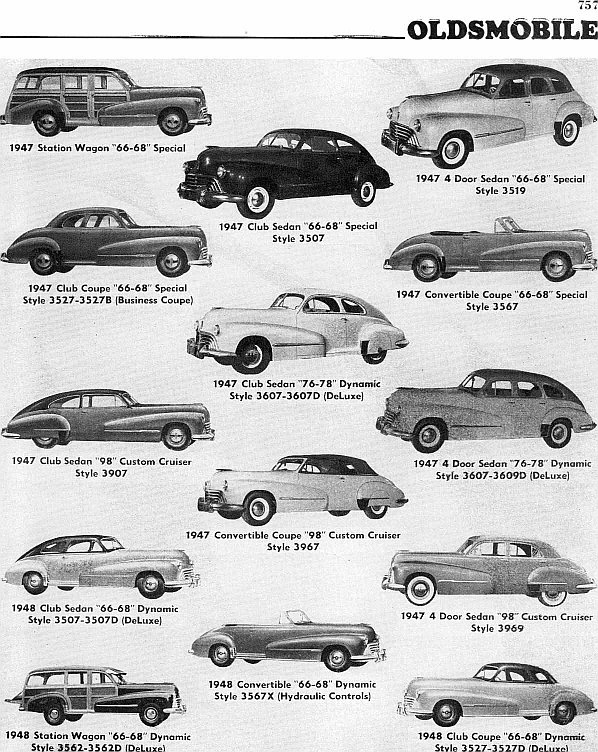
The last Oldsmobile, an “Alero”, rolls off of the assembly line.

The iconic brand was one of the oldest in America, begun by Ransom E. Olds, who would also create REO cars and trucks after he left Oldsmobile.

Oldsmobile would be bought up by General Motors along with Buick, Pontiac and others.

The Cutlass would be the highest selling model in the 70’s and 80’s after being one of the hottest “muscle cars.”

By the late nineties sales had dropped off precipitously and by 2000 GM announced the brand would meet it’s demise in 2004.

The Dawes Commission in Indian Territory

Today in History, April 28: 1897 – The Chickasaw and Choctaw tribes, two of the five civilized tribes, agree to relinquish communal control of their lands after being convinced to do so by the Dawes Commission. The Dawes Act had previously ruled that other tribes must give up their lands and adapt to white customs, but the five civilized tribes were exempt; an 1830 treaty gave them control of their lands as long as the grass grows and the rivers run. Soon after convincing the Chickasaws and the Choctaws to give up the rights to their lands, the other civilized tribes followed suit, resulting in most of their land being given to settlers, including in the Sooner’s land run. In FDR’s administration the five civilized tribes would be given back the control over some of their lands, but the damage had been done.

The Tragedy of the SS Sultana

Today in History, April 27, 1865:

The SS Sultana.

They had left their farms, their jobs and their families, to fight for the Union, some for glory, some for honor. Any glory in the war faded, as it always must, as they fought through terrible battles. They saw their friends die mutilated, many of them suffered irreparable injuries.

Then they were captured by their enemy and sent to horrific prison camps such as the despised Andersonville. Conditions there were unspeakable; even if the Confederates had any sympathy for them, the South didn’t have the resources to care for it’s own, much less it’s prisoners.

Finally after months or years of starvation and brutality, the war was over; they were liberated. They were going home! Can you imagine the joy, the rapture they must have felt? Most had to have believed it would never happen, that they would die in their captivity.

They marched (those that could still walk) to ports on the Mississippi to board steamships for the trip north and home. Desperate to get home as quickly as possible, they begged, cajoled, bartered or simply boarded the overloaded river boats clandestinely. You can take just one more, right?

The steamer SS Sultana was one of those commissioned by the Union Government to get them home. Her capacity was for 376 passengers. 376. By the time she sailed from the captured city of Vicksburg, MS she was loaded down with at least 2,400…mostly those Union prisoners on their way home.

At 2 AM on the 27th of April her decks and quarters were jammed beyond capacity, but their must have been peace amongst the passengers. The ship was top heavy and as she made the turns of the river, the water in her inter-connected boilers sloshed back and forth, lowering the water levels in the boilers opposite the turn. One of the boilers had been hastily patched to allow her use on the trip.

Suddenly, one of the boilers burst, causing at least two more to follow. The ship exploded, the suddenly escaping steam burned hundreds to death in an instant, setting the wooden ship afire to kill hundreds more. Most of those that managed to escape the ship into the water, already emaciated, drowned before they could be rescued; the first ship to reach them was an hour away in the frigid waters.

Of the 2,400, as many as 1,900 perished. 7 to 9 miles above Memphis on the river, even the recently defeated Confederates there responded with compassion, opening their homes to the few survivors.

No one was ever prosecuted for the disaster, however Maj. Gen. Napoleon Jackson Tecumseh Dana, commander of the Department of the Mississippi, was relieved of his command by Lt. Gen. Grant.
Assassin’s Demise

Today in History, April 26, 1865:

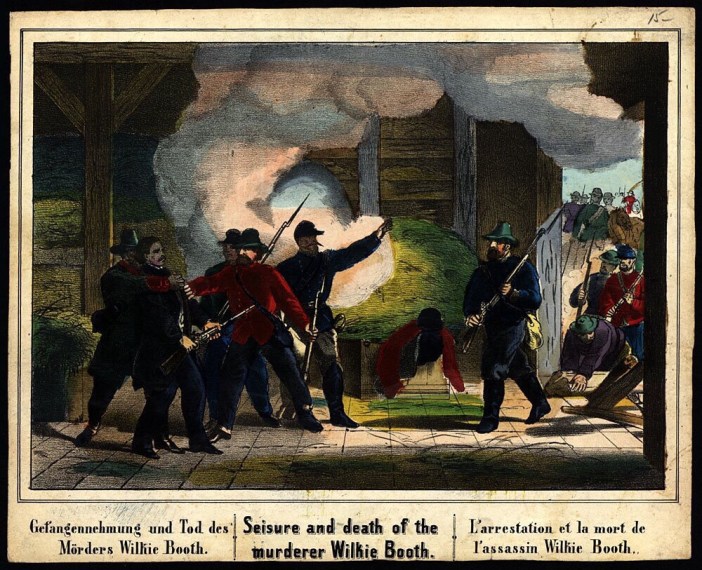
Union Army forces track down John Wilkes Booth 12 days after he assassinated President Lincoln. In the meantime, he had been hidden by Confederates, treated by Doctor Samuel Mudd (your name is mud) and hidden in a barn on the Garrett farm in Virginia, where he was found.

The barn was set afire and his associate surrendered. Booth refused…a Union soldier, Boston Corbett, saw Booth inside the barn and fired his Colt revolver…causing a mortal wound to Booth.

Many Confederates saw Booth as a hero. However many Southerners wept openly at Lincoln’s death, and Confederate Generals, including Lee and Johnston, denounced Booth’s actions.

Fortunately, in the interim between his deed and his death, Booth was able to see news accounts that recorded his hero’s denunciation of his act. So when he died, he knew what he was.

Confederate Big Easy Defenseless

Today in History, April 25, 1862:

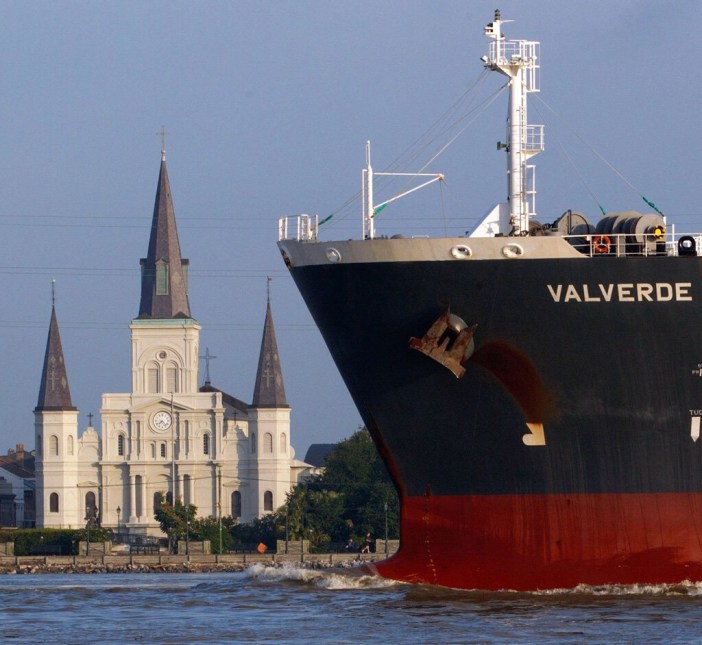
Have you ever walked along the levee in the French Quarter in New Orleans, Louisiana? If you have, it’s difficult not to be awed when you look UP at the top of the levee and see a ship floating across the water…well above you.

The view makes it very obvious how incredibly vulnerable the city is to the Mighty Mississippi and the massive ships sailing her channel.

On this date in 1862 Union Admiral David Farragut had already led his fleet of US Navy ships past Ft. Jackson and Ft. St. Phillips below the Crescent City, he and his crews blew past nascent the Confederate “Navy” and placed their heavy guns off of New Orleans.

The New Orleans military, government and citizens were told…it was obvious…if they didn’t surrender, the US Navy would fire DOWN into the wooden structures of the Quarter….they may, if necessary, blast a hole in the levee and simply let nature flood out the defenders.

Confederate General Mansfield Lovell told Major Moore what would happen if resisted. So they stalled while Lovell shipped his troops and equipment north by rail to Vicksburg.

Finally on April 29 the residents folded. By May 2 the Confederates relinquished the largest, most industrial, cosmopolitan city in the Confederacy. Remember the rivers were the thoroughfares in the 1800’s.

The Union now had control of NOLA’S resources, and now the Union could ship supplies north from the Gulf as far as Vicksburg and north to south.

The War had seen a major change. And the citizens of New Orleans would find peace with General Butler worse than war with Farragut. But thats a different story.

Sir Winston Churchill, Knight of the Garter

Today in History, April 24, 1953:

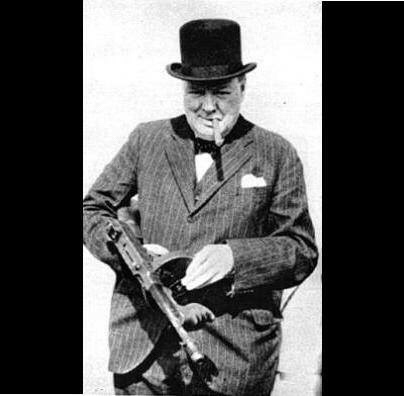
British Prime Minister Winston Spencer Churchill is Knighted by Queen Elizabeth II, making him a Knight of the Garter.

The Queen had wanted to make Churchill a Knight as Duke of London, a new and dynamic position, but he declined since this would require his son and other descendants to live at a certain financial level that they may not be able to sustain.

Born in 1874, Churchill had served with distinction in the Boer War as a young man, been a major player in the First World War as Lord of the Admiralty, and then been banished to the political “wilderness” for ten years leading into WWII. During those years, he constantly preached a message of military preparedness to his contemporaries…acts that made him a laughing stock…the Nazis only wanted peace and he was a militant nut. Once the realities set in with Hitler’s invasion of several European neighbors, Britons turned to Churchill for their salvation, and he proved himself up to the task.

What an amazing amount of History Sir Winston and Queen Elizabeth have been a part of!

Citizenship in a Republic

Today in History, April 23, 1910:

“The Man in the Arena” speech. After his presidency, President Theodore Roosevelt took a tour of Europe and was received with great fanfare and accolades, both from the common man and royalty. On this date he gave a 35 page speech entitled “Citizenship in a Republic” about the responsibilities involved at the Sorbonne in Paris, France. A segment on page 7 became an inspirational and historic passage.

“It is not the critic who counts; not the man who points out how the strong man stumbles, or where the doer of deeds could have done them better. The credit belongs to the man who is actually in the arena, whose face is marred by dust and sweat and blood; who strives valiantly; who errs, who comes short again and again, because there is no effort without error and shortcoming; but who does actually strive to do the deeds; who knows great enthusiasms, the great devotions; who spends himself in a worthy cause; who at the best knows in the end the triumph of high achievement, and who at the worst, if he fails, at least fails while daring greatly, so that his place shall never be with those cold and timid souls who neither know victory nor defeat.”