A Sad End to an Amazing Life


Today in History, December 15: 1890 –

Sitting Bull, Hunkpapa Lakota Sioux medicine man, is killed by his own people. Sitting Bull had been an important and historical figure amongst his people, long before his conflicts with the white man.

He had a vision of the white soldiers falling before the Sioux, and it came to pass with Custer’s Last Stand during Battle of the Little Big Horn. He would survive that battle and spend several years spent in Canada.

Later he would tour with Buffalo Bill Cody’s Wild West Show across the nation. Eventually he retired to the Standing Rock Agency. In the year of his death young Sioux had begun taking part in a resurgent “Ghost Dance” movement…agency officials feared that Sitting Bull would lend his name to the movement, and sent Indian Agency Police to arrest Sitting Bull. Things went south quickly, and the Indian Agency Police shot and killed Sitting Bull, leading to the first incident at Wounded Knee.


A Pardon for “Little Sister”

Today in History, December 14: 1863 –

President Lincoln grants amnesty to his sister-in-law, Emilie Todd Helm, whose Confederate General husband had been killed at the Battle of Chickamauga. Emilie had made her way to DC and was staying in the White House with the President and her half sister, Mary Todd Lincoln. This was part of a plan Lincoln had to re-unite the Union.

By his order, any Confederate “rebel” that would swear an oath of loyalty to the Union would be granted amnesty. Lincoln hoped this would foster reconciliation and diminish the ranks of the Confederate Army.

Ironically, “four score and seven” years earlier, the British Army had pronounced the same decree, stating that any “rebel” involved in the Revolutionary War who would swear an oath of loyalty to the British Crown, would be granted amnesty; and the British decree was proffered for the same reason. In 1776 it met with limited success. In 1863, it met with some success, but the war would continue for two more years.

And Good Riddance!

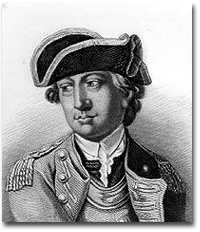
Today in History, December 13: 1776 – This is one of those “God knows what you need more than you do” stories. When the Continental Congress chose George Washington as commander-in-chief of the Continental Army, they bypassed an extremely experienced and competent alternative; Gen. Charles Lee…

Charles Lee has served as an officer in the British Army, serving with distinction in the French and Indian War. Lee never forgave the perceived slight.

In the fall of 1776, Washington and the army he commanded had fled in horrible conditions across New Jersey and were holed up at the Delaware River, bedraggled, barely clothed, starving, and facing a vastly superior force of British regulars. What was worse was that many of Washington’s soldier’s enlistments were up soon, and few were likely to stay.

Washington sent repeated messages to Lee encouraging him bring his well rested army to the Delaware. Lee, satisfied to see Washington fail, hesitated, delayed and finally responded slowly. On this day in 1776 he left his Army and went with a small guard contingent to look for female companionship at a local tavern.

Loyalists to the crown were often informing the British of Colonial movements. Two days later Lee was caught in his bedclothes as he relaxed in the tavern where he had partaken of his chosen prostitutes. British Col. Banastre Tarleton and his troops raided the tavern and captured Lee, who was the Colonial’s most experienced Officer; many had called for him to lead the Army rather than Washington.

The British were exhilarated at having captured Lee, the Americans were demoralized. Washington, however, was privately relieved. Now the army that had been commanded by Lee could be utilized by more loyal officers to continue the fight.

Listen to the Professionals

Today in History, December 12: 1917 –

Rail disaster in the Alps. Between 1,000 and 1,200 French soldiers had Christmas leave from the Italian front, and boarded an overloaded train bound for France over the Alps.

The train’s engineer refused to begin the trip…the passenger cars did not have enough brakes to make the trip safely. He changed his mind when when a well-meaning French officer pointed a pistol to his head…intent on his troops seeing their families for Christmas.

As the train reached the bottom of a long grade near Modane, France, the engineer’s fears were realized…the brakes would not slow the train and when the train reached a wooden bridge it derailed, most of the passenger cars bursting into flames. At least half of the soldiers were killed in the horrific crash…over 500. Listen to the professionals.

A Proclamation in Jerusalem

Today in History, December 11: 1917 –

During WWI, the British Prime Minister David Lloyd George had ordered that Jerusalem be taken as part of a second front in the war against the Ottoman Empire…German allies.

The war had not been going well in 1917. Lloyd George decided to move on of the Western Front commanders, Gen. Edmund Allenby, to the Middle East. Allenby reported to Cairo, taking command of the Egyptian Expeditionary Force (EEF) and immediately making changes.

Allenby and his troops fought hard battles across the desert, entering Palestine and arriving outside Jerusalem on December 9. The Ottoman Turks, having fought hard, abandoned the city.

On the 11th Allenby entered through the Jaffa Gate by foot as a display of respect for the Holy City.

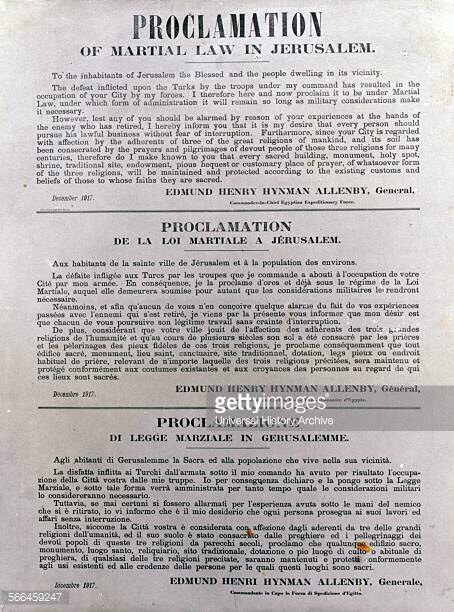
Having ended hundreds of years of Ottoman rule over the city, he presented a proclamation in English, French, Italian, Hebrew, Arabic, Russian and Greek assuring people of all religions of his intent to keep Holy sites open to all.

So much History and importance before and since in Jerusalem.

According to the Times of Israel, a re-enactment of the event was held today with the assistance of the Tower of David Museum, complete with descendants of General Allenby in attendance.

Sea Warfare Changes Before the World’s View

Today in History, December 10: 1941 –

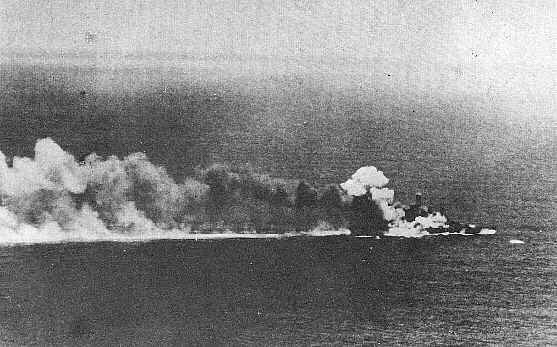
4,000 Japanese troops land in the Philippines, 700 land on the island of Guam and seize it. To top of a disastrous day, Japanese torpedo bombers swarmed over the British Battleships Prince of Wales and Repulse, sending them both to the bottom of the South China Sea. Since December 7th, Japanese air raids had destroyed fully half of the Allied aircraft in the Pacific theater. Some battleship sailors had consoled themselves with the thought that the ships lost at Pearl Harbor due to the air raid were unable to protect themselves only because they were caught at their moorings. It was believed that ships at sea, with room to maneuver could avoid aircraft. The loss of the powerful Prince of Wales and Repulse quickly put these thoughts to rest.

“Before We’re Through With ‘em, the Japanese Language Will be Spoken Only in Hell!” -Adm. William F. Halsey

Today in History, December 8: 1941 –

The US Navy Task Force focused around the USS Enterprise (CV-6) aircraft carrier, short on supplies and fuel, enters Pearl Harbor in the dark of night to re-provision as quickly as possible. Uncertainty reigns; nobody knows if the surprise attack by Japanese aircraft was the precursor to an invasion…

The men of the Task Force are horrified by the destruction they are witnessing; mighty ships they had seen just days before lay smoldering and efforts to rescue untold numbers of their friends trapped in the ships were ongoing. The stench of burning oil and bodies permeates the night air.

The commander of the Task Force, Vice Admiral William Halsey observes the carnage from the bridge of the Enterprise and angrily utters one of what will be many memorable quotes from him during the war, “Before we’re through with ’em, the Japanese language will be spoken only in hell!”

Today, of course, Japan is one of our closest and most faithful allies. But on December 8, 1941, and for years to come, the surprise attack on Pearl Harbor and other allied basis left no room for anything but battle.

Pearl Harbor…An Unmitigated Failure for Japan

Today in History, December 7: 1941 –

Did you know that the Japanese surprise attack on the bases at Pearl Harbor, Hawaii was…a tremendous failure? In spite of the horrific losses in lives and the loss of combatant ships and aircraft, the Japanese Task Force missed their primary targets. The battleships and most of the aircraft they destroyed were obsolete…and they knew it.

They were after the American aircraft carriers, which they recognized as the next generation capital ships. Their intelligence was that the American carriers were in port at their berths, but the Kawanishi flying boat that provided that info couldn’t catch that the carriers left soon after it’s recon mission.

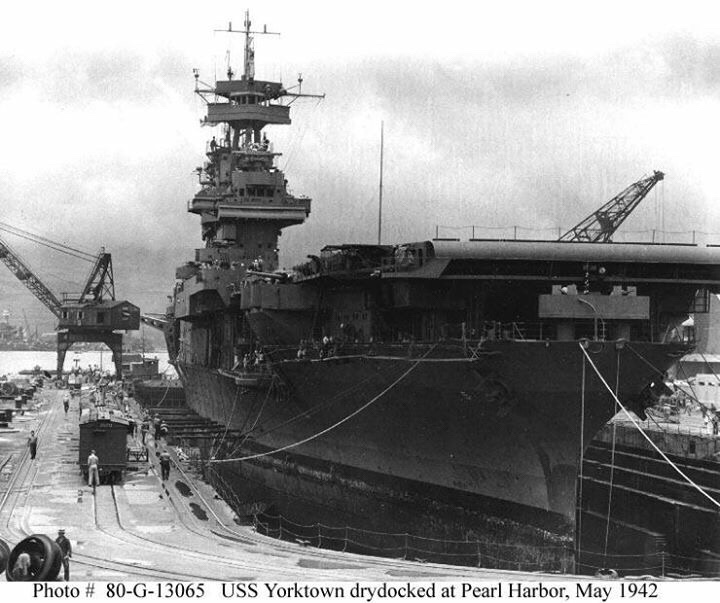
The Japanese aircraft failed to destroy the dry dock facilities at Pearl…allowing the repair of many of the ships damaged during the attack, and importantly, the USS Yorktown after the Battle of the Coral Sea, allowing her to take part in the tide-turning Battle of Midway.

And due to Admiral Nagumo’s decision to cancel another sortee, the attack failed to destroy or damage the fuel storage depot at Pearl. Had they done so, the entire fleet would have been forced to retreat the 2500 miles to San Diego (if they could make it there). The US fleet could not have operated from Pearl for nearly a year if they had lost that fuel depot. So while the attack was a flashy victory for the Empire, it was a tactical loss. America’s industrial capacity quickly replaced the losses. God bless our heroes that lost their lives that day.

What was supposed to be the backbone of the US Pacific Fleet, several Battleships, were either completely destroyed or so badly damaged that it would take years before they could put to sea again. the Arizona was virtually blown apart by a direct hit that ignited her magazines (her ammunition stores); the Oklahoma rolled over and capsized; only one of the behemoths managed to get steam up and make a run for the sea. But her commander wisely beached her, fearful that she might be sunk in the channel and put the entire harbor out of commission for months.

The Army commander, more worried about sabotage than air attacks, had ordered all of the Army Air Corps’ aircraft lined up wingtip to wingtip so they could be more easily guarded. They made easy targets for strafing Japanese fighters. Only two Army fighters made it into the air to do battle with the enemy (my father grew up with one of the pilots).

Being Late Made History

Today in History, December 6: 1941 –

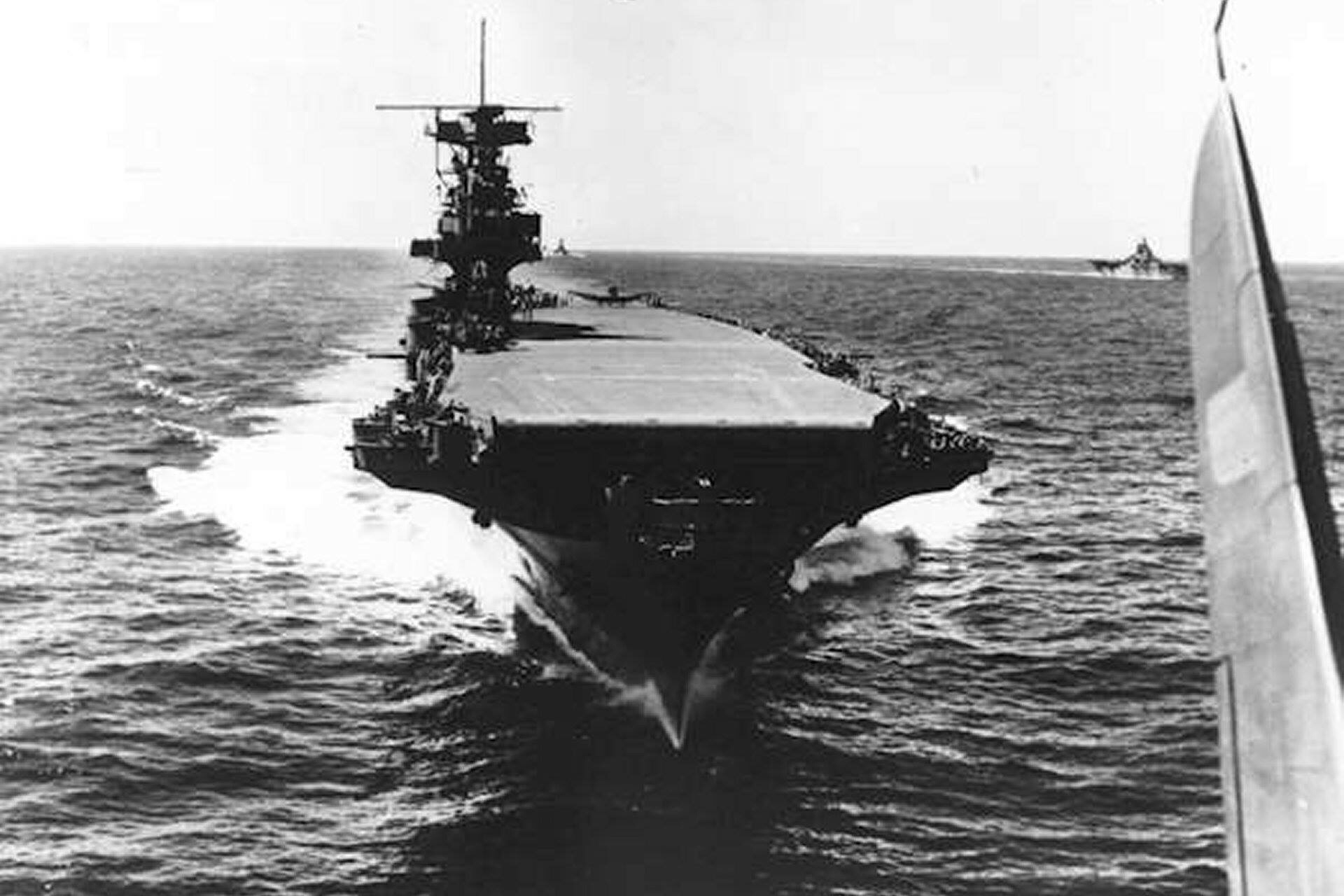
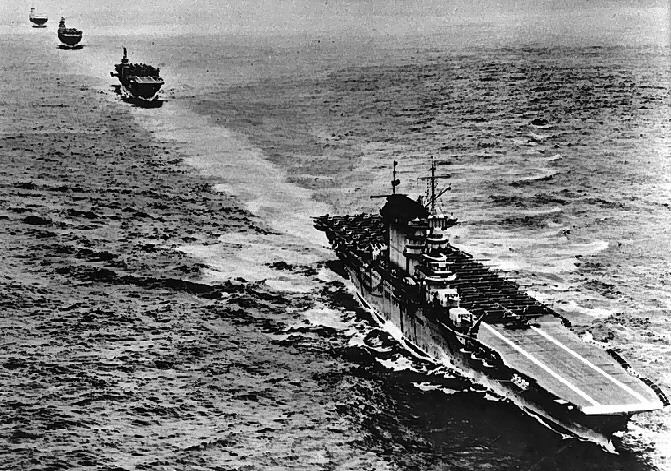
The aircraft carrier USS Enterprise (CV6) was at sea, returning to Pearl Harbor, Hawaii after delivering a squadron of Marine fighter planes and their pilots to Wake Island.

Seas had been rough, and the Task Force’s timing was not what they wanted. The sailors were looking forward to Saturday night on Oahu and Sunday morning relaxing on the golf course or at the Royal Hawaiian. Instead the destroyer sailors spent the night being tossed about;

the Enterprise crew, aboard a larger ship, sat down in the hangar deck to watch the now famous motion picture, “Sergeant York” about a heroic soldier from WWI.

Some of the viewers, considered lucky because they would be aboard the scout flights assigned to fly ahead to Pearl the next morning, would be dead within hours. The rest would be the lucky ones…because of the delay, the Enterprise was not at her berth on the morning of December 7th.

The Enterprise and her crew would earn 20 battle stars during WWII. Her air crews would be responsible for a large part of the victory at Midway and she would play a large part in the battles during the Guadalcanal Campaign. She would, for a time, be the only American carrier in the Pacific.

So, had she not encountered that storm, had she been in Pearl on December 7, how different would the course of WWII been? How many more lives lost?