Today in History, June 11: 1804 – A duel between Alexander Hamilton and Vice-President Aaron Burr ends in the death of Hamilton. Both men had played important roles in the birth of America, Hamilton greatly more so. Hamilton had been an aide to Gen. Washington during the Revolutionary War and a key player in the writing of the Constitution, and then the primary driver in creating our financial system.
Burr had been a hero of the Canadian campaign during the war and was a talented politician, if less than diligent in his ethics. Hamilton despised Burr, and considered it his duty to defeat Burr’s ambitions wherever he could. Finally, after Hamilton played a key role in defeating Burr’s ambitions to be New York’s next Governor, Burr challenged Hamilton to a duel.
Duels were then illegal in New York, and most of the challenges were brought to an amicable solution without gunfire. The combatants and their seconds had to go across the river to New Jersey, to a promontory known as Weehawken. Depending on which side you listen to, Hamilton fired his shot into the air, believing the duel to be frivolous. In this version, Burr then took careful aim and shot Hamilton dead.
Burr’s second reports that Hamilton fired at Burr and missed. With the death of such a prominent American, Burr was excoriated as a cad. He finished out his term as Vice-President to hide behind the immunity from prosecution it provided. Afterwards he instigated a scheme to create a separate nation within the Louisiana Territory, going to the British for support (which was refused) and was tried for treason, of which he was acquitted. Nonetheless, he was despised by all, and remained so in history.
This is one of those moments in History, that will forever be shrouded in mystery. As with time travel theories…what if this had never happened? What if Burr had missed? There is a very real possibility Hamilton could have been President at some point. If so, what effect would he have on the War of 1812? With his financial acumen, would he have affected Andrew Jackson’s battle with the Bank? Or would Jackson or any since have even been President?
How often has a split second in History…changed History?
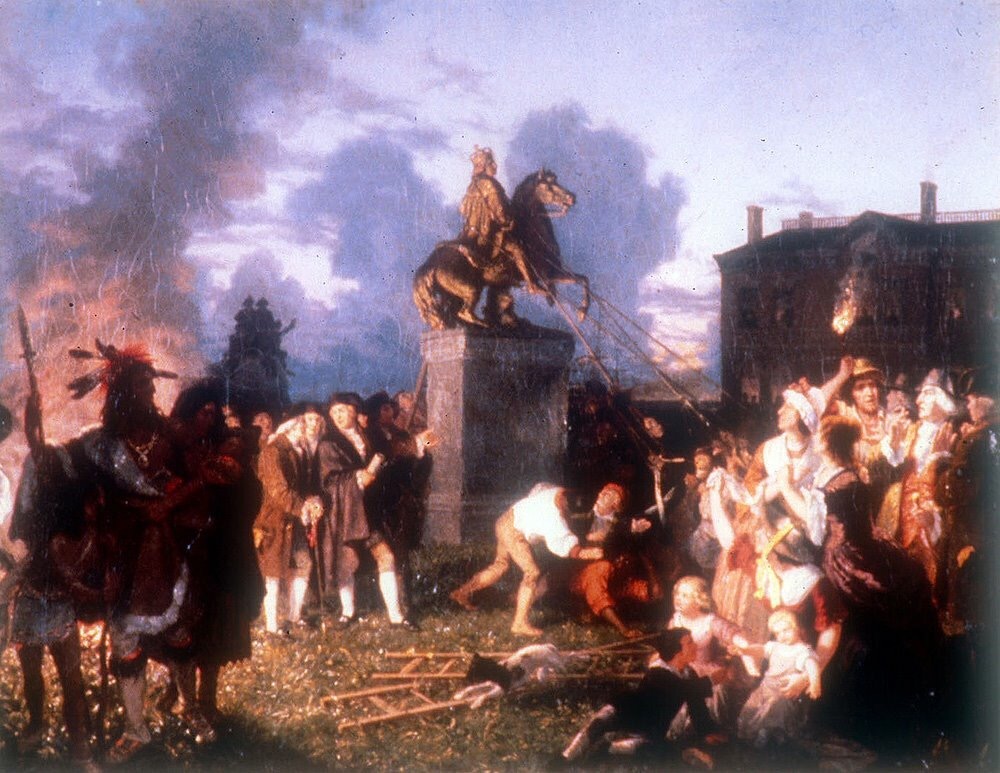
Today in History, July 10: 1776 – After hearing the reading of the Declaration of Independence, jubilant New Yorkers, soldiers and civilians alike, rushed to Bowling Green and pulled down the large lead statue of King George III there. The statue was taken to Connecticut where it was melted down and made into guns and ammunition for use against the British.
Today in History, July 9: 1944 – Victory at the Battle of Saipan. The US Marines defeat the Japanese military on Saipan, the first island with Japanese civilians to be taken by the US. It was a difficult battle, made all the more so by the existence of a civilian population. The Marines set up well lit camps for the civilians to be safe from battle. Fearing that his citizens would find out that the Americans were not the vicious, heartless enemy projected by propaganda, the Emperor issued a communique to the civilian population of Saipan, telling them that if they committed suicide they would receive the same treatment in the afterlife as Japanese soldiers that died in battle. American servicemen were horrified as Japanese civilians threw their children from cliffs, then followed them to the rocks below. The newly won island would be used as an air base for B-29 Superfortress bombers that would bomb the Japanese mainland.
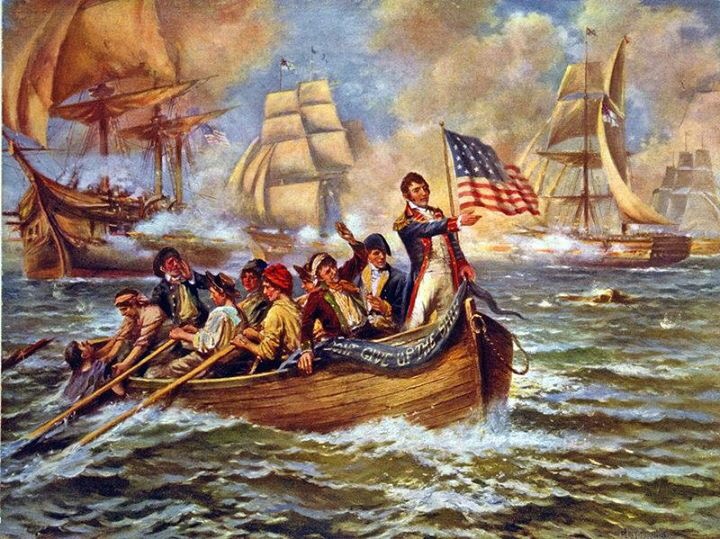
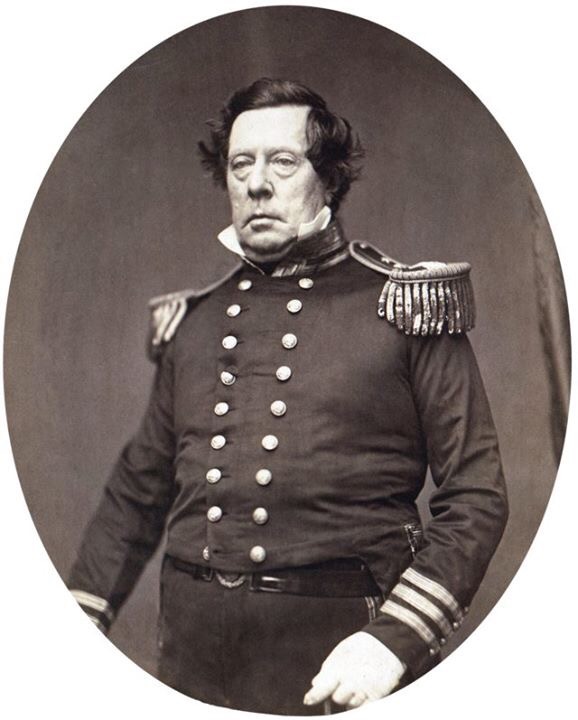
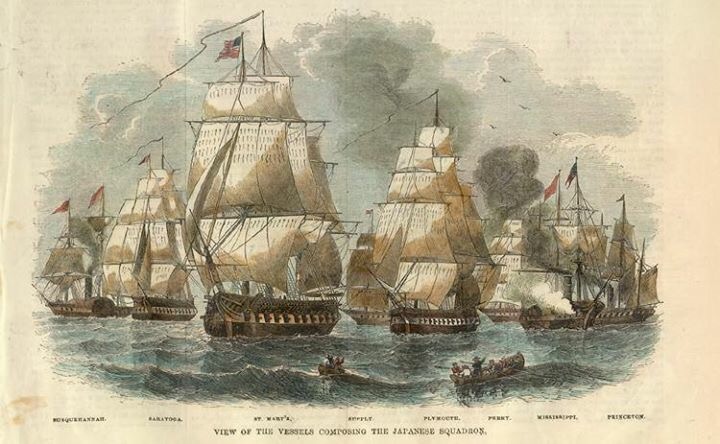
Today in History, July 8: 1853 – US Navy Commodore Matthew C. Perry and his fleet arrive in Edo Harbor (Tokyo) Japan and by threat of force, demand that the Japanese contemplate relations with the US. Faced with the threat of bombardment from Perry’s ships, the Japanese accepted a letter from President Millard Filmore. When Perry returned the next year, the offer of open relations was accepted. The rest of the story is that Commodore Perry also pioneered steam power in the Navy, served under his famous older brother Oliver Hazard Perry (“We have met the enemy and they are ours!”) during the War of 1812, was a hero in the Mexican-American War, and he and his brother were direct descendents of William Wallace. Wow.
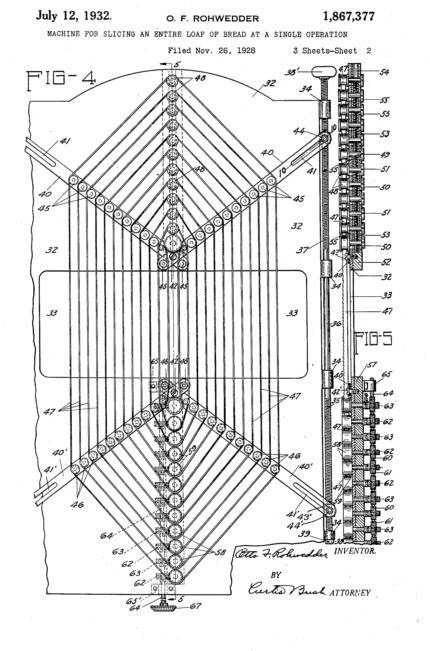
Today in History, July 7: 1928 – “The best thing since sliced bread.” In 1912 Otto Frederick Rohwedder of Davenport, Iowa invented a machine to automatically slice bread, but it was destroyed in a fire. It would take him until 1928 to perfect his machine, first used by the Chillicothe Bread Company of Chillicothe, Missouri on this date. With bread pre-sliced to smaller dimensions, sales went wild, except for a brief 2 month interlude when pre-sliced bread was banned during WWII to lower prices. The ban was lifted after complaints from mothers.
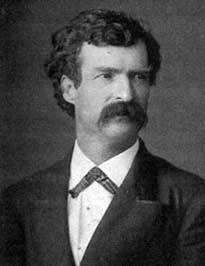
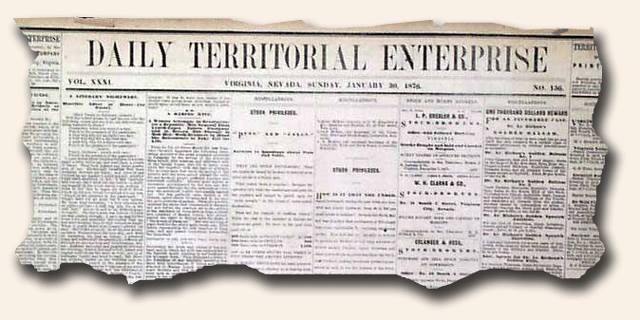
Today in History, July 6: 1861 – Twenty-six year old Samuel Clemons, having followed his brother to the Nevada territory in search of adventure and riches, begins writing for Virginia City’s “Territorial Enterprise” newspaper under the pen name Mark Twain. He had searched for precious metals without success, and began writing to make money. He had spent time on the Mississippi River on river boats, which inspired his pen name. He went on to write in California, where he would begin his career in fiction. He would live to 1910.
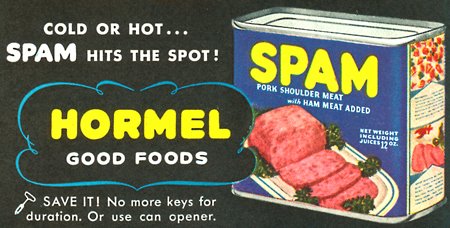
Today in History, July 5: 1937 – SPAM (Spiced Ham) is introduced by the Hormel Meat Co. It would become a staple for Depression Era families, WII soldiers, and most Americans in generations to come. Do you love Spam?
Today in History, July 5: 1896 – Outlaw Bill Doolin, having been arrested by famous Oklahoma Lawman Bill Tilghman at Eureka Springs, Arkansas without incident, escapes from the Guthrie, Oklahoma jail. He had masterminded several robberies, both with his gang and the Dalton Brothers. He should have stayed put. By August 25th, a posse caught up with him and took him out during a gun battle.
Today in History, July 4: This is my favorite day of the year to post, not only because it is America’s birthday, but because the date is so rich in American History.
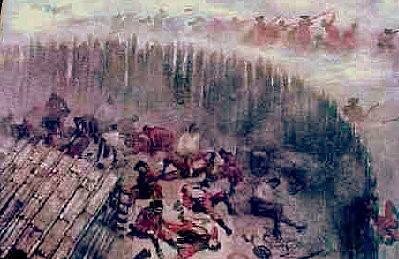
1754 – During the French and Indian Wars, a young colonial member of the British Army abandons “Fort Necessity” after surrendering it to the French the day before. The officer, 22-year-old Lt. George Washington had also commanded British forces in the first battle of the war on the American continent weeks before. The French and Indian Wars were only part of a global conflict between England and France, the Seven Years War. His experience here would serve Washington well in our War for Independence.
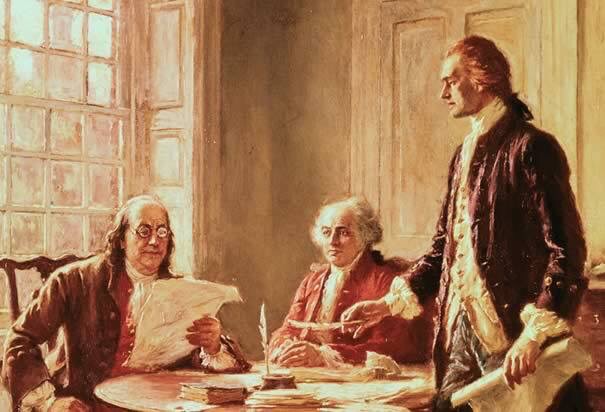
1776 – The second Continental Congress adopts the Declaration of Independence from England after years of conflict as colonists, “We hold these truths to be self-evident, that all men are created equal, that they are endowed by their Creator with certain unalienable Rights, that among these are Life, Liberty and the pursuit of Happiness.”
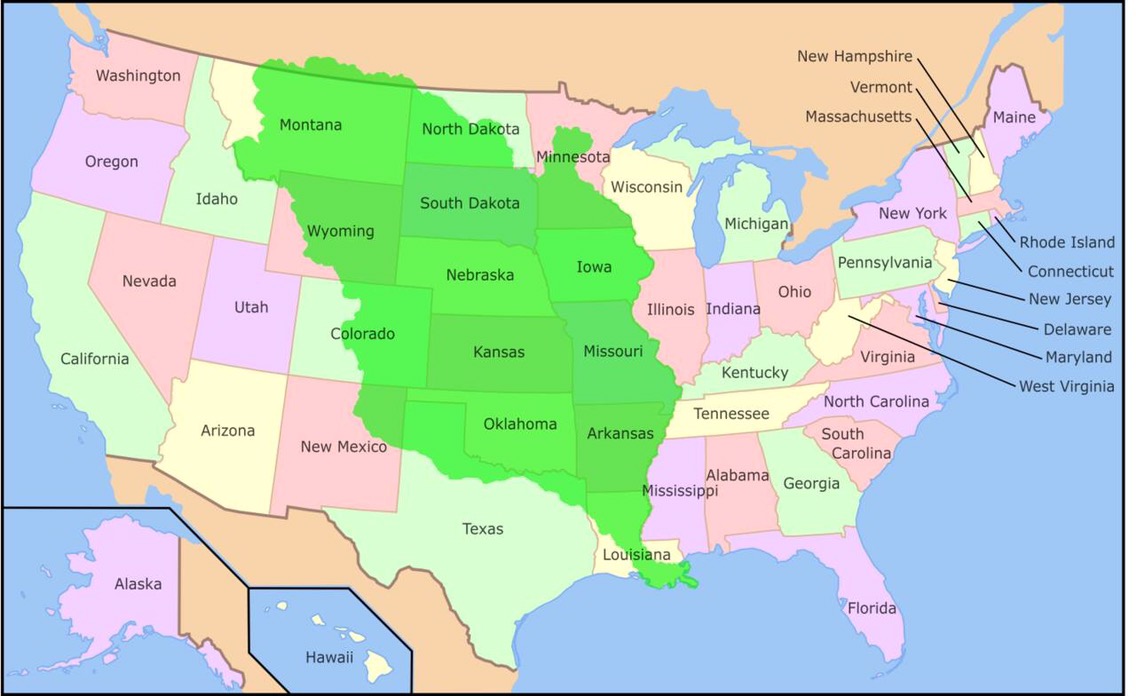
1803 – President Thomas Jefferson announces the signing of a treaty in Paris formalizing the Louisiana Purchase, effectively doubling the size of the United States in one day for $15M.
1826 – 50 years after the adoption of the Declaration of Independence, two of it’s signers, second President John Adams and third President Thomas Jefferson, die on the same day. The two had become bitter political enemies for years (Adams a devout Federalist, Jefferson an equally devout state’s rights man, in addition to vicious political vitriol the two had exchanged). But in 1812 they made amends and began a years’ long correspondence, making them good friends again. It is said that Adams’ last words were, “Jefferson survives”. He was wrong, Jefferson had died five hours before. Many Americans at the time saw their death on the same day 50 years after the Nation’s birth as a divine sign.
1863 – Confederate General John C. Pemberton surrenders Vicksburg, Mississippi to Union General Ulysses S. Grant. Pemberton had sent a note asking for terms on the 3rd, and initially Grant gave his usual “unconditional surrender” response. He then thought about what he would do with 30,000 starving Southern troops, who he had lay siege to since May 18th, and granted them parole, accepting the surrender on the 4th. The capture of Vicksburg effectively secured the main artery of commerce for the Union and cut off of the Confederate states west of the Mississippi (and their supplies) from the South. Grant’s parole of the rebels would come back to haunt him, as the Confederacy did not recognize it’s terms and many of the parolees fought again…which came back to haunt the Confederacy because as a result the Union stopped trading prisoners. Celebrated as a great victory by the North, but by Vicksburg not so much. The Citizens of the Southern city had to take to living in caves during the siege as US Navy and Army continuously bombarded their homes. Starving and desperate, they saw Grant’s waiting a day to accept surrender as malicious. Independence Day would not be officially celebrated in Vicksburg for a generation.
1863 – On the same day, half a continent away, Confederate General Robert E. Lee led his defeated Army of Northern Virginia south away from the Battle of Gettysburg, Pennsylvania. This was no small matter…”Bobby Lee” had been out-foxing and out-maneuvering multiple Union Generals practically since the war began. No official surrender here…Lee’s army would survive to fight another day. While both battles were turning points, they did not spell the end of the South as many believe. There were years of hard, bitter fighting still to come with ghastly losses in life and injury. Gettysburg was, however, the last serious attempt by the South to invade the North.
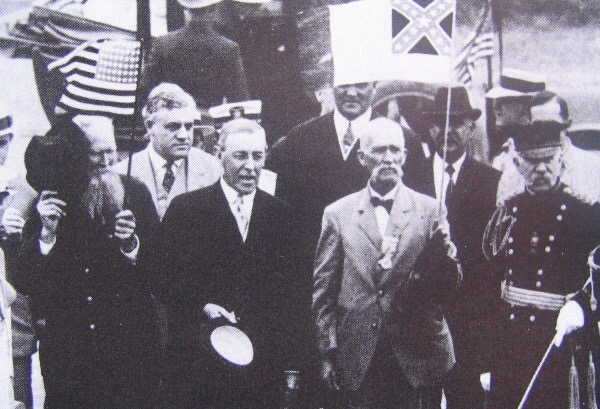
1913 – President Woodrow Wilson addresses the Great 50 Year Reunion of Gettysburg, attended by thousands of Veterans from both sides, who swapped stories, dined together…and it would seem, forgave for a time.
1939 – “I consider myself the luckiest man on the face of the Earth”. After 17 years as a beloved member of Major League Baseball, New York Yankee Lou Gehrig stands in Yankee Stadium and says goodbye to his fans, having been diagnosed with a terminal disease that now bears his name. I doubt there was a dry eye in the house. I’ve posted the video below.
God Bless America! And thank you to our service men and women that continue to make our freedoms possible.
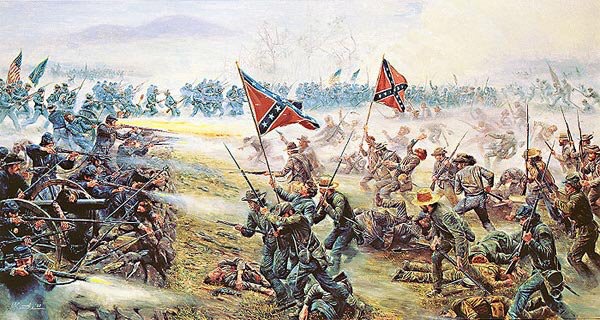
Today in History, July 3: 1863 – Pickett’s Charge, the 3rd and last day of the Battle of Gettysburg. Confederate Gen. Robert E. Lee had assaulted the Union positions on the left and the right; today he ordered an artillery barrage and an all out frontal assault on the Union center on Cemetery Ridge, which seems to be prophetic. Gen. George Pickett and his superior, Gen. Longstreet had doubts, but when it looked as if the Yankees were retreating, they implemented Lee’s command. 12,500 rebels assaulted the ridge…to do so they had to climb over a fence and advance nearly a mile across open ground to reach the ridge…but the Union troops were not retreating, and they had held most of their cannon fire during the Confederate barrage.
The Union troops opened up with a fierce cannon barrage of their own, coupled with intense rifle fire. The few Confederates that reached the Union positions had left fully half of their brethren dead or injured on the field. After this massacre, Lee rode out onto the field, reassuring his men, “This has all be my fault”. It was not a self-pitying statement; it was reassurance to his adoring men that the failure was not theirs to carry. The ever resourceful Lee had to retreat, and Union Gen. Meade’s Army was in no shape to pursue. The Union lost 23,000 dead and wounded, the South 25,000+. It would be hard to say who “won” with those numbers, but i there was a winner, it was the Union. Lee and the South would never again be able to take the offensive against the North. On the 4th, Pickett wrote to his fiancee, “It is all over now. Many of us are prisoners, many are dead, many wounded, bleeding and dying. Your soldier lives and mourns and but for you, my darling, he would rather be back there with his dead, to sleep for all time in an unknown grave.”













 Mark Loves History!