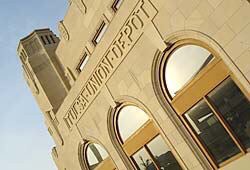
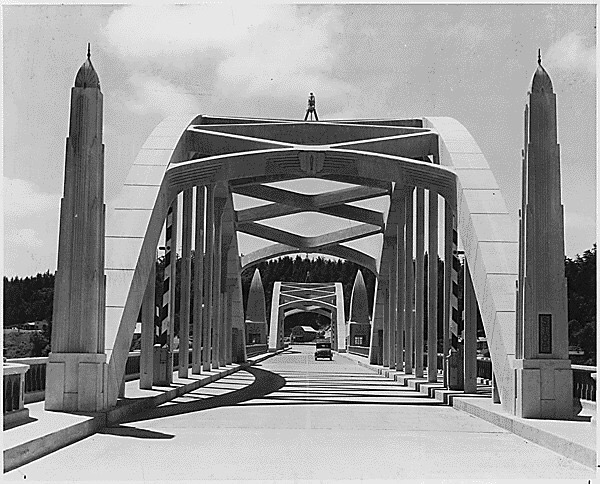
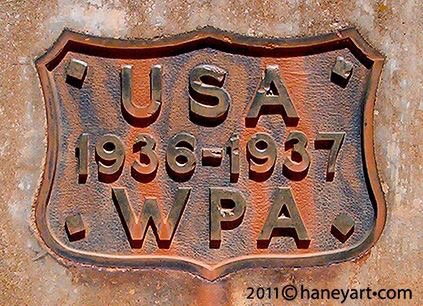

 Today in History, April 8: 1935 – Congress approved the Emergency Relief Appropriation Act, which would fund the Works Progress Administration. The WPA employed 8.5 million people in 1.4 million projects until it was disbanded in 1943. It only employed a quarter of the nation’s unemployed during the Great Depression and is still a matter of contention today. Was it socialism? Or a temporary fix for horrendous economic disaster? Whatever your opinion, it resulted in marked improvements to the nation’s infrastructure.
Light Up
 Today in History, April 7: 1827 – English Chemist and Pharmacist John Walker sells his first “friction match”, the first safe and easy method to ignite fire in the modern age. He had been experimenting for some time when a combination of chemicals accidentally caught fire when struck on a solid surface. Walker called his matches “Congreves” after the inventor of the Congreve Rocket of “The Rocket’s Red Glare” fame. There are indications that the ancient Chinese had invented these same items in the 14th Century.
The Olympics Return
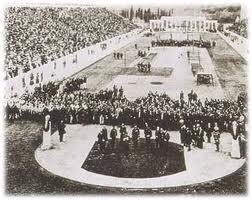 Today in History, March 6: 1896 – The first modern Olympics are held in Athens, Greece. The ancient Olympic games were held in Olympia (thus Olympics) Greece for hundreds of years. When the 1896 games were held, one of the first events was a run to retrace the route a Greek soldier had taken from Marathon to Athens in 490 B. C., bringing news that the invading Persians had been defeated (Thus the term Marathon). In 1896 there were 280 participants (some of them passing tourists); in the most recent Olympics, approximately 11,000 athletes were involved. As an aside…the athletes in the ancient Olympics were reputedly all nude. I imagine that would affect the number of viewers….
An Old Lion Retires…Sort Of
 Today in History, April 5: 1955 – British Prime Minister Winston Churchill resigns his post. One would think he was ending his service to his country after having served for 60 years, since 1895, courageously on the battlefield, in Parliament, as First Lord of the Admiralty, helping lead Britain into preparation for WWI; he was one of the few sounding the warning of Hitler’s aggression leading to WWII, then led his country and to a large part the world through that conflict to victory. After his retirement, he returned to parliament until 1964.
Let ’em up easy…

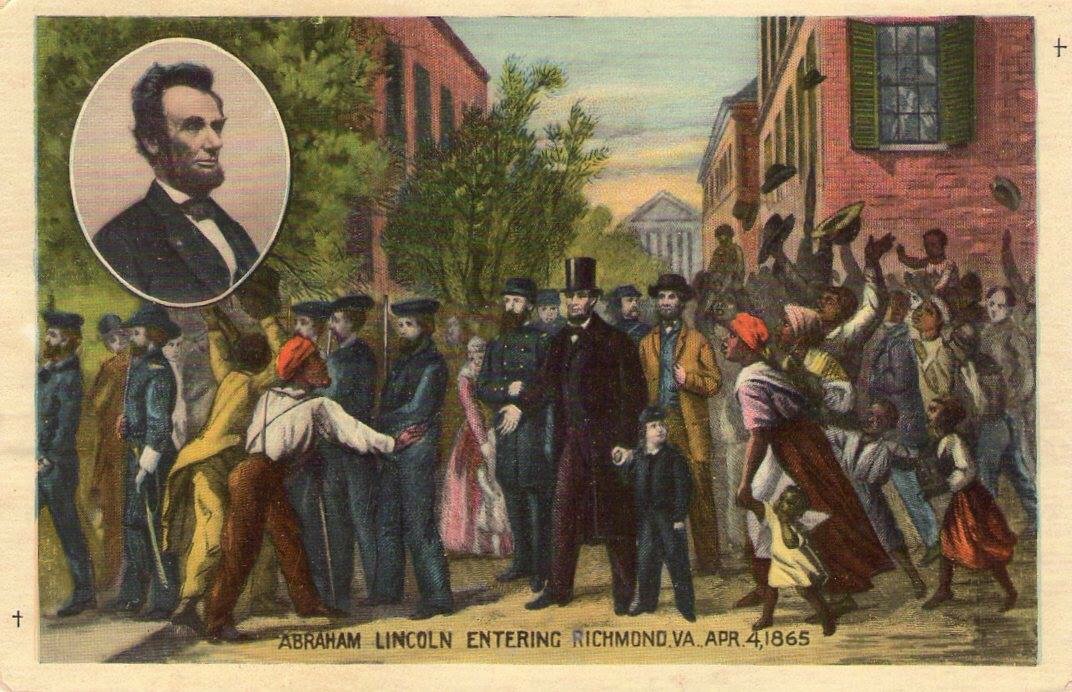
 Today in History, April 4: 1865 – President Lincoln enters Richmond, the Confederate Capitol. Lincoln had been at City Point when informed that Richmond had been taken the day before by Union Army forces. He immediately sailed on the USS Malvern, Flag Officer David Dixon Porter’s flagship for Richmond. After he disembarked, he was initially escorted through crowds by a contingent of sailors, who were very relieved when they were met by a group of Union Cavalry to assist in escorting the President to the home of Confederate President Jefferson Davis. Many former slaves attempted to pay homage to Lincoln, who would not allow it. Onlookers watched from the windows and street corners. At Davis’ house, Lincoln sat in Davis’ chair, then toured the house. When later asked by Union Gen. Weitzel how the conquered rebels should be treated, Lincoln indicated that he would not give an order in that regard, but that his advice would be to, “Let them up easy….let them up easy”. As for the nervous sailors and cavalrymen that escorted him? As it turns out, Lincoln was safer in the Confederate capitol that his own. He had only ten days until he would be assassinated.
The Pony Express
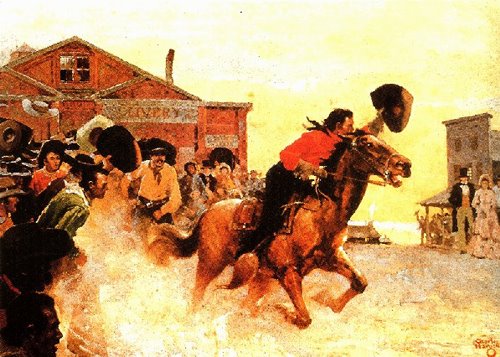
Today in History, April 3: 1860 – The First Pony Express mail is run. The riders would change horse about every 15 miles to cover the 1,800 miles between St. Joseph, MO and Sacramento, CA in an average of 10 days…lightning fast for those days. The Pony Express was romanticized and became the stuff of legend, with the likes of 14-year-old William Cody (Buffalo Bill later) making the run. It would only last until October of 1861 (about 18 months) when the first transcontinental telegraph line rendered it obsolete.
The Richmond Bread Riots

Today in History, April 2: 1863 – “As she raised her hand to remove her sunbonnet and use it for a fan, her loose calico sleeve slipped up and revealed the mere skeleton of an arm. She perceived my expression as I looked at it, and hastily pulled down her sleeve with a short laugh. ‘This is all that’s left of me’ she said. ‘It seems real funny, don’t it?. . .We are starving. As soon as enough of us get together, we are going to the bakeries and each of us will take a loaf of bread. That is little enough for the government to give us after it has taken all our men.” The Richmond, Virginia Bread Riots. During the Civil War, Richmond had been made the capitol of the Confederacy. Several factors had led to starvation conditions among the general populace of the South. The Union Navy had blockaded nearly all Southern ports, and the blockade runners could not bring in enough supplies. Growing cotton was more profitable than growing food, so most planters did that; what crops were left were usually taken by armies in the field, Confederate and Union. The prices of what little was left skyrocketed…wheat (bread) prices tripled, dairy products quadrupled…if they could be found at all. On this day in 1863 the mothers of Richmond had enough and rioted, breaking windows of bakeries and other stores, making off with bread, clothing, even jewelry. They confronted Confederacy President Jefferson Davis, who initially threw the change from his pockets at the crowd, saying he sympathized with their plight. When that didn’t work, he threatened to have the militia fire into the crowd of war wives and mothers. That finally got them to disperse.
“Oh, what a beautiful mornin’, Oh, what a beautiful day. I got a beautiful feelin’ Ev’rything’s goin’ my way.”

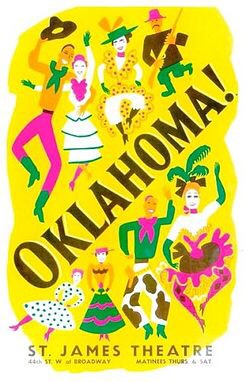 Today in History, March 31: 1943 – Historically Broadway musicals had gone for flash and opened with a bang. So most critics expected this new musical, opening on Broadway in the middle of WWII, to bomb. They misunderstood the mood of the country, apparently. When Rodgers and Hammerstein’s Oklahoma! premiered on this date in 1943 on Broadway, it opened with the melodious tunes of a cowboy singing as he greeted a peaceful morning. Almost in unison the war weary audience let out an audible “aaaaahh”. By the time the cast had sung the title song and closed the play, Joan Roberts (Laurey) says that the applause was deafening through two encores. The record setting musical would run for 15 years, 2,212 performances, before closing.
Disaster, A Nation Mourns


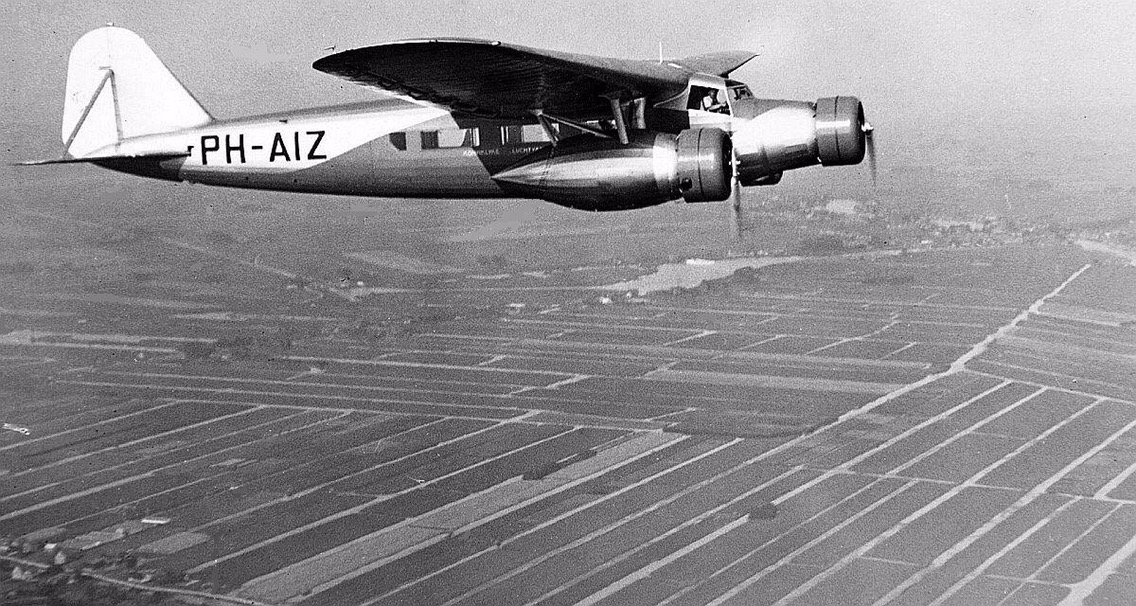 Today in History, March 31: 1931 – As TWA Flight 599, a Fokker F.10 Tri-Motor wings it’s way over Kansas between Kansas City and Wichita, the structure of one of those wings fails, and shears off. The aircraft immediately crashed into the prairie, taking the lives of all eight passengers and crew. Included in the Reaper’s tally that day was a celebrated American hero. The famous player and most winning coach of Notre Dame’s football team, who led his team to morality as well as victory, Knute Rockne. The entire nation mourned as if a President had died; and the President paid tribute as Knute’s home nation of Norway knighted him. The airline industry was forever changed; TWA nearly went under and aircraft safety became a priority.
Seward’s Folly
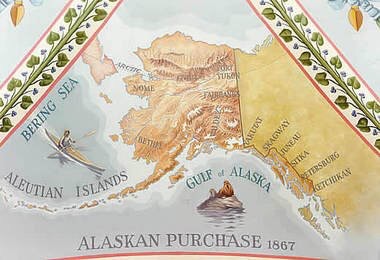
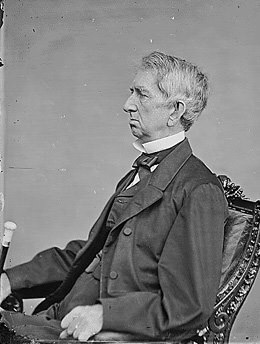
 Today in History, March 30: 1867 – “Seward’s Folly”. US Secretary of State William H. Seward signs a treaty with Russia, purchasing Alaska for $7 Million, about 2 cents per acre. He was excoriated in the press for using public funds to buy a frozen landscape. One of his contemporaries described Seward as, “one of those spirits who sometimes will go ahead of public opinion instead of tamely following its footprints.” This would be borne out with the realization that the United States now owned some of the most beautiful landscape on Earth, which was larger than Texas, California and Montana combined and contained gold and oil that would replace Seward’s investment exponentially. Seward had been a leading contender for the Presidency in 1860, but was beaten by Abraham Lincoln, who asked him to be Secretary of State. Their initially rocky relationship soon changed, and Seward soon became a faithful friend to Lincoln. On the night Lincoln was assassinated, one of John Wilkes Booth’s co-conspirators nearly murdered Seward in his home, stabbing him repeatedly. But he survived and continued to serve.
 Mark Loves History!