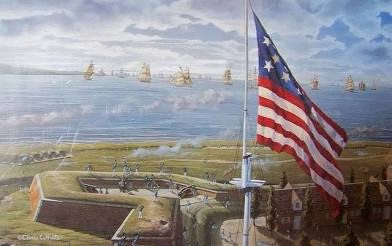
The War of 1812 & Communication

Today in History, June 18, 1812:

Ironies of 19th century communication, or the lack thereof in the War of 1812. 

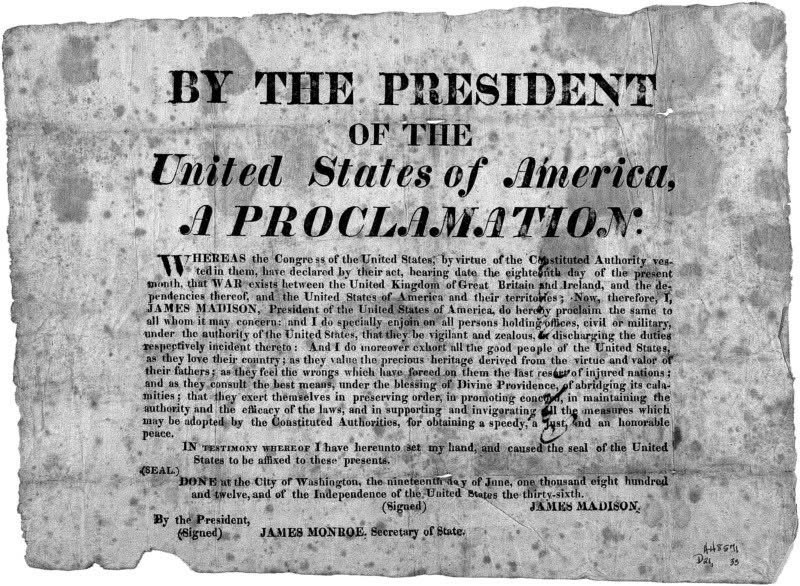
On June 1, 1812, President Madison asked to declare war on Great Britain because Britain would not stop boarding US ships and impressing US sailors into the Royal Navy. By the 18th Congress had acted and President Madison signed the declaration of war.

The irony? Five days later on June 23, 1812, a new British government repealed the Orders in Council, deciding impressing US sailors was not in Britain’s interest, and created bad relations with America.

Neither nation knew what the other was doing.

The ships carrying the messages to the opposing governments likely passed each other on the Atlantic. 

But the war was on. 

Likewise, when the war ended with the Treaty of Ghent on December 24, 1814, it took weeks for the message to reach the Americas. So on January 8, 1815, British General Packenham, hero of the war with France, attempted to take New Orleans with a large army.

American General Andrew Jackson defended New Orleans with an army of US soldiers, Indian allies, and pirate Jean Lafitte’s roughians. With tactics, artillery and folks that knew how to shoot, they decimated the British. 2,042 casualties for the British, including Packenham killed, to only 71 casualties for the Americans.

Weeks after the war had ended.
Lindbergh Testified Before Congress

Today in History, January 23, 1941:

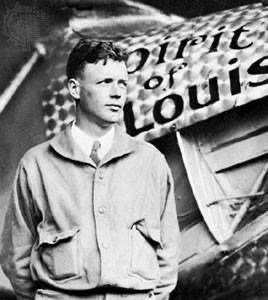
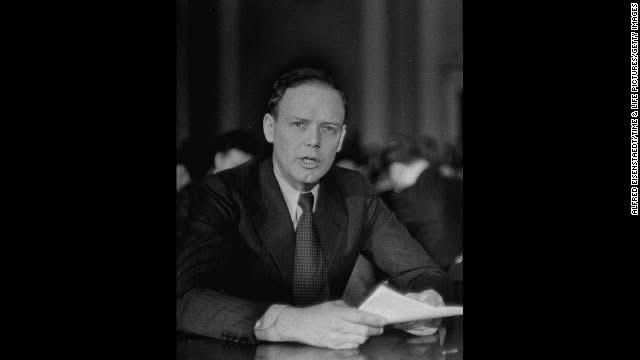
American hero Charles Lindbergh, who in 1927 was the first to fly solo across the Atlantic, sits before the US Congress and encourages the US to remain neutral with Nazi Germany.

After his son was kidnapped and subsequently murdered, Lindbergh and his wife moved to Europe to avoid attention.

While there he became enamored with the German air superiority (at least warning America about that) and their “advancements”.

When he returned, son of a US Congressman, he sat before congress and denounced FDR’s administration, Jews, and the British, encouraging neutrality.

A fool on a fool’s errand? Perhaps.

Only history can determine whether he can be forgiven for his poor judgement after he flew 50 combat missions in the Pacific against the Japanese once the war began. He would die in Hawaii in 1974. Hero or traitor? We all make poor choices at some point in our lives, but can we obtain redemption?

Christmas Heroes

Remember History, and take heart as we persevere.

As we celebrate Christmas, the birth of Christ, I am always drawn to remember those who sacrificed so much so we could live in freedom.

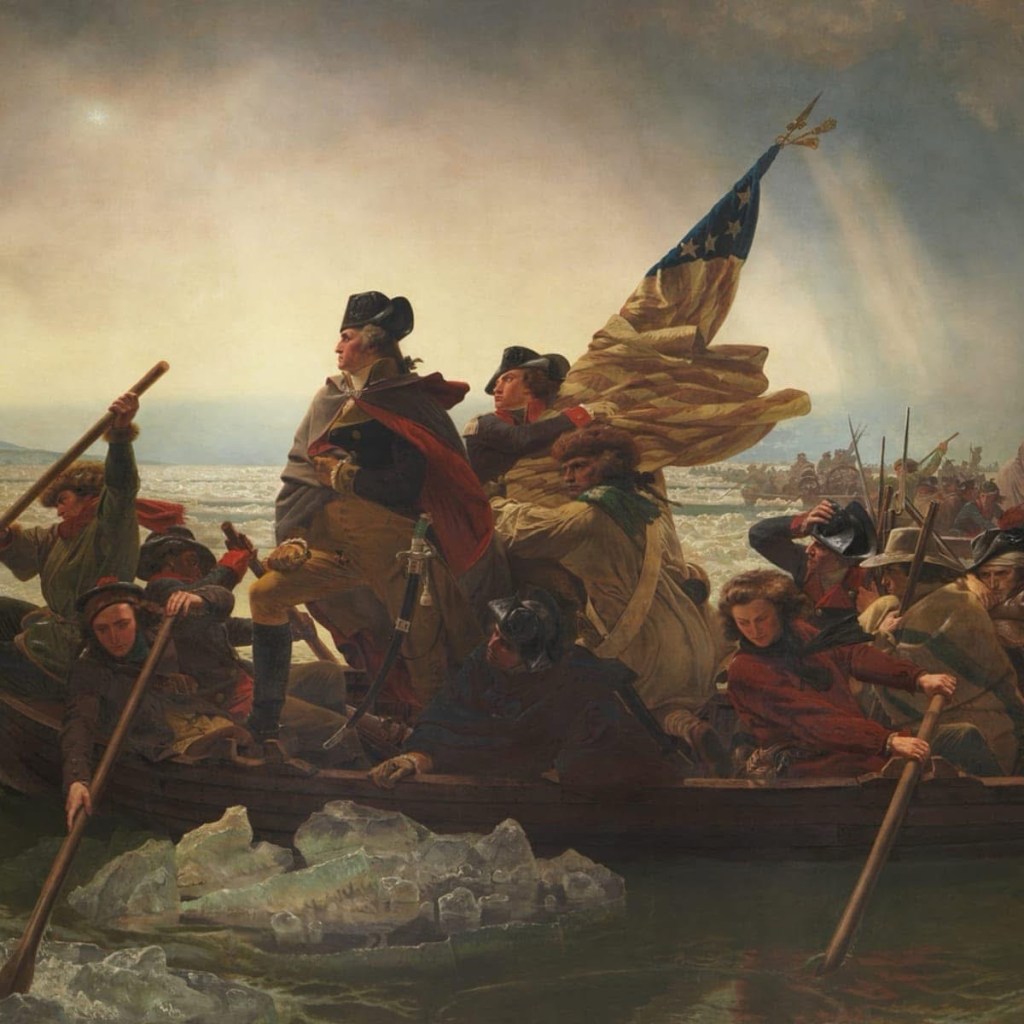
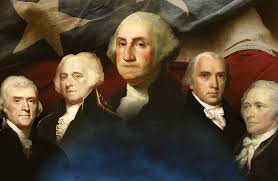
In 1776 George Washington and his troops spent Christmas away from their families, crossing the Delaware to kick some Hessian derrière at Trenton, New Jersey.

In 1777 that same army spent Christmas at Valley Forge…starving, shivering without clothing or shelter while training for coming battles.

From 1861-1865 the nation was at war…families were separated and brother fought brother…General William Tecumseh Sherman sent a Christmas present to President Lincoln in 1864…Savannah, Georgia.

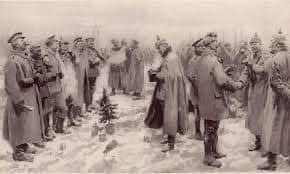
In 1914 a British soldier in the trenches listened to German soldiers singing Silent Night in the darkness and risked his life to stand up and join in. Soldiers from both armies spent Christmas exchanging gifts and playing ball…a small respite from killing one another.

In 1918 the entire world spent Christmas suffering through a flu pandemic which took millions of lives…at the same time they suffered the first mechanized war.

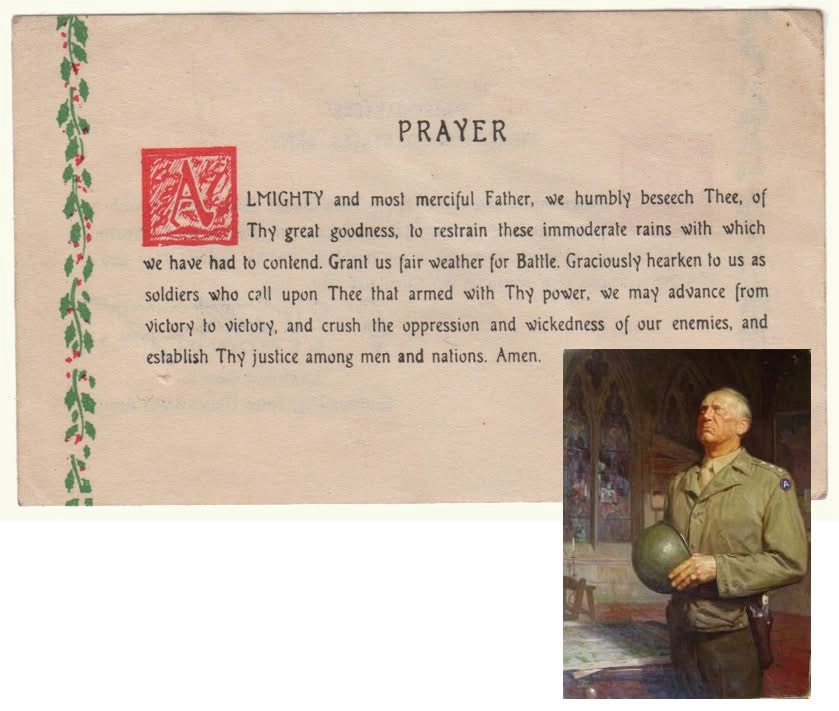
In 1944 the 101st Airborne and Patton’s 3rd Army spent Christmas fighting Nazis at Bastogne.

History gives us peace. Because if we know it, we know life goes on. If we know history and have faith, we know our travails are temporary and we will all be together soon enough with our savior.

God Bless you all. May you receive God’s strength and comfort.

Merry Christmas!

Sail on, O Ship of State!

Sail on, O Ship of State!

In the midst of foreign wars in 1940, Franklin Delano Roosevelt won a third term as US President. It had been a hard fought campaign. 

Learning that the loser in the campaign, Wendell Wilkie, was headed to London to gain info on the war, FDR invited him to the White House. They chatted amicably, and FDR asked the Republican to deliver a handwritten note to Prime Minister Winston Churchill, giving him a letter of introduction, making him an emissary. 

The note contained part of a Longfellow poem which FDR & Churchill, both Naval enthusiasts, would recognize immediately. 

When Churchill gave a speech on February 9, 1941 he included the verse, crediting FDR and Wilkie. 

…Sail on, O Ship of State!

Sail on, O Union, strong and great!

Humanity with all its fears,

With all the hopes of future years,

Is hanging breathless on thy fate!

The verse recognized the troubles both nations were enduring. 

I share this now reflecting on how good it would be in these contentious times if in the coming months the victor and the defeated of a presidential campaign could come together and help the ship of state to sail on. Lincoln also did it with his “team of rivals.” 

Don’t worry. I’m not holding my breath. 

THE Speech: A Time for Choosing

Today in History, October 27, 1964:

While campaigning for Barry Goldwater to be president, actor Ronald Reagan gave a speech entitled “A Time for Choosing” which would come to define the American conservative movement for years to come. Reagan’s inspiring words would also show him to be the “Great Communicator” and launch him into the California governor’s office and eventually the presidency.

His words have often been recited and repeated as being pertinent to later times, and can be today as well. It is worth the time to listen.

https://youtu.be/qXBswFfh6AY?si=LPOyXa3o1BYVIz1T

Juneteenth

Today in History, June 19, 1865:

Juneteenth

“What to the slave is the Fourth of July?” – Frederick Douglass

Douglass asked this question in an 1852 speech given on July 5th. During the same speech he praised the founding fathers as heroes. Yet the founding fathers had to make compromises which declared American citizens to be less than human. Douglass was a patriot himself, loving the country which had enslaved him since birth, yet recognizing the evils of bondage.

He sent his sons to fight with white men in the Civil War to defeat slavery.

In 1863 President Lincoln declared slavery illegal in the slave states with the Immancipation Proclamation.

Since this did not serve the purposes of the Confederacy, most slaves did not learn of the proclamation until the end of the war. The last to learn of their freedom were the slaves in Texas. On June 19, 1865, Union troops arrived in Texas… the previously enslaved blacks learned they had been free for two years.

The following year they began to celebrate this date as Juneteenth. As Douglass had said, Independence Day had meant little to them. But the day THEY had learned of their freedom mattered a great deal.

The reddest state in the Union, a previous slave state, Texas recognized Juneteenth in 1980. It would be recognized nationally in 2021. Many consider Juneteenth to be a “made up” holiday. Are not all holidays “made up?” This one is simply newer.

I do not know any celebrants of Juneteenth who do not also celebrate the Fourth of July, America’s Independence Day. Douglass surely did. Yet we cannot deny that “Juneteenth” is a second Independence Day, because many of our citizens did not enjoy their independence until that date in 1865.

We should rejoice that date. Many of our ancestors died to ensure we could finally enjoy the full purpose of our independence.

The Star Spangled Banner Written

Today in History, September 13, 1814:

The War of 1812 had been raging for two years. The British had burned DC and had set their sights on Baltimore. During the siege, a local doctor was taken prisoner and was being held onboard a British warship.

A lawyer friend of his journeyed to Baltimore to negotiate his release, and succeeded.

However, the British will not release them until the next day.

Thus attorney Francis Scott Key had a front row seat to a lengthy bombardment of Ft. McHenry in an attempt to reduce the fort.

Key was inspired by the fact that the American flag was still standing after the failed attack, and sat to pen a poem, “The Defense of Ft. McHenry”.

Today we know his poem as “The Star Spangled Banner”.

Saint Patrick Fought for America

Today in History, March 17, 1780:

“The General directs that all fatigue and working parties cease for to-morrow the SEVENTEENTH instant,” read the orders, “a day held in particular regard by the people of [Ireland].”

General George Washington’s Army was bedded down amidst 6 foot snow drifts, suffering through the worst winter on record…even worse than Valley Forge.

Recently the Irish, who were also in rebellion against the Crown, had declared themselves AMERICANS in solidarity with the American colonists that were fighting for their independence.

At least a quarter of Washington’s army was Irish…and a vast majority of his commanders shared that distinction.

So GW decided that St. Patrick’s Day…(not Christmas, nor Easter)…would be a day of rest and celebration for his army.

The Day Before December 7

Today in History, December 6, 1941:

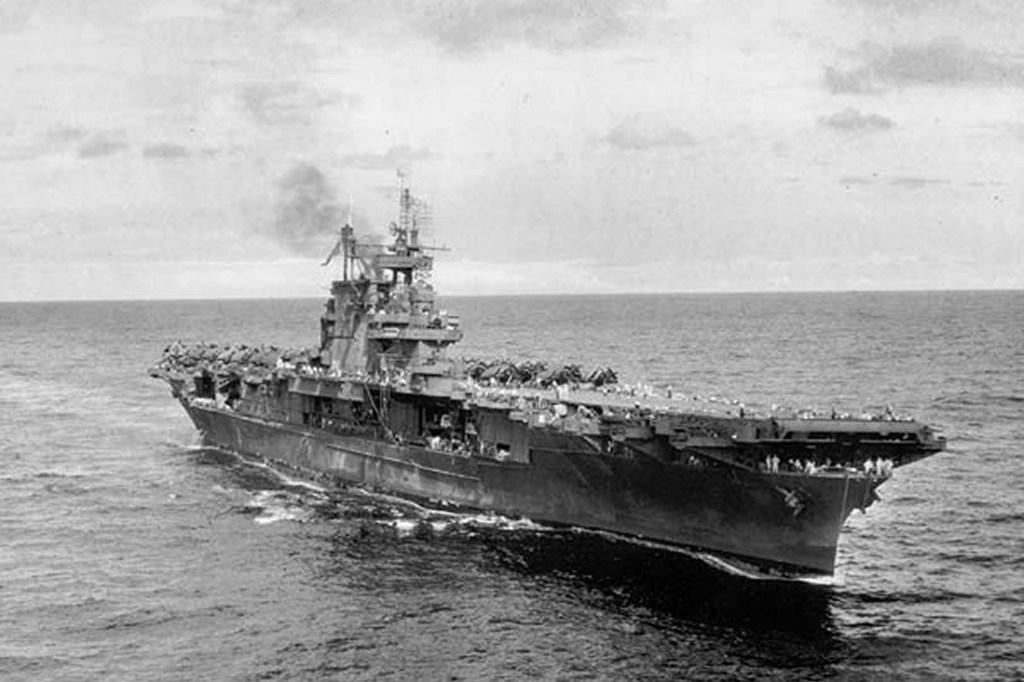
The aircraft carrier USS Enterprise (CV6) was at sea, returning to Pearl Harbor, Hawaii after delivering a squadron of Marine fighter planes and their pilots to Wake Island.

Seas had been rough, and the Task Force’s speed was not what they wanted.

The sailors were looking forward to Saturday night on Oahu and Sunday morning relaxing on the golf course or at the Royal Hawaiian.

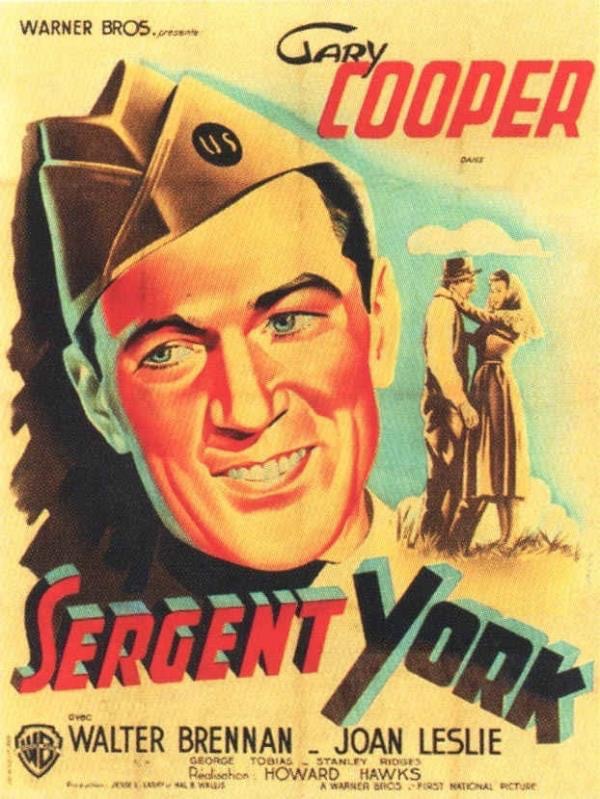
Instead the destroyer sailors spent the night being tossed about; the Enterprise crew, aboard a larger ship, sat down in the hangar deck to watch the now famous motion picture, “Sergeant York” about a heroic soldier from WWI.

Some of the viewers were considered lucky because they would be aboard the scout flights assigned to fly ahead to Pearl the next morning, and would be dead within hours.

The rest would be the lucky ones…because of the delay, the Enterprise was not at her berth on the morning of December 7th. I wonder if she would have been the most decorated ship of WWII if she had been?

The Prescient President & The Gettysburg Address

Today in History, November 19, 1863:

“I should be glad, if I could flatter myself that I came as near to the central idea of the occasion, in two hours, as you did in two minutes.”

-Edward Everett, popular orator that spoke with President Lincoln at Gettysburg to commemorate those that died there during the pivotal Battle of Gettysburg earlier in the year.

President Lincoln spoke briefly, and his speech was criticized at the time by some media, but has become legendary for it’s prescience. See below for the full text…

Four score and seven years ago our fathers brought forth on this continent, a new nation, conceived in Liberty, and dedicated to the proposition that all men are created equal.

Now we are engaged in a great civil war, testing whether that nation, or any nation so conceived and so dedicated, can long endure. We are met on a great battle-field of that war. We have come to dedicate a portion of that field, as a final resting place for those who here gave their lives that that nation might live. It is altogether fitting and proper that we should do this.

But, in a larger sense, we can not dedicate — we can not consecrate — we can not hallow — this ground. The brave men, living and dead, who struggled here, have consecrated it, far above our poor power to add or detract. The world will little note, nor long remember what we say here, but it can never forget what they did here. It is for us the living, rather, to be dedicated here to the unfinished work which they who fought here have thus far so nobly advanced. It is rather for us to be here dedicated to the great task remaining before us — that from these honored dead we take increased devotion to that cause for which they gave the last full measure of devotion — that we here highly resolve that these dead shall not have died in vain — that this nation, under God, shall have a new birth of freedom — and that government of the people, by the people, for the people, shall not perish from the earth.