Nightline & The Hostage Crisis Countdown…

TODAY IN HISTORY, MARCH 24, 1981:

“Nightline”, an ABC news show, premieres, according to Historyorb.com.

The most interesting part of this story is that “nightline” with Ted Koppel actually began in November 1979 with the Iran Hostage Crisis. But then, that was focused on the Democrat administration of Jimmy Carter, so we can’t report that accurately.

The program had its beginnings on November 8, 1979, just four days after the Iran hostage crisis started. ABC News president Roone Arledge felt the best way to compete against NBC’s The Tonight Show Starring Johnny Carson was to update Americans on the latest news from Iran. At that time, the show was called:

“The Iran Crisis—America Held Hostage: Day xxx” where xxx represented each day Iranians held hostage the occupants of the U.S. Embassy in Tehran, Iran. Originally, World News Tonight lead anchor Frank Reynolds hosted the special report. Shortly after its creation, Reynolds stopped hosting the program.

Ted Koppel, then ABC News’s State Department Correspondent, took on the hosting duties. It wasn’t until a few days later that a producer had the idea of displaying the number of days on “America Held Hostage”: Day 15, Day 50, Day 150, and so on.

The show continued to run as Nightline after the hostages were freed, and Ted Koppel became one of America’s most respected journalists.

“So. You’re the little woman who wrote the book that made this big war?” – A. Lincoln

Today in History, March 20, 1852:

“So…you’re the little woman who wrote the book that made this great war!”

President Abraham Lincoln greets Harriett Beecher Stowe at the Presidential Mansion in 1862, ten years after her novel “Uncle Tom’s Cabin” was first published.

I am amazed at the foresight and courage displayed by this woman, a school teacher turned author.

By her own admission, in the epilogue of the book, for the first part of her life, she knew of slavery, disapproved of it, but being a Northerner, it was distant and she felt that the problem would be resolved eventually on it’s own.

How many of today’s injustices do we see the same way? Between meeting some runaway slaves, becoming familiar with the Underground Railroad, and stories from her family and friends, and finally the Compromise of 1850 (in which the government promised to return runaway slaves in exchange for new limitations on slavery expansion), she became an avid abolitionist.

She wrote Uncle Tom’s Cabin to illustrate the aspects of slavery that most did not understand at that time.

As slaves, a mother’s children were often sold off, never to be seen again.

Women were sold into prostitution, to be used until their value had diminished.

If a good and kindly “master” came on hard times, he might sell a good man “down the river” to cruel and harsh masters, as “Uncle Tom” was.

With her novel, Mrs. Stowe humanized the slavery issue, brought it home to people and chastised them for not living up to their Christian values.

The novel would become the best selling novel of the 19th century and would inspire abolitionist views amongst Americans. It was certainly far from the only cause of the Civil War…but the novel played it’s part in American History.

One has to wonder if this “little woman” had any idea of the importance her words would have. If you haven’t read (or listened to) this novel, you should.ance her words would have. If you haven’t read (or listened to) this novel, you should.

America’s Dogs Go to War

Today in History, March 13, 1942:

For my K-9 Officer friends and their partners.

The US Army Quarter Master Corps begins training dogs for service in the Army, Navy, Marines and Coast Guard as well.

German Shepherds, Belgian sheep dogs, Doberman Pinschers, Collies, Siberian Huskies, Malumutes and Eskimos were used for Patrol, Scout, Sentry, Messenger and Mine-detection duties.

The dogs were very valuable in alerting servicemen to approaching enemies.

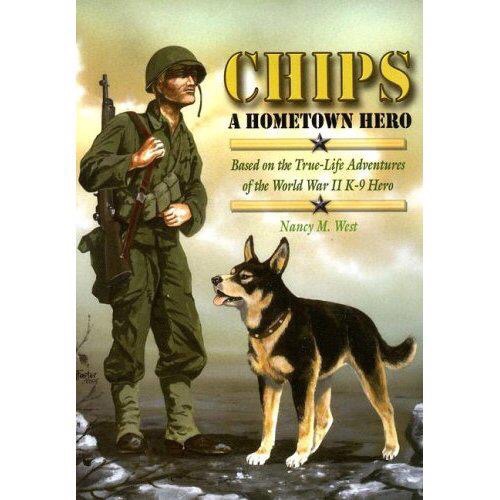
During the Italian campaign a German Shepherd named “Chips”, serving as a Scout with the 3rd Infantry Division, broke away from his handlers and by himself attacked a German machine gun nest, forcing the entire German unit to surrender.

Connections The Nation Grows Honest Men Secure Their Future For Us An Amazing Day

Today in History, March 10:

I was researching for today and found amazing connections – I love connections in History! This will be a long post, but in summary:

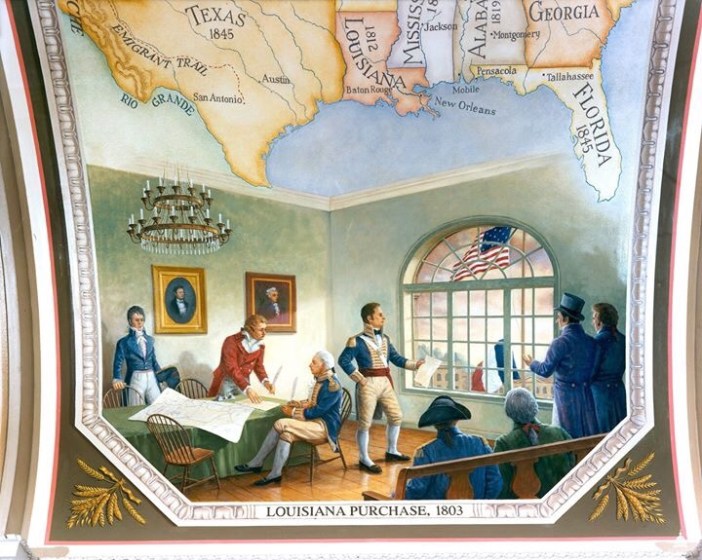
In 1804 a ceremony was held in St. Louis commemorating the Louisiana Purchase, which doubled the size of our young nation overnight.

In 1848 the US Senate ratifies the Treaty of Guadalupe Hidalgo, officially ending the Mexican-American War and again doubling the size of our nation.

Many believed the Mexican-American War was an unjust, fabricated conflict, much as many of us argue today about the Iraq War and its costs (not saying what my beliefs are…but I always stand with my beloved country).

Two of the men who felt the Mexican-American War was unjust spoke out vocally about their beliefs. One was a Congressman who disagreed with men he respected on the issue. The other who spoke out was a young Army officer who, in spite of his beliefs, fought courageously during the war.

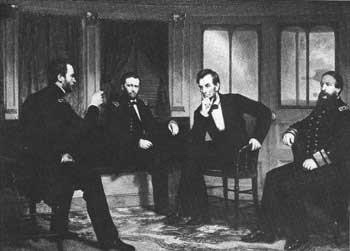
In 1864 the Congressman, now President, signed documents promoting the young officer to Lt. General of the US Army (a rank only George Washington had previously held as permanent) so no other officer would be his equal. Abraham Lincoln and Ulysses S. Grant believed wholeheartedly in their cause during the Civil War.

Today in History, March 10, 1804:

In St. Louis (not yet Missouri), an official ceremony is conducted, transferring possession of the “Louisiana Purchase” from Spain to the United States, virtually doubling the size of the American landscape overnight.

Today in History, March 10, 1848:

Treaty of Peace, Friendship, Limits and Settlement between the United States of America and the Mexican Republic, or the Treaty of Guadalupe Hidalgo ending the Mexican-American War is ratified by the US Senate after several amendments were made by that Congressional body.

The treaty had been negotiated in Mexico, documenting monies to be paid by the United States to Mexico and territories including modern day California, New Mexico, Arizona, and parts of Nevada, Colorado, Wyoming and Utah to be ceded to the US.

Senators to include Thomas Hart Benton, Jefferson Davis, Sam Houston, Stephen A. Douglas, and John C. Calhoun fought over the final draft.

Today in History, March 10, 1864:

President Lincoln signs documents promoting Ulysses S. Grant to the rank of Lieutenant General.

Grant was only the second person to hold the rank, the first having been George Washington. Winfield Scott had held the rank in the interim, but only as a “brevet” or temporary rank.

Lincoln wanted his commanding general to have a rank above his other generals for leadership purposes. Grant would answer only to the President. I didn’t find anything to document it, but have to wonder if this was partially because Grant had been promoted over several more senior officers to command the army due to his runaway successes in the west.

The End of an Era – The Age of Sail was Over

Today in History, March 9, 1862:

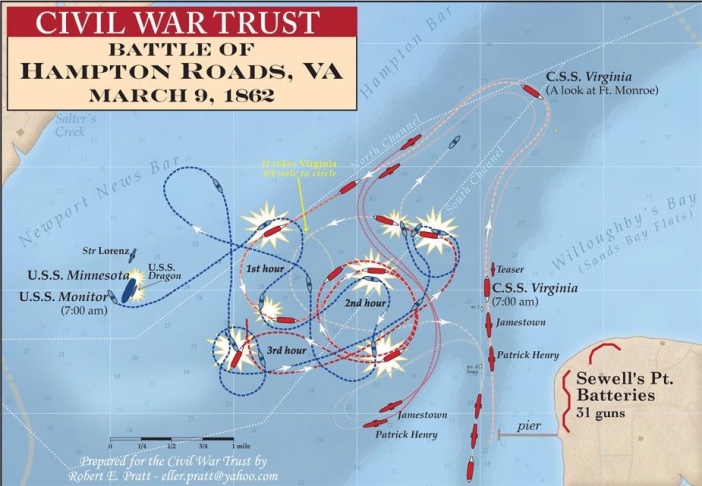
The Battle of Hampton Roads.

Few are able to be part of a truly history changing event.

When the Civil War began, the Union abandoned the Naval Base at Norfolk, Virginia, burning everything they could in retreat.

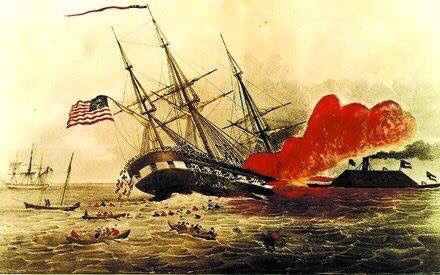
The Confederacy took the base, and raised the sunken Union USS Merrimack. They then rebuilt her into the ironclad CSS Virginia.

The Union Navy placed an embargo on all Southern ports, including the entrance to the Southern capitol of Richmond. The South attempted to break this embargo with their new ironclad ship, sinking two Union wooden “ships of the line” in the process.

The Virginia returned to base for the night, then returned to finish off the last major embargo ship on 9 March, 1862.

She was confronted by the Union version of the ironclad…the USS Monitor. The two new iron ships battered away at each other for over three hours without seriously damaging each other, and then withdrew.

The Virginia would be scuttled at her base as the Union advanced…the Monitor would be lost at sea.

But more importantly….navies worldwide…Britain, France, Spain, the Far East, watched and realized that their wooden navies had suddenly become obsolete.

D. C. Donnybrook

Today in History, March 4, 1829:

A real Donnybrook.

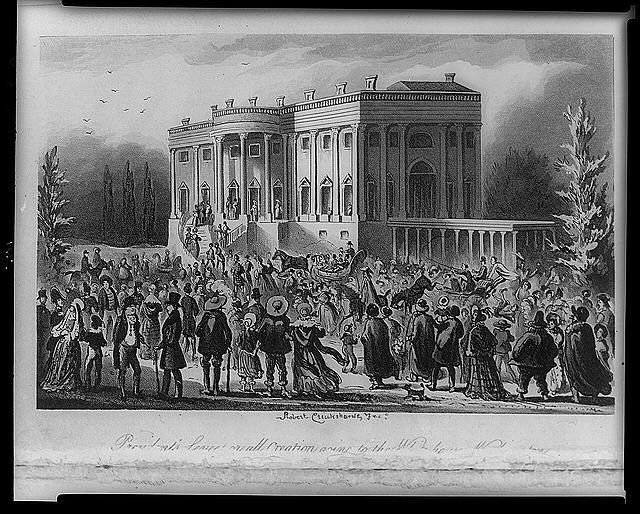
It was a tradition to have an “open house” after a Presidential Inauguration. Newly elected President Andrew Jackson continued the tradition, but there was a problem.

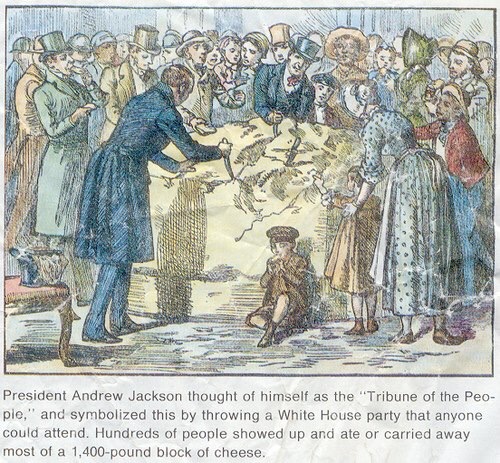
Every President has tried to portray himself as a “man of the people”, but in Jackson’s case, it was true. He was a frontiersman, and a combat veteran of the War of 1812.

Rather than a few blue bloods showing up for the open house, upwards of 20,000 common citizens showed up to visit the Executive Mansion.

They entered through windows, stood on the furniture, and were only drawn outside by an inventive White House staffer that filled troughs with juice and liquor on the White House lawn.

The President himself fled to the hotel he had been residing in prior to the election. The carpet “smelled like cheese” for months, but not due to a sampling of cheese…the production of a huge block of cheese to the President actually happened near the end of his term.

Kicking the Abolition Can Down the Road…

Today in History, March 2, 1807:

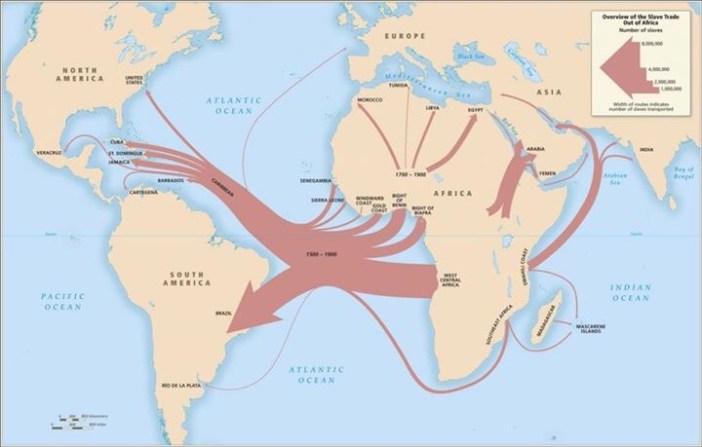
The US Congress passes a law abolishing the transatlantic slave trade in the US, “An Act to prohibit the importation of slaves into any port or place within the jurisdiction of the United States, from and after the first day of January, in the year of our Lord, One Thousand Eight Hundred and Eight.”

Congress began the habit of “kicking the can down the road” from the very beginning. When the Constitution was ratified, a clause was included that prohibited any laws affecting slavery for 20 years, or 1808.

The clause was included to ensure that southern states would sign off on the union.

By 1794 abolitionist groups were already forming to push for action once the time was up; in 1805 Senator Stephen Row Bradley of Vermont announced his intention to present the bill described here, and did so. The British also outlawed the slave trade in 1807.

However the importation of slaves continued in Central and South America, especially in Brazil where it had begun, until 1860 (officially).

Even this step by US lawmakers was a bit of a cynical compromise…the South signed off on the new law easily because they had enough slaves already in the country that they didn’t feel they needed to import them anymore.

“Oh…Do You Remember the Fun of Him?”

Today in History, January 6, 1919:

“Death had to take Roosevelt sleeping, for if he had been awake, there would have been a fight.”

-Vice President Thomas Marshall.

President Theodore Roosevelt dies at Sagamore Hill, Oyster Bay, New York in his sleep of a heart attack. “Teddy” had taken every last drop of adventure and worthiness that he could squeeze out of life in the preceding 60 years.

Roosevelt had been a sickly child; constantly plagued by breathing problems, he could rarely play with the other children. His father, Theodore Sr., a remarkable man himself, told “Teedie” that if he wanted to have a successful life, he would have to take charge and force his body into the form he needed to match his intellect. Roosevelt did just that. He took exercise as his “raison detre” until he was barrel chested and of vigorous health. Each time he became sick during his life, he would simply work through it.

As a young man, while serving in the New York Assembly, Roosevelt was called home from Albany by an urgent message. After the train ride to NYC, he arrived home to be met at the door by his brother, “There is a curse upon this house.”

Roosevelt’s wife and mother died on the same day…February 14, 1884, within hours of each other. Writing in his diary only a large X and the words “The light has gone out of my life”, Roosevelt fled into the west, becoming a rancher and for a time a lawman in the Dakota Territory. The experience would strengthen him and give him a background people respected.

During his life he was a state rep from New York, the Police Commissioner for New York City, Governor of New York, the Assistant Secretary of the Navy (he oversaw the building of a modern US Navy while his boss was not paying attention), he led the “Rough Riders” (1st Volunteer US Cavalry) up San Juan Hill in the Spanish-American War, became Vice President, and the President after President McKinley was assassinated.

As President he defined the modern presidency, breaking up monopolies, seeing that mistreated workers got a fair shake, sent the “Great White Fleet” around the world establishing American as a world influence, saw the Panama Canal built, saw the establishment of the National Parks Service, and countless other accomplishments.

He worked tirelessly for the American people. After the Presidency he traveled extensively, going on an African Safari, and exploring an unknown region of South America, “The River of Doubt”; a region so treacherous that it was considered a no-man’s land. He nearly died in the mapping of the river, now called “Rio Roosevelt” in his honor.

All of his male children fought in WWI, and the only reason Teddy didn’t was because the Democrat President (Wilson) refused to let him, afraid Roosevelt would run against him in the next election and win. One of his sons, Quentin, would be shot down over France and be killed. That was the last straw for the “Old Lion”. He mourned dreadfully until his death.

One of his other children, Theodore Roosevelt, Jr., would be the only General to go ashore with the troops at D-Day in WWII; Teddy Jr would die of a heart attack himself several weeks after the Normandy invasion. The entire world would mourn President Roosevelt’s passing; he had become larger that life, a hero to people the world over. The quintessential American. And in case you couldn’t tell, my favorite Hero.

At TR’s funeral at Oyster Bay, what I believe is the best, most heartfelt eulogy was spoken in passing. Walking from the church a New York City Police Captain who had served with Roosevelt more than 20 years earlier when he was Police Commissioner, was overcome with emotion. He turned to TR’s sister and asked, “Oh…do you remember the FUN of him?”

“The American People, in Their Righteous Might, Will Win Through to Absolute Victory…”

Today in History, December 8, 1941:

As the Japanese continued their invasion of the Philippines, Malaysia, Hong Kong and other Allied interests in the Pacific, President Franklin Roosevelt gives his famous “Day of Infamy” speech asking Congress to declare that a state of war had existed since the bombs began to fall on Pearl Harbor the day before.

“Get off my Lawn!!” – The Roosevelt Corollary

Today in History, December 6, 1904:

The Roosevelt Corollary to the Monroe Doctrine. The Monroe Doctrine had been established to tell European powers to stay out…no Emperialism in the Western Hemisphere. When it was declared, the US didn’t really have the forces to back it up. But, conveniently the Royal Navy agreed and enforced it for their former adversaries.

In 1904 President Roosevelt made an addition to the Doctrine. There had been recent incidents in which European powers threatened actions against South American nations that they felt owed them money. In his annual message to the Congress, TR stated that, should any developing nations in the Western Hemisphere require intervention due to unrest or an inability to handle their financial affairs, it would be the US that would intervene, not foreign nations. This time TR had the Navy to back it up.

Many criticize Roosevelt’s assumption of police powers in the Americas as expansionist, and with the events surrounding the building of the Panama Canal, there is likely some validity to that view. However the primary objective was to ensure that foreign powers knew the US would not tolerate their use of military force in our backyard. And it kept the big kids from taking advantage of the still developing countries in the Western Hemisphere.

http://www.theodoreroosevelt.org/life/rooseveltcorollary.htm