Senator John J. Crittenden, former Kentucky Governor, US Representative, and US Attorney General, had put forth the Crittenden Compromise in a last ditch effort to prevent Civil War.
The nation had been arguing over the abomination of slavery since it’s inception; and “compromise” had been made before, with the Missouri Compromise which divided the nation north and south regarding which states would have slavery and which would not.
Then the Compromise of 1850, in which each new state got to decide.
During the 1850’s the Republican party was established with it’s primary platform being to prevent the spread of slavery.
Crittenden, a “Constitutional Unionist” suggested several Constitutional amendments that would bring things back to the Missouri Compromise levels since several states had already seceded due to Republican Abraham Lincoln’s election.
This time the Republican majority in the Senate said no to compromise and killed his bill.
As an aside, Crittenden’s grandson (and namesake), would be killed at the Battle of Little Big Horn with Custer.
The Battle of Stones River, south of Nashville, Tennessee, concluded after 3 days of hard fighting.
Union General William Rosecrans was tasked with securing central Tennessee, while Confederate General Braxton Bragg was tasked with defending the area.
Bragg went on the attack, but his forces were repelled repeatedly, and finally defeated.
The South lost 33% of their force, the Union 31%.
Together they suffered 25,000 casualties in one of the bloodiest battles of the war.
As we celebrate Christmas, the birth of Christ, I am always drawn to remember those who sacrificed so much so we could live in freedom.
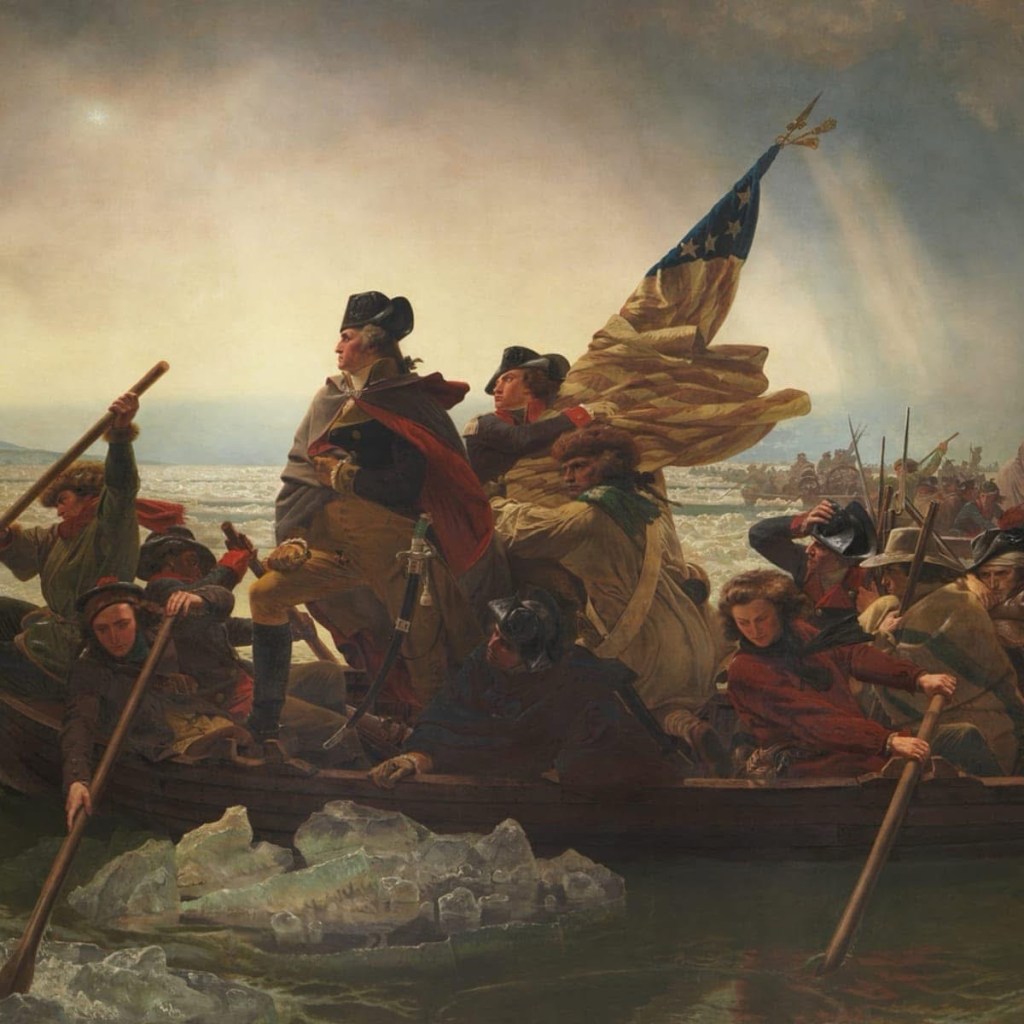
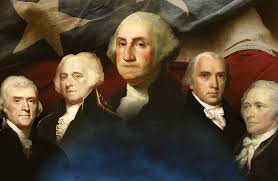
In 1776 George Washington and his troops spent Christmas away from their families, crossing the Delaware to kick some Hessian derrière at Trenton, New Jersey.
In 1777 that same army spent Christmas at Valley Forge…starving, shivering without clothing or shelter while training for coming battles.
From 1861-1865 the nation was at war…families were separated and brother fought brother…General William Tecumseh Sherman sent a Christmas present to President Lincoln in 1864…Savannah, Georgia.
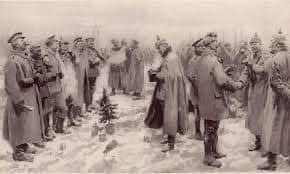
In 1914 a British soldier in the trenches listened to German soldiers singing Silent Night in the darkness and risked his life to stand up and join in. Soldiers from both armies spent Christmas exchanging gifts and playing ball…a small respite from killing one another.
In 1918 the entire world spent Christmas suffering through a flu pandemic which took millions of lives…at the same time they suffered the first mechanized war.
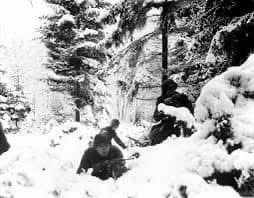
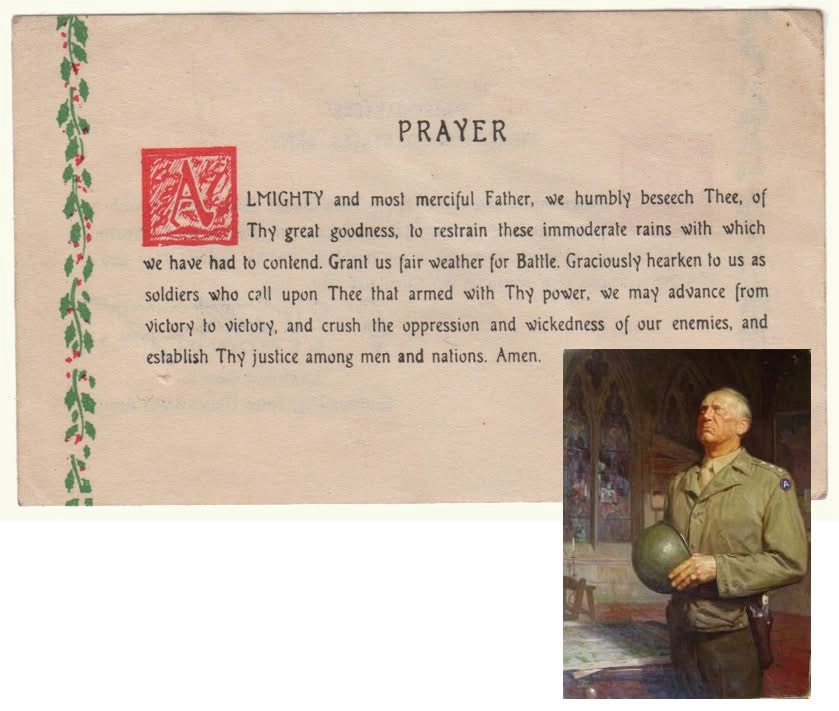
In 1944 the 101st Airborne and Patton’s 3rd Army spent Christmas fighting Nazis at Bastogne.
History gives us peace. Because if we know it, we know life goes on. If we know history and have faith, we know our travails are temporary and we will all be together soon enough with our savior.
God Bless you all. May you receive God’s strength and comfort.
“What to the slave is the Fourth of July?” – Frederick Douglass
Douglass asked this question in an 1852 speech given on July 5th. During the same speech he praised the founding fathers as heroes. Yet the founding fathers had to make compromises which declared American citizens to be less than human. Douglass was a patriot himself, loving the country which had enslaved him since birth, yet recognizing the evils of bondage.
He sent his sons to fight with white men in the Civil War to defeat slavery.
In 1863 President Lincoln declared slavery illegal in the slave states with the Immancipation Proclamation.
Since this did not serve the purposes of the Confederacy, most slaves did not learn of the proclamation until the end of the war. The last to learn of their freedom were the slaves in Texas. On June 19, 1865, Union troops arrived in Texas… the previously enslaved blacks learned they had been free for two years.
The following year they began to celebrate this date as Juneteenth. As Douglass had said, Independence Day had meant little to them. But the day THEY had learned of their freedom mattered a great deal.
The reddest state in the Union, a previous slave state, Texas recognized Juneteenth in 1980. It would be recognized nationally in 2021. Many consider Juneteenth to be a “made up” holiday. Are not all holidays “made up?” This one is simply newer.
I do not know any celebrants of Juneteenth who do not also celebrate the Fourth of July, America’s Independence Day. Douglass surely did. Yet we cannot deny that “Juneteenth” is a second Independence Day, because many of our citizens did not enjoy their independence until that date in 1865.
We should rejoice that date. Many of our ancestors died to ensure we could finally enjoy the full purpose of our independence.
He lay staring up at the sky, though the sun was hidden from his sight by smoke and dust and powder. The mini-ball had shattered his left thigh… he could not stand. The pain was excruciating, his hands were covered in blood from where he attempted to feel his injuries.
He could hear the rifles firing, accompanied by the cannon and rallying cries. What horrified him most… he could hear the crackling of the fire. He knew it was coming closer very fast, fueled by the trees in the Wilderness. A forest was no place for so much weaponry.
He looked one direction, then the other. Dozens of men lay in similar condition to him. Many of them screaming for help that could not come. Closest to him, he saw Tommy. He grew up with Tommy… with all these men. Their regiment all signed up from the same town. Tommy was the strongest of them, always steadfast and quiet.
When the fire reached Tommy, it caught his clothing first, but soon it engulfed him entirely. Tommy’s terrified screams echoed in his ears until Tommy’s powder went up, and Tommy was silent.
He rasped out a plea for help. He tried to crawl. He knew he was going to die. But he had to get away from the fire. He and the others had sewn tags with their names on them to their shirts. If he died in the fire, mama would never know what happened to him. He had to save that tag.
He felt his strength leaving him, and lost consciousness. Maybe he would not feel the flames.
He woke suddenly. They must’ve found him. He lay on his back on a table. Above him stood a man covered in blood and grime. The man spoke to others, “Hold him down.”
Then he felt the saw begin to bite into his flesh, he screamed and mercifully, lost consciousness again.
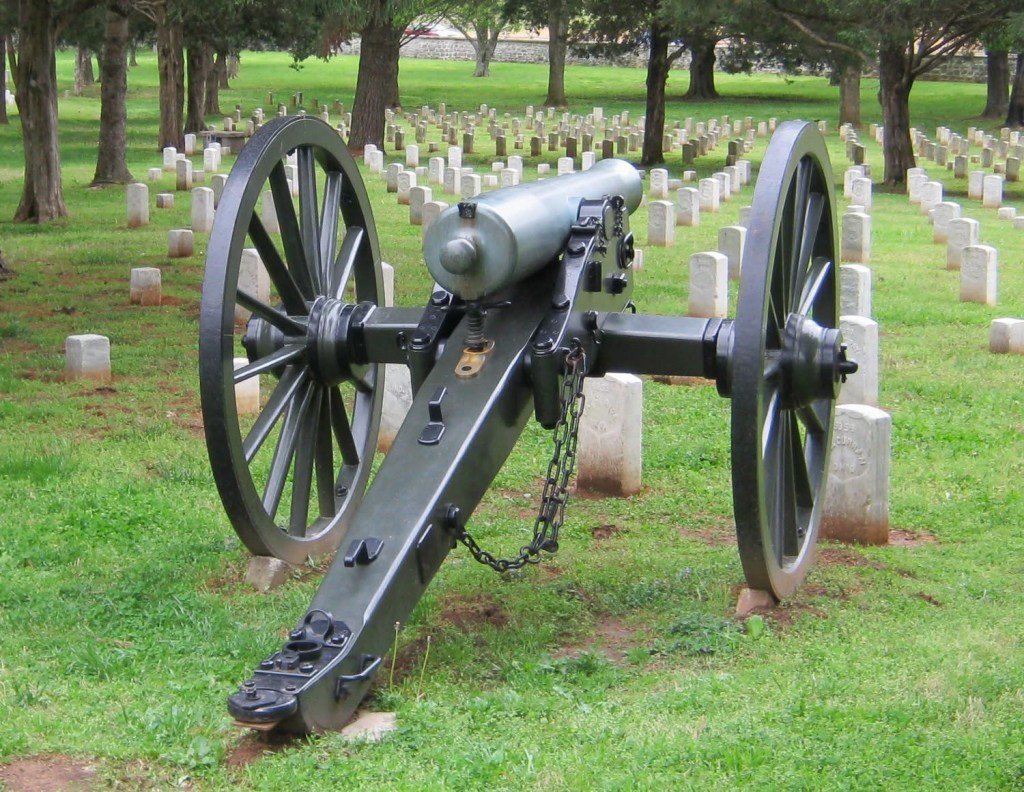
The leg that wasn’t there anymore hurt all the time, as if it were still present. All these years later, he stood on that damned crutch, looking out on a field full of markers.
He could hear their voices. He could hear their screams and feel their pain. The men that weren’t there anymore, that hurt all the time, as if they were still present.
⁃ Battle of the Wilderness, Civil War, 1864.
————-
She was playing in the street, kicking a ball with her friends. Her momma watched with a smile.
She was 13 that year. Her body was changing, and she noticed the boys looked at her differently. She was filling out, having to become accustomed to full breasts and wide hips, amongst other things. Momma had explained things to her. How someday she would have children of her own.
That was the day the soldiers came.
She wished she could talk to momma now. And papa. It had been months since that long ago day in the street. She knew she would never have her own children. It was all gone. Her womanly features were gone. What little flesh she had left hung from her bones loosely. She looked into the hollow, lost eyes of the people around her and understood she looked the same. Everything hurt. Her joints actually rubbed together.
When the door clanged shut, she looked at the shower heads. A warm shower would be such a relief. It would feel good on her filthy flesh.
She knew in her heart this was not a shower room. She heard the hiss of the gas. That would be a relief too, she thought.
⁃ Nazi concentration camp, 1940’s.
These accounts may be from my imagination, however they are based on actual events. Similar incidents happened many times.
As depressing as these events are, knowing history provides perspective. Knowing so many people never got to live their lives makes you appreciate yours all the more, even when things are bad.
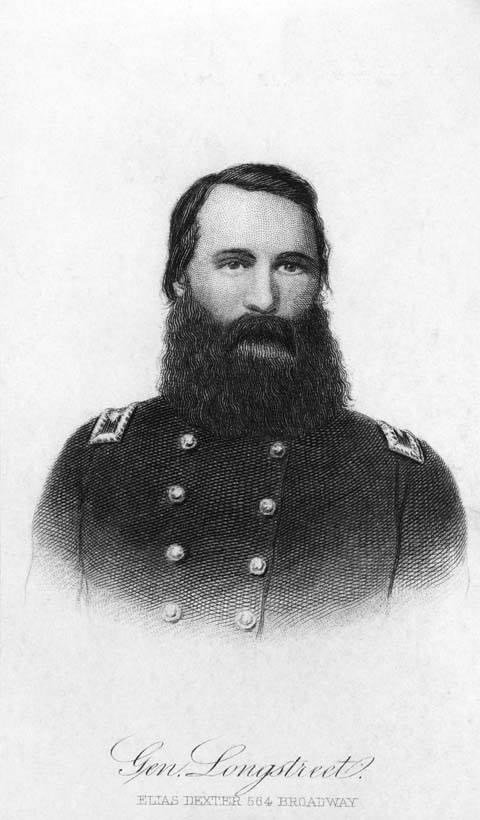
James Longstreet is born in near Edgefield, South Carolina.
Longstreet is an excellent example of the paradox of the 19th century. He graduated West Point, fought gallantly in the Mexican-American War at the Battle of Chapultepec; he was close friends with Ulysses Grant, serving as best man at Grant’s wedding.
After such loyal service to the US Army, in 1861 he resigned his commission and joined the Confederacy.
He fought in most of the major battles in the eastern area and some in the west. Aside from Robert E. Lee, he was likely the most respected and successful Southern General.
Yet after the war, he determined to do the best he could by his countrymen. He joined the Republican Party and returned his loyalty to the government.
The Republican party had been the entity that had pursued the war in the North, so his detractors excoriated him for this act…but in his statements he wanted to use the power of the Republican party to maintain Southern rights and desires.
Jubal Early and others claimed he was responsible for the loss at Gettysburg (he was not).
Much like Lee, whether you agree with what he fought for or not, Longstreet appeared to be a “Southern Gentleman”, and gained the admiration of the soldiers that served with him.
“I should be glad, if I could flatter myself that I came as near to the central idea of the occasion, in two hours, as you did in two minutes.”
-Edward Everett, popular orator that spoke with President Lincoln at Gettysburg to commemorate those that died there during the pivotal Battle of Gettysburg earlier in the year.
President Lincoln spoke briefly, and his speech was criticized at the time by some media, but has become legendary for it’s prescience. See below for the full text…
Four score and seven years ago our fathers brought forth on this continent, a new nation, conceived in Liberty, and dedicated to the proposition that all men are created equal.
Now we are engaged in a great civil war, testing whether that nation, or any nation so conceived and so dedicated, can long endure. We are met on a great battle-field of that war. We have come to dedicate a portion of that field, as a final resting place for those who here gave their lives that that nation might live. It is altogether fitting and proper that we should do this.
But, in a larger sense, we can not dedicate — we can not consecrate — we can not hallow — this ground. The brave men, living and dead, who struggled here, have consecrated it, far above our poor power to add or detract. The world will little note, nor long remember what we say here, but it can never forget what they did here. It is for us the living, rather, to be dedicated here to the unfinished work which they who fought here have thus far so nobly advanced. It is rather for us to be here dedicated to the great task remaining before us — that from these honored dead we take increased devotion to that cause for which they gave the last full measure of devotion — that we here highly resolve that these dead shall not have died in vain — that this nation, under God, shall have a new birth of freedom — and that government of the people, by the people, for the people, shall not perish from the earth.
Stephen Dodson Ramseur was born in Lincolnton, North Carolina in 1837. In 1860, he graduated the United States Military Academy at West Point in the US Army.
The next year he was one of many in the US Army who left the service to join the Confederacy…because it encompassed their “Country”. Young “Dod” proved to be a daring, impetuous, and courageous leader and quickly rose to be the youngest Major General in the Confederate Army.
At the Battle of Malvern Hill in the Peninsular Campaign, he was seriously wounded when shot in the right arm, temporarily paralyzed.
He drew the attention of Gen. Robert E. Lee and was promoted. At Chancellorsville his brigade scored a major victory, fighting with Stonewall Jackson and J.E.B. Stuart. Ramseur was wounded in the leg during this battle. At Gettysburg, it was Dod’s Brigade that chased the Union forces back through the town in a rout. In the Wilderness Campaign he fought valiantly at the Battle of Spotsylvania Court House, being shot from his horse, once again hit in the right arm. Taking over Jubal Early’s division, he fought courageously at Cold Harbor and Petersburg. During the Shenandoah Valley Campaigns, he again fought hard… On October 19, during the Battle of Cedar Creek, he was shot from his horse again. He mounted a second horse, and was again shot from it.
Mounting a third horse to continue the fight, he was shot twice through the lungs, finally bringing him down.
He was loaded into an ambulance to be treated…and his ambulance was captured by Union forces.
The Union took him to Belle Grove Plantation for treatment by Union doctors, but it was no use.
Next is the most telling part of Dod’s fascinating story.
Word of his capture and condition spread quickly. As he lie dying, many of his friends…Union officers including George Armstrong Custer that had been his contemporaries before the war, rushed to his side and held an hours long vigil, keeping him company until he passed on October 20, 1864.
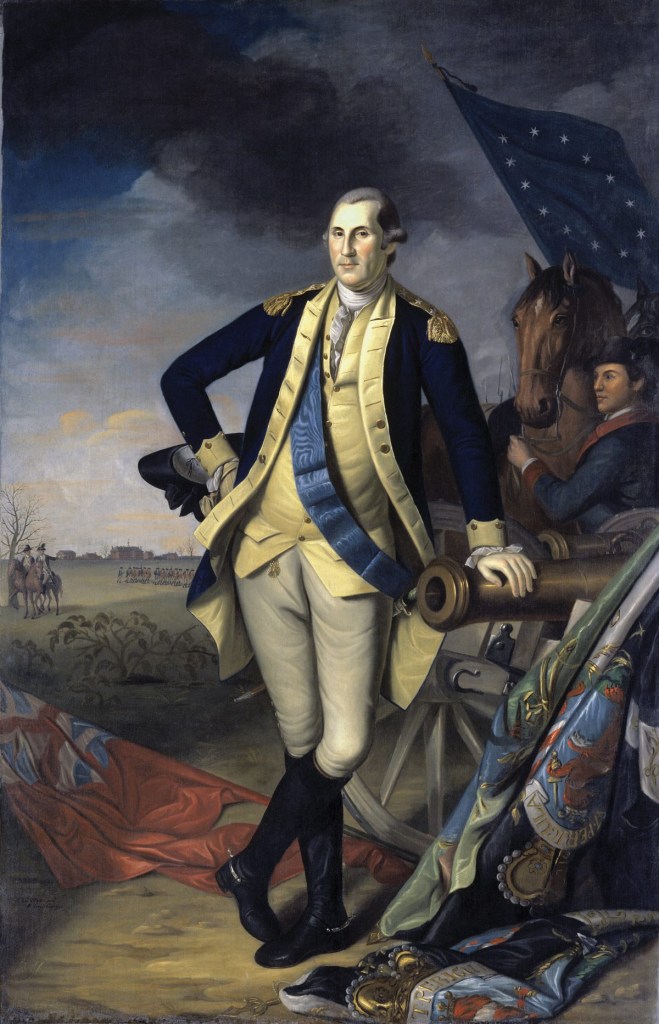
President Gerald Ford signs an act of Congress promoting Lieutenant General George Washington to General of the Armies, what would be a six star general if the insignia existed.
This act promoted the former President over numerous US Army Generals and US Navy Admirals, which was the point.
In the military and paramilitary services such as police, rank matters. To the extent that if two officers of the same rank are involved in an action, they will be comparing dates of rank to see who is in command.
During the Civil War, when General Ulysses Grant was given command of the Union Armies, he was promoted to Lt. General to ensure he outranked all other commanders.
During WWI and WWII the same actions were taken to ensure American commanders would not be outranked by their Allied contemporaries such as Bernard Montgomery in the British Army.
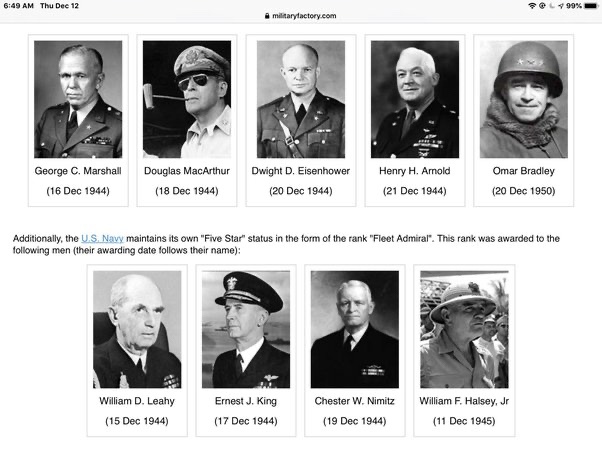
This resulted in several 5-Star Generals and Admirals. Generals of the Army (singular) or Fleet Admirals.
In WWI Gen. John “Black Jack” Pershing had been made a General of the Armies.
At the nation’s bicentennial, it was considered unacceptable that the father of the country should be outranked by any fellow officers, much less so many.
The act not only promoted Gen. Washington above his fellows, it stated nobody can be promoted above him.
1863 – The Union and the Confederates first clash at The Battle of Gettysburg, and both send reinforcements. The first day went badly for the Union, but the largest battle in North America had three more days to go, and would become a major turning point in the Civil War.
1898 – The Battle of San Juan Hill becomes a major victory for the US in the Spanish-American War as the US Army’s Fifth Corps takes the heights over Santiago de Cuba. It also set the stage for Colonel Theodore Roosevelt to become President as he became famous for leading his Rough Riders up Kettle Hill (not San Juan).
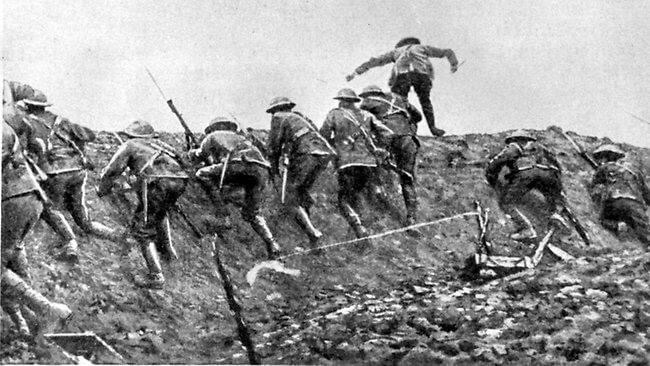
1916 – The Battle of the Somme in France; after a week’s bombardment with over 250,000 shells, the British launch an attack into no-man’s land. The Germans had retained many machine guns despite the bombardment, and the British soldiers were slaughtered. With 20,000 dead and 40,000 wounded in one day, it was one of the worst defeats for the British military’s history.
1942 – The Battle of El Alamein; In North Africa Erwin Rommel’s army had routed the British and their allies, driving them back so quickly that they had to leave much of their equipment behind. But on today’s date the British Army, resupplied by Americans and reorganized, turned the tide back on Rommel at El Alamein.
















 Mark Loves History!