


Today in History, June 18, 1812:
Ironies of 19th century communication, or the lack thereof in the War of 1812.
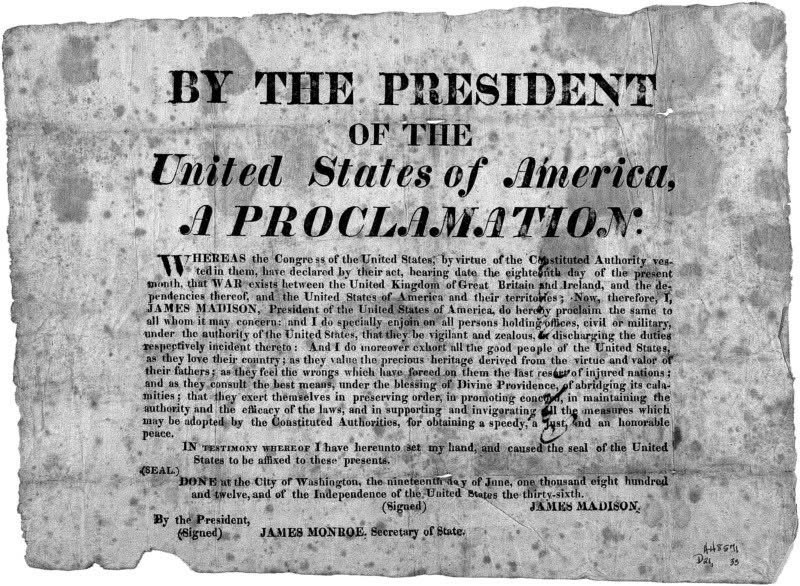
On June 1, 1812, President Madison asked to declare war on Great Britain because Britain would not stop boarding US ships and impressing US sailors into the Royal Navy. By the 18th Congress had acted and President Madison signed the declaration of war.
The irony? Five days later on June 23, 1812, a new British government repealed the Orders in Council, deciding impressing US sailors was not in Britain’s interest, and created bad relations with America.
Neither nation knew what the other was doing.
The ships carrying the messages to the opposing governments likely passed each other on the Atlantic.
But the war was on.
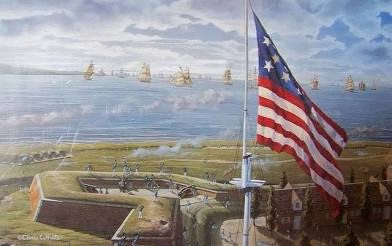
Likewise, when the war ended with the Treaty of Ghent on December 24, 1814, it took weeks for the message to reach the Americas. So on January 8, 1815, British General Packenham, hero of the war with France, attempted to take New Orleans with a large army.
American General Andrew Jackson defended New Orleans with an army of US soldiers, Indian allies, and pirate Jean Lafitte’s roughians. With tactics, artillery and folks that knew how to shoot, they decimated the British. 2,042 casualties for the British, including Packenham killed, to only 71 casualties for the Americans.
Weeks after the war had ended.


















 Mark Loves History!