How America Receives News Changes

Today in History, January 17, 1998:

It depends on what the meaning of the word ‘is’ is.”

Matt Drudge, of the “Drudge Report” breaks the Clinton-Lewinsky Scandal, in which President Bill Clinton was discovered having an affair with a young White House intern.

Amidst a series of lies and cover-ups, Clinton would eventually be found to be in contempt of court, see charges of perjury, the suspension of his law license by the state of Arkansas and by the United States Supreme Court, and impeachment.

The incident also cemented internet news sources as legitimate, much to the chagrin of the mainstream media, which had tried to kill the story to protect the Democrat in the White House.

Many incidents since have demonstrated for Americans just how few individuals had controlled the information they received, and the bias those sources allowed to drive them.
Fighting the Good Fight…and Consequences

Today in History, March 22: 1871:

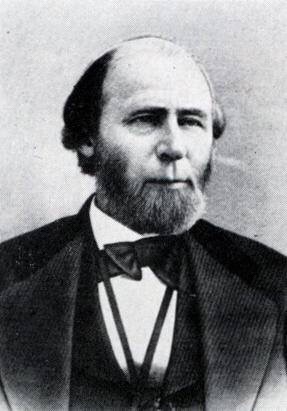
North Carolina Governor William Holden (no, not THAT William Holden) is removed from office by impeachment…the first US Governor to receive this punishment.

His crime? Holden was a Republican and an abolitionist…during his tenure as Governor he hired two dozen detectives to hunt down the leaders of the NC KKK, got a bill passed that called out the militia against the KKK, and suspended habeas corpus to enhance his ability to prosecute the leaders of the Klan.

In 1870 the state’s Democrats won the legislature and quickly moved to impeach Holden for his hard-handed tactics against the KKK.

Holden had enacted these actions to counter the assassination of a Republican Senator and the hanging of an African-American police officer, amongst other crimes. In 2011, the entirety of the North Carolina Senate voted to pardon Holden.


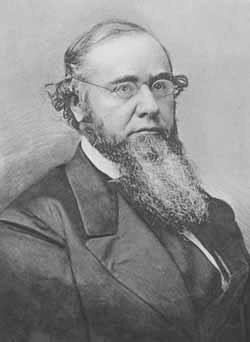
Today in History, August 12: 1867 – “Hon. EDWIN M. STANTON, Secretary of War.
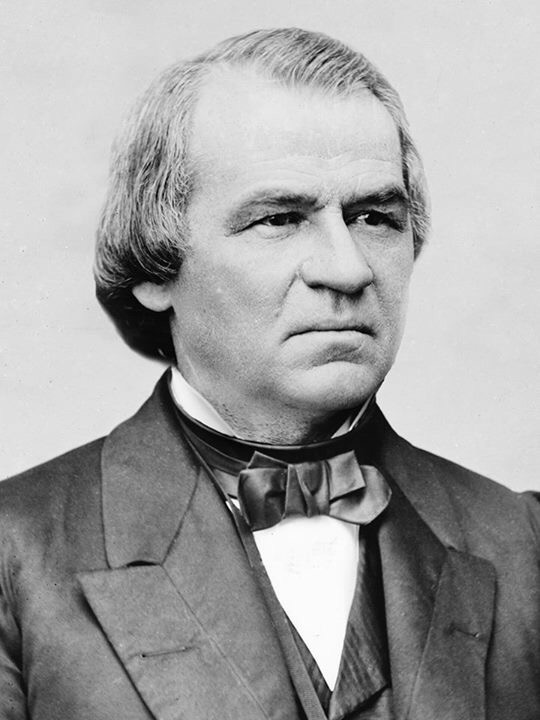
Sir: By virtue of the power and authority vested in me as President by the Constitution and laws of the United States, you are hereby suspended from office as Secretary of War, and will cease to exercise any and all functions pertaining to the same.
You will at once transfer to General Ulysses S. Grant, who has this day been authorized and empowered to act as Secretary of War ad interim, all records, books, and other property now in your custody and charge.
ANDREW JOHNSON”
Volatile politics is nothing new in America. For his second term, President Lincoln had chosen Democrat Andrew Johnson as his vice President because he was from a border state, loyal to the Union, but a Southerner. 

 When Johnson assumed office after Lincoln’s assassination, he did not enforce reconstruction in the South as strongly as Lincoln’s contemporaries in the cabinet and the Congress wanted. The battle was ongoing, with Congress passing the Tenure of Office Act to prevent Johnson from firing cabinet members that did not agree with him. 

 Most prominent was Secretary of War Edwin M. Stanton. On this date Johnson suspended Stanton and replaced him with the popular Gen. Ulysses S. Grant, who resigned the position once Congress reconvened and voted not to remove Stanton. Stanton refused to leave, to the point that in February of 1868 when Johnson formally fired him, Stanton barricaded himself in his office in the War Department. 

 The “radical” Republicans in the House voted to impeach Johnson over the ordeal, but the Senate, after a lengthy trial, kept him in office.