As we celebrate Christmas, the birth of Christ, I am always drawn to remember those who sacrificed so much so we could live in freedom.
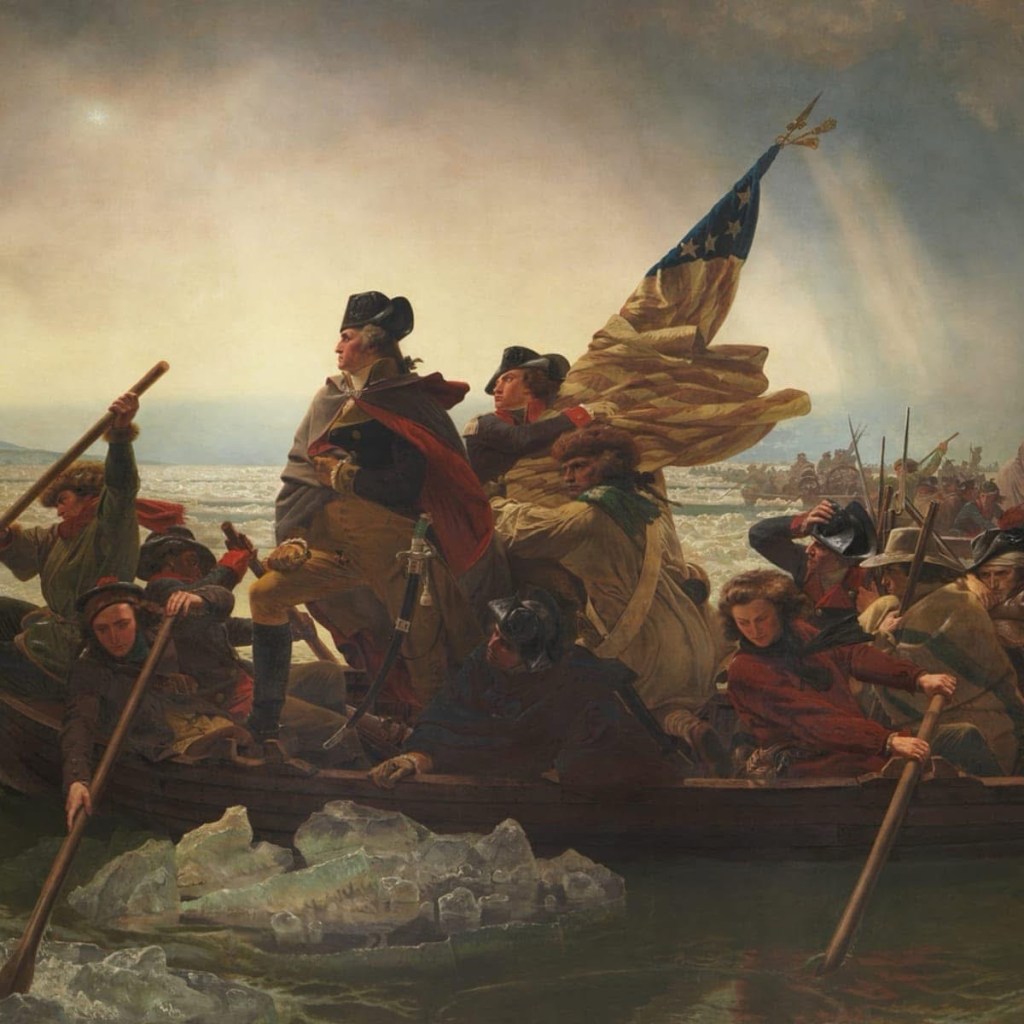
In 1776 George Washington and his troops spent Christmas away from their families, crossing the Delaware to kick some Hessian derrière at Trenton, New Jersey.
In 1777 that same army spent Christmas at Valley Forge…starving, shivering without clothing or shelter while training for coming battles.
From 1861-1865 the nation was at war…families were separated and brother fought brother…General William Tecumseh Sherman sent a Christmas present to President Lincoln in 1864…Savannah, Georgia.
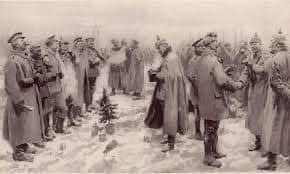
In 1914 a British soldier in the trenches listened to German soldiers singing Silent Night in the darkness and risked his life to stand up and join in. Soldiers from both armies spent Christmas exchanging gifts and playing ball…a small respite from killing one another.
In 1918 the entire world spent Christmas suffering through a flu pandemic which took millions of lives…at the same time they suffered the first mechanized war.
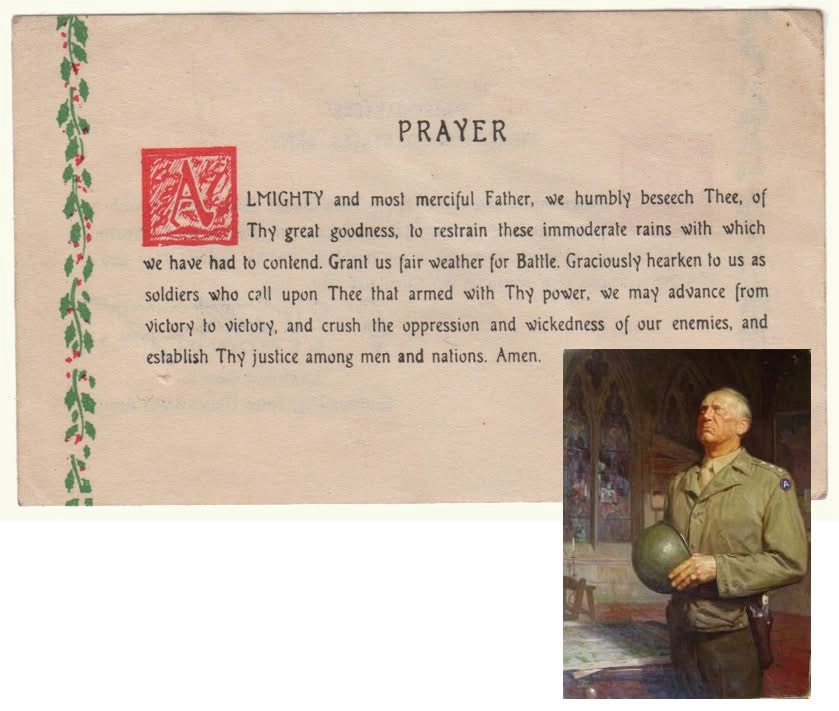
In 1944 the 101st Airborne and Patton’s 3rd Army spent Christmas fighting Nazis at Bastogne.
History gives us peace. Because if we know it, we know life goes on. If we know history and have faith, we know our travails are temporary and we will all be together soon enough with our savior.
God Bless you all. May you receive God’s strength and comfort.
In the midst of foreign wars in 1940, Franklin Delano Roosevelt won a third term as US President. It had been a hard fought campaign.
Learning that the loser in the campaign, Wendell Wilkie, was headed to London to gain info on the war, FDR invited him to the White House. They chatted amicably, and FDR asked the Republican to deliver a handwritten note to Prime Minister Winston Churchill, giving him a letter of introduction, making him an emissary.
The note contained part of a Longfellow poem which FDR & Churchill, both Naval enthusiasts, would recognize immediately.
When Churchill gave a speech on February 9, 1941 he included the verse, crediting FDR and Wilkie.
…Sail on, O Ship of State!
Sail on, O Union, strong and great!
Humanity with all its fears,
With all the hopes of future years,
Is hanging breathless on thy fate!
The verse recognized the troubles both nations were enduring.
I share this now reflecting on how good it would be in these contentious times if in the coming months the victor and the defeated of a presidential campaign could come together and help the ship of state to sail on. Lincoln also did it with his “team of rivals.”
“What to the slave is the Fourth of July?” – Frederick Douglass
Douglass asked this question in an 1852 speech given on July 5th. During the same speech he praised the founding fathers as heroes. Yet the founding fathers had to make compromises which declared American citizens to be less than human. Douglass was a patriot himself, loving the country which had enslaved him since birth, yet recognizing the evils of bondage.
He sent his sons to fight with white men in the Civil War to defeat slavery.
In 1863 President Lincoln declared slavery illegal in the slave states with the Immancipation Proclamation.
Since this did not serve the purposes of the Confederacy, most slaves did not learn of the proclamation until the end of the war. The last to learn of their freedom were the slaves in Texas. On June 19, 1865, Union troops arrived in Texas… the previously enslaved blacks learned they had been free for two years.
The following year they began to celebrate this date as Juneteenth. As Douglass had said, Independence Day had meant little to them. But the day THEY had learned of their freedom mattered a great deal.
The reddest state in the Union, a previous slave state, Texas recognized Juneteenth in 1980. It would be recognized nationally in 2021. Many consider Juneteenth to be a “made up” holiday. Are not all holidays “made up?” This one is simply newer.
I do not know any celebrants of Juneteenth who do not also celebrate the Fourth of July, America’s Independence Day. Douglass surely did. Yet we cannot deny that “Juneteenth” is a second Independence Day, because many of our citizens did not enjoy their independence until that date in 1865.
We should rejoice that date. Many of our ancestors died to ensure we could finally enjoy the full purpose of our independence.
“I should be glad, if I could flatter myself that I came as near to the central idea of the occasion, in two hours, as you did in two minutes.”
-Edward Everett, popular orator that spoke with President Lincoln at Gettysburg to commemorate those that died there during the pivotal Battle of Gettysburg earlier in the year.
President Lincoln spoke briefly, and his speech was criticized at the time by some media, but has become legendary for it’s prescience. See below for the full text…
Four score and seven years ago our fathers brought forth on this continent, a new nation, conceived in Liberty, and dedicated to the proposition that all men are created equal.
Now we are engaged in a great civil war, testing whether that nation, or any nation so conceived and so dedicated, can long endure. We are met on a great battle-field of that war. We have come to dedicate a portion of that field, as a final resting place for those who here gave their lives that that nation might live. It is altogether fitting and proper that we should do this.
But, in a larger sense, we can not dedicate — we can not consecrate — we can not hallow — this ground. The brave men, living and dead, who struggled here, have consecrated it, far above our poor power to add or detract. The world will little note, nor long remember what we say here, but it can never forget what they did here. It is for us the living, rather, to be dedicated here to the unfinished work which they who fought here have thus far so nobly advanced. It is rather for us to be here dedicated to the great task remaining before us — that from these honored dead we take increased devotion to that cause for which they gave the last full measure of devotion — that we here highly resolve that these dead shall not have died in vain — that this nation, under God, shall have a new birth of freedom — and that government of the people, by the people, for the people, shall not perish from the earth.
Illinois “circuit” lawyer Abraham Lincoln, running to be the Senator from that state, gives a speech at the capitol of Springfield and gains the Republican nomination.
One of his most famous speeches, the “House Divided” speech did not gain him the job of US Senator from Illinois, that would go to his opponent, Stephen A. Douglas.
However, published nationally, it did launch him onto the national stage, along with his series of debates against Douglas, which would gain him the Presidency two years later.
The speech was prophetic, as Lincoln told his listeners that after recent events, the nation could no longer expect to be half free and half slave, but must be all one or the other.
“A house divided against itself cannot stand. I believe this government cannot endure, permanently, half slave and half free.
I do not expect the Union to be dissolved — I do not expect the house to fall — but I do expect it will cease to be divided. It will become all one thing or all the other.
Either the opponents of slavery will arrest the further spread of it, and place it where the public mind shall rest in the belief that it is in the course of ultimate extinction; or its advocates will push it forward, till it shall become lawful in all the States, old as well as new — North as well as South.
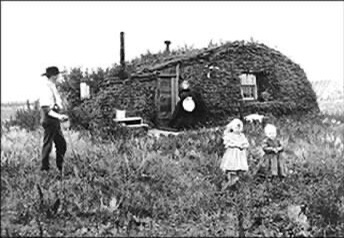
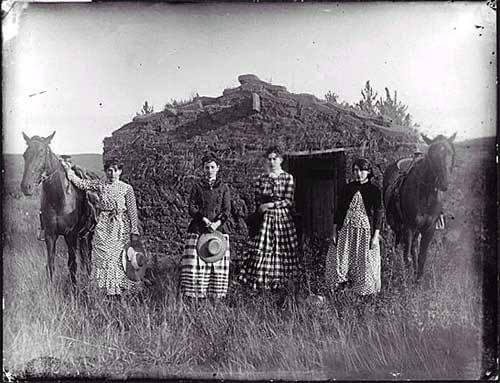
President Lincoln signs the Homestead Act, which would give 160 acres of western lands to anyone who would farm it successfully for 5 years and build a residence upon it (often a sod building).
The Act would encourage vastly expanded settlement of the west; bad news for Native Americans, good news for those newer Americans wanting to improve their lot in life.
Congress had attempted to pass similar acts in 1852, 1854, and 1859, but each time the attempts were shot down by Southern Democrats who were afraid that if the west were populated it would result in more “free” states, which would result in more votes against slavery.
Once the Republican Lincoln was elected, and the Civil War began, the Southern Democrats were no longer part of the equation.
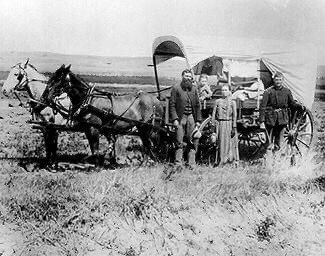
The Republicans soon passed the Homestead Act and the settlement of the west began in earnest. By the end of the war 15,000 settlers (some of which were merely pawns for land speculators) had accepted their lands. Eventually 80 Million acres would be settled.
After the election of Abraham Lincoln, a known Republican abolitionist, South Carolina had seceded from the Union in December, 1860. The other Southern states had not yet seceded, the Confederacy not yet formed.
The commander of Ft. Sumter in Charleston (SC) Harbor asked for supplies and more men.
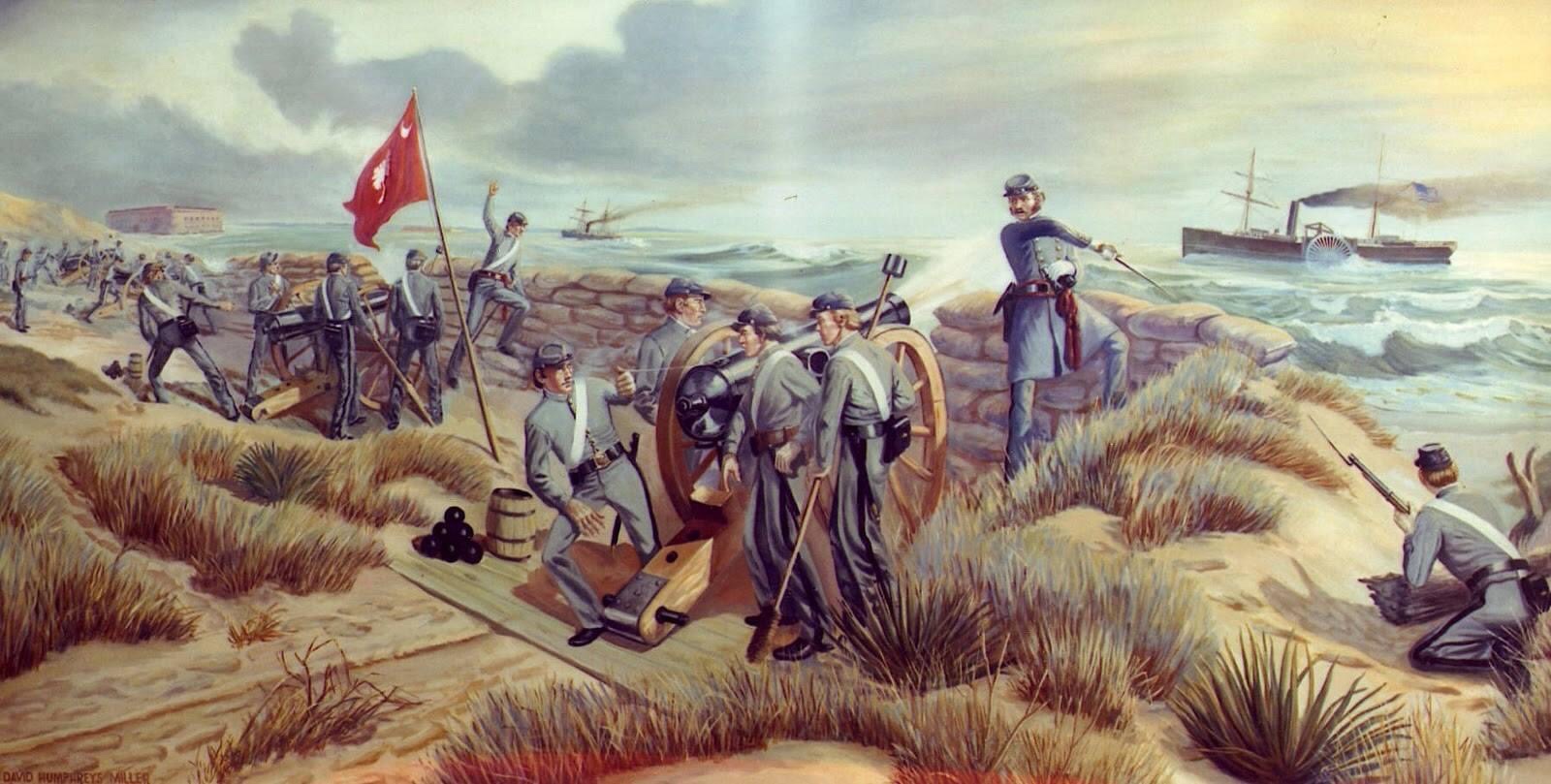
President Buchanan’s administration (Lincoln was not yet in office) dispatched the civilian ship Star of the West to resupply the island fortress.
As the ship entered Charleston Harbor cadets at the Citadel fired upon her and she turned about to escape, continuing to take fire. She suffered only light damage.
Despite this attack, when Lincoln assumed the office of President, other states having seceded, he stated that the North would not fire the first shot…that war would only occur if the states that had seceded fired the first shot.
At the same time he refused to give up Federal forts in the south.
In April Confederate General PGT Beauregard would order an attack on Ft. Sumter, beginning the Civil War. Some historians consider the attack upon the Star of the West to be the beginning of the Civil War, but the attack on Ft. Sumter is generally considered to be the initiation of hostilities.
The first of seven debates between two candidates for an Illinois Senate seat begins.
Now famous as the Lincoln-Douglas Debates, former Congressman Lincoln, a former Whig and member of the infant Republican Party, tried for incumbent Democrat Stephen A. Douglas’ Senate seat.
The primary focus of the debates was Lincoln’s desire to curtail the spread of slavery to midwest and western states, and Douglas’ belief that each state should be able to decide for itself.
It is “debatable” who won the debates, but Lincoln lost the election.
Yet the debates launched this little known lawyer onto the national stage. Two years later he would face Douglas and others for the Presidency and would win.
It is important to note that while Lincoln was an abolitionist at heart, he was not yet arguing for complete abolition, only restrictions on slavery. Each of the debates lasted for hours. Here is one telling quote from Lincoln,
“This declared indifference, but, as I must think, covert real zeal for the spread of slavery, I cannot but hate. I hate it because of the monstrous injustice of slavery itself. I hate it because it deprives our republican example of its just influence in the world—enables the enemies of free institutions, with plausibility, to taunt us as hypocrites—causes the real friends of freedom to doubt our sincerity, and especially because it forces so many really good men amongst ourselves into an open war with the very fundamental principles of civil liberty—criticizing the Declaration of Independence, and insisting that there is no right principle of action but self-interest.”
Lincoln did not have all of the answers. He had little choice but to play politics and compromise to achieve his goals. I personally do not see how an analysis of his speeches, writings, and actions can lead to any conclusion other than he was an abolitionist.
“This bill is a most unpleasant one. But we perceive no way in which we can avoid it and sustain the government. The rebels, who are now destroying or attempting to destroy this Government, have thrust upon the country many disagreeable things.”
— Thaddeus Stevens, Chairman of the House Committee on Ways and Means speaking on the Revenue Act of 1861, the nation’s first income tax, which was signed into law by President Lincoln on this date.
The law also provided for certain property taxes and levies on imports, which Lincoln feared would be impeded in the Southern ports by seceding states.
The tax was by intent and design temporary, meant to fund the fight to restore the Union in the Civil War. Changes would be made in 1862, and the law would be repealed in 1871.
But the dye had been cast, and the 16th Amendment of 1909/1913 would bring the ever increasing tax back for good.
Sam had led a bit of a rough life. He saw great success, no doubt, but he was also an alcoholic. His father struggled with the demon for a time, and his grandfather had succumbed to it. In those days they didn’t realize it was often a family trait or a disease…it was simply a weakness. Sam had fought the demon his entire adult life. He was brilliant at is chosen profession. He quit it for a time because of his drinking and tried other jobs…farmer, realtor, shopkeeper…none worked out. As brilliant as he was, he had another weakness; he had a big heart and was much to quick to trust people with his money. So Sam spent most of his life broke.
Even with this, events in his life led him in a round about way to the pinnacle of success. He succeeded where others failed miserably due to his tenacity, his organizational skills and his ability to see the big picture. Yet through it all, no matter how much he achieved, his detractors never forgot, and certainly never let him forget, his demons.
Sam had made his fortune at last…but then, in his older years when there was little to no chance of building success anew, his other failure reared its ugly head again. The people he trusted with his money were scoundrels, and he found himself…and more importantly to him, his family, destitute once again.
Living on borrowed money, things got worse. One day while eating a peach his wife had given him, he felt as if he had been stung by something within it. He had no time for doctors and stubbornly toiled for months until the pain was unbearable to relent to his wife’s demands to see his physician. By then, it was too late. The mouth and throat cancer was advanced, and all that could be done was to provide him with pain killers until the end would come.
Sam’s father had been an inveterate braggart, a schemer and an incessant talker. It embarrassed Sam so that he became the exact opposite. Quiet and humble to a fault, it took everything he had to do what he had refused for years…to blow his own horn and tell his own story. But now it was the only way he could leave his wife and children with a means of support. So he threw himself into the task.
For over a year he wrote. He wore a muffler to cover the baseball sized tumor at his throat. Typical of his demeanor, he never complained of the excruciating pain that wracked him day and night…his family only saw him grimace from the pain when he was asleep and unable to hide it.
Sam worked with a purpose…he amazed his publisher by finishing 10,000 words in a day, written out. Mark couldn’t believe it…Mark was one of the most prolific story-telling authors of his time, and could never match Sam, who disliked the task of telling his own story. But now he had to…for his family…for his legacy because his old detractors were only too happy to repeat their own refrain, “See, we told you so.”
Fighting past the pain and past the fog of his medications, he toiled even when he could no longer write, and tortured himself to dictate his story to others.
Finally on July 16, 1885, Sam completed his autobiography. Mark had promised to publish it for a handsome price which would see to it that Sam’s family did not want for anything. It was suspected that Mark had ghostwritten the work…which he adamantly and angrily denied. His friend Sam had written the work…brilliant and surprising as usual.
Having won his last battle, he could let go now. Seven days later on July 23, 1885, Hiram Ulysses Grant, “U.S. Grant” due to an Army administrator’s error in his youth, Sam to his friends, a drunk to his detractors, an amazing horseman and hero of the Mexican-American War, General of the Army and President of the United States, passed from this earth.
Mark Twain saw that “The Personal Memoirs of U.S. Grant” was published and the family was treated fairly and well. Sam had found someone trustworthy this time. I’ve read General Grant’s memoirs, and they would be impressive if written by someone in perfect health. They are nothing less that heroic considering the suffering he endured during his final work.
I am fortunate to have what appears to be a 1st Edition of volume 1. Would love to find the matching volume 2! I’ve listened to the audible book.












 Mark Loves History!