New Orleans Race Riots…Democrats Murder Republicans

Today in History, July 30, 1866:

The New Orleans Riot. NOLA had been under Union control for most of the Civil War, although deep South in geography and sentiments. In 1864, a state convention of mostly Confederate sympathies had tried to enforce “Black Codes” to limit the rights of Freedmen.

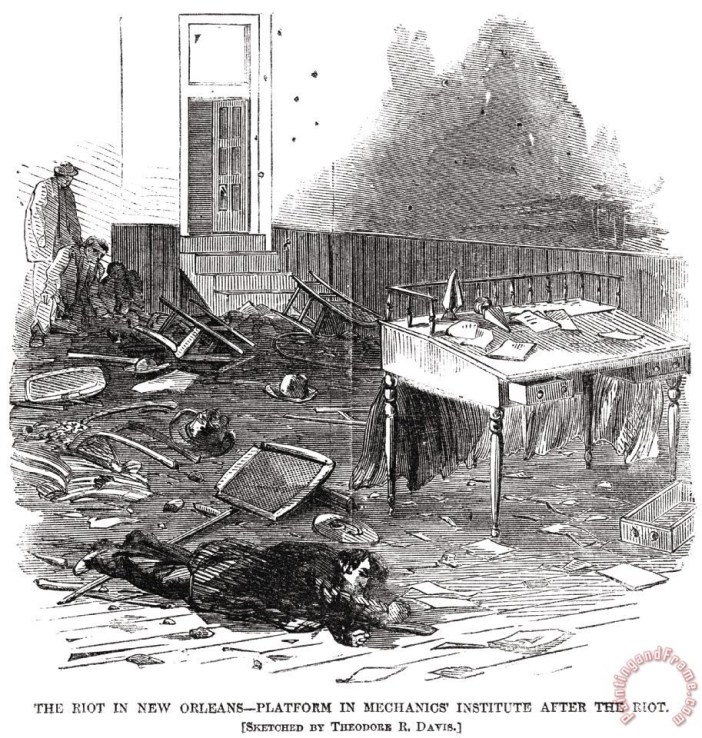
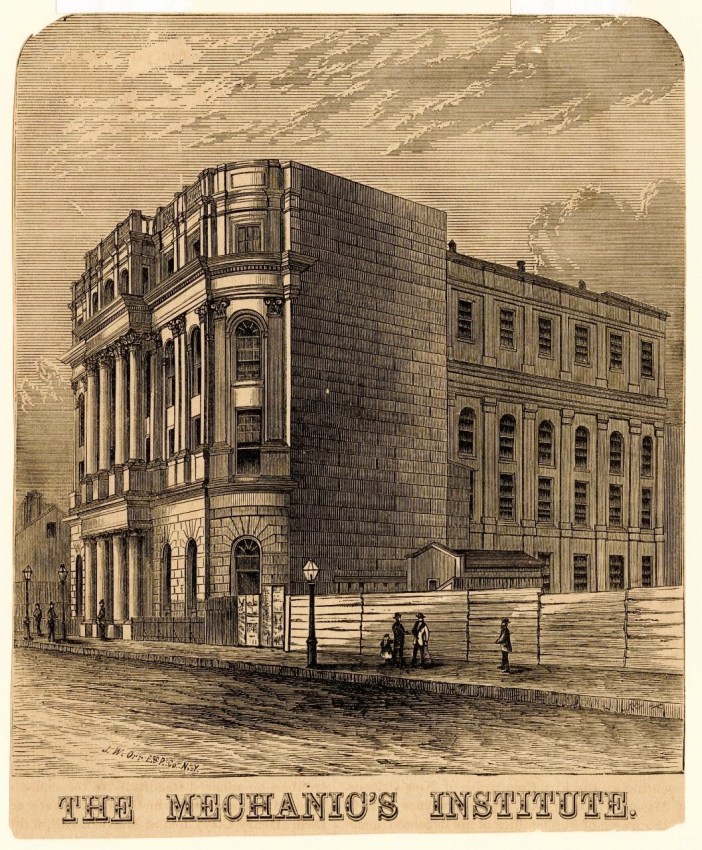
Now that the war was over, “Radical” Republicans were holding a state convention in The Mechanic’s Institute in New Orleans in hopes of gaining control of the legislature.

A group of black Union veterans formed and marched to the Institute in support of the Republicans, where they were attacked by an armed group of former Confederates, including some authorities (the Mayor and others were Democrat former Confederates). 34-35 black and 3 white Republicans were killed.

Other similar riots in the South occurred, convincing enough voters that more stringent Reconstruction policies were needed.

In November Republicans would sweep into both houses of Congress by 77%. The next year they would force through the Fourteenth Amendment protecting citizenship rights and equal protections over the protests of Democrats in Congress. Before it could be ratified, the Reconstruction Acts were passed…requiring former states to ratify if before they could be represented in Congress.

Carl Spaatz, Pioneer of Air Power

Today in History, July 14, 1974:

General Carl Spaatz dies.

Spaatz was a fighter pilot in his youth during WW1. He remained in the Army Air Corps, and when WW2 began went to England.

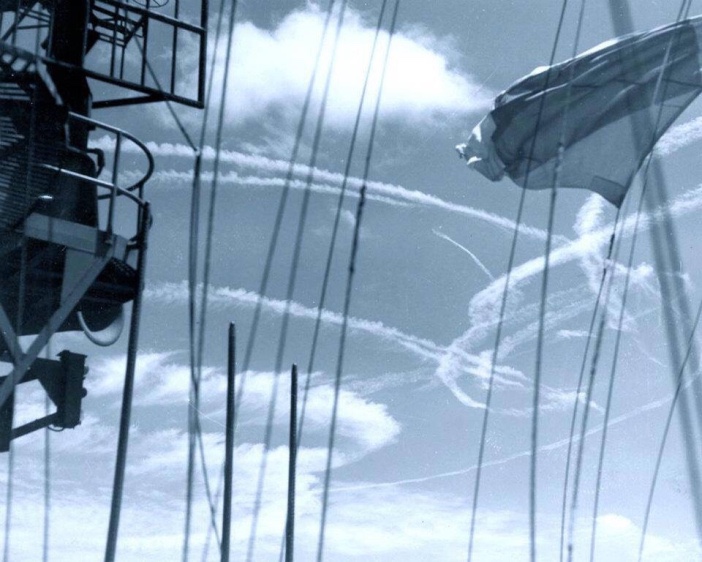
As German bombs fell on London during the Blitz and everyone else ran for the shelters, Spaatz sat on rooftops to gain knowledge of German tactics by watching their bombers and fighters in action.

When America entered the war, he became the commander of the Eighth Air Force as it began daylight bombing raids over Germany.

After the war, the Army Air Corps was separated from the US Army and became its own military branch, the US Air Force in 1947. Spaatz was it’s first Chief of Staff.

Saipan Banzai Charge

Today in History, July 7, 1944:

The largest Japanese Banzai charge (suicidal attack) of World War II is conducted during the Battle of Saipan, when the Japanese military is finally cornered on the island.

3,400 Japanese soldiers, including the wounded and civilians were killed as they charged the US Army and Marines. 650 Americans would die in the massive attack, but they held firm, and within two days the island was declared secure.

I won’t post the photos and videos I found, as they are gruesome. Look them up if you’d like.

3 posthumous medals of honor would be awarded out of this horrific battle.

Circus Horror

Today in History, July 6, 1944:

The Hartford, Connecticut Circus Fire.

During a performance by Barnum & Bailey Ringling Brother’s Circus, held in a massive tent, the tent suddenly caught fire. The tent had been treated with a mixture to make it waterproof that was also flammable, and the fire spread very quickly and within seconds large flaming sections were falling on the spectators below.

Many managed to escape by cutting holes in the sides of the tent, but when the supporting ropes burned through, the tent poles gave way and the entire structure came down. Between 167 and 169 people were killed and 700 injured, mostly children.

“Steady, men….steady! ChaaaaAAAaaRRGE!!”

Today in History, July 1:

A day for important battles.

1863 – The Union and the Confederates first clash at The Battle of Gettysburg, and both send reinforcements. The first day went badly for the Union, but the largest battle in North America had three more days to go, and would become a major turning point in the Civil War.

1898 – The Battle of San Juan Hill becomes a major victory for the US in the Spanish-American War as the US Army’s Fifth Corps takes the heights over Santiago de Cuba. It also set the stage for Colonel Theodore Roosevelt to become President as he became famous for leading his Rough Riders up Kettle Hill (not San Juan).

1916 – The Battle of the Somme in France; after a week’s bombardment with over 250,000 shells, the British launch an attack into no-man’s land. The Germans had retained many machine guns despite the bombardment, and the British soldiers were slaughtered. With 20,000 dead and 40,000 wounded in one day, it was one of the worst defeats for the British military’s history.

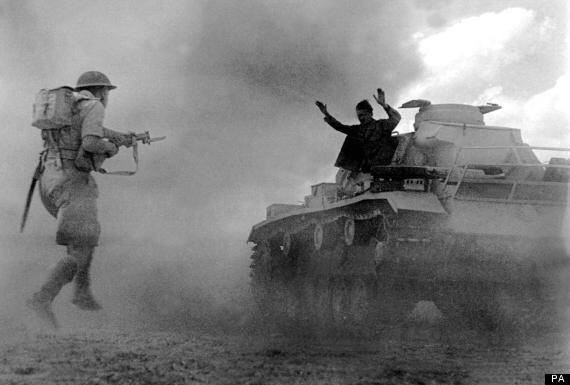
1942 – The Battle of El Alamein; In North Africa Erwin Rommel’s army had routed the British and their allies, driving them back so quickly that they had to leave much of their equipment behind. But on today’s date the British Army, resupplied by Americans and reorganized, turned the tide back on Rommel at El Alamein.

The “Jungle” and The Birth of the USDA

Today in History, June 30, 1906:

The Federal Meat Inspection Act is passed by Congress.

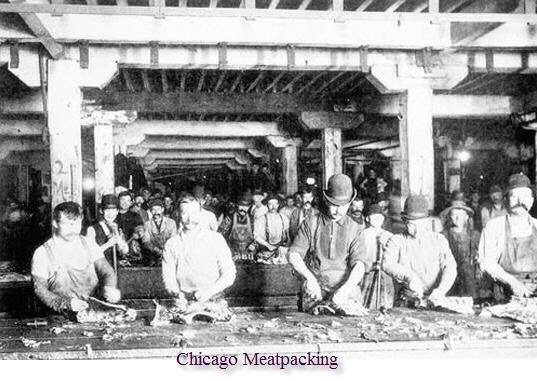
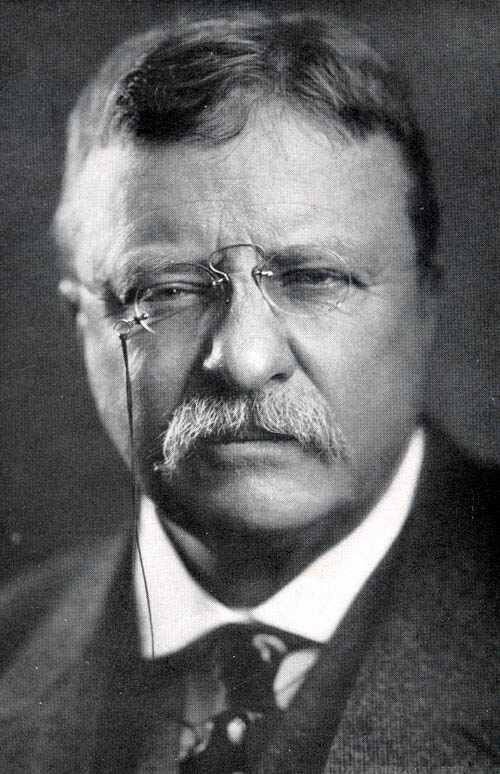
After Upton Sinclair had published “The Jungle” about Chicago’s corrupt meat packing industry, President Theodore Roosevelt sent representatives to investigate the industry.

Despite the Chicago industry’s efforts to hinder the investigation, the investigators uncovered horrible practices. TR respected his investigator’s findings, and Congress acted to protect the public.

The USDA was born, and healthy meat processing practices were enforced. It may seem a mundane issue, but where would the health of our children be without these actions?

Ignore History at Your Peril

Today in History, June 22, 1941:

Operation Barbarossa.

The largest invasion in history, ordered by Adolph Hitler, kicks off as 3 million German soldiers, supported by 19 Panzer (tank) divisions, 2,500 aircraft and 7,000 artillery pieces use their now standard Blitzkrieg tactics against Russia.

Initially the offensive was incredibly successful, pushing 300 miles into enormous Russia within weeks.

Hitler’s fellow meglomaniac Stalin had signed a non-aggression pact with Hitler, and had recently asked to join Hitler in his designs on world domination, so he thought his country was safe; and Russia’s air forces were obsolete.

However, Hitler was ignoring history (never, ever, EVER, do that!!). Napoleon (almost 129 years to the day) had invaded Russia and been turned back by the Russian winter, in WWI Hitler’s predecessors had been ruined by opening a second front against Russia. Hitler’s fate would be the same.

Russia benefited from an almost limitless source of manpower, and the industrial might of America, which sent arms and modern aircraft. Added to the Russian winter which Hitler did not prepare for, and defeat was unavoidable for Germany. 

Being sent to the “Eastern Front” was the kiss of death for German troops who had gained disfavor with their superiors.

The Great Marianas Turkey Shoot

Today in History, June 19, 1944:

Reversal of Fortunes, exhibited by “The Great Marianas Turkey Shoot”, or the First Battle of the Philippine Sea.

US Marines, supported by their parent service, the US Navy, are invading Saipan and other islands in the Marianas Islands, which is such a threat to Japan that the Imperial Japanese Navy finally comes out to fight a definitive battle.

When the war began the Japanese had the most advanced aircraft available, while the US Navy lagged sorely behind. The Japanese Zero, for example, was much faster and more maneuverable than the American Wildcat fighter. But by 1944 the American industrial complex had engaged fully. As late as 1943 the USS Enterprise stood alone in the Pacific against numerous IJN Carriers.

But by June of 1944 the Americans put to sea 15 Aircraft Carriers in 4 Task Groups equipped with modern aircraft that far out matched Japan’s aircraft, which had not been updated since the war began. In addition, Japan’s air service had lost nearly all of it’s experienced pilots, while the Americans had thousands of combat hardened, well-trained pilots and crews.

When the IJN sent it’s carriers and their crews against TF 58, they were massacred. In two days the Japanese lost over 400 aircraft and their crews, 3 aircraft carriers they could not spare, and the Americans lost 29 aircraft (some of the crews were rescued) and no ships. So many Japanese aircraft fell from the skies that a Lexington pilot referred to it as an old time turkey shoot, and the name stuck.

The air crews of the task force had been launched late in the day on the 20th to attack the Japanese fleet. When they returned, it was well after dark and they began landing their planes in the sea, unable to see the carriers well enough for landings aboard.

With the threat from enemy submarines and aircraft during the war, blackout conditions were the rule. Admiral Marc Mitscher wasn’t going to lose his boys and their planes, however. With his order the fleet lit up, and the planes began landing on fumes.

Proving Their Mettle…Farmers and Shopkeepers at Bunker Hill

Today in History, June 17, 1775:

“Don’t one of you fire until you see the whites of their eyes!”

The Battle of Bunker Hill.

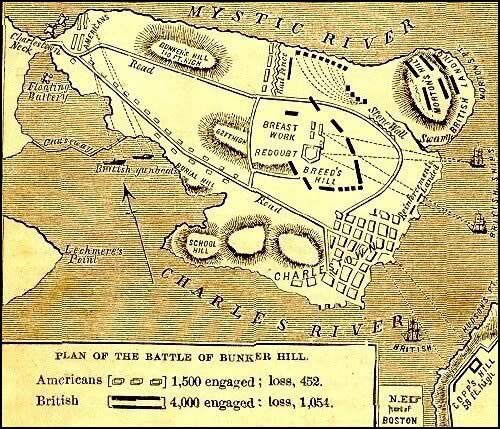
British Gen. William Howe landed his army on the Charlestown Peninsula and attacks colonist (Patriot) positions on Breed’s Hill and Bunker Hill.

Believing they were fighting farmers with pitchforks (the Patriots WERE as yet untrained and unorganized) Howe had his well trained, experienced troops charge the American positions head on, and was repelled by not so inexperienced fire (a poor farmer hunting game can’t afford to waste ammo, and becomes a very good marksman).

The Brits mounted a second attack, and were again sent running back down the hill. A third wave succeeded, however, as the militia was running out of ammunition.

Howe eventually won the battle, but he did so at great expense…nearly half his army lie dead on the field. The British had learned a dear lesson…they were fighting an untrained and poorly disciplined group of citizen soldiers…that were highly motivated and devoted to their cause.

The Siege of Gibraltar

Today in History, June 16, 1779:

Reportedly the largest battle (in terms of troops / sailors involved) of the American Revolutionary War begins….at Gibraltar.

When the French came in to aid the Americans, Spain followed suit. But of course, they had their own motives and designs. Primarily to regain lost territories; but they also drew up plans for the invasion and conquest of Britain.

On today’s date French and British forces began a land and sea siege of the British fortress at Gibralter, which was the keystone of English control of the Mediterranean Sea.

The Great Siege of Gibraltar, with constant bombardment, attacks, counter attacks, Naval reinforcement, Naval battles, starvation and disease would continue for 3 years and 7 months.

Gibraltar never fell.