Wiley Post Circumnavigates the Earth

Today in History, July 22, 1933:

We all know that Wiley Post died with his more famous Oklahoma brother Will Rogers at Point Barrow, Alaska in a plane crash. Will was a favorite Oklahoma son and a national hero as a humorist.

But on this date in 1933 Will’s friend Wiley, born in Texas but raised in Oklahoma, was the first man to circumnavigate the Earth by air in the Winnie Mae.

He also was an original innovator of the pressurized suit to allow high altitude flight, and made several attempts at cross country high altitude flight. He also discovered the Jet Stream, which has become so important to weather and aviation history.

The Grapes of Wrath

Today in History, April 14, 1939:

The Grapes of Wrath by John Steinbeck is first published and would become iconic, capturing the hearts of those that had lived through the Great Depression in the preceding years.

The novel told the story of the Joads, one of many Oklahoma families driven off of their farms by the Dust Bowl and bankers who evicted them when they couldn’t raise crops to pay mortgages. Like so many others, the family was forced to leave Oklahoma for California, where they were derisively called “Okies”, to seek work as laborers in order to survive.

My father (who lived through it) used to counter that the migration of the “Okies” from Oklahoma to California had greatly increased the intelligence level of both states.

Pearl Harbor…An Unmitigated Failure for Japan

Today in History, December 7: 1941 –

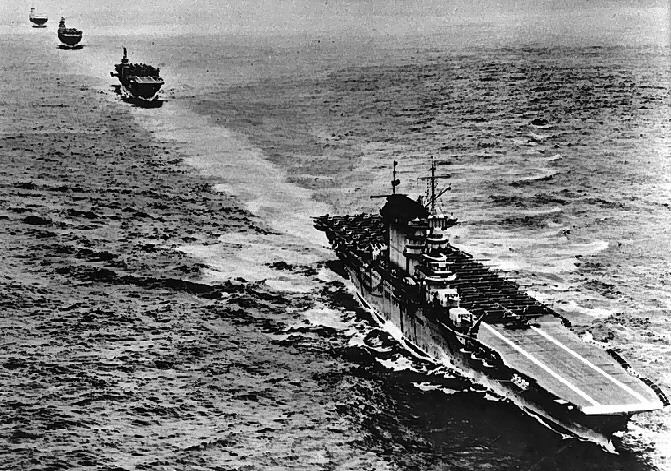
Did you know that the Japanese surprise attack on the bases at Pearl Harbor, Hawaii was…a tremendous failure? In spite of the horrific losses in lives and the loss of combatant ships and aircraft, the Japanese Task Force missed their primary targets. The battleships and most of the aircraft they destroyed were obsolete…and they knew it.

They were after the American aircraft carriers, which they recognized as the next generation capital ships. Their intelligence was that the American carriers were in port at their berths, but the Kawanishi flying boat that provided that info couldn’t catch that the carriers left soon after it’s recon mission.

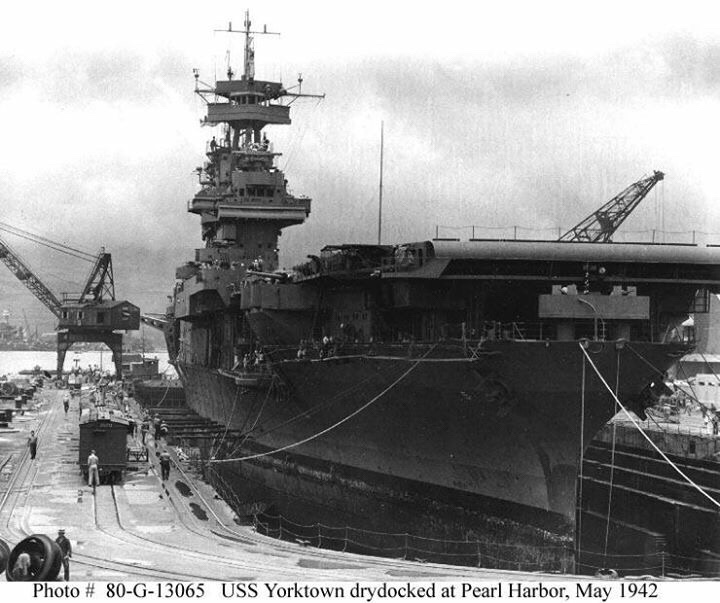
The Japanese aircraft failed to destroy the dry dock facilities at Pearl…allowing the repair of many of the ships damaged during the attack, and importantly, the USS Yorktown after the Battle of the Coral Sea, allowing her to take part in the tide-turning Battle of Midway.

And due to Admiral Nagumo’s decision to cancel another sortee, the attack failed to destroy or damage the fuel storage depot at Pearl. Had they done so, the entire fleet would have been forced to retreat the 2500 miles to San Diego (if they could make it there). The US fleet could not have operated from Pearl for nearly a year if they had lost that fuel depot. So while the attack was a flashy victory for the Empire, it was a tactical loss. America’s industrial capacity quickly replaced the losses. God bless our heroes that lost their lives that day.

What was supposed to be the backbone of the US Pacific Fleet, several Battleships, were either completely destroyed or so badly damaged that it would take years before they could put to sea again. the Arizona was virtually blown apart by a direct hit that ignited her magazines (her ammunition stores); the Oklahoma rolled over and capsized; only one of the behemoths managed to get steam up and make a run for the sea. But her commander wisely beached her, fearful that she might be sunk in the channel and put the entire harbor out of commission for months.

The Army commander, more worried about sabotage than air attacks, had ordered all of the Army Air Corps’ aircraft lined up wingtip to wingtip so they could be more easily guarded. They made easy targets for strafing Japanese fighters. Only two Army fighters made it into the air to do battle with the enemy (my father grew up with one of the pilots).

WAVES…Born at OSU


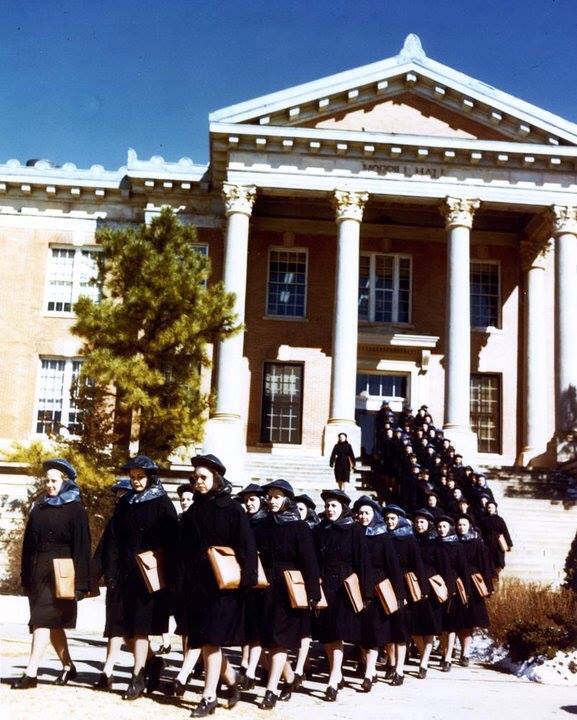
Today in History, October 9: 1942 – The Navy’s first WAVES (Women Accepted for Volunteer Emergency Service) begin school in Stillwater, Oklahoma. That should make us proud.

Morrill Hall at Oklahoma State University was the birthplace of the WAVES program. It may seem trite today, but in it’s time it was a leap forward for women’s placement in the workplace. 


Today in History, August 13: 1931 – The first Community Hospital in the United States is dedicated in Elk City, Oklahoma. Dr. Michael Shadid noticed that the farmers and their families in the region were not getting sufficient medical care. He worked with the farmers and the Oklahoma Farmer’s Union to begin a non-profit clinic and hospital owned by the farmers. For his trouble the Medical Examiners Board tried to revoke his medical license, the State Medical Association tried to pass a bill outlawing non-profit hospitals, and the Beckham County Medical Association expelled him.

Oklahoma Lawmen…Oklahoma Badmen


Today in History, July 5: 1896 – Outlaw Bill Doolin, having been arrested by famous Oklahoma Lawman Bill Tilghman at Eureka Springs, Arkansas without incident, escapes from the Guthrie, Oklahoma jail. He had masterminded several robberies, both with his gang and the Dalton Brothers. He should have stayed put. By August 25th, a posse caught up with him and took him out during a gun battle.

“Oh, what a beautiful mornin’, Oh, what a beautiful day. I got a beautiful feelin’ Ev’rything’s goin’ my way.”

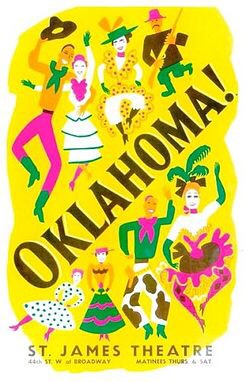
Today in History, March 31: 1943 – Historically Broadway musicals had gone for flash and opened with a bang. So most critics expected this new musical, opening on Broadway in the middle of WWII, to bomb. They misunderstood the mood of the country, apparently. When Rodgers and Hammerstein’s Oklahoma! premiered on this date in 1943 on Broadway, it opened with the melodious tunes of a cowboy singing as he greeted a peaceful morning. Almost in unison the war weary audience let out an audible “aaaaahh”. By the time the cast had sung the title song and closed the play, Joan Roberts (Laurey) says that the applause was deafening through two encores. The record setting musical would run for 15 years, 2,212 performances, before closing. 

The Chisolm Trail

Today in History, March 4: 1868 – Jesse Chisholm dies. The famous Chisholm Trail is named for Jesse. Most of us assume that Chisholm was a cattle baron that established the trail to take his cattle north. Not so. Jesse was a “halfbreed” in the vernacular of the time…part Scot and part Cherokee. He lived amongst the Native Americans in Arkansas and Indian Territory, and established himself as a merchant. He often negotiated the release of hostages taken by Native American tribes. He knew the landscape well, and established a route from Wichita, Kansas to the Red River, then further south into Texas for his commerce. When Texans needed to move their cattle north to rail heads in Kansas, they used Chisholm’s trail, widening it to as much as 400 yards which can still be seen. Over a million cattle would be moved along the trail established by Jesse Chisholm.