The War of 1812 & Communication

Today in History, June 18, 1812:

Ironies of 19th century communication, or the lack thereof in the War of 1812. 

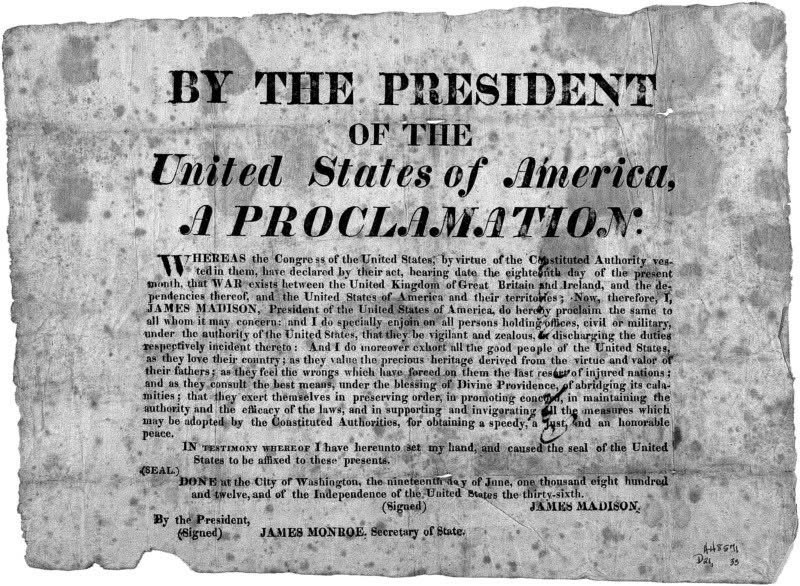
On June 1, 1812, President Madison asked to declare war on Great Britain because Britain would not stop boarding US ships and impressing US sailors into the Royal Navy. By the 18th Congress had acted and President Madison signed the declaration of war.

The irony? Five days later on June 23, 1812, a new British government repealed the Orders in Council, deciding impressing US sailors was not in Britain’s interest, and created bad relations with America.

Neither nation knew what the other was doing.

The ships carrying the messages to the opposing governments likely passed each other on the Atlantic. 

But the war was on. 

Likewise, when the war ended with the Treaty of Ghent on December 24, 1814, it took weeks for the message to reach the Americas. So on January 8, 1815, British General Packenham, hero of the war with France, attempted to take New Orleans with a large army.

American General Andrew Jackson defended New Orleans with an army of US soldiers, Indian allies, and pirate Jean Lafitte’s roughians. With tactics, artillery and folks that knew how to shoot, they decimated the British. 2,042 casualties for the British, including Packenham killed, to only 71 casualties for the Americans.

Weeks after the war had ended.

Sail on, O Ship of State!

Sail on, O Ship of State!

In the midst of foreign wars in 1940, Franklin Delano Roosevelt won a third term as US President. It had been a hard fought campaign. 

Learning that the loser in the campaign, Wendell Wilkie, was headed to London to gain info on the war, FDR invited him to the White House. They chatted amicably, and FDR asked the Republican to deliver a handwritten note to Prime Minister Winston Churchill, giving him a letter of introduction, making him an emissary. 

The note contained part of a Longfellow poem which FDR & Churchill, both Naval enthusiasts, would recognize immediately. 

When Churchill gave a speech on February 9, 1941 he included the verse, crediting FDR and Wilkie. 

…Sail on, O Ship of State!

Sail on, O Union, strong and great!

Humanity with all its fears,

With all the hopes of future years,

Is hanging breathless on thy fate!

The verse recognized the troubles both nations were enduring. 

I share this now reflecting on how good it would be in these contentious times if in the coming months the victor and the defeated of a presidential campaign could come together and help the ship of state to sail on. Lincoln also did it with his “team of rivals.” 

Don’t worry. I’m not holding my breath. 

THE Speech: A Time for Choosing

Today in History, October 27, 1964:

While campaigning for Barry Goldwater to be president, actor Ronald Reagan gave a speech entitled “A Time for Choosing” which would come to define the American conservative movement for years to come. Reagan’s inspiring words would also show him to be the “Great Communicator” and launch him into the California governor’s office and eventually the presidency.

His words have often been recited and repeated as being pertinent to later times, and can be today as well. It is worth the time to listen.

https://youtu.be/qXBswFfh6AY?si=LPOyXa3o1BYVIz1T

Theodore Roosevelt, Jr on July 4th, 1942; Connections

Today in History, July 4, 1942:

A lifetime of service, epitomized.

I really enjoy connections in history, and the Roosevelts are replete with material. Theodore Roosevelt, Jr, the president’s namesake son, created a military legacy which probably eclipsed that of his father.

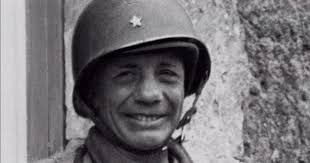
On July 4, 1942, at 55 years old, Brigadier General Roosevelt found himself in command of a segment of the US Army 1st Infantry Battalion (The Big Red One), 26th Regiment en route to Europe during WWII.

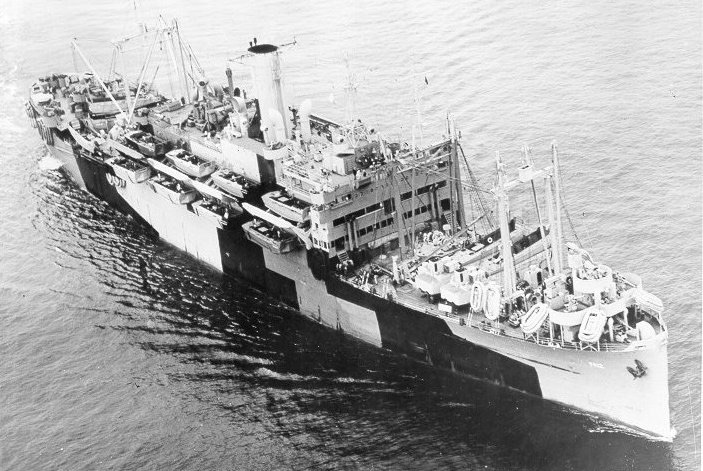
Independence Day came in the middle of the Atlantic aboard an aging rust bucket of a troop ship named the USS Leonard Wood en route to England.

His cousins Franklin and Eleanor were in the White House.

TR Jr celebrated the day with food and song for his troops, and gave a speech.

In the speech he explained the irony that 25 years before on Independence Day in 1917, he had been on another troop ship in the middle of the Atlantic, sailing with the same Regiment to Europe to fight the same enemy for the same reasons in WWI.

There were more Independence Day ironies for the family.

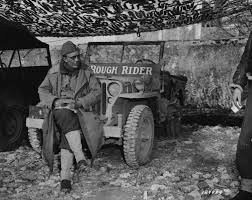
17 years before TR Jr’s first crossing with the Regiment, on July 4, 1900, his father the President led a parade of Rough Riders in Oklahoma City; many of them were from Oklahoma and the Indian Territory.

2 years before that on Independence Day in 1898 TR had still been in Cuba, having led the charge up Kettle Hill on July 1st.

The rust bucket? It was named for the US Army officer, Leonard Wood, who had been Colonel Roosevelt’s (Sr) commander and close friend during the Spanish-American War campaign.

TR Jr would go on to fight with distinction in the North Africa campaigns. On the D-Day Normandy invasion on June 6, 1944 he would be the only general officer to go ashore in the first wave with his troops. Dropped in the wrong location, he was famous for declaring “We will start the war from right here.”

Theodore Roosevelt, Jr would die in France a little over a month after D-Day, suffering a heart attack. He is buried there next to his brother Quentin, who died in combat in WWI.

Father and son would both be awarded the Medal of Honor posthumously.

Juneteenth

Today in History, June 19, 1865:

Juneteenth

“What to the slave is the Fourth of July?” – Frederick Douglass

Douglass asked this question in an 1852 speech given on July 5th. During the same speech he praised the founding fathers as heroes. Yet the founding fathers had to make compromises which declared American citizens to be less than human. Douglass was a patriot himself, loving the country which had enslaved him since birth, yet recognizing the evils of bondage.

He sent his sons to fight with white men in the Civil War to defeat slavery.

In 1863 President Lincoln declared slavery illegal in the slave states with the Immancipation Proclamation.

Since this did not serve the purposes of the Confederacy, most slaves did not learn of the proclamation until the end of the war. The last to learn of their freedom were the slaves in Texas. On June 19, 1865, Union troops arrived in Texas… the previously enslaved blacks learned they had been free for two years.

The following year they began to celebrate this date as Juneteenth. As Douglass had said, Independence Day had meant little to them. But the day THEY had learned of their freedom mattered a great deal.

The reddest state in the Union, a previous slave state, Texas recognized Juneteenth in 1980. It would be recognized nationally in 2021. Many consider Juneteenth to be a “made up” holiday. Are not all holidays “made up?” This one is simply newer.

I do not know any celebrants of Juneteenth who do not also celebrate the Fourth of July, America’s Independence Day. Douglass surely did. Yet we cannot deny that “Juneteenth” is a second Independence Day, because many of our citizens did not enjoy their independence until that date in 1865.

We should rejoice that date. Many of our ancestors died to ensure we could finally enjoy the full purpose of our independence.

Chophouse Massacre – Dewey Lives!

Today in History, October 23, 1935:

The Chophouse Massacre.

Gangster and racketeer Dutch Schultz and several of his crew were gunned down in his “headquarters”, the Palace Chophouse in Newark, New Jersey by 2 hit men from Murder, Inc.

I find the interesting part of the story in why he was killed, and the future of another man involved.

Schultz had been prosecuted twice by a very talented and aggressive US Prosecutor, Thomas Dewey. Schultz had gone to his fellow Mafioso and sought permission to assassinate Dewey. When they declined, afraid the full weight of national law enforcement would be brought to bear on them, Schultz was furious and made plans to kill Dewey anyway.

That’s when the decision was made that Schultz had to be eliminated.

Schultz’s death and Dewey’s survival meant that Dewey would become the NY DA, NY Governor, and would run for President 3 times.

In 1948 it was so much assumed he would win that the Chicago Tribune ran the headline “Dewey Defeats Truman”, a paper that the real victor, Truman, held up for a famous photo…relegating crusading prosecutor Thomas Dewey, known for his photographic mind that helped him tear apart suspects on the stand, who so angered the Mafia that they wanted to kill him, to a punchline for most.

This is why I like finding the links in history.

Life Lessons from U.S. Grant

On the evening of the first day out from Goliad we heard the most unearthly howling of wolves, directly in our front. The prairie grass was tall, and we could not see the beasts, but the sound indicated they were near.

To my ear it appeared that there must have been enough of them to devour our entire party, horses and all, at a single meal.

The part of Ohio I hailed from was not thickly settled, but wolves had been driven out long before I left. Benjamin was from Indiana, still less populated, where the wolf yet roamed over the prairies. He understood the nature of the animal and the capacity of a few to make believe there was an unlimited number of them. He kept on towards the noise, unmoved. I followed on his trail, lacking the moral courage to turn back…but Benjamin did not propose turning back.

When he did speak it was to ask, “Grant, how many wolves do you think are in that pack?”

Knowing where he was from, and suspecting he thought I would over-estimate the number, I determined to show my acquaintance with the animal by putting the estimate below what possibly could be correct, and answered, “Oh, about twenty,” very indifferently. He smiled and rode on.

In a minute we were close upon them, and before they saw us. There were just TWO of them. Seated upon their haunches, with their mouths close together, they had made all of the noise we had been hearing for the last ten minutes.

I HAVE OFTEN THOUGHT OF THIS INCIDENT SINCE, WHEN I HAVE HEARD THE NOISE OF A FEW DISAPPOINTED POLITICIANS WHO HAVE DESERTED THEIR ASSOCIATES. THERE ARE ALWAYS MORE OF THEM BEFORE THEY ARE COUNTED.

Personal Memoirs of U.S. Grant, December, 1845 near Goliad, Texas.

He never ceases to impress me!

The Prescient President & The Gettysburg Address

Today in History, November 19, 1863:

“I should be glad, if I could flatter myself that I came as near to the central idea of the occasion, in two hours, as you did in two minutes.”

-Edward Everett, popular orator that spoke with President Lincoln at Gettysburg to commemorate those that died there during the pivotal Battle of Gettysburg earlier in the year.

President Lincoln spoke briefly, and his speech was criticized at the time by some media, but has become legendary for it’s prescience. See below for the full text…

Four score and seven years ago our fathers brought forth on this continent, a new nation, conceived in Liberty, and dedicated to the proposition that all men are created equal.

Now we are engaged in a great civil war, testing whether that nation, or any nation so conceived and so dedicated, can long endure. We are met on a great battle-field of that war. We have come to dedicate a portion of that field, as a final resting place for those who here gave their lives that that nation might live. It is altogether fitting and proper that we should do this.

But, in a larger sense, we can not dedicate — we can not consecrate — we can not hallow — this ground. The brave men, living and dead, who struggled here, have consecrated it, far above our poor power to add or detract. The world will little note, nor long remember what we say here, but it can never forget what they did here. It is for us the living, rather, to be dedicated here to the unfinished work which they who fought here have thus far so nobly advanced. It is rather for us to be here dedicated to the great task remaining before us — that from these honored dead we take increased devotion to that cause for which they gave the last full measure of devotion — that we here highly resolve that these dead shall not have died in vain — that this nation, under God, shall have a new birth of freedom — and that government of the people, by the people, for the people, shall not perish from the earth.

George Washington Promoted…in 1976

Today in History, October 11, 1976:

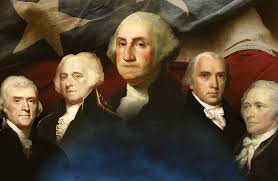
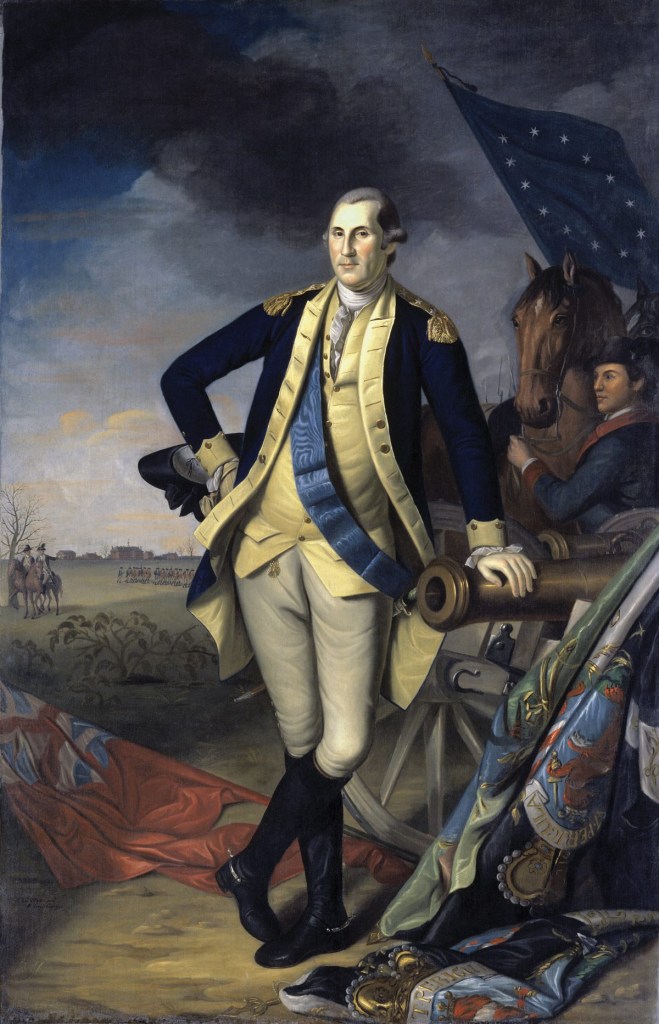
President Gerald Ford signs an act of Congress promoting Lieutenant General George Washington to General of the Armies, what would be a six star general if the insignia existed.

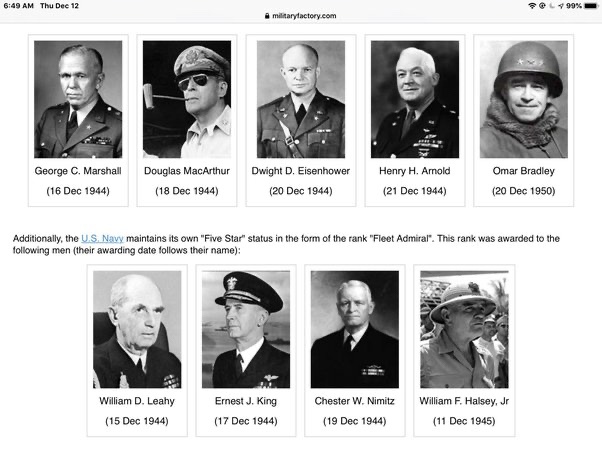
This act promoted the former President over numerous US Army Generals and US Navy Admirals, which was the point.

In the military and paramilitary services such as police, rank matters. To the extent that if two officers of the same rank are involved in an action, they will be comparing dates of rank to see who is in command.

During the Civil War, when General Ulysses Grant was given command of the Union Armies, he was promoted to Lt. General to ensure he outranked all other commanders.

During WWI and WWII the same actions were taken to ensure American commanders would not be outranked by their Allied contemporaries such as Bernard Montgomery in the British Army.

This resulted in several 5-Star Generals and Admirals. Generals of the Army (singular) or Fleet Admirals.

In WWI Gen. John “Black Jack” Pershing had been made a General of the Armies.

At the nation’s bicentennial, it was considered unacceptable that the father of the country should be outranked by any fellow officers, much less so many.

The act not only promoted Gen. Washington above his fellows, it stated nobody can be promoted above him.

I don’t believe any of them would object.

Carpathia – History Connections

Today in History, July 17, 1918:

Crossing paths in history.

As most know, on April 12, 1912, RMS Titanic struck an iceberg and sank within 4 hours.

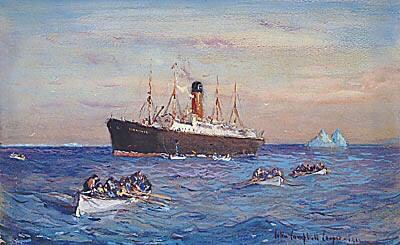
The nearest ship to receive her distress signal was the RMS Carpathia, which sped at full speed for two hours to the disaster scene. Upon her arrival, she rescued 705 survivors from the freezing waters of the North Atlantic.

The Carpathia’s crew became heroes, being awarded medals. Her Captain, Arthur Henry Rostron, was knighted and was a guest of President William Taft in the White House.

During WWI the Carpathia served as a troop ship, transporting thousands of American soldiers across the Atlantic to the war in Europe.

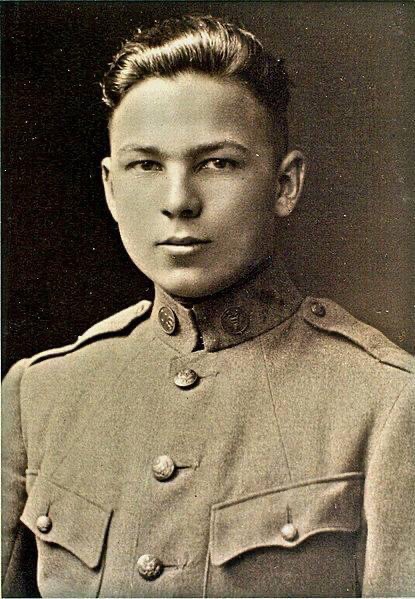
One of those doughboys was Frank Buckles, who would become the last surviving American Soldier from WWI before his death in 2011.

He was a prisoner of war in the Philippines during WWII (as a civilian) and a strong advocate for a WWI Memorial, which…led him to be a guest of President George W. Bush in the White House.

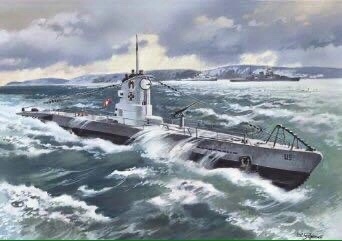
On this date in 1918 the Carpathia was sunk by German U-Boat U-55. All but 5 of her crew managed to escape to lifeboats.

They were in turn saved by the Sloop HMS Snowdrop, which arrived and drove off the German sub before it could machine gun the crew in their boats.

Everything is connected in history…you just have to find it. We usually know only a snippet of people’s lives. But they normally touch so much more.

Also on this date, in 1763, John Jacob Astor was born in Germany. He would immigrate to America and become America’s first millionaire. His grandson, John Jacob Astor IV, the world’s richest man, would die during the Titanic disaster.