“When I die, my epitaph, or whatever you call those signs on gravestones, is going to read:
“I joked about every prominent man of my time, but I never met a man I didn’t like.”
I am so proud of that, I can hardly wait to die so it can be carved.” –Will Rogers.
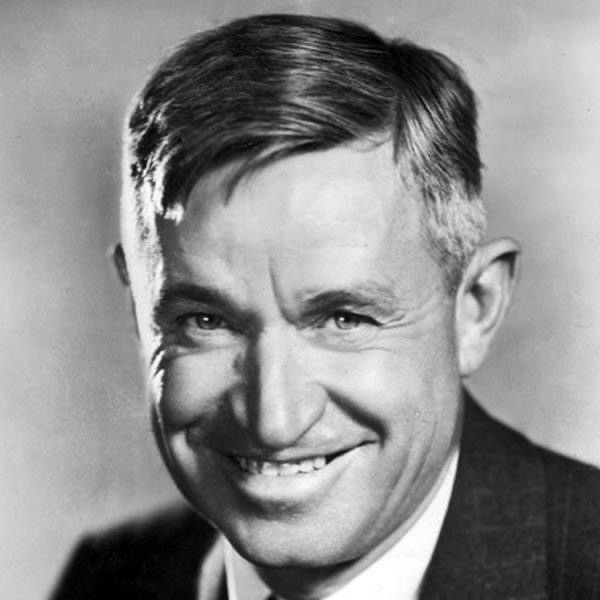
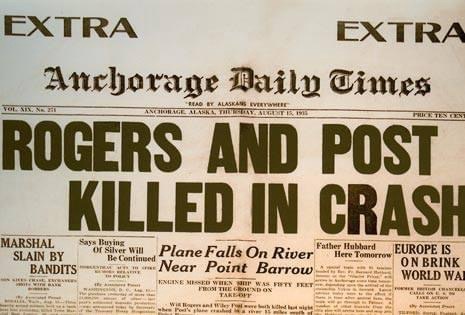
Oklahoma’s two most favorite sons die together in Fort Barrow, Alaska.
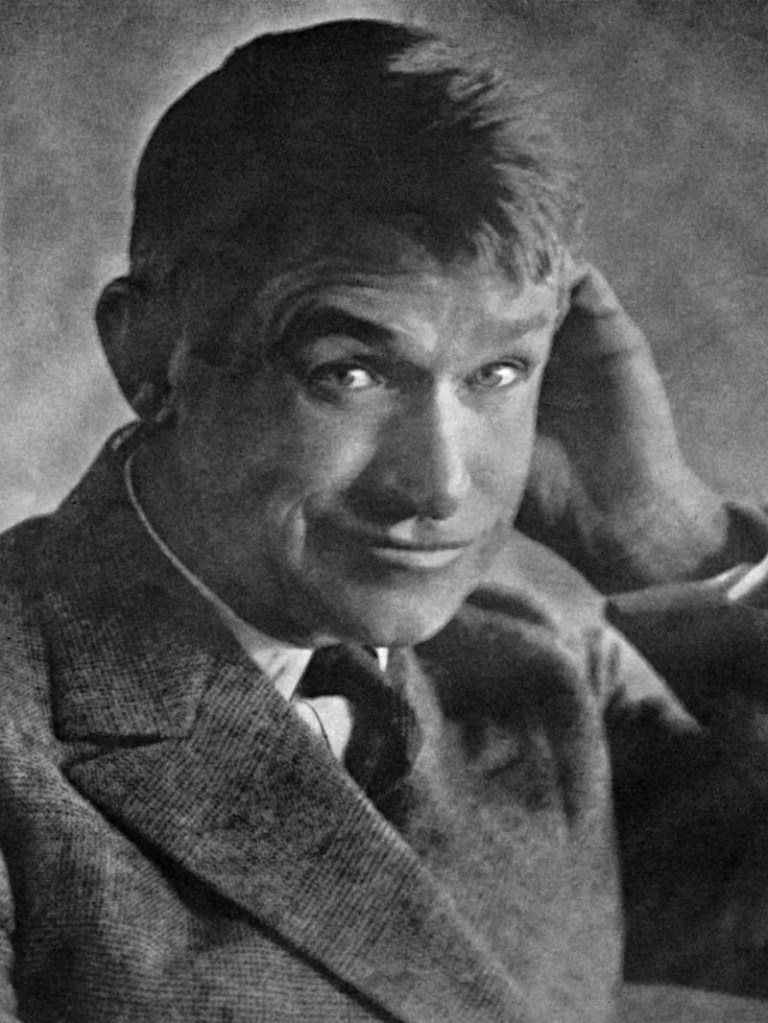
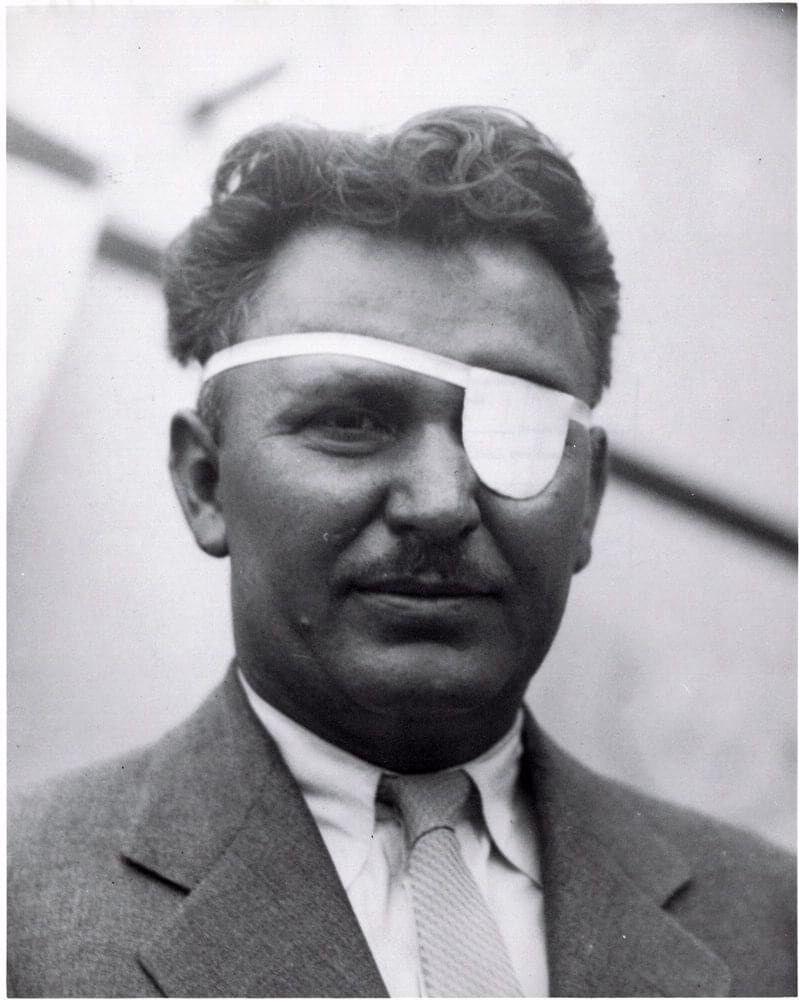
Will Rogers and Wiley Post were good friends, and both proponents of advances in aviation.
Rogers started out as a cowboy doing rope tricks and became an actor, journalist and humorist, becoming world famous and loved by the world.
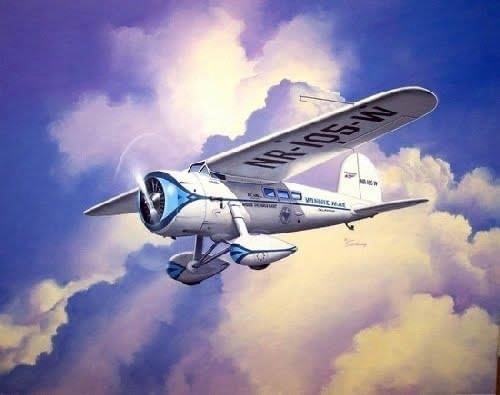
Post was an aviation pioneer, being the first to fly around the world solo, pioneering the “pressure suit” that would lead to pressurized suits for future pilots and astronauts, and the first to suggest using the jet stream and high altitude flight for commercial aviation.
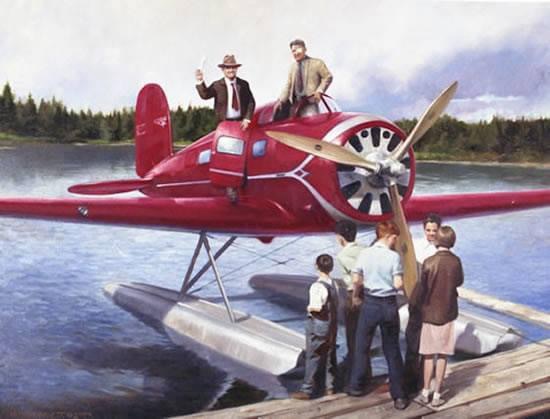
Rogers was accompanying his friend Post on another around the world flight when they took off from a lake in Fort Barrow…the aircraft’s engine failed and they crashed, and both died.
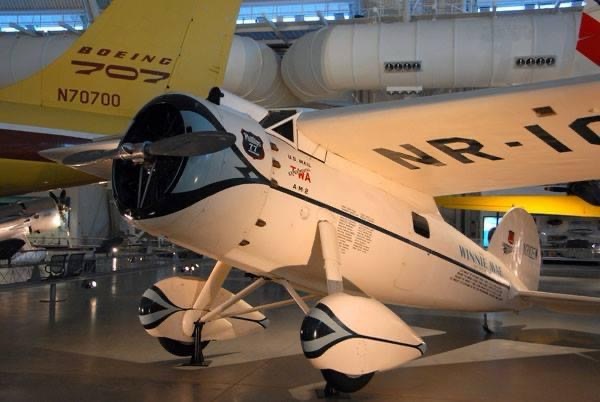
The entire world mourned, but especially Oklahoma. The aircraft that Post flew to set so many records, the “Winnie Mae” is on display at the National Air and Space Museum in Washington, D.C., and there are memorials to both men from coast to coast. Proud to be an Okie. One has to wonder what impact either of them would have had in the decades that followed (WWII, jet age, politics) had they survived.
I really enjoy connections in history, and the Roosevelts are replete with material. Theodore Roosevelt, Jr, the president’s namesake son, created a military legacy which probably eclipsed that of his father.
On July 4, 1942, at 55 years old, Brigadier General Roosevelt found himself in command of a segment of the US Army 1st Infantry Battalion (The Big Red One), 26th Regiment en route to Europe during WWII.
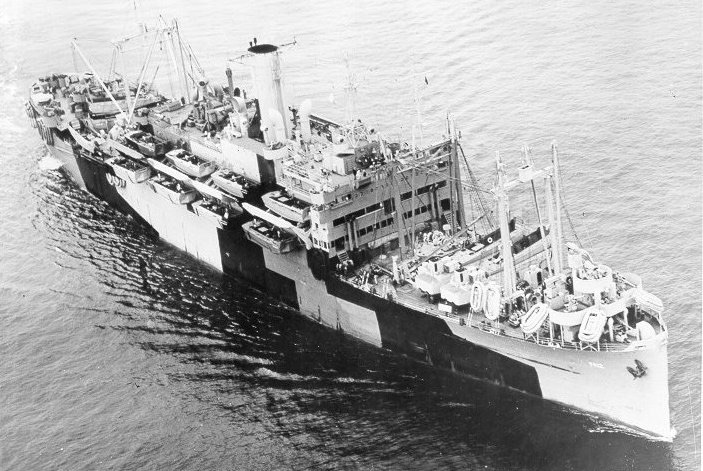
Independence Day came in the middle of the Atlantic aboard an aging rust bucket of a troop ship named the USS Leonard Wood en route to England.
His cousins Franklin and Eleanor were in the White House.
TR Jr celebrated the day with food and song for his troops, and gave a speech.
In the speech he explained the irony that 25 years before on Independence Day in 1917, he had been on another troop ship in the middle of the Atlantic, sailing with the same Regiment to Europe to fight the same enemy for the same reasons in WWI.
There were more Independence Day ironies for the family.
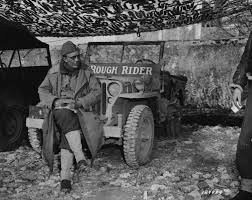
17 years before TR Jr’s first crossing with the Regiment, on July 4, 1900, his father the President led a parade of Rough Riders in Oklahoma City; many of them were from Oklahoma and the Indian Territory.
2 years before that on Independence Day in 1898 TR had still been in Cuba, having led the charge up Kettle Hill on July 1st.
The rust bucket? It was named for the US Army officer, Leonard Wood, who had been Colonel Roosevelt’s (Sr) commander and close friend during the Spanish-American War campaign.
TR Jr would go on to fight with distinction in the North Africa campaigns. On the D-Day Normandy invasion on June 6, 1944 he would be the only general officer to go ashore in the first wave with his troops. Dropped in the wrong location, he was famous for declaring “We will start the war from right here.”
Theodore Roosevelt, Jr would die in France a little over a month after D-Day, suffering a heart attack. He is buried there next to his brother Quentin, who died in combat in WWI.
Father and son would both be awarded the Medal of Honor posthumously.
“What to the slave is the Fourth of July?” – Frederick Douglass
Douglass asked this question in an 1852 speech given on July 5th. During the same speech he praised the founding fathers as heroes. Yet the founding fathers had to make compromises which declared American citizens to be less than human. Douglass was a patriot himself, loving the country which had enslaved him since birth, yet recognizing the evils of bondage.
He sent his sons to fight with white men in the Civil War to defeat slavery.
In 1863 President Lincoln declared slavery illegal in the slave states with the Immancipation Proclamation.
Since this did not serve the purposes of the Confederacy, most slaves did not learn of the proclamation until the end of the war. The last to learn of their freedom were the slaves in Texas. On June 19, 1865, Union troops arrived in Texas… the previously enslaved blacks learned they had been free for two years.
The following year they began to celebrate this date as Juneteenth. As Douglass had said, Independence Day had meant little to them. But the day THEY had learned of their freedom mattered a great deal.
The reddest state in the Union, a previous slave state, Texas recognized Juneteenth in 1980. It would be recognized nationally in 2021. Many consider Juneteenth to be a “made up” holiday. Are not all holidays “made up?” This one is simply newer.
I do not know any celebrants of Juneteenth who do not also celebrate the Fourth of July, America’s Independence Day. Douglass surely did. Yet we cannot deny that “Juneteenth” is a second Independence Day, because many of our citizens did not enjoy their independence until that date in 1865.
We should rejoice that date. Many of our ancestors died to ensure we could finally enjoy the full purpose of our independence.
He lay staring up at the sky, though the sun was hidden from his sight by smoke and dust and powder. The mini-ball had shattered his left thigh… he could not stand. The pain was excruciating, his hands were covered in blood from where he attempted to feel his injuries.
He could hear the rifles firing, accompanied by the cannon and rallying cries. What horrified him most… he could hear the crackling of the fire. He knew it was coming closer very fast, fueled by the trees in the Wilderness. A forest was no place for so much weaponry.
He looked one direction, then the other. Dozens of men lay in similar condition to him. Many of them screaming for help that could not come. Closest to him, he saw Tommy. He grew up with Tommy… with all these men. Their regiment all signed up from the same town. Tommy was the strongest of them, always steadfast and quiet.
When the fire reached Tommy, it caught his clothing first, but soon it engulfed him entirely. Tommy’s terrified screams echoed in his ears until Tommy’s powder went up, and Tommy was silent.
He rasped out a plea for help. He tried to crawl. He knew he was going to die. But he had to get away from the fire. He and the others had sewn tags with their names on them to their shirts. If he died in the fire, mama would never know what happened to him. He had to save that tag.
He felt his strength leaving him, and lost consciousness. Maybe he would not feel the flames.
He woke suddenly. They must’ve found him. He lay on his back on a table. Above him stood a man covered in blood and grime. The man spoke to others, “Hold him down.”
Then he felt the saw begin to bite into his flesh, he screamed and mercifully, lost consciousness again.
The leg that wasn’t there anymore hurt all the time, as if it were still present. All these years later, he stood on that damned crutch, looking out on a field full of markers.
He could hear their voices. He could hear their screams and feel their pain. The men that weren’t there anymore, that hurt all the time, as if they were still present.
⁃ Battle of the Wilderness, Civil War, 1864.
————-
She was playing in the street, kicking a ball with her friends. Her momma watched with a smile.
She was 13 that year. Her body was changing, and she noticed the boys looked at her differently. She was filling out, having to become accustomed to full breasts and wide hips, amongst other things. Momma had explained things to her. How someday she would have children of her own.
That was the day the soldiers came.
She wished she could talk to momma now. And papa. It had been months since that long ago day in the street. She knew she would never have her own children. It was all gone. Her womanly features were gone. What little flesh she had left hung from her bones loosely. She looked into the hollow, lost eyes of the people around her and understood she looked the same. Everything hurt. Her joints actually rubbed together.
When the door clanged shut, she looked at the shower heads. A warm shower would be such a relief. It would feel good on her filthy flesh.
She knew in her heart this was not a shower room. She heard the hiss of the gas. That would be a relief too, she thought.
⁃ Nazi concentration camp, 1940’s.
These accounts may be from my imagination, however they are based on actual events. Similar incidents happened many times.
As depressing as these events are, knowing history provides perspective. Knowing so many people never got to live their lives makes you appreciate yours all the more, even when things are bad.
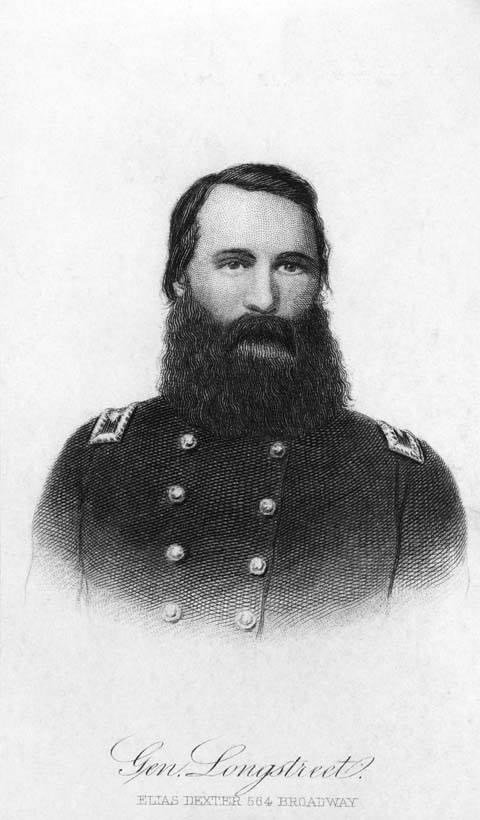
James Longstreet is born in near Edgefield, South Carolina.
Longstreet is an excellent example of the paradox of the 19th century. He graduated West Point, fought gallantly in the Mexican-American War at the Battle of Chapultepec; he was close friends with Ulysses Grant, serving as best man at Grant’s wedding.
After such loyal service to the US Army, in 1861 he resigned his commission and joined the Confederacy.
He fought in most of the major battles in the eastern area and some in the west. Aside from Robert E. Lee, he was likely the most respected and successful Southern General.
Yet after the war, he determined to do the best he could by his countrymen. He joined the Republican Party and returned his loyalty to the government.
The Republican party had been the entity that had pursued the war in the North, so his detractors excoriated him for this act…but in his statements he wanted to use the power of the Republican party to maintain Southern rights and desires.
Jubal Early and others claimed he was responsible for the loss at Gettysburg (he was not).
Much like Lee, whether you agree with what he fought for or not, Longstreet appeared to be a “Southern Gentleman”, and gained the admiration of the soldiers that served with him.
Gangster and racketeer Dutch Schultz and several of his crew were gunned down in his “headquarters”, the Palace Chophouse in Newark, New Jersey by 2 hit men from Murder, Inc.
I find the interesting part of the story in why he was killed, and the future of another man involved.
Schultz had been prosecuted twice by a very talented and aggressive US Prosecutor, Thomas Dewey. Schultz had gone to his fellow Mafioso and sought permission to assassinate Dewey. When they declined, afraid the full weight of national law enforcement would be brought to bear on them, Schultz was furious and made plans to kill Dewey anyway.
That’s when the decision was made that Schultz had to be eliminated.
Schultz’s death and Dewey’s survival meant that Dewey would become the NY DA, NY Governor, and would run for President 3 times.
In 1948 it was so much assumed he would win that the Chicago Tribune ran the headline “Dewey Defeats Truman”, a paper that the real victor, Truman, held up for a famous photo…relegating crusading prosecutor Thomas Dewey, known for his photographic mind that helped him tear apart suspects on the stand, who so angered the Mafia that they wanted to kill him, to a punchline for most.
The War of 1812 had been raging for two years. The British had burned DC and had set their sights on Baltimore. During the siege, a local doctor was taken prisoner and was being held onboard a British warship.
A lawyer friend of his journeyed to Baltimore to negotiate his release, and succeeded.
However, the British will not release them until the next day.
Thus attorney Francis Scott Key had a front row seat to a lengthy bombardment of Ft. McHenry in an attempt to reduce the fort.
Key was inspired by the fact that the American flag was still standing after the failed attack, and sat to pen a poem, “The Defense of Ft. McHenry”.
Today we know his poem as “The Star Spangled Banner”.
Today in History, September 4, 1886:
Apache Warrior Geronimo surrenders to US Army General Nelson Miles in Skeleton Canyon, Arizona.
As a young man living with his family in the Mexican state of Chihuahua, Spaniards brutally murdered his wife and children in a raid.
Geronimo would have a hatred for Mexicans from then forward. Leading raids against non-Indian settlers, he prevented settlement of Apache lands for years.
After nearly 30 years of fighting, he came to the conclusion that further fighting was pointless due to the endless numbers of settlers.
After his surrender, he ended up in Ft. Sill, Oklahoma Territory where he converted to Christianity and became a successful farmer. He became quite the celebrity, even riding with President Theodore Roosevelt in his 1905 inaugural parade.
On the evening of the first day out from Goliad we heard the most unearthly howling of wolves, directly in our front. The prairie grass was tall, and we could not see the beasts, but the sound indicated they were near.
To my ear it appeared that there must have been enough of them to devour our entire party, horses and all, at a single meal.
The part of Ohio I hailed from was not thickly settled, but wolves had been driven out long before I left. Benjamin was from Indiana, still less populated, where the wolf yet roamed over the prairies. He understood the nature of the animal and the capacity of a few to make believe there was an unlimited number of them. He kept on towards the noise, unmoved. I followed on his trail, lacking the moral courage to turn back…but Benjamin did not propose turning back.
When he did speak it was to ask, “Grant, how many wolves do you think are in that pack?”
Knowing where he was from, and suspecting he thought I would over-estimate the number, I determined to show my acquaintance with the animal by putting the estimate below what possibly could be correct, and answered, “Oh, about twenty,” very indifferently. He smiled and rode on.
In a minute we were close upon them, and before they saw us. There were just TWO of them. Seated upon their haunches, with their mouths close together, they had made all of the noise we had been hearing for the last ten minutes.
I HAVE OFTEN THOUGHT OF THIS INCIDENT SINCE, WHEN I HAVE HEARD THE NOISE OF A FEW DISAPPOINTED POLITICIANS WHO HAVE DESERTED THEIR ASSOCIATES. THERE ARE ALWAYS MORE OF THEM BEFORE THEY ARE COUNTED.
Personal Memoirs of U.S. Grant, December, 1845 near Goliad, Texas.
“The General directs that all fatigue and working parties cease for to-morrow the SEVENTEENTH instant,” read the orders, “a day held in particular regard by the people of [Ireland].”
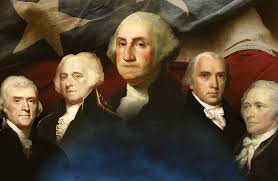
General George Washington’s Army was bedded down amidst 6 foot snow drifts, suffering through the worst winter on record…even worse than Valley Forge.
Recently the Irish, who were also in rebellion against the Crown, had declared themselves AMERICANS in solidarity with the American colonists that were fighting for their independence.
At least a quarter of Washington’s army was Irish…and a vast majority of his commanders shared that distinction.
So GW decided that St. Patrick’s Day…(not Christmas, nor Easter)…would be a day of rest and celebration for his army.








 Mark Loves History!