Women’s Army Corps

Today in History, May 15, 1942:

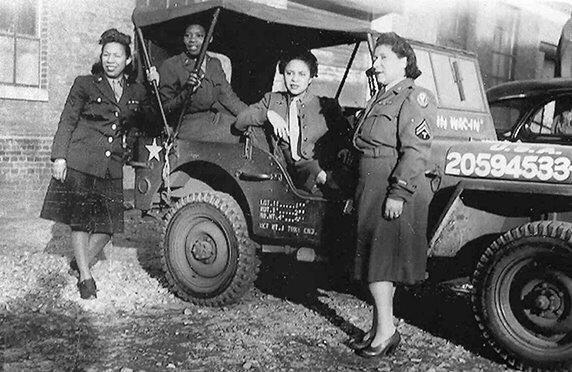
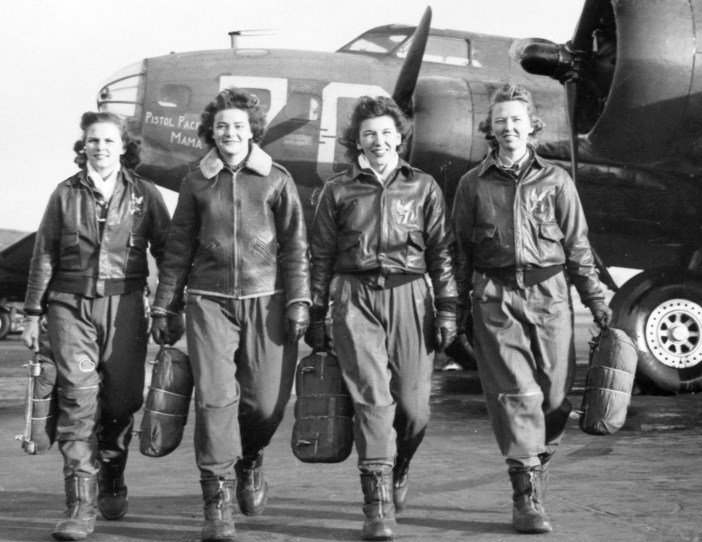
President Franklin Roosevelt signs a bill passed the previous day creating the Women’s Army Auxiliary Corps.

The bill had been put forward by Massachusetts Representative Edith Nourse Rogers in mid-1941, who had seen women volunteer in the first World War…on their own dime and without compensation or benefits. The bill lingered until after the attack on Pearl Harbor, when it was taken more seriously.

The many women who served as WACS and WAVES (Navy) during WWII were paid and received benefits, although not as much as the men. It would be decades before they received pensions.

Their service was to be in non-combat roles…secretarial, air traffic control, ferrying aircraft, and hundreds of other positions.

While the inclusion of the hundreds of thousands of women in the military was a huge step forward for a nation which had only given women the vote two decades before, it was still repleat with gender bias. Women could not command men.

The move also was born of necessity, rather than revolutionary thinking. It had the full support of the Army’s commanding General, George C. Marshall, who testified before Comgress on behalf of the legislation.

Marshall expected the “Two-Ocean War” to quickly overwhelm the nation’s ability to provide “manpower”. He believed women already trained in administrative jobs would be more efficient and effective than men.

While the women served in “non-combat” roles as operators, etc, you can’t serve in a combat zone without the risks of combat. WACS were killed in action. One source indicated 16.

The Stars and Stripes Forever

Today in History, May 14: 1897 – In Willow Grove Park, Philadelphia, “The Stars and Stripes Forever”, composed by John Phillip Sousa, is first performed in public. As of 1987 it is now the official US March of the United States of America. The tune, and the lyrics Sousa attached to it has to touch every truly American soul.

Let martial note in triumph float
And liberty extend its mighty hand
A flag appears ‘mid thunderous,
The banner of the Western land.
The emblem of the brave and true
Its folds protect no tyrant crew;
The red and white and starry blue
Is freedom’s shield and hope.

[Second Strain]
Other nations may deem their flags the best
And cheer them with fervid elation
But the flag of the North and South and West
Is the flag of flags, the flag of Freedom’s nation.

(repeats) Other nations may deem their flags the best
And cheer them with fervid elation,
But the flag of the North and South and West
Is the flag of flags, the flag of Freedom’s nation.

[Trio]
Hurrah for the flag of the free!
May it wave as our standard forever,
The gem of the land and the sea,
The banner of the right.
Let despots remember the day
When our fathers with mighty endeavor
Proclaimed as they marched to the fray
That by their might and by their right
It waves forever.

[Repeat of the First Strain]
Let eagle shriek from lofty peak
The never-ending watchword of our land;
Let summer breeze waft through the trees
The echo of the chorus grand.
Sing out for liberty and light,
Sing out for freedom and the right.
Sing out for Union and its might,
O patriotic sons.

[Grandioso]
Hurrah for the flag of the free.
May it wave as our standard forever
The gem of the land and the sea,
The banner of the right.
Let despots remember the day
When our fathers with mighty endeavor
Proclaimed as they marched to the fray,
That by their might and by their right
It waves forever.

H. Norman Schwarzkopf Investigates the Lindbergh Kidnapping


Today in History, May 12: 1932 – H. Norman Schwarzkopf looks down into the recently found shallow grave of infant Charles Lindbergh, Jr. in a field not far from the Lindbergh home. The Lindbergh baby had been kidnapped from his home on March 1st, the ransom paid, but the child was not returned to his parents. Schwarzkopf, a West Point graduate and WWI veteran, in 1921 had been appointed by the Governor of New Jersey to create, organize and train the New Jersey State Police. It was in this capacity that he led the investigation of the Lindbergh Kidnapping, the “Crime of the Century”. He would prove that the baby had been killed accidentally as he was being carried down a ladder from his second floor bedroom. When a new governor took office, he would be sacked. He would return to the US Army when WWII broke out, where he would be tasked to use his logistics and organizational talents to train the Iranian police, a country where the US was setting up railroads to supply the Soviet Union for the fight against Germany. After the war, Schwarzkopf would also help set up the security forces of the Shah. Two years after he investigated the Lindbergh kidnapping, his son, H. Norman Schwarzkopf, Jr. would be born. And as most know, “Stormin’ Norman” would follow his father to the middle east in the service of his country nearly six decades later.

The American Bible Society is Founded

celebrating-200-years-of-sharing-gods-word-american-bible-society-blog


Today in History, May 11, 1816:

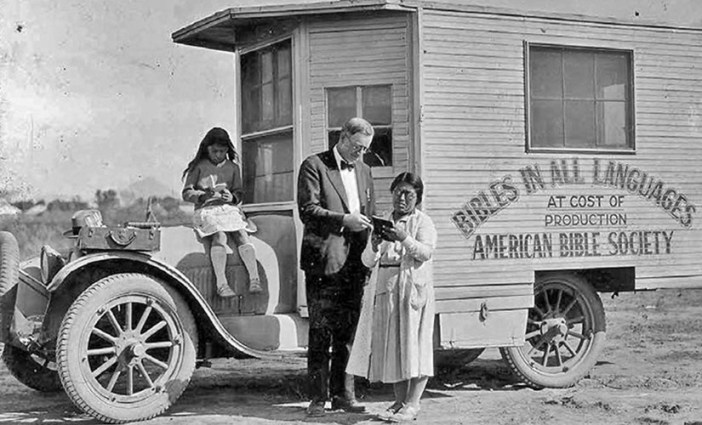
The American Bible Society was founded in New York City.  The Society was formed as a consortium of numerous smaller societies, mostly state based.  The members were abolitionists Christians with the mission to put Bibles into as many hands as possible “without note or comment.”

The first President of the Society was Elias Boudinot, who had also been President of the Continental Congress for a time.  Other prominent officers included Supreme Court Justice John Jay and Star Spangled Banner author Francis Scott Key.

The Society distributed many translations of the Bible, including into Native American languages.  It provided pocket Bibles to soldiers during the Civil War and in wars since.

At it’s outset the Society was devoutly Protestant, and had a rocky start with the many Catholic immigrants to the United States.  In the mid nineteenth century it took steps to correct this problem.

The ABS has distributed millions of copies of the Bible in countries all over the world since its inception.  Today it manages an online resource to search Bible text in several languages.

“The Ship That Wouldn’t Die”


Today in History, April 16, 1945:

Picket duty in the seas off of Okinawa was a very dangerous place.  Destroyers were stationed in exterior positions from the US fleet to provide radar warnings for the carriers, bombardment and landing groups.  That also made them the first targets for Japanese Kamikaze aircraft inbound.

The USS Laffey (DD 724) was on picket duty.  She was already a veteran of D-Day where she served with Pearl Harbor survivor USS Nevada, and then several other actions in the Pacific.

A flight of approximately 50 Japanese suicide planes attacked the fleet, and many of them chose to target the tiny destroyer.  Val diver bombers and others repeatedly dove on the desperately maneuvering ship while the Laffey’s gun crews kept up a killing fire.  The crew kept fighting, shooting down several of the bombers, taking numerous bomb hits and being impacted by six of the Kamikazes.

A flight of 4 Grumman Wildcat F4F’s and a squadron of 12 F4U Corsairs from nearby carriers raced in the help, shooting down some of the attackers.  A couple of the fighters went down in the melee, including one Corsair which clipped the destroyer’s antennas before crashing into the sea.  Fortunately all of the flyers were rescued.

The Navy’s most notable Historian, Samuel Eliot Morrison, said, “Probably no ship has ever survived an attack of the intensity she experienced.”

The Presidential Unit Citation awarded to the Laffey’s crew read:

CITATION:  “For extraordinary heroism in action as a Picket Ship on Radar Picket Station Number One during an attack by approximately thirty enemy Japanese planes, thirty miles northwest of the northern tip of Okinawa, April 16, 1945. Fighting her guns valiantly against waves of hostile suicide planes plunging toward her from all directions, the U.S.S. LAFFEY set up relentless barrages of antiaircraft fire during an extremely heavy and concentrated air attack. Repeatedly finding her targets, she shot down eight enemy planes clear of the ship and damaged six more before they crashed on board. Struck by two bombs, crash-dived by suicide planes and frequently strafed, she withstood the devastating blows unflinchingly and, despite severe damage and heavy casualties, continued to fight effectively until the last plane had been driven off. The courage, superb seamanship and indomitable determination of her officers and men enabled the LAFFEY to defeat the enemy against almost insurmountable odds, and her brilliant performance in this action, reflects the highest credit upon herself and the United States Naval Service.”

For the President,

/s/ James Forrestal
Secretary of the Navy

You can still walk the decks where these brave men fought and several died aboard the Laffey at Patriot’s Point in Charleston Harbor, South Carolina.  Her museum location is significant as she was named for US Navy Seaman Bartlett Laffey, who earned the Medal of Honor during the Civil War, which began in Charleston Harbor.