Confederate Big Easy Defenseless

Today in History, April 25, 1862:

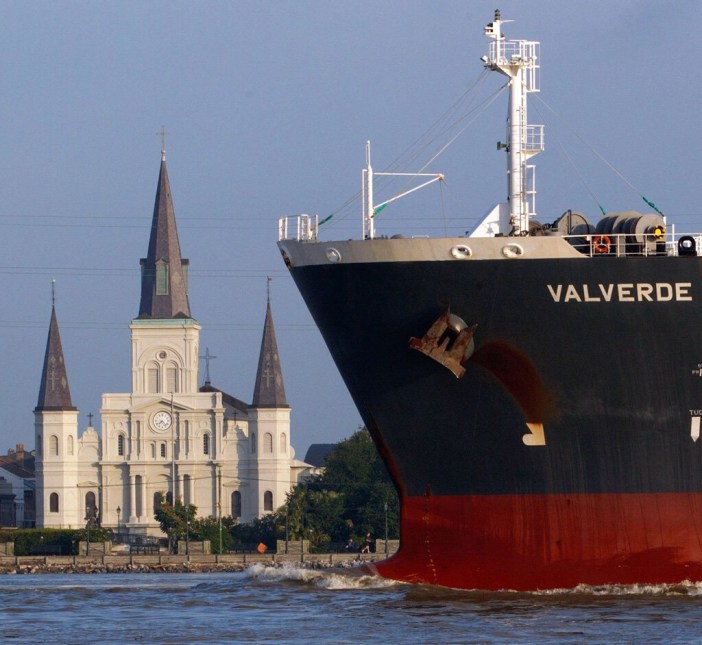
Have you ever walked along the levee in the French Quarter in New Orleans, Louisiana? If you have, it’s difficult not to be awed when you look UP at the top of the levee and see a ship floating across the water…well above you.

The view makes it very obvious how incredibly vulnerable the city is to the Mighty Mississippi and the massive ships sailing her channel.

On this date in 1862 Union Admiral David Farragut had already led his fleet of US Navy ships past Ft. Jackson and Ft. St. Phillips below the Crescent City, he and his crews blew past nascent the Confederate “Navy” and placed their heavy guns off of New Orleans.

The New Orleans military, government and citizens were told…it was obvious…if they didn’t surrender, the US Navy would fire DOWN into the wooden structures of the Quarter….they may, if necessary, blast a hole in the levee and simply let nature flood out the defenders.

Confederate General Mansfield Lovell told Major Moore what would happen if resisted. So they stalled while Lovell shipped his troops and equipment north by rail to Vicksburg.

Finally on April 29 the residents folded. By May 2 the Confederates relinquished the largest, most industrial, cosmopolitan city in the Confederacy. Remember the rivers were the thoroughfares in the 1800’s.

The Union now had control of NOLA’S resources, and now the Union could ship supplies north from the Gulf as far as Vicksburg and north to south.

The War had seen a major change. And the citizens of New Orleans would find peace with General Butler worse than war with Farragut. But thats a different story.

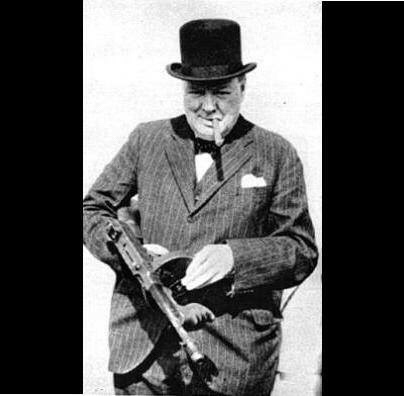
Sir Winston Churchill, Knight of the Garter

Today in History, April 24, 1953:

British Prime Minister Winston Spencer Churchill is Knighted by Queen Elizabeth II, making him a Knight of the Garter.

The Queen had wanted to make Churchill a Knight as Duke of London, a new and dynamic position, but he declined since this would require his son and other descendants to live at a certain financial level that they may not be able to sustain.

Born in 1874, Churchill had served with distinction in the Boer War as a young man, been a major player in the First World War as Lord of the Admiralty, and then been banished to the political “wilderness” for ten years leading into WWII. During those years, he constantly preached a message of military preparedness to his contemporaries…acts that made him a laughing stock…the Nazis only wanted peace and he was a militant nut. Once the realities set in with Hitler’s invasion of several European neighbors, Britons turned to Churchill for their salvation, and he proved himself up to the task.

What an amazing amount of History Sir Winston and Queen Elizabeth have been a part of!

Citizenship in a Republic

Today in History, April 23, 1910:

“The Man in the Arena” speech. After his presidency, President Theodore Roosevelt took a tour of Europe and was received with great fanfare and accolades, both from the common man and royalty. On this date he gave a 35 page speech entitled “Citizenship in a Republic” about the responsibilities involved at the Sorbonne in Paris, France. A segment on page 7 became an inspirational and historic passage.

“It is not the critic who counts; not the man who points out how the strong man stumbles, or where the doer of deeds could have done them better. The credit belongs to the man who is actually in the arena, whose face is marred by dust and sweat and blood; who strives valiantly; who errs, who comes short again and again, because there is no effort without error and shortcoming; but who does actually strive to do the deeds; who knows great enthusiasms, the great devotions; who spends himself in a worthy cause; who at the best knows in the end the triumph of high achievement, and who at the worst, if he fails, at least fails while daring greatly, so that his place shall never be with those cold and timid souls who neither know victory nor defeat.”

George Washington Knew How to Fight…And When Not to Fight…

george-washington-portrait

Today in History, April 22, 1793:

President George Washington issues a Proclamation of Neutrality, making it clear to the great powers of Europe, and France in particular, that the newly born United States would not participate in a war then sweeping the old countries.

[Philadelphia, 22 April 1793]

“Whereas it appears that a state of war exists between Austria, Prussia, Sardinia, Great-Britain, and the United Netherlands, of the one part, and France on the other, and the duty and interest of the United States require, that they should with sincerity and good faith adopt and pursue a conduct friendly and impartial toward the belligerent powers:

I have therefore thought fit by these presents to declare the disposition of the United States to observe the conduct aforesaid towards those powers respectively; and to exhort and warn the citizens of the United States carefully to avoid all acts and proceedings whatsover, which may in any manner tend to contravene such disposition.

And I do hereby also make known that whosoever of the citizens of the United States shall render himself liable to punishment or forfeiture under the law of nations, by committing, aiding or abetting hostilities against any of the said powers, or by carrying to any of them those articles, which are deemed contraband by the modern usage of nations, will not receive the protection of the United States, against such punishment or forfeiture: and further, that I have given instructions to those officers, to whom it belongs, to cause prosecutions to be instituted against all persons, who shall, within the cognizance of the courts of the United States, violate the Law of Nations, with respect to the powers at war, or any of them.

In testimony whereof I have caused the Seal of the United States of America to be affixed to these presents, and signed the same with my hand. Done at the city of Philadelphia, the twenty-second day of April, one thousand seven hundred and ninety-three, and of the Independence of the United States of America the seventeenth.”

Go. WASHINGTON.

By the President.
Th: Jefferson.

The assertion of neutrality did not set well with many Americans, and certainly not with the French.  After all, powerful France had been instrumental in the winning of American independence, finalized in the Treaty of Paris only ten years previous in 1783.  Now France had been inspired to undergo their own Revolution, and expected America to reciprocate in support of her war with the other European nations.  French Edmond Genet was then in the United States, appealing directly to the people for support.  President Washington was none too pleased with Genet’s attempts to bypass the American Federal government in his efforts.
Jefferson, Madison and Hamilton debated the subject in the newspapers using aliases, Pacificus and Helivicus.
It wasn’t that President Washington and his cabinet were unfaithful to their first ally.  They were practical.  The French Revolution had taken on a different tone than the American Revolution, with the beheading of King Louis XVI.
Even more importantly, Washington knew America was not yet a world power.  The British did not yet entirely respect American sovereignty, despite the Treaty of Paris.  Washington new the nation needed decades to build it’s resources and to unify politically before playing a meaningful part in world affairs.
America is truly fortunate to have had the guidance and forethought of our Founding Fathers.  The nation would certainly have plenty of opportunities to return the favors France had provided…World War I, World War II most prominent.

Red Baron Downed

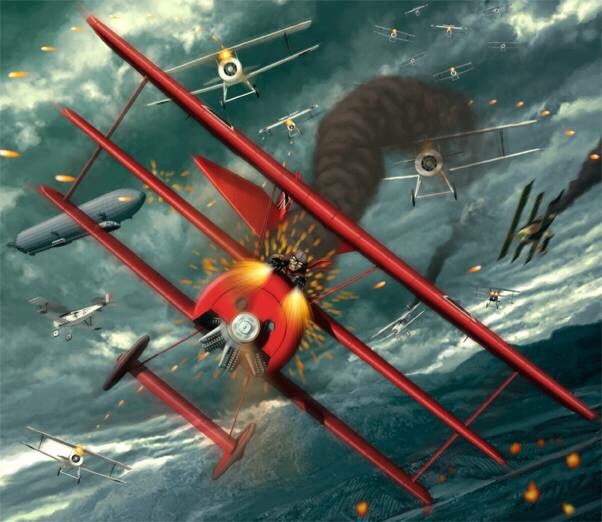
Today in History, April 21: 1918 – Over Morlancourt Ridge, near the Somme River, Manfred Von Richthofen, aka The Red Baron, is fatally wounded and crashes his famous Fokker Dr.I triplane. Richthofen was a hero to Germany and famous world wide after scoring 80 victories in the skies over Europe in WWI. There is still controversy concerning whether he was shot down by Canadian pilot Arthur Brown in his Sopwith Camel, or ground fire.

“Don’t Fire Unless Fired Upon. But if They Mean to Have a War, Let it Begin Here.”

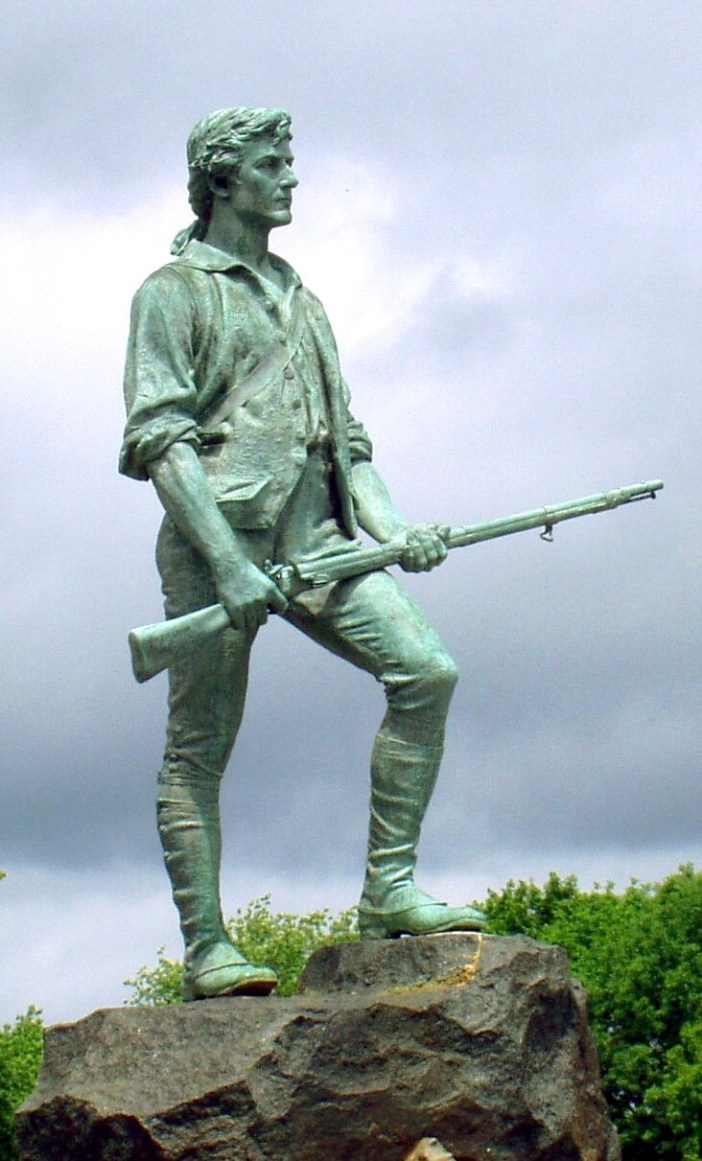
Today in History, April 19: 1775 – The Midnight Ride continues. Paul Revere and his fellow rider, William Dawes meet up while warning Lexington of the approaching British soldiers. They had stopped at several villages between there and Boston spreading the alarm.

In each village additional riders would set off in all directions to spread the word for minutemen to converge on Lexington and Concord. Village cannons were fired so they would be heard in neighboring villages…a pre-arranged signal. The system was so efficient that before the British soldiers were even disembarking from their boats, still miles away, hundreds of Patriots were converging on the British target of munitions at Concord. Unbeknownst to them, their mission had already been rendered moot. The “rebels”, long aware of the British plans, had already dispersed and hidden the munitions. Revere and Dawes had already warned Samuel Adams and John Hancock, who had been taken elsewhere to prevent their arrest.

In Lexington Revere and Dawes met up with Dr. Samuel Prescott, who had been visiting his fiance. The three set out for Concord to warn them. On the road they encountered an British patrol and were captured. As they were being taken to a nearby meadow Prescott shouted, “Put on!” (scatter, run for it). He and Revere rode off in opposite directions. Prescott jumped his horse over a neaby stone fence and was off into the night. Dawes escaped, but lost his horse, leaving him on foot. Revere made his second escape of the night, as he’d nearly been captured in Charleston earlier. However he soon came upon a group of British officers and was captured again. He would eventually be released, but without his horse. Precott, a Concord native familiar with the area, quickly made his way to Concord and warned them, then continued on to warn others.

“Don’t fire unless fired upon, but if they mean to have a war, let it begin here.” –Militiaman Capt. John Parker, to his troops on Lexington Green. When the 700 British troops reached Lexington, they were confronted with a mere 77 minutemen who had managed to convene there. Capt. Parker, knowing that the British mission had already been rendered pointless, was not eager to risk the lives of is men. He had them form in ranks on Lexington Green, where they could give an expression of dissention without blocking the road to Concord. The British commander decided to confront them anyway. With an expression of great insult, the British commander ordered the “damned rebels” to disperse. Parker directed them to do so as the well trained British regulars approached. Nobody knows who fired the “shot heard ’round the world”. The Americans, of course, believe it was and over eager British soldier; the British believe it was from a minuteman; some speculation is that it was fired from the safety of a nearby tavern. Whoever fired that first shot, it resulted in the British cutting down nearly a dozen minutemen, and one injured British soldier. The British then marched past the dead and injured on their way to Concord. http://youtu.be/wAFz5YNCTGc

The Brits, emboldened, marched on Concord. When they got there they were confronted with more than 300 minutemen. The outcome was quite different than at Lexington. The British were quickly repelled, and decided to return to Boston. As they completed the long march back to Boston, the minutemen continuously fired upon them from behind trees, rocks, fences, etc. By the time the regulars made it back to Boston, they had lost over 300 men.

Why was it the “shot heard ’round the world”? Not just because of the American Revolution. The acts of the revolutionaries did not affect only the “Colonies”. The French were encouraged to aid the Americans with their fleet eventually. Other portions of the British Empire were encouraged to revolt. King George didn’t know it, but on this date, thanks to a few farmer and merchant “peasants”, the sun had begun to set on the British Empire.

Today in History, April 15, 1924:

Rand-McNally publishes the 1st Edition of The Rand-McNally Road Chum, the precursor to the Road Atlas they made popular.

William Rand and Andrew McNally had been in the publishing business since the 1860’s, and had been publishing regional maps for railroads and oil companies.

They initiated a numbering system for their highway maps and even put up road signs for their traveling customers. The system would be adopted by federal and state governments and is in use today.

Their first Atlas editions were provided for free in Gulf gas stations.

The Grapes of Wrath

Today in History, April 14, 1939:

The Grapes of Wrath by John Steinbeck is first published and would become iconic, capturing the hearts of those that had lived through the Great Depression in the preceding years.

The novel told the story of the Joads, one of many Oklahoma families driven off of their farms by the Dust Bowl and bankers who evicted them when they couldn’t raise crops to pay mortgages. Like so many others, the family was forced to leave Oklahoma for California, where they were derisively called “Okies”, to seek work as laborers in order to survive.

My father (who lived through it) used to counter that the migration of the “Okies” from Oklahoma to California had greatly increased the intelligence level of both states.

An Epic Hail Storm

Today in History, April 13, 1360:

“Black Monday”. During the Hundred Years War, English King Edward III had invaded France, bent on taking the French crown. The French locked themselves up within fortresses and castles while Edward and his armies sacked and pillaged the countryside. The English burned the Paris suburbs and then set their sights on Chartres. But on this date a sudden storm rose up….over 1,000 English troops, including two of their top commanders, were killed by….hail. The English saw this as a sign from God, and Edward soon agreed to a peace that included ending his desire for the French Monarchy. Within 9 years the French would declare that Edward had not lived up to the treaty they had signed, and the war would continue until 1453.