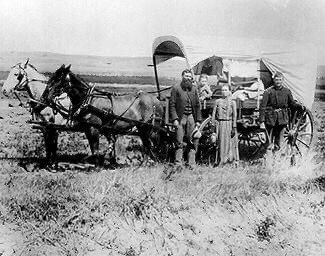
The Crittenden Compromise

Today in History, January 16, 1861:

“The Crittenden Compromise”.

Senator John J. Crittenden, former Kentucky Governor, US Representative, and US Attorney General, had put forth the Crittenden Compromise in a last ditch effort to prevent Civil War.

The nation had been arguing over the abomination of slavery since it’s inception; and “compromise” had been made before, with the Missouri Compromise which divided the nation north and south regarding which states would have slavery and which would not.

Then the Compromise of 1850, in which each new state got to decide.

During the 1850’s the Republican party was established with it’s primary platform being to prevent the spread of slavery.

Crittenden, a “Constitutional Unionist” suggested several Constitutional amendments that would bring things back to the Missouri Compromise levels since several states had already seceded due to Republican Abraham Lincoln’s election.

This time the Republican majority in the Senate said no to compromise and killed his bill.

As an aside, Crittenden’s grandson (and namesake), would be killed at the Battle of Little Big Horn with Custer.
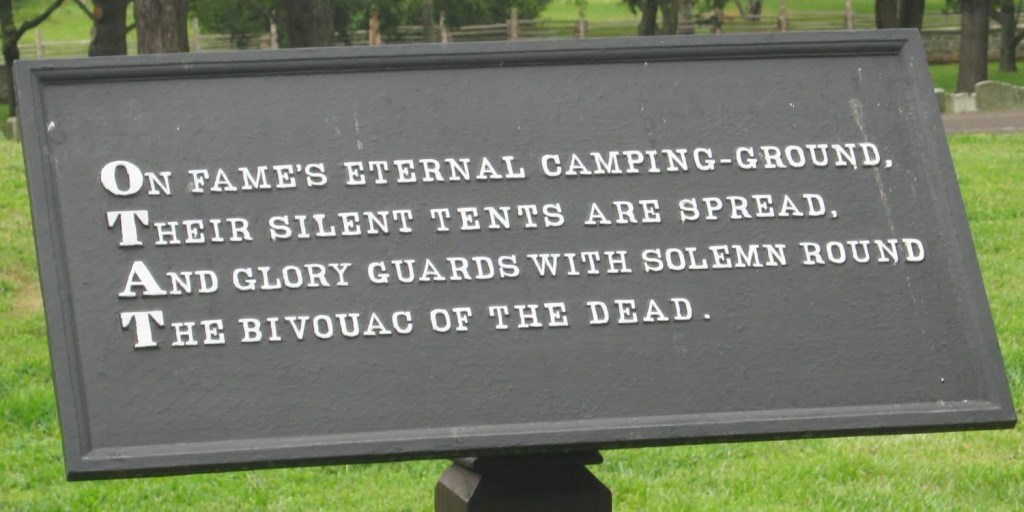
Stones River

Today in History, January 2, 1862:

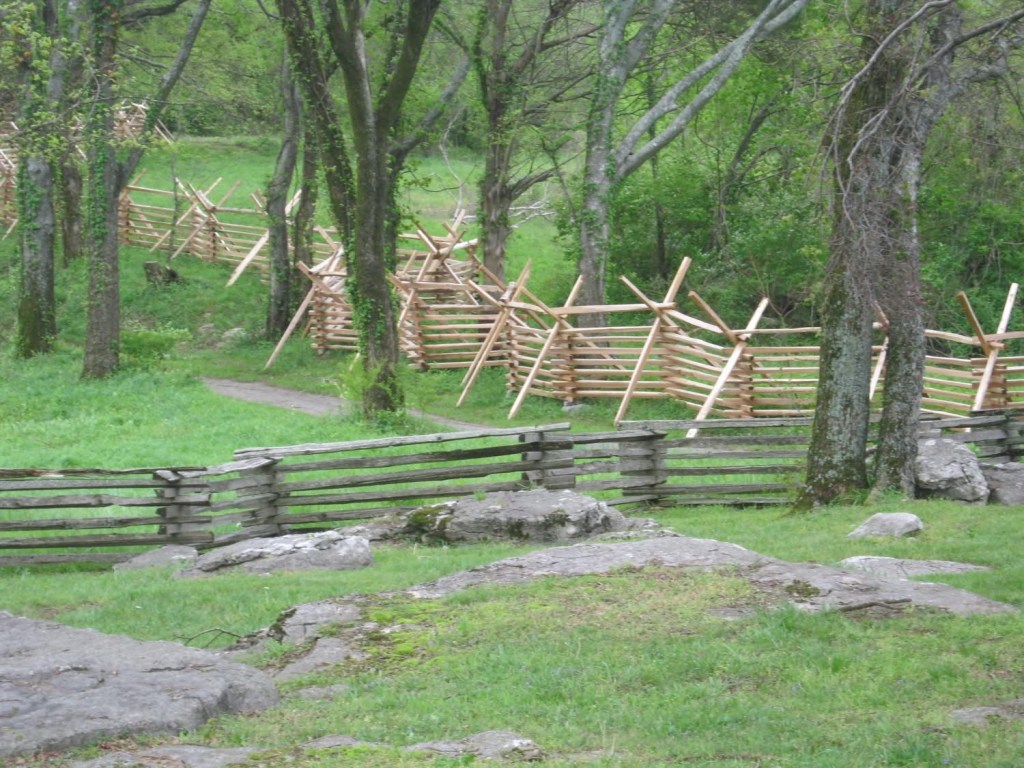
The Battle of Stones River, south of Nashville, Tennessee, concluded after 3 days of hard fighting.

Union General William Rosecrans was tasked with securing central Tennessee, while Confederate General Braxton Bragg was tasked with defending the area.

Bragg went on the attack, but his forces were repelled repeatedly, and finally defeated.

The South lost 33% of their force, the Union 31%.

Together they suffered 25,000 casualties in one of the bloodiest battles of the war.

Sail on, O Ship of State!

Sail on, O Ship of State!

In the midst of foreign wars in 1940, Franklin Delano Roosevelt won a third term as US President. It had been a hard fought campaign. 

Learning that the loser in the campaign, Wendell Wilkie, was headed to London to gain info on the war, FDR invited him to the White House. They chatted amicably, and FDR asked the Republican to deliver a handwritten note to Prime Minister Winston Churchill, giving him a letter of introduction, making him an emissary. 

The note contained part of a Longfellow poem which FDR & Churchill, both Naval enthusiasts, would recognize immediately. 

When Churchill gave a speech on February 9, 1941 he included the verse, crediting FDR and Wilkie. 

…Sail on, O Ship of State!

Sail on, O Union, strong and great!

Humanity with all its fears,

With all the hopes of future years,

Is hanging breathless on thy fate!

The verse recognized the troubles both nations were enduring. 

I share this now reflecting on how good it would be in these contentious times if in the coming months the victor and the defeated of a presidential campaign could come together and help the ship of state to sail on. Lincoln also did it with his “team of rivals.” 

Don’t worry. I’m not holding my breath. 

Juneteenth

Today in History, June 19, 1865:

Juneteenth

“What to the slave is the Fourth of July?” – Frederick Douglass

Douglass asked this question in an 1852 speech given on July 5th. During the same speech he praised the founding fathers as heroes. Yet the founding fathers had to make compromises which declared American citizens to be less than human. Douglass was a patriot himself, loving the country which had enslaved him since birth, yet recognizing the evils of bondage.

He sent his sons to fight with white men in the Civil War to defeat slavery.

In 1863 President Lincoln declared slavery illegal in the slave states with the Immancipation Proclamation.

Since this did not serve the purposes of the Confederacy, most slaves did not learn of the proclamation until the end of the war. The last to learn of their freedom were the slaves in Texas. On June 19, 1865, Union troops arrived in Texas… the previously enslaved blacks learned they had been free for two years.

The following year they began to celebrate this date as Juneteenth. As Douglass had said, Independence Day had meant little to them. But the day THEY had learned of their freedom mattered a great deal.

The reddest state in the Union, a previous slave state, Texas recognized Juneteenth in 1980. It would be recognized nationally in 2021. Many consider Juneteenth to be a “made up” holiday. Are not all holidays “made up?” This one is simply newer.

I do not know any celebrants of Juneteenth who do not also celebrate the Fourth of July, America’s Independence Day. Douglass surely did. Yet we cannot deny that “Juneteenth” is a second Independence Day, because many of our citizens did not enjoy their independence until that date in 1865.

We should rejoice that date. Many of our ancestors died to ensure we could finally enjoy the full purpose of our independence.

James Longstreet – American

Today in History, January 8, 1821:

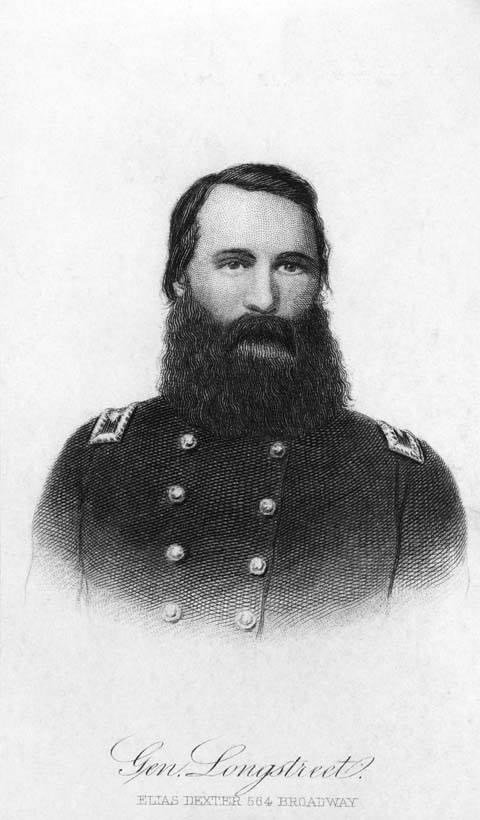
James Longstreet is born in near Edgefield, South Carolina.

Longstreet is an excellent example of the paradox of the 19th century. He graduated West Point, fought gallantly in the Mexican-American War at the Battle of Chapultepec; he was close friends with Ulysses Grant, serving as best man at Grant’s wedding.

After such loyal service to the US Army, in 1861 he resigned his commission and joined the Confederacy.

He fought in most of the major battles in the eastern area and some in the west. Aside from Robert E. Lee, he was likely the most respected and successful Southern General.

Yet after the war, he determined to do the best he could by his countrymen. He joined the Republican Party and returned his loyalty to the government.

The Republican party had been the entity that had pursued the war in the North, so his detractors excoriated him for this act…but in his statements he wanted to use the power of the Republican party to maintain Southern rights and desires.

Jubal Early and others claimed he was responsible for the loss at Gettysburg (he was not).

Much like Lee, whether you agree with what he fought for or not, Longstreet appeared to be a “Southern Gentleman”, and gained the admiration of the soldiers that served with him.

Brothers in Arms

Today in History, October 20, 1864:

Read to the end to be amazed.

Stephen Dodson Ramseur was born in Lincolnton, North Carolina in 1837. In 1860, he graduated the United States Military Academy at West Point in the US Army.

The next year he was one of many in the US Army who left the service to join the Confederacy…because it encompassed their “Country”. Young “Dod” proved to be a daring, impetuous, and courageous leader and quickly rose to be the youngest Major General in the Confederate Army.

At the Battle of Malvern Hill in the Peninsular Campaign, he was seriously wounded when shot in the right arm, temporarily paralyzed.

He drew the attention of Gen. Robert E. Lee and was promoted. At Chancellorsville his brigade scored a major victory, fighting with Stonewall Jackson and J.E.B. Stuart. Ramseur was wounded in the leg during this battle. At Gettysburg, it was Dod’s Brigade that chased the Union forces back through the town in a rout. In the Wilderness Campaign he fought valiantly at the Battle of Spotsylvania Court House, being shot from his horse, once again hit in the right arm. Taking over Jubal Early’s division, he fought courageously at Cold Harbor and Petersburg. During the Shenandoah Valley Campaigns, he again fought hard… On October 19, during the Battle of Cedar Creek, he was shot from his horse again. He mounted a second horse, and was again shot from it.

Mounting a third horse to continue the fight, he was shot twice through the lungs, finally bringing him down.

He was loaded into an ambulance to be treated…and his ambulance was captured by Union forces.

The Union took him to Belle Grove Plantation for treatment by Union doctors, but it was no use.

Next is the most telling part of Dod’s fascinating story.

Word of his capture and condition spread quickly. As he lie dying, many of his friends…Union officers including George Armstrong Custer that had been his contemporaries before the war, rushed to his side and held an hours long vigil, keeping him company until he passed on October 20, 1864.

George Washington Promoted…in 1976

Today in History, October 11, 1976:

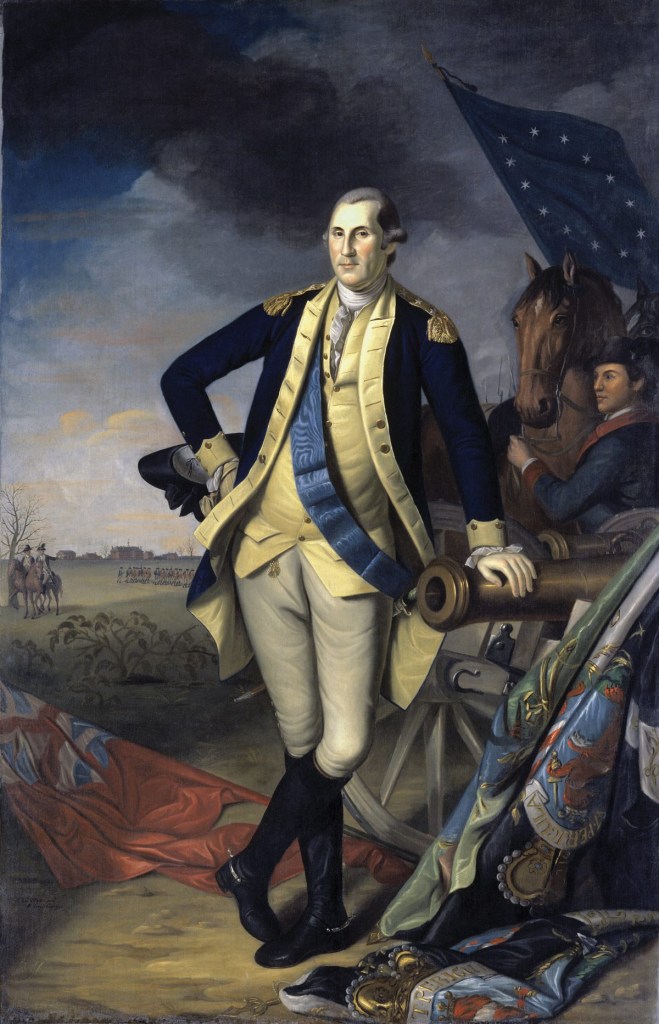
President Gerald Ford signs an act of Congress promoting Lieutenant General George Washington to General of the Armies, what would be a six star general if the insignia existed.

This act promoted the former President over numerous US Army Generals and US Navy Admirals, which was the point.

In the military and paramilitary services such as police, rank matters. To the extent that if two officers of the same rank are involved in an action, they will be comparing dates of rank to see who is in command.

During the Civil War, when General Ulysses Grant was given command of the Union Armies, he was promoted to Lt. General to ensure he outranked all other commanders.

During WWI and WWII the same actions were taken to ensure American commanders would not be outranked by their Allied contemporaries such as Bernard Montgomery in the British Army.

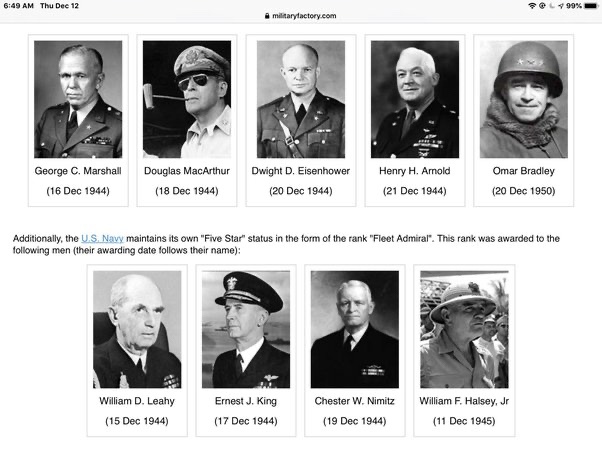
This resulted in several 5-Star Generals and Admirals. Generals of the Army (singular) or Fleet Admirals.

In WWI Gen. John “Black Jack” Pershing had been made a General of the Armies.

At the nation’s bicentennial, it was considered unacceptable that the father of the country should be outranked by any fellow officers, much less so many.

The act not only promoted Gen. Washington above his fellows, it stated nobody can be promoted above him.

I don’t believe any of them would object.

A Day for Historic Battles

Today in History, July 1:

A day for historic battles.

1863 – The Union and the Confederates first clash at The Battle of Gettysburg, and both send reinforcements. The first day went badly for the Union, but the largest battle in North America had three more days to go, and would become a major turning point in the Civil War.

1898 – The Battle of San Juan Hill becomes a major victory for the US in the Spanish-American War as the US Army’s Fifth Corps takes the heights over Santiago de Cuba. It also set the stage for Colonel Theodore Roosevelt to become President as he became famous for leading his Rough Riders up Kettle Hill (not San Juan).

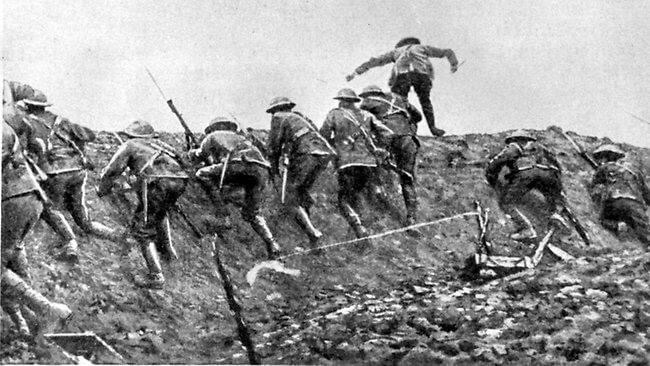
1916 – The Battle of the Somme in France; after a week’s bombardment with over 250,000 shells, the British launch an attack into no-man’s land. The Germans had retained many machine guns despite the bombardment, and the British soldiers were slaughtered. With 20,000 dead and 40,000 wounded in one day, it was one of the worst defeats for the British military’s history.

1942 – The Battle of El Alamein; In North Africa Erwin Rommel’s army had routed the British and their allies, driving them back so quickly that they had to leave much of their equipment behind. But on today’s date the British Army, resupplied by Americans and reorganized, turned the tide back on Rommel at El Alamein.

A House Divided

Today in History, June 16, 1858:

Illinois “circuit” lawyer Abraham Lincoln, running to be the Senator from that state, gives a speech at the capitol of Springfield and gains the Republican nomination.

One of his most famous speeches, the “House Divided” speech did not gain him the job of US Senator from Illinois, that would go to his opponent, Stephen A. Douglas.

However, published nationally, it did launch him onto the national stage, along with his series of debates against Douglas, which would gain him the Presidency two years later.

The speech was prophetic, as Lincoln told his listeners that after recent events, the nation could no longer expect to be half free and half slave, but must be all one or the other.
“A house divided against itself cannot stand. I believe this government cannot endure, permanently, half slave and half free.

I do not expect the Union to be dissolved — I do not expect the house to fall — but I do expect it will cease to be divided. It will become all one thing or all the other.

Either the opponents of slavery will arrest the further spread of it, and place it where the public mind shall rest in the belief that it is in the course of ultimate extinction; or its advocates will push it forward, till it shall become lawful in all the States, old as well as new — North as well as South.

The 1862 Homestead Act

Today in History, May 20, 1862:

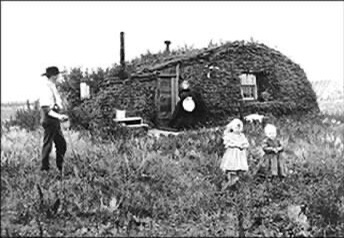
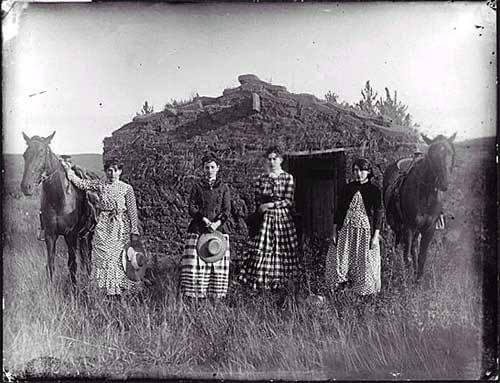
President Lincoln signs the Homestead Act, which would give 160 acres of western lands to anyone who would farm it successfully for 5 years and build a residence upon it (often a sod building).

The Act would encourage vastly expanded settlement of the west; bad news for Native Americans, good news for those newer Americans wanting to improve their lot in life.

Congress had attempted to pass similar acts in 1852, 1854, and 1859, but each time the attempts were shot down by Southern Democrats who were afraid that if the west were populated it would result in more “free” states, which would result in more votes against slavery.

Once the Republican Lincoln was elected, and the Civil War began, the Southern Democrats were no longer part of the equation.

The Republicans soon passed the Homestead Act and the settlement of the west began in earnest. By the end of the war 15,000 settlers (some of which were merely pawns for land speculators) had accepted their lands. Eventually 80 Million acres would be settled.