Christmas Heroes

Remember History, and take heart as we persevere.

As we celebrate Christmas, the birth of Christ, I am always drawn to remember those who sacrificed so much so we could live in freedom.

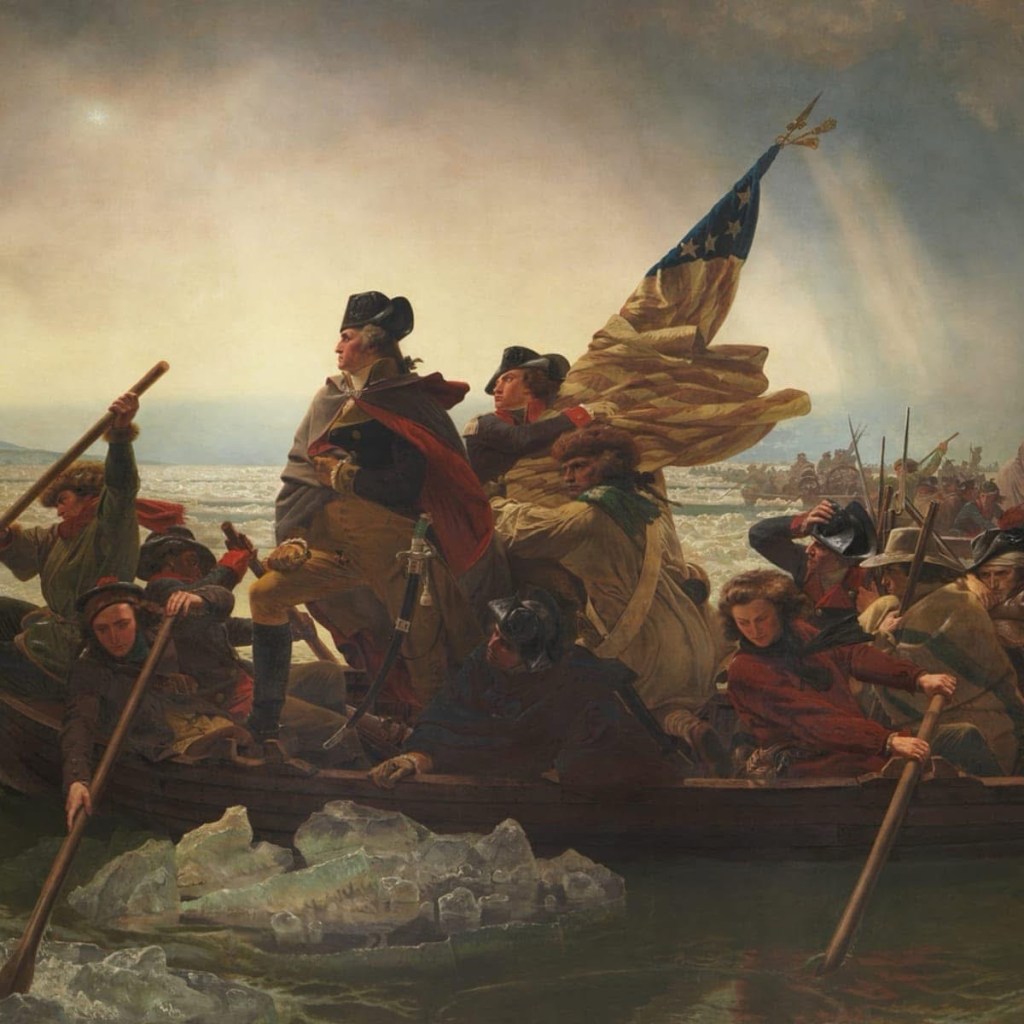
In 1776 George Washington and his troops spent Christmas away from their families, crossing the Delaware to kick some Hessian derrière at Trenton, New Jersey.

In 1777 that same army spent Christmas at Valley Forge…starving, shivering without clothing or shelter while training for coming battles.

From 1861-1865 the nation was at war…families were separated and brother fought brother…General William Tecumseh Sherman sent a Christmas present to President Lincoln in 1864…Savannah, Georgia.

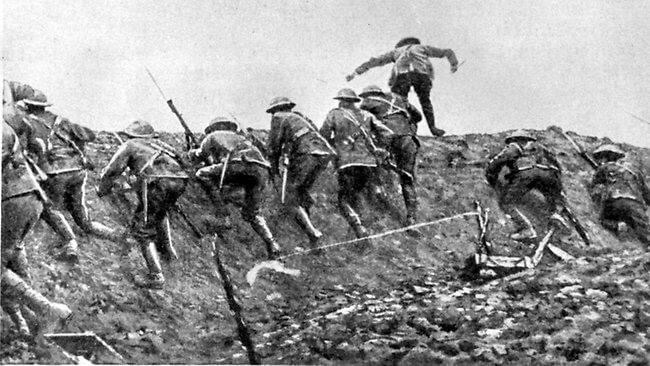
In 1914 a British soldier in the trenches listened to German soldiers singing Silent Night in the darkness and risked his life to stand up and join in. Soldiers from both armies spent Christmas exchanging gifts and playing ball…a small respite from killing one another.

In 1918 the entire world spent Christmas suffering through a flu pandemic which took millions of lives…at the same time they suffered the first mechanized war.

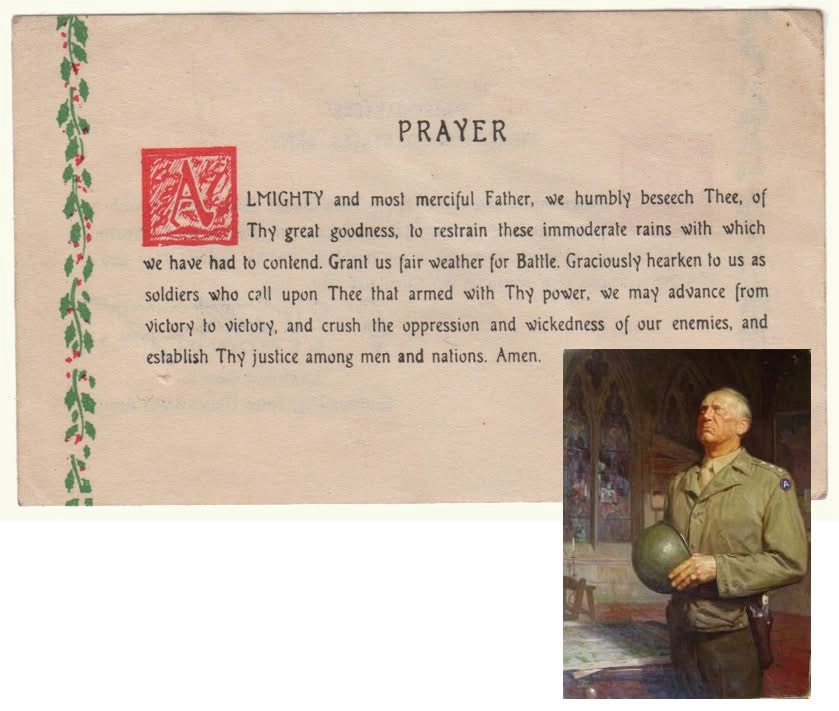
In 1944 the 101st Airborne and Patton’s 3rd Army spent Christmas fighting Nazis at Bastogne.

History gives us peace. Because if we know it, we know life goes on. If we know history and have faith, we know our travails are temporary and we will all be together soon enough with our savior.

God Bless you all. May you receive God’s strength and comfort.

Merry Christmas!
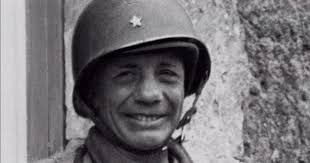
Theodore Roosevelt, Jr on July 4th, 1942; Connections

Today in History, July 4, 1942:

A lifetime of service, epitomized.

I really enjoy connections in history, and the Roosevelts are replete with material. Theodore Roosevelt, Jr, the president’s namesake son, created a military legacy which probably eclipsed that of his father.

On July 4, 1942, at 55 years old, Brigadier General Roosevelt found himself in command of a segment of the US Army 1st Infantry Battalion (The Big Red One), 26th Regiment en route to Europe during WWII.

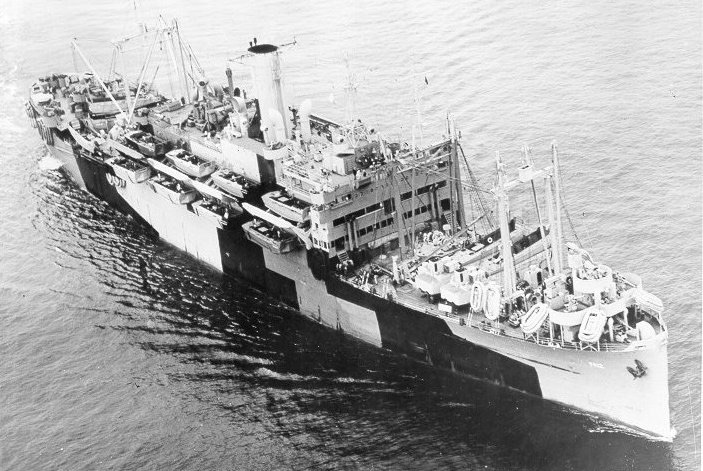
Independence Day came in the middle of the Atlantic aboard an aging rust bucket of a troop ship named the USS Leonard Wood en route to England.

His cousins Franklin and Eleanor were in the White House.

TR Jr celebrated the day with food and song for his troops, and gave a speech.

In the speech he explained the irony that 25 years before on Independence Day in 1917, he had been on another troop ship in the middle of the Atlantic, sailing with the same Regiment to Europe to fight the same enemy for the same reasons in WWI.

There were more Independence Day ironies for the family.

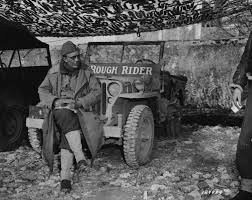
17 years before TR Jr’s first crossing with the Regiment, on July 4, 1900, his father the President led a parade of Rough Riders in Oklahoma City; many of them were from Oklahoma and the Indian Territory.

2 years before that on Independence Day in 1898 TR had still been in Cuba, having led the charge up Kettle Hill on July 1st.

The rust bucket? It was named for the US Army officer, Leonard Wood, who had been Colonel Roosevelt’s (Sr) commander and close friend during the Spanish-American War campaign.

TR Jr would go on to fight with distinction in the North Africa campaigns. On the D-Day Normandy invasion on June 6, 1944 he would be the only general officer to go ashore in the first wave with his troops. Dropped in the wrong location, he was famous for declaring “We will start the war from right here.”

Theodore Roosevelt, Jr would die in France a little over a month after D-Day, suffering a heart attack. He is buried there next to his brother Quentin, who died in combat in WWI.

Father and son would both be awarded the Medal of Honor posthumously.

Carpathia – History Connections

Today in History, July 17, 1918:

Crossing paths in history.

As most know, on April 12, 1912, RMS Titanic struck an iceberg and sank within 4 hours.

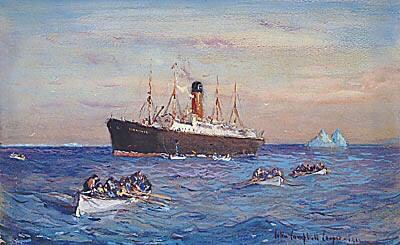
The nearest ship to receive her distress signal was the RMS Carpathia, which sped at full speed for two hours to the disaster scene. Upon her arrival, she rescued 705 survivors from the freezing waters of the North Atlantic.

The Carpathia’s crew became heroes, being awarded medals. Her Captain, Arthur Henry Rostron, was knighted and was a guest of President William Taft in the White House.

During WWI the Carpathia served as a troop ship, transporting thousands of American soldiers across the Atlantic to the war in Europe.

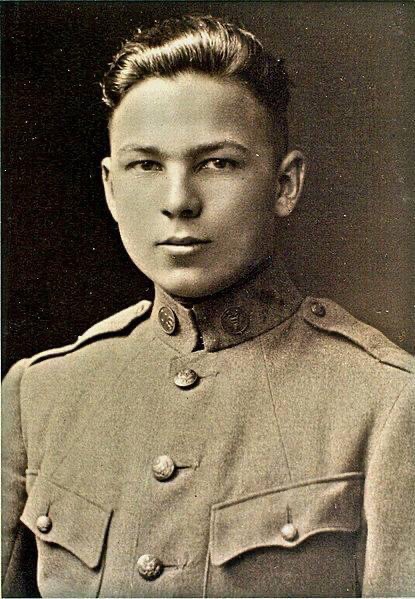
One of those doughboys was Frank Buckles, who would become the last surviving American Soldier from WWI before his death in 2011.

He was a prisoner of war in the Philippines during WWII (as a civilian) and a strong advocate for a WWI Memorial, which…led him to be a guest of President George W. Bush in the White House.

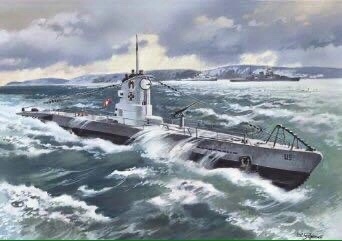
On this date in 1918 the Carpathia was sunk by German U-Boat U-55. All but 5 of her crew managed to escape to lifeboats.

They were in turn saved by the Sloop HMS Snowdrop, which arrived and drove off the German sub before it could machine gun the crew in their boats.

Everything is connected in history…you just have to find it. We usually know only a snippet of people’s lives. But they normally touch so much more.

Also on this date, in 1763, John Jacob Astor was born in Germany. He would immigrate to America and become America’s first millionaire. His grandson, John Jacob Astor IV, the world’s richest man, would die during the Titanic disaster.

A Day for Historic Battles

Today in History, July 1:

A day for historic battles.

1863 – The Union and the Confederates first clash at The Battle of Gettysburg, and both send reinforcements. The first day went badly for the Union, but the largest battle in North America had three more days to go, and would become a major turning point in the Civil War.

1898 – The Battle of San Juan Hill becomes a major victory for the US in the Spanish-American War as the US Army’s Fifth Corps takes the heights over Santiago de Cuba. It also set the stage for Colonel Theodore Roosevelt to become President as he became famous for leading his Rough Riders up Kettle Hill (not San Juan).

1916 – The Battle of the Somme in France; after a week’s bombardment with over 250,000 shells, the British launch an attack into no-man’s land. The Germans had retained many machine guns despite the bombardment, and the British soldiers were slaughtered. With 20,000 dead and 40,000 wounded in one day, it was one of the worst defeats for the British military’s history.

1942 – The Battle of El Alamein; In North Africa Erwin Rommel’s army had routed the British and their allies, driving them back so quickly that they had to leave much of their equipment behind. But on today’s date the British Army, resupplied by Americans and reorganized, turned the tide back on Rommel at El Alamein.

“Black Jack” Pershing

Today in History, March 16, 1916:

Misconceptions. US General John Joseph “Black Jack” Pershing leads a force south across the border with Mexico to assist in the chase of Mexican rebel Pancho Villa.

I knew this. I also knew that Pershing served as the commanding US General during WWI. What I didn’t know? He was born during the Civil War, was a leading cadet during his time at West Point…leading the contingent at the funeral of Ulysses S. Grant.

He fought Apaches and Sioux during his career.

He served in the 10th US Cavalry, the famous “Buffalo Soldiers”, or the original African-American soldiers (we had a Buffalo Soldier that came to the City Hall cafeteria routinely before his passing…what an honor).

The surprise for me was that I thought “Black Jack” was because he was seen as a pirate or a gambler…instead the cadets he supervised while a strict instructor at West Point hated him, and because he served in an African-American command, they called him “N****R Jack”….later amended to “Black Jack”…and it stuck.

He served in that same regiment as they charged up San Juan Hill with Teddy Roosevelt, then served in the Philippines. Roosevelt took a liking to him, appreciating his abilities, and made him an envoy to Tokyo in 1905…so he served as an observer to the Russo-Japanese War, then received his generalship by appointment by TR.

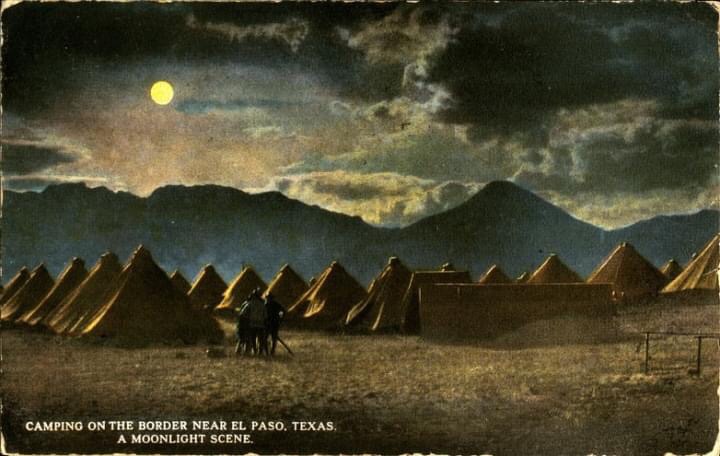
In 1915 Pershing was commanding the Presidio in San Francisco when his regiment was reassigned to Ft. Bliss, Texas because of the problems with Mexico.

After a year there, he sent for his family to join him…only to find out that his wife and three daughters had died in a house fire at the Presidio…leaving only his young son to join him.

After his exploits in Mexico, along with young George S. Patton, he would become the commanding General of the American Expeditionary Force in Europe during WWI, becoming the mentor to the likes of Dwight Eisenhower, George Patton, George C. Marshall, Omar Bradley and many others. What a life!

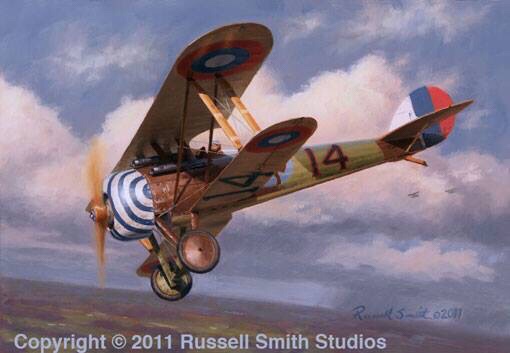
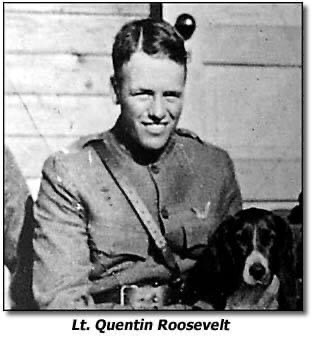
Quentin Roosevelt Shot Down

TODAY IN HISTORY, JULY 14, 1918:

US Airman Quentin Roosevelt, youngest son of President Theodore Roosevelt, dies when he is shot down over France in WWI.

He and his brothers, who all served in WWI were very competitive in the voracity of their service, trying to live up to their father’s exploits…a father who also wanted to serve but was refused due to President Wilson’s fear that TR’s service might lead to a run for President in 1920. TR wouldn’t live that long…and he spent his last years heartbroken over the loss of his youngest son.

TR Jr. would die of a heart attack just weeks after leading his division in the Normandy invasion of 1944…again living up to his father’s legacy. A family of immense wealth; several generations of which dedicated their lives to service to their country.

And the Wars Begin

Today in History, June 28, 1914:

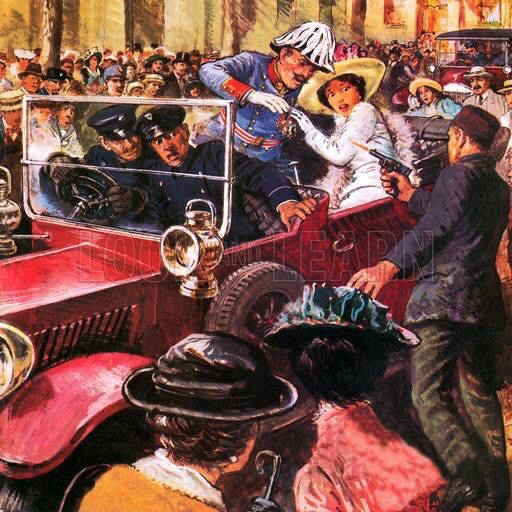
“Don’t die darling, live for our children.'” Crying, shot through the neck, Archduke Franz Ferdinand lays in the lap of his beloved wife Sofie, who had been shot through the abdomen in their car while it traveled through Sarajevo.

A socialist madman (anyone seeing a trend here?) had shot both of them, the second assassination attempt of the day. Their deaths would set off World War I, and, some believe, the continuing wars of the twentieth century.

We Are Going “Over There!”

TODAY IN HISTORY, APRIL 6, 1917:

President Woodrow Wilson asks Congress for a Declaration of War.

“It is a war against all nations. American ships have been sunk, American lives taken, in ways which it has stirred us very deeply to learn of, but the ships and people of other neutral and friendly nations have been sunk and overwhelmed in the waters in the same way. There has been no discrimination. The challenge is to all mankind. Each nation must decide for itself how it will meet it.

The choice we make for ourselves must be made with a moderation of counsel and a temperateness of judgment befitting our character and our motives as a nation.

We must put excited feeling away. Our motive will not be revenge or the victorious assertion of the physical might of the nation, but only the vindication of right, of human right, of which we are only a single champion.”

One Man…Many Lives

Today in History, January 24, 1965:

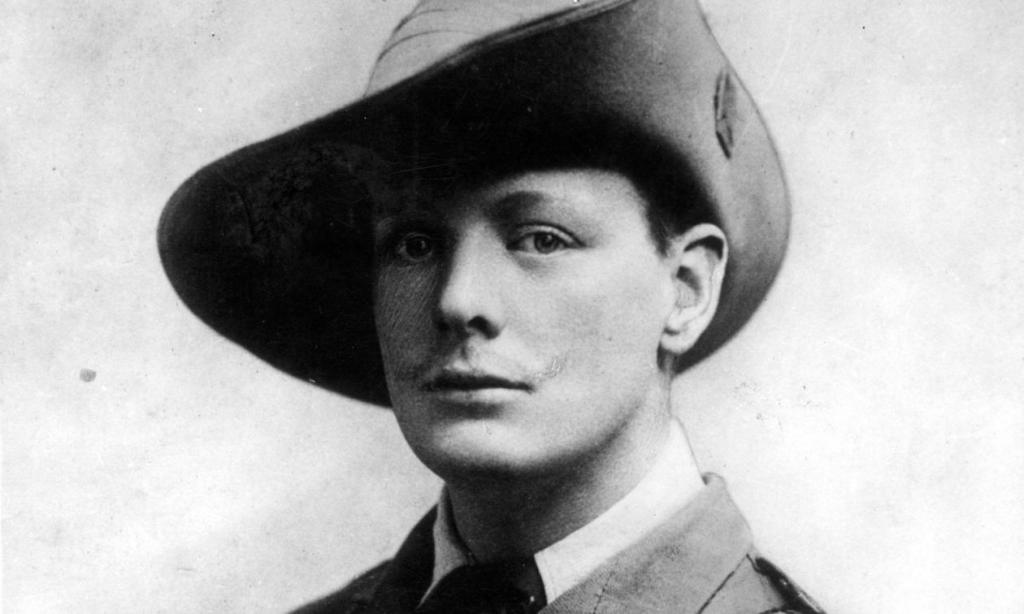
Sir Winston Leonard Spencer Churchill died at the age of 90 in London, England.

I normally try to avoid posting people’s birth and natural cause death dates. These are natural events in their lives, which we all experience. Normally not something they “accomplished.” However as I did my standard research for today’s date, my mind was changed.

Most of the individuals I post about led significant lives…and finding their connections through time is one of my favorite subjects. Yet as I read over several events that I might post about for just this single date, I kept seeing major events which I recognized for having one thing in common…or one person…the remarkable Winston Churchill.

So. Keeping in mind these events are only a microcosm of the influence he had during his 90 years on this Earth:

January 24, 1900. 26-year-old Winston Churchill was a correspondent covering the Boer War in South Africa when he was made a Lieutenant for his exploits. On today’s date he covered the Battle of Spion Kop during the Siege of Ladysmith. During the war he would manage to distinguish himself in combat.

January 24, 1915. The Royal Navy engages the German Navy at the famous Battle of Dogger Bank due to intelligence gained by the Admiralty. In charge of the Admiralty was a 41-year-old First Lord of the Admiralty, Winston Churchill. He would leave the office somewhat in disgrace after failed efforts in the Dardanelles and Gallipoli…but the indefatigable man would reinvent himself, serving in the government in several posts, including Lord of the Admiralty again.

January 24, 1943. After having done his time in “the wilderness” when he was nearly the sole voice shouting against appeasement of the Nazi regime, now Winston Churchill was the Prime Minister of Britain. On this date he concluded a landmark conference with American President Franklin Roosevelt at Casablanca, Morocco, during which the Allied leaders set the course for the second world war.

There is so much more to cover that Churchill was involved in; what an amazing life!