Sir Winston Churchill, Knight of the Garter

Today in History, April 24, 1953:

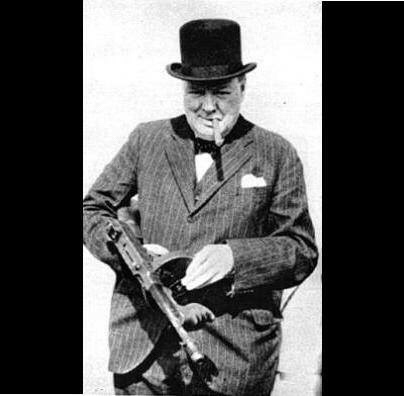
British Prime Minister Winston Spencer Churchill is Knighted by Queen Elizabeth II, making him a Knight of the Garter.

The Queen had wanted to make Churchill a Knight as Duke of London, a new and dynamic position, but he declined since this would require his son and other descendants to live at a certain financial level that they may not be able to sustain.

Born in 1874, Churchill had served with distinction in the Boer War as a young man, been a major player in the First World War as Lord of the Admiralty, and then been banished to the political “wilderness” for ten years leading into WWII. During those years, he constantly preached a message of military preparedness to his contemporaries…acts that made him a laughing stock…the Nazis only wanted peace and he was a militant nut. Once the realities set in with Hitler’s invasion of several European neighbors, Britons turned to Churchill for their salvation, and he proved himself up to the task.

What an amazing amount of History Sir Winston and Queen Elizabeth have been a part of!

Tokyo Bombed

Today in History, April 18, 1942:

A US Navy Task Force including aircraft carriers USS Hornet (CV-8) and USS Enterprise (CV-6) carries US Army Air Corps Colonel Jimmy Doolittle, his force of 16 twin engine B-25 Mitchell medium bombers and their crews to within 600 miles of the Japanese coast.

The intent was to get within 400 miles, but Japanese picket boats were encountered and the launch had to be made early lest the two American carriers (half of the carriers in the Pacific at that point) be destroyed by counter-attack.

Hornet carried the bombers, Enterprise provided cover with her planes. Doolittle’s men bombed their targets, made it across Japan’s defenses unscathed, but then had to crash land either in the sea or in China. Some made their way to safety with the assistance of Chinese resistance fighters; some were murdered by their Japanese captors.

When announcing the attack, which had a huge impact on American morale, President Roosevelt said the planes were launched from the new American base at “Shangri-la”, a reference to the 1933 novel Lost Horizon.

After the Japanese attack on Pearl Harbor, their forces had “swept the board” for months in the Pacific; this attack was needed to show the Japanese, and the world, that they were “touchable”.

The raid was a major influence on the Japanese command to go ahead with Operation MI…the invasion of Midway Island. The purpose for that operation was to draw out and destroy the American fleet.

American Patrol & The Girl I Left Behind Me

gm-american-e1428418484501


Today in History, April 2, 1942:

In Hollywood, California, Glenn Miller and his Orchestra record their version of “American Patrol.”  The tune was originally written in 1885 by F. W. Meacham, but Miller’s orchestra would add swing and jazz to the already inspiring instrumental.

This would make it representative and nearly synonymous with the jaunty, cock-sure attitude of American servicemen fighting World War II in multiple theaters.  Miller and his band would entertain the troops with this and other hits in live shows until his death on December 15, 1944, when he would be lost while flying to France for a performance.  Think of the most popular entertainer you can, and they would pale in comparison to Glenn Miller in the late thirties and early forties.  Major Miller’s loss was felt.

It is important to remember what was occurring in April of 1942.  The attack on Pearl Harbor was only five months in the past, American troops at Bataan were about to surrender, the US Navy was conducting hit and run raids on Japanese strongholds, the Doolittle Raid on Tokyo was in this month, and Americans were training up for the war in Europe while U-Boats lurked off of American shores.

“The Girl I Left Behind Me.”  If you listen, and know what you are listening for, at about the 1:40 mark you pick up on the overlay Miller’s crew added to “American Patrol” of “The Girl I Left Behind Me.”  While versions of this tune were popular in Dublin and the British service long before, it became popular in the US Army during the Civil War and in the Cavalry as a marching tune.  So popular in fact, you’ve likely heard it in movies about the US Cavalry.


Cherry Blossoms

Today in History, March 27, 1912:

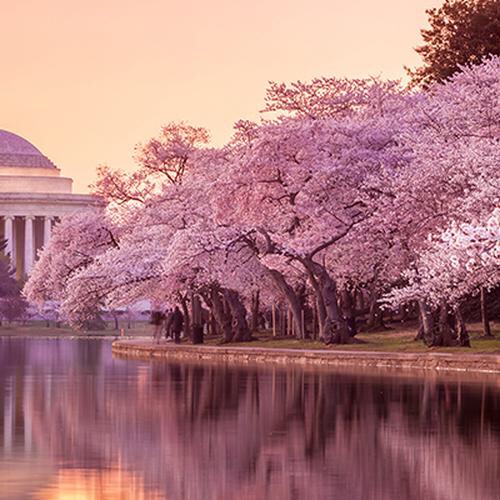
First Lady Helen Taft and the wife of the Japanese Ambassador, Viscountess Chinda, plant two Cherry Blossom trees along the Potomac near the Jefferson Memorial.

They were part of 3,020 Cherry Blossom trees given to the US by the Japanese to be planted in DC. The city of Tokyo had actually given 2,000 trees in 1910, but they were diseased by the time they reached the US and could not be used.

A private Japanese citizen then paid to have the 3,020 trees sent in their place. The beautiful trees bloom each Spring, and are the subject of festivals.

The trees came from a famous collection in Tokyo, which was mostly destroyed during bombing in WWII. After the war, the US sent cuttings from DC’s trees to replenish the Tokyo collection from whence they came.

Nitti Didn’t Die That Hollywood Death…

Today in History, March 19: 1943:

Most of us are familiar with the scene from the “Untouchables” in which Elliott Ness pushes the incredibly evil Frank Nitti from the roof of the courthouse to his death, because Nitti is cajoling Ness about the death of his friend.

The truth?

Nitti took over the Chicago rackets after Al Capone went to prison. He tried to extort California movie studios, and, failing, faced prison time.

He had also married the widow of Edward J. O’Hare, Capone’s attorney. Facing prison, he decided instead to get drunk (.23 bac), to walk to a nearby railroad center, and commit suicide.

He tried to stand in front of a train, but his courage failed. He then shot himself in the head with a .32 caliber pistol…missed the first two times…and finally on the third time, succeeded.

O’Hare had turned state’s witness to save his family…his son Butch would become a WWII hero, and O’Hare International Airport would be named for him.

Hero…Scapegoat…Hero…

Today in History, March 16: 1916 – German Admiral, and commander of the German Navy Alfred von Tirpitz, submits his resignation to kaiser Wilhelm, who accepts it. Tirpitz had been a trusted advisor to the kaiser, overseeing the build up of the Navy begun in 1897.

Despite his best efforts, the German surface fleet never became a match for the Royal Navy. In 1914 Tirpitz began unrestricted submarine warfare in the war zone…sinking neutral ships as well as combatants. When the Lusitania was sunk, with significant loss of neutral American lives, Wilhelm became nervous that America would enter the war, and Tirpitz, formerly a national hero, fell out of favor. Thus his resignation. The ship pictured was commissioned in 1936 and named after Tirpitz. It would be sunk by RAF bombers in 1944.

Firestorm in Tokyo

Today in History, March 9: 1945:

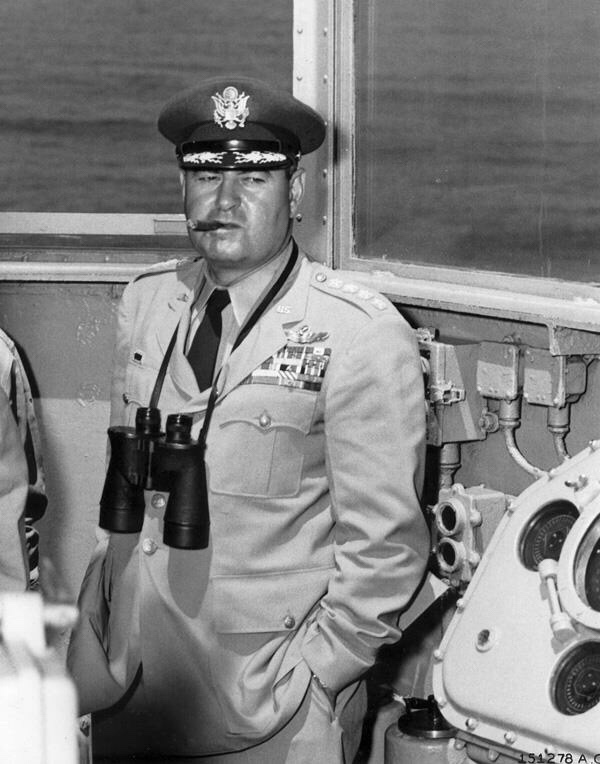
The Firebombing of Tokyo. General Curtis Lemay, hero of the air war in the Pacific, had been given the task of using American air power to end the war without losing untold numbers of American lives.

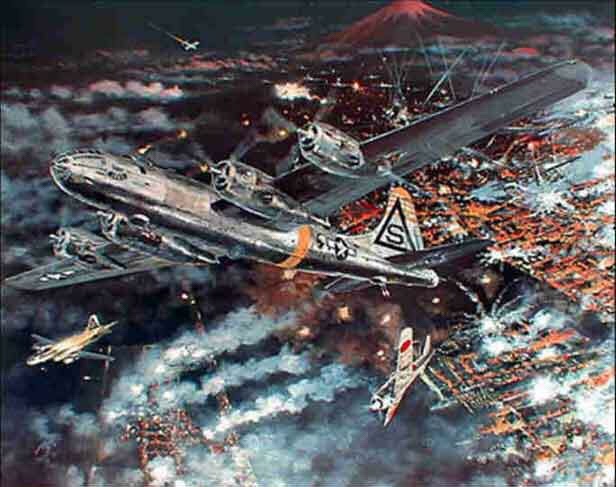
As part of that effort, on this date in 1945, over 300 B-29 Superfortress bombers took off from Tinian and Saipan in the Marianas en route to Tokyo. A little after midnight, they began dropping thousands of tons of incendiary bombs.

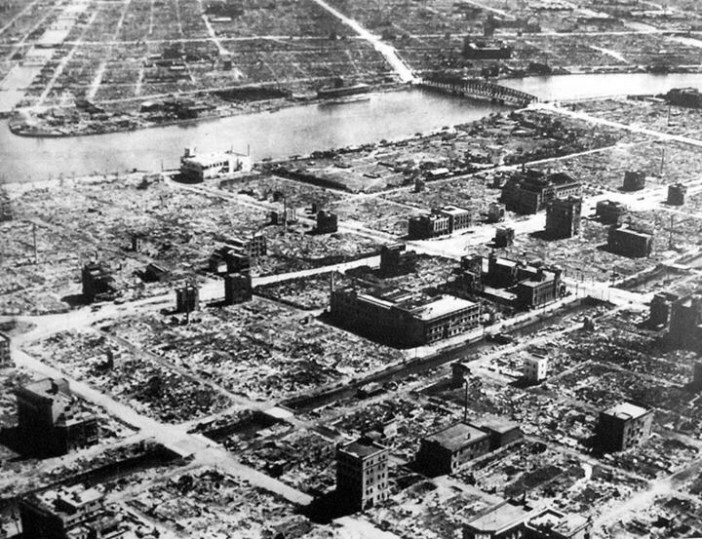
The result was a firestorm that engulfed 15 square miles of the city, which was composed mostly of wooden structures with paper walls. The numbers vary from 90,000 to 120,000, but the death toll was enormous. The citizens of Tokyo were unable to escape the flames fueled by 30 knot winds.

As much is made of the atomic bombs dropped on Hiroshima and Nagasaki, neither matched the death toll of the firestorm in Tokyo. The only difference was that the atomic attacks took one bomber with one bomb rather than thousands of bombs with hundreds of bombers.

Costs of Appeasement

Today in History, March 7: 1936:

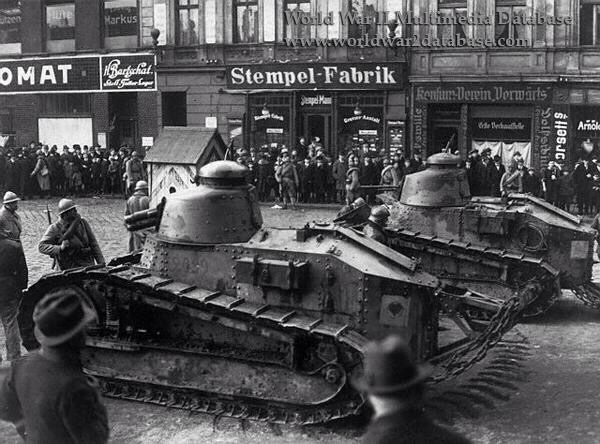
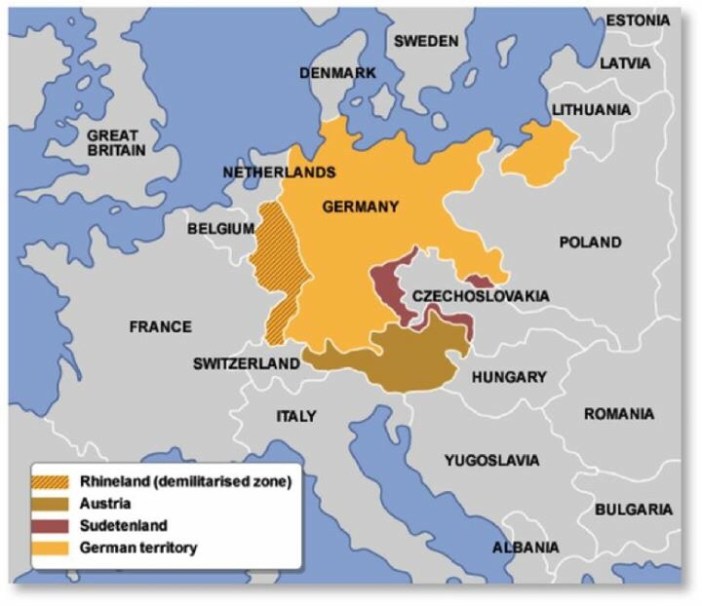
“If you French had intervened in the Rhineland in 1936 we should have been sunk and Hitler would have fallen” – German General Heinz Guderian, interviewed after WWII.

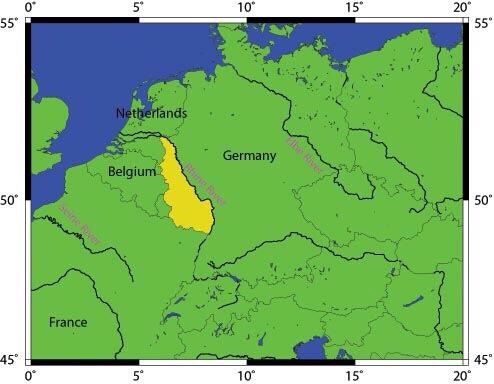
On this date, Germany “remilitarized” the Rhineland with a token force. It had been de-militarized after WWI to protect Germany’s neighbors.

In some skullduggery, Hitler claimed the people of the Rhineland were German peoples, and wanted the military presence. Now it was just a matter of seeing if anyone would call his hand.

In his memoirs, Hitler agreed with Guderian, saying that he had been very nervous in the 48 hours after the move.

Except for a few unheeded voices (Churchill), the governments of Europe refused to act, mostly for financial reasons. Bet they wished they could have had a “do over” on that decision.

Freedom From Want

Today in History, March 6: 1942 –

“The third is freedom from want—which, translated into world terms, means economic understandings which will secure to every nation a healthy peacetime life for its inhabitants—everywhere in the world.”

—Franklin Delano Roosevelt’s January 6, 1941

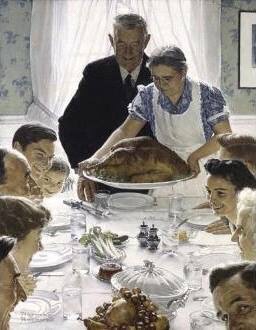
The third in a series of paintings by Norman Rockwell, based on President FDR’s Four Freedoms State of the Union address in 1941, entitled “Freedom From Want”, and alternatively famously known as “The Thanksgiving Picture” or “I’ll Be Home for Christmas” is published in the Saturday Evening Post.

The iconic painting included members of Rockwell’s family, which were photographed separately then included in the painting. The nation was at war, and the image was of those on the home front.

American’s could relate, but some Europeans were outraged as they were suffering daily bombings at the time.

“A Decree For the Protection of the People and the State”…The Reichstag Fire Decree

Today in History, February 28, 1933:

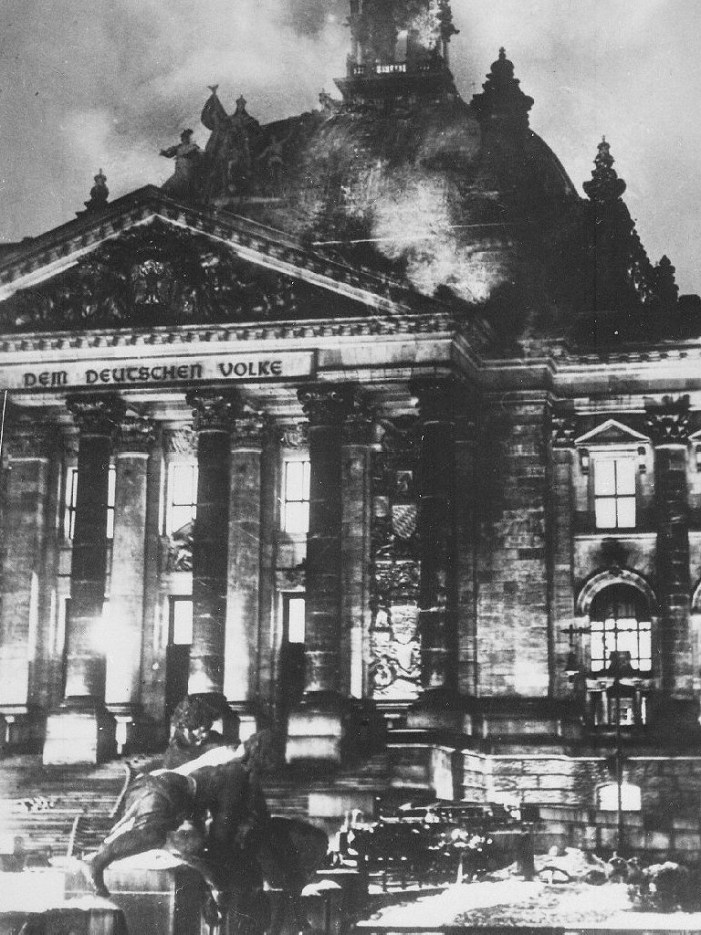
The Reichstag Fire Decree. On the night of February 27, 1933, the German Parliament, or Reichstag, was burned by arsonists.

The very next day (strike while the iron is hot) German President Paul Von Hindenburg, on the “advice” of Chancellor Adolph Hitler, issues the Reichstag Fire Decree “for the protection of the people and the state.”

The order suspended basic civil liberties guaranteed by the German Constitution.

The fire was blamed on the Nazi’s enemies, Communists. However it is likely the fire was contrived to justify the order, which began Hitler’s dictatorship.

The same type of maneuver would be used by the Nazis in September, 1939, to justify the invasion of Poland.

“Those who would give up essential liberty, to purchase a little temporary safety, deserve neither liberty nor safety.” – Benjamin Franklin