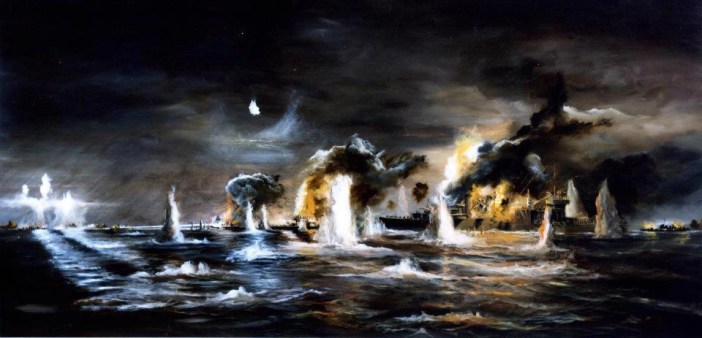
First Deposits into “Iron Bottom Sound”

Today in History, August 9, 1942:

Two days after the US Marines had made an amphibious landing on Guadalcanal seized what would become Henderson Field, the transports that brought them still stood off the coast, protected by 8 American and Australian Cruisers and 14 destroyers.

In the early morning hours a force of Japanese Heavy and Light Cruisers moved silently into the waters between Guadalcanal and Savo Island and opened fire on the American and Australian warships, which they caught, quite literally, napping. The British commander of the Allied force, Admiral Crutchley had taken his flagship to a conference with the amphibious force commander, Admiral Richmond Kelly Turner and Marine Gen. Alexander Vandergrift, leaving a subordinate in command.

The Japanese Navy had been practicing and perfecting night time combat tactics for years, a fact the USN was not aware of, so they weren’t really expecting an assault. The Japanese also had very effective torpedoes. Several of the Allied ships managed to get off some shots that caused minor damage to the IJN cruisers, but the experienced, practiced Japanese crews poured withering torpedo and gunfire into the American and Australian ships, whose crews were exhausted from 2 days of shelling the enemy ashore in humid high temperatures.

Within an hour the USS Astoria, USS Quincy and USS Vincennes were on their way to the sea floor, making the first of many deposits that would give this passage the name “Iron Bottom Sound” because of all of the Allied and Japanese ships that now rest there with their crews. The next day, Admiral Turner would order the HMAS Canberra scuttled due to her damage.

The US aircraft carriers that had been providing air cover for the landings had been ordered out of the area by their commander, Adm. Frank “Black Jack” Fletcher. The transports and their covering surface ships could not remain with range of Japanese aircraft without air cover of their own, so they too left the area, leaving the Marines to their own devices for quite some time. Numerous battles would be fought in the waters of Guadalcanal, Savo and Tulagi Islands, and in “The Slot” leading from Guadalcanal to the enemy bases in the Solomons.

“Damn the Torpedoes!”

Today in History, August 5, 1864:

“Damn the Torpedoes, Full Speed Ahead!!”

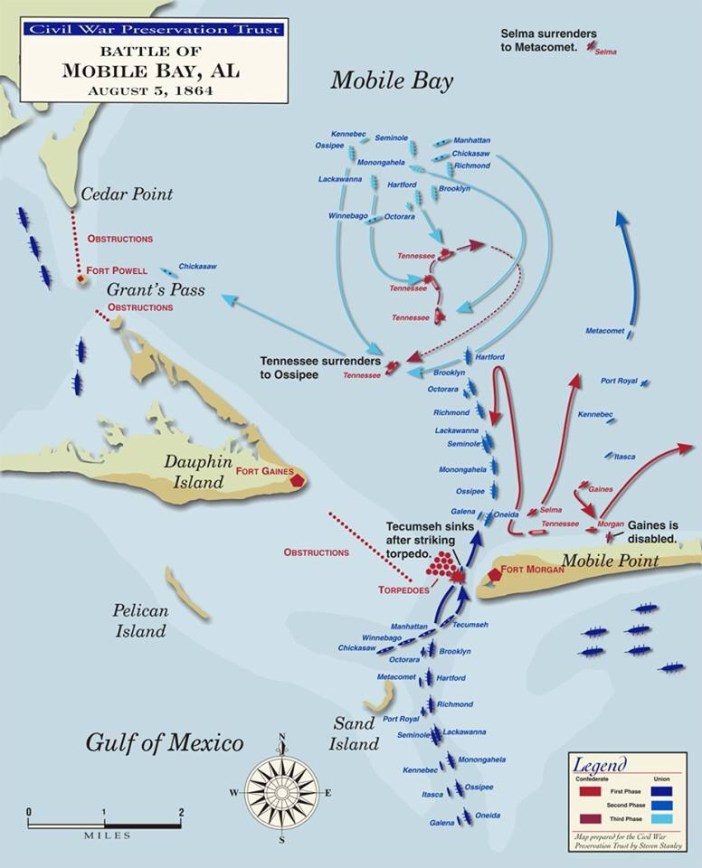
The Battle of Mobile Bay. During the Civil War, Confederate “blockade runners” (Rhett Butler types) kept the South in vital supplies by running past the Union Navy blockade from Cuba to ports like Mobile Bay, Alabama.

US Navy Admiral David Glasgow Farragut was tasked with closing this last Confederate source of supplies. His fleet had to fight past the Confederate fleet of ironclads and two forts that guarded the bay. As the battle progressed, the Union fleet began to fragment, until Farragut rallied his sailors with famous admonition, winning the battle.

Mobile would remain in Confederate hands, but access to it was cut off for the duration. Farragut was the adopted son of US Naval Officer David Porter, who also raised his biological sons, famous Naval officers David Dixon Porter, and William Porter. One family played such a vital role in the glory of the US Navy. Can you imagine being a part of it?

No Greater Love…

Today in History, July 31, 1976:

The Big Thompson Canyon Flood.

While Colorado was celebrating its Centennial, a highly unusual thunderstorm broke out high in the mountains, near the source of the Big

Thompson Canyon in northern Colorado.

The storm deluged the canyon with the equivalent of 3/4’s of the area’s annual rainfall in a matter of hours. It sent a wall of water 20 feet high racing down the canyon; residents and tourists miles away from the storm near the mouth of the canyon had no idea there was a storm higher up, much less a torrent of flood water headed their way.

144 died.

Colorado State Trooper Sgt. W. Hugh Purdy and Estes Park Officer Michel O. Conley were advised of the approaching flood. Remember that this was before cell phones and other mass media, most of which would not have worked in the canyon anyway.

These men drove their patrol cars up the canyon, telling people to flee using their public address systems, with full knowledge of what they were doing….until they met the water and were killed.

I saw this memorial while visiting relatives in Greeley, CO as a teen. These men are part of the reason I’m a cop. God bless them and their families.

New Orleans Race Riots…Democrats Murder Republicans

Today in History, July 30, 1866:

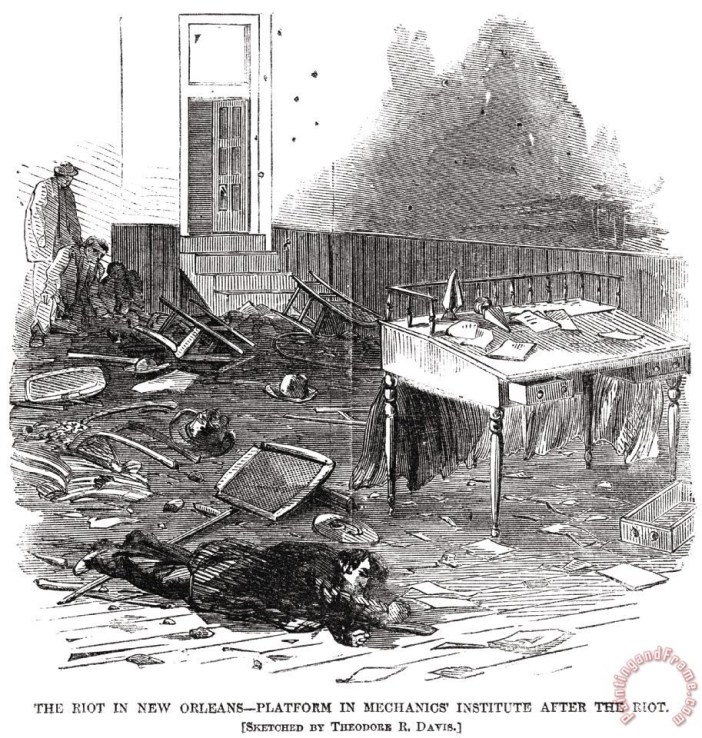
The New Orleans Riot. NOLA had been under Union control for most of the Civil War, although deep South in geography and sentiments. In 1864, a state convention of mostly Confederate sympathies had tried to enforce “Black Codes” to limit the rights of Freedmen.

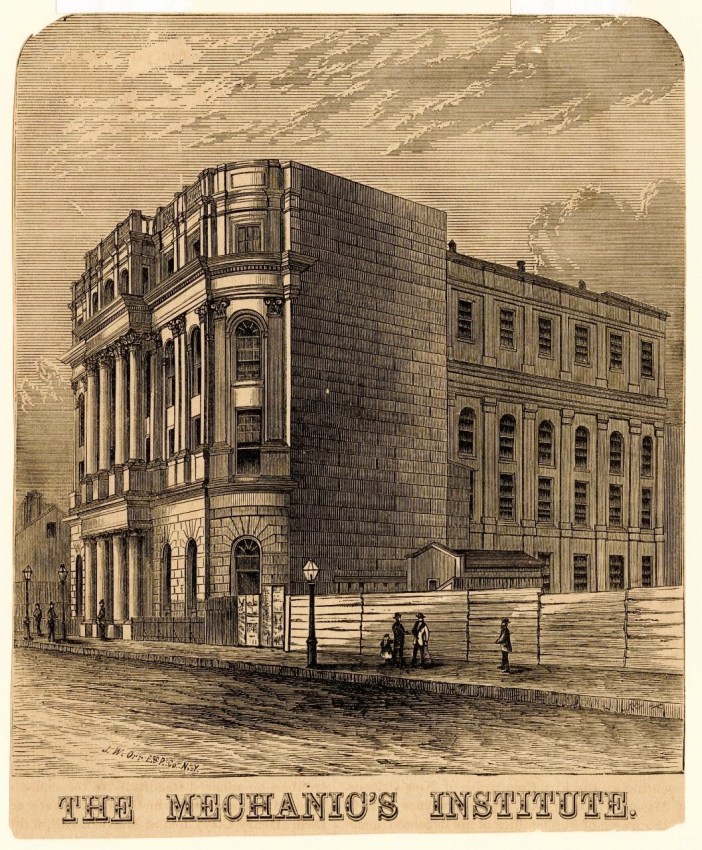
Now that the war was over, “Radical” Republicans were holding a state convention in The Mechanic’s Institute in New Orleans in hopes of gaining control of the legislature.

A group of black Union veterans formed and marched to the Institute in support of the Republicans, where they were attacked by an armed group of former Confederates, including some authorities (the Mayor and others were Democrat former Confederates). 34-35 black and 3 white Republicans were killed.

Other similar riots in the South occurred, convincing enough voters that more stringent Reconstruction policies were needed.

In November Republicans would sweep into both houses of Congress by 77%. The next year they would force through the Fourteenth Amendment protecting citizenship rights and equal protections over the protests of Democrats in Congress. Before it could be ratified, the Reconstruction Acts were passed…requiring former states to ratify if before they could be represented in Congress.

“Lick ‘em Tomorrow, Though”

The Confederates had caught the Union soldiers mostly unaware and the first battle at Shiloh Meeting House had been a rout. The losses on both sides had been horrendous.

Union General Grant had been calm through it all. Despite the allegations he’d been drunk…again…he looked at the big picture and planned for the second day.

That night, amidst the cries of the wounded, General Sherman found Grant alone.

Sherman: “Well. We’ve had the devil’s own day of it, haven’t we?”

Grant, calmly and matter of factly, “Yes. Lick ‘em tomorrow though.”

That was all. No ostentatious oratory. He had it planned out in his head and now that he was back on his element, his confidence was back.

An example of how to live our lives when you’ve had a devil’s day of it.

Yep. Lick ‘em tomorrow though.”

Raison D’être – Sam Finishes His Book

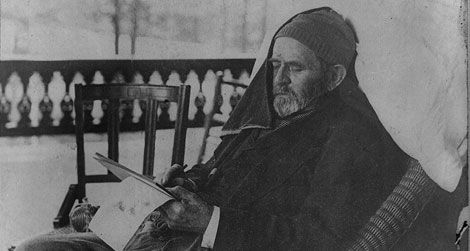
Today in History, July 16, 1885: Sam finishes his book.

Sam had led a bit of a rough life. He saw great success, no doubt, but he was also an alcoholic. His father struggled with the demon for a time, and his grandfather had succumbed to it. In those days they didn’t realize it was often a family trait or a disease…it was simply a weakness. Sam had fought the demon his entire adult life. He was brilliant at is chosen profession. He quit it for a time because of his drinking and tried other jobs…farmer, realtor, shopkeeper…none worked out. As brilliant as he was, he had another weakness; he had a big heart and was much to quick to trust people with his money. So Sam spent most of his life broke.

Even with this, events in his life led him in a round about way to the pinnacle of success. He succeeded where others failed miserably due to his tenacity, his organizational skills and his ability to see the big picture. Yet through it all, no matter how much he achieved, his detractors never forgot, and certainly never let him forget, his demons.

Sam had made his fortune at last…but then, in his older years when there was little to no chance of building success anew, his other failure reared its ugly head again. The people he trusted with his money were scoundrels, and he found himself…and more importantly to him, his family, destitute once again.

Living on borrowed money, things got worse. One day while eating a peach his wife had given him, he felt as if he had been stung by something within it. He had no time for doctors and stubbornly toiled for months until the pain was unbearable to relent to his wife’s demands to see his physician. By then, it was too late. The mouth and throat cancer was advanced, and all that could be done was to provide him with pain killers until the end would come.

Sam’s father had been an inveterate braggart, a schemer and an incessant talker. It embarrassed Sam so that he became the exact opposite. Quiet and humble to a fault, it took everything he had to do what he had refused for years…to blow his own horn and tell his own story. But now it was the only way he could leave his wife and children with a means of support. So he threw himself into the task.

For over a year he wrote. He wore a muffler to cover the baseball sized tumor at his throat. Typical of his demeanor, he never complained of the excruciating pain that wracked him day and night…his family only saw him grimace from the pain when he was asleep and unable to hide it.

Sam worked with a purpose…he amazed his publisher by finishing 10,000 words in a day, written out. Mark couldn’t believe it…Mark was one of the most prolific story-telling authors of his time, and could never match Sam, who disliked the task of telling his own story. But now he had to…for his family…for his legacy because his old detractors were only too happy to repeat their own refrain, “See, we told you so.”

Fighting past the pain and past the fog of his medications, he toiled even when he could no longer write, and tortured himself to dictate his story to others.

Finally on July 16, 1885, Sam completed his autobiography. Mark had promised to publish it for a handsome price which would see to it that Sam’s family did not want for anything. It was suspected that Mark had ghostwritten the work…which he adamantly and angrily denied. His friend Sam had written the work…brilliant and surprising as usual.

Having won his last battle, he could let go now. Seven days later on July 23, 1885, Hiram Ulysses Grant, “U.S. Grant” due to an Army administrator’s error in his youth, Sam to his friends, a drunk to his detractors, an amazing horseman and hero of the Mexican-American War, General of the Army and President of the United States, passed from this earth.

Mark Twain saw that “The Personal Memoirs of U.S. Grant” was published and the family was treated fairly and well. Sam had found someone trustworthy this time. I’ve read General Grant’s memoirs, and they would be impressive if written by someone in perfect health. They are nothing less that heroic considering the suffering he endured during his final work.

Carl Spaatz, Pioneer of Air Power

Today in History, July 14, 1974:

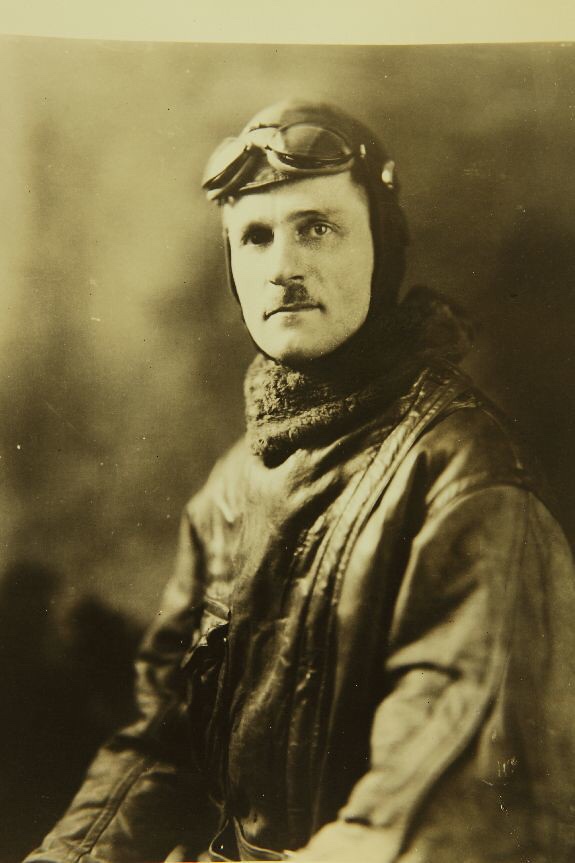
General Carl Spaatz dies.

Spaatz was a fighter pilot in his youth during WW1. He remained in the Army Air Corps, and when WW2 began went to England.

As German bombs fell on London during the Blitz and everyone else ran for the shelters, Spaatz sat on rooftops to gain knowledge of German tactics by watching their bombers and fighters in action.

When America entered the war, he became the commander of the Eighth Air Force as it began daylight bombing raids over Germany.

After the war, the Army Air Corps was separated from the US Army and became its own military branch, the US Air Force in 1947. Spaatz was it’s first Chief of Staff.

Saipan Banzai Charge

Today in History, July 7, 1944:

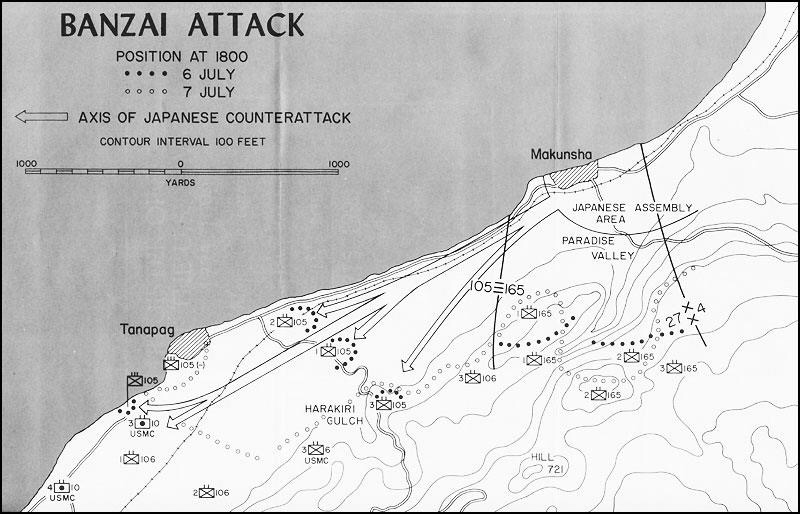
The largest Japanese Banzai charge (suicidal attack) of World War II is conducted during the Battle of Saipan, when the Japanese military is finally cornered on the island.

3,400 Japanese soldiers, including the wounded and civilians were killed as they charged the US Army and Marines. 650 Americans would die in the massive attack, but they held firm, and within two days the island was declared secure.

I won’t post the photos and videos I found, as they are gruesome. Look them up if you’d like.

3 posthumous medals of honor would be awarded out of this horrific battle.

Circus Horror

Today in History, July 6, 1944:

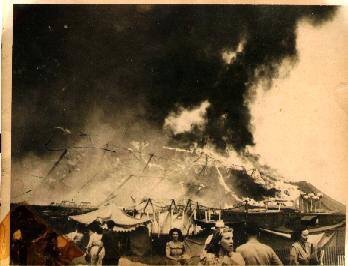
The Hartford, Connecticut Circus Fire.

During a performance by Barnum & Bailey Ringling Brother’s Circus, held in a massive tent, the tent suddenly caught fire. The tent had been treated with a mixture to make it waterproof that was also flammable, and the fire spread very quickly and within seconds large flaming sections were falling on the spectators below.

Many managed to escape by cutting holes in the sides of the tent, but when the supporting ropes burned through, the tent poles gave way and the entire structure came down. Between 167 and 169 people were killed and 700 injured, mostly children.