The Texas City Disaster

Today in History, April 16, 1947:

The Texas City Disaster, the worst industrial disaster in US History.

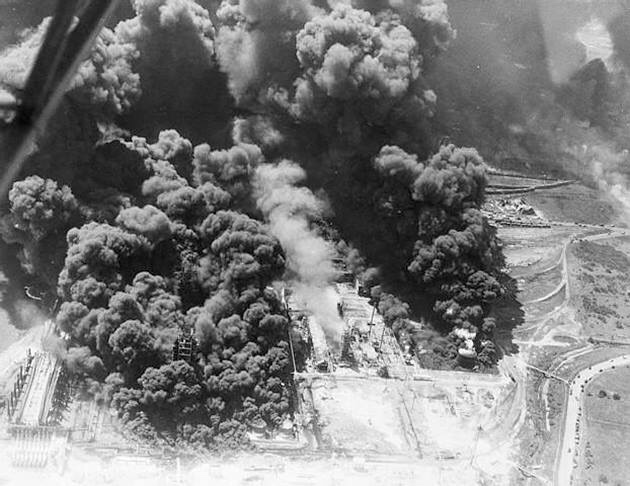
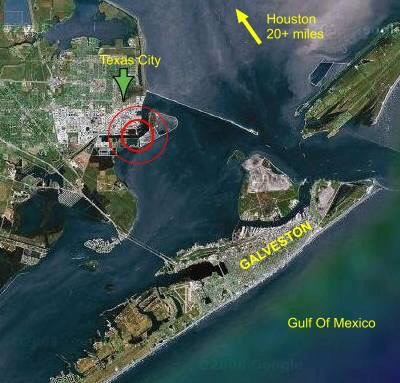
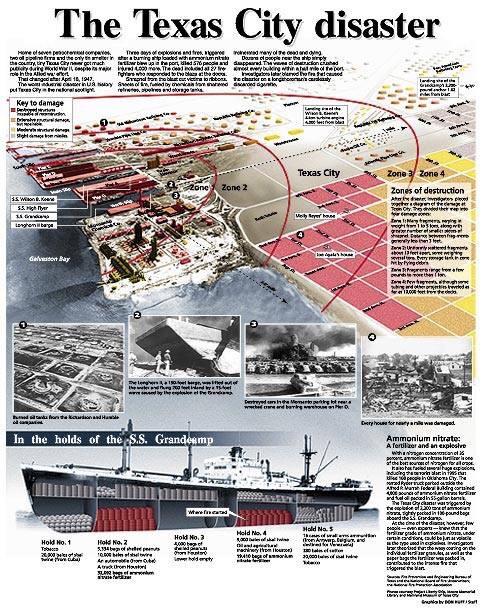
A French ship, the SS Grandcamp, loaded with 2300 tons of ammonium nitrate fertilizer in the port city of Texas City, across from Galveston, explodes in the channel leading to Houston, devastating the docks and the town.

All but one of the town’s firefighters were killed, and several other fires were ignited on other ships and in the oil town in the following days. Most of the city was destroyed, and at least 581 people were killed.
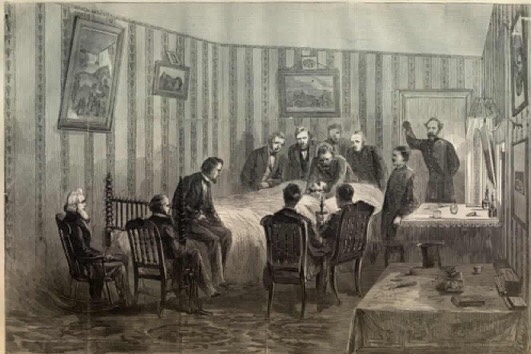
Irredeemable Loss & Grief…Assassination of President Lincoln

Today in History, April 14, 1865:

Within a week of the surrender at Appomattox, a coward assassinated President Abraham Lincoln.

If you were old enough on 9/11, you experienced the indescribable loss, grief, and helplessness we all experienced.

I use this in an attempt to fathom the emotions Americans must have felt at the loss of Lincoln. He had led them through the most traumatic time in our nation’s history…the times ahead were still uncertain. How would the North and South reunite? Was the war really over? They needed his steady hand on the rudder stearing the ship of state more than ever.

And suddenly Abraham was gone.

I post “O Captain! My Captain!” By Walt Whitman almost every year on this date, because I believe he came closest to capturing the grief the nation must have felt.

O Captain! My Captain!

O Captain! my Captain! our fearful trip is done,
The ship has weather’d every rack, the prize we sought is won,
The port is near, the bells I hear, the people all exulting,
While follow eyes the steady keel, the vessel grim and daring;
                         But O heart! heart! heart!
                            O the bleeding drops of red,
                               Where on the deck my Captain lies,
                                  Fallen cold and dead.
O Captain! my Captain! rise up and hear the bells;
Rise up—for you the flag is flung—for you the bugle trills,
For you bouquets and ribbon’d wreaths—for you the shores a-crowding,
For you they call, the swaying mass, their eager faces turning;
                         Here Captain! dear father!
                            This arm beneath your head!
                               It is some dream that on the deck,
                                 You’ve fallen cold and dead.
My Captain does not answer, his lips are pale and still,
My father does not feel my arm, he has no pulse nor will,
The ship is anchor’d safe and sound, its voyage closed and done,
From fearful trip the victor ship comes in with object won;
                         Exult O shores, and ring O bells!
                            But I with mournful tread,
                               Walk the deck my Captain lies,
                                  Fallen cold and dead.

A Devil’s Bargain

Today in History, April 13, 1941:

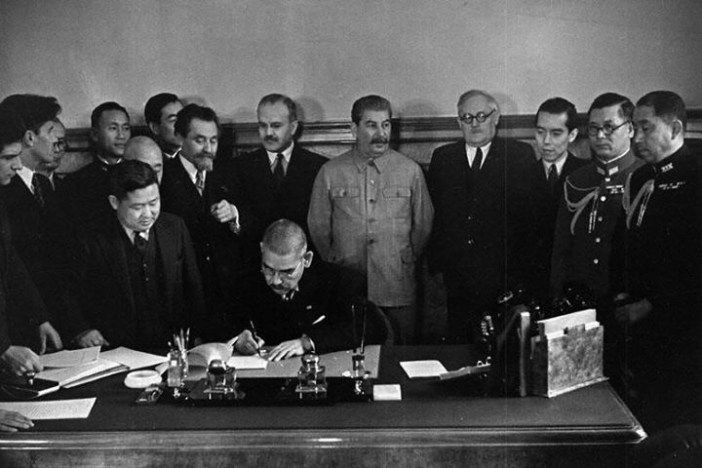
The Russian and Japanese governments sign a non-aggression treaty. The treaty gave both nations much needed cover.

The Russians didn’t have to fight the Japanese in Manchuria, freeing up hundreds of thousands of troops to fight the Germans.

The Japanese, likewise, freed up hundreds of thousands of troops to fight the Americans. FDR encouraged Stalin at Malta to declare war on Japan after the defeat of Germany.

They did so, conveniently, between the atomic bombings of Hiroshima and Nagasaki, ostensibly after the war was over, invading Manchuria and demanding the northern islands of Japan for their “effort”.

SPEBSQSA, Inc

Today in History, April 11, 1938:

The Society for the Preservation and Encouragement of Barbershop Quartet Singing in America is founded by Owen Clifton Cash, Rupert I. Hall, and 24 other men at the Tulsa Club in Tulsa, OK. (Encyclopedia Britannica). For an example of Barbershop Quartet Harmonizing, also my favorite Beatles song.

The Statute of Anne…Authors Get Rights!

Today in History, April 10, 1710:

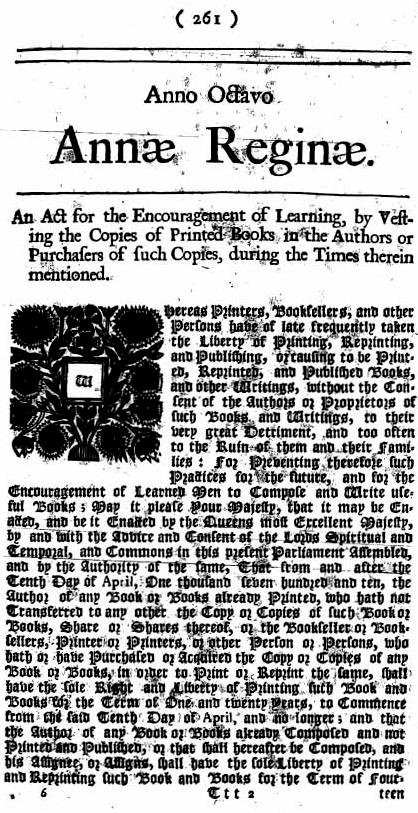
The Statute of Anne. The English Parliament passes the first statute awarding authors rights of copy.

Prior to this act, what little rights or restrictions on copying books and other works that existed in England protected the Stationer’s Company, and was enforced by the company.

With the Statute of Anne, the government enforced the rules, and gave the original author rights to copy their work for 14 years, after which they could obtain another 14. After the 28 years lapsed, the work defaulted to the public domain.

Much as we have seen with internet hijacking of artist’s work today, author’s work was being reproduced in poor or changed quality, taking away creative incentive. The Statute of Anne was revolutionary in publishing.

Other nations followed suit in the coming years (America in 1790). In 1886 the Berne Convention in Switzerland led to an agreement among several nations to recognize each other’s copyrights. The US would not join until 1986 (according to Britannica.)

A Kamikaze in London

Today in History, April 9, 1937:

A Kamikaze in….London.

In the 1930’s most nations were attempting to set aircraft range records…for the sake of doing so and for military purposes.

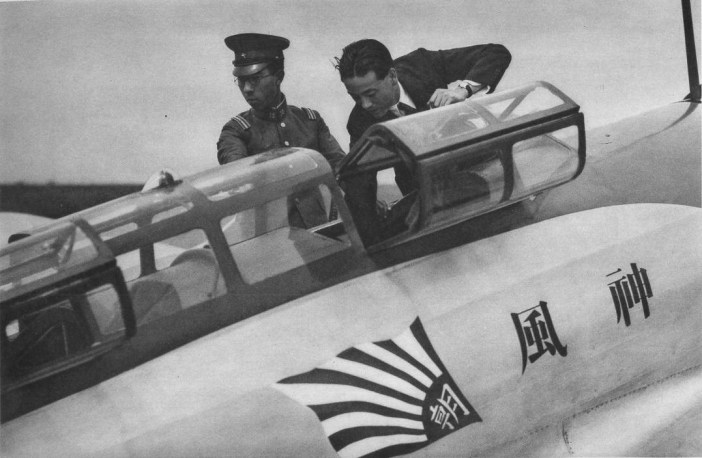
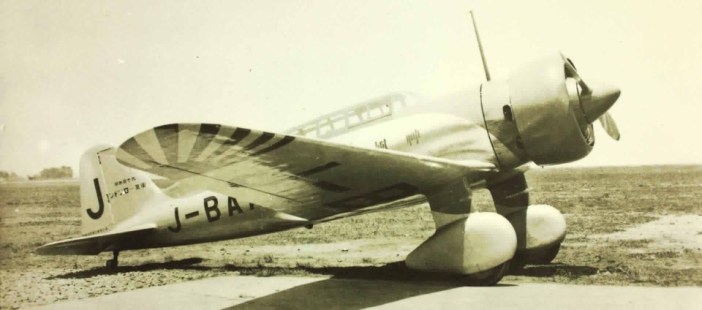
The Japanese newspaper Asahi Shimbun sponsored the flight of the “Kamikaze-Go”, a long range reconnaissance aircraft from Tokyo to London in honor of the coronation of King George VI.

Arriving at it’s destination in a little over 51 hours, the aircraft was greeted in London by cheering crowds.

It’s pilot, Masaaki Iinuma, became a Japanese national hero, hailed as the Japanese Lindbergh. He and his navigator, Kenji Tsukagoshi would both be killed during WWII.

The aircraft would crash, be recovered, and placed in a museum which would be destroyed by aerial bombardment.

The aircraft type would be used as a long range recon plane during the war. The whole thing began as the Japanese designed aircraft that could reach their far-ranging territories.

Congreves…The 1st Modern, Safe, Box Match…

Today in History, April 7, 1827:

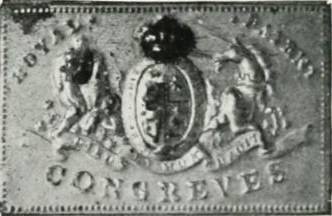
English Chemist and Pharmacist John Walker sells his first “friction match”, the first safe and easy method to ignite fire in the modern age.

He had been experimenting for some time when a combination of chemicals accidentally caught fire when struck on a solid surface.

Walker called his matches “Congreves” after the inventor of the Congreve Rocket of “The Rocket’s Red Glare” fame.

There are indications that the ancient Chinese had invented these same items in the 14th Century.

1896 Olympics…Modern Reincarnation

Today in History, March 6, 1896:

The first modern Olympics are held in Athens, Greece. The ancient Olympic games were held in Olympia (thus Olympics) Greece for hundreds of years.

When the 1896 games were held, one of the first events was a run to retrace the route a Greek soldier had taken from Marathon to Athens in 490 B. C., bringing news that the invading Persians had been defeated (Thus the term Marathon). In 1896 there were 280 participants (some of them passing tourists).

American Patrol

Today in History, April 2, 1942:

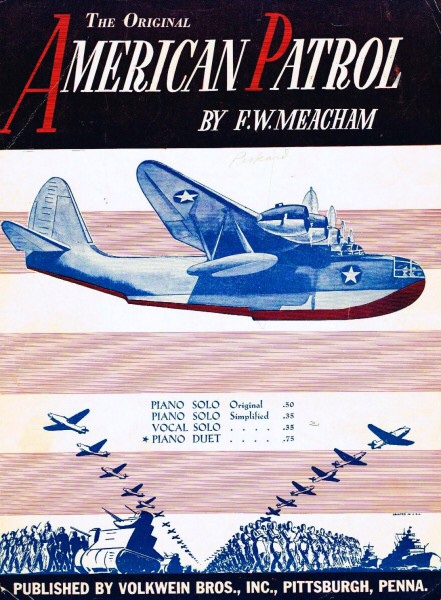
In Hollywood, California, Glenn Miller and his Orchestra record their version of “American Patrol.” 

The tune was originally written in 1885 by F. W. Meacham, but Miller’s orchestra would add swing and jazz to the already inspiring instrumental.

This would make it representative and nearly synonymous with the jaunty, cock-sure attitude of American servicemen fighting World War II in multiple theaters.  Miller and his band would entertain the troops with this and other hits in live shows until his death on December 15, 1944, when he would be lost while flying to France for a performance. 

Think of the most popular entertainer you can, and they would pale in comparison to Glenn Miller in the late thirties and early forties.  Major Miller’s loss was felt.

It is important to remember what was occurring in April of 1942.  The attack on Pearl Harbor was only five months in the past, American troops at Bataan were about to surrender, the US Navy was conducting hit and run raids on Japanese strongholds, the Doolittle Raid on Tokyo was in this month, and Americans were training up for the war in Europe while U-Boats lurked off of American shores.

“The Girl I Left Behind Me.”  If you listen, and know what you are listening for, at about the 1:40 mark you pick up on the overlay Miller’s crew added to “American Patrol” of “The Girl I Left Behind Me.”  While versions of this tune were popular in Dublin and the British service long before, it became popular in the US Army during the Civil War and in the Cavalry as a marching tune.  So popular in fact, you’ve likely heard it in movies about the US Cavalry.

Just What a War-Weary Audience Needed

Today in History, March 31, 1943:

Historically Broadway musicals had gone for flash and opened with a bang.

So most critics expected this folksy, country new musical, opening on Broadway in the middle of WWII, to bomb.

They misunderstood the mood of the nation, which had been in the midst of world war and the related personal losses and stress for years.

When Rodgers and Hammerstein’s Oklahoma! premiered on this date in 1943 on Broadway, it opened with the melodious tunes of a cowboy singing as he greeted a peaceful morning.

Almost in unison the war weary audience let out an audible “aaaaahh”.

By the time the cast had sung the title song and closed the play, Joan Roberts (Laurey) says that the applause was deafening through two encores. The record setting musical would run for 15 years, 2,212 performances, before closing.