The Coercive Acts – A Heavy Hand Has the Opposite Effect

Today in History, March 28, 1774:

The British Parliament enacts the Coercive Acts, or what were called the Intolerable Acts in the colonies.

Since the end of the 7-years war, part of which was fought on the North American continent between Britain and France, the British Government was cash strapped. Part of their solution was to tax the American colonists, who did not have representation in Parliament. Taxation without representation led to increasing discontent in the colonies.

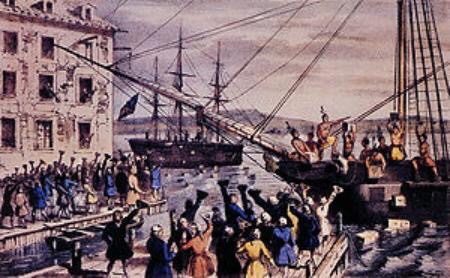
After the Boston Tea party in December of 1773, parliament decided to punish the Massachusetts colony, in hopes that the recalcitrant colony would back down, and the other colonies would calm themselves and pressure Massachusetts to behave.

The Boston Port Act closed the port of Boston until the colonials paid back the cost of the tea destroyed during the Tea Party to the East India Company, and until the King was satisfied that peace had been restored.

The Massachusetts Government Act took governance of the colony out of American hands. All administrators would be appointed by the British Governor, or the King. Citizens would only be allowed to have one town meeting per year.

The Administration of Justice Act allowed the Governor to move trials for royal officials accused of crimes to other colonies or Britain, effectively preventing witnesses from testifying in the trials.

The Quartering Act ordered that American colonists provide housing for British troops. Many believe that this forced colonists to house troops in their homes, but that is not correct; they were to house them in public buildings or vacant buildings.

Finally the Quebec Act drastically enlarged the territory of Quebec into lands previously considered to be part of the colonies. Aside from the obvious, the Protestant colonists believed the Roman Catholic French of Quebec were being primed for use against them.

The Intolerable Acts had the opposite of the effect Parliament intended. They had underestimated the Americans. Rather than turn on Massachusetts, the other colonies shipped in supplies that Boston could no longer get by sea and agreed to defend Massachusetts should she be attacked.

By September, the first Continental Congress had convened to organize a unified response.
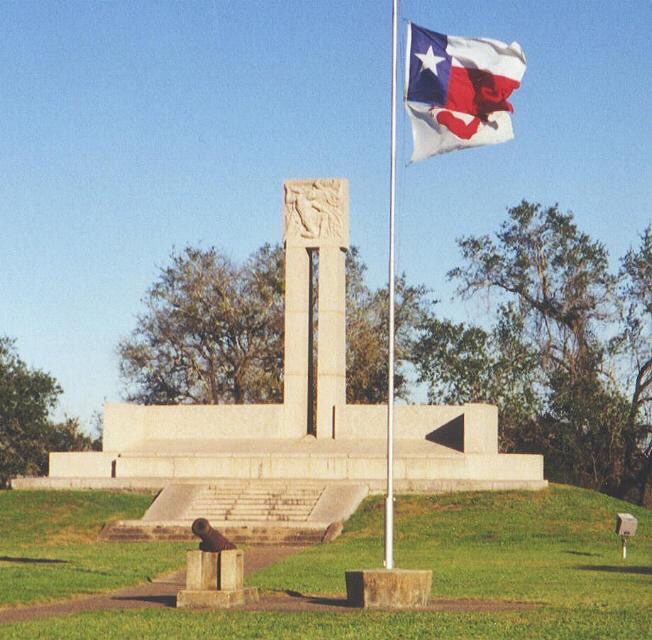
Murder…War Crimes…at Goliad

Today in History, March 27, 1836:

The Goliad Massacre.

In the preceding days, several battles had been fought between the Mexican Army and Texians fighting for their independence.

Among others, James W. Fannin had to surrender his forces faced with overwhelming Mexican force and artillery.

He and his men had been promised surrender terms that included good treatment and “parole” back to the United States. They were not aware that in December of the previous year Gen. Antonio Lopez de Santa Anna had asked for and received from the Mexican Congress a law declaring that any Texian or American soldiers that were captured would be treated as pirates and executed.

In spite of pleas from one of his generals, Santa Anna ordered the men executed. Deprived of the ability to fight to the end by false promises of parole (parole was a common military practice – those that surrendered simply promised not to take up arms again), 303 men that were ambulatory were marched out of Fort Defiance in Goliad along three separate roads.

They were told that they were to gather wood, or that they were being taken to a port to be shipped to New Orleans. Many of the men joined in a chorus of “home sweet home” the night before. After marching about 3/4 of a mile, they were halted. Their Mexican guards turned and, on a prearranged signal, shot the unarmed men down. Only 28 managed to play dead and survive.

Forty more, including Fannin, were too injured to join the march and were executed within the fort. The Mexicans saved Fannin for last, setting him on a chair in the courtyard due to his injuries. He asked only that his property be returned to his family, that he be shot in the heart, not the face, and that he be given a Christian burial. The Mexicans shot him in the face, shared his effects, and burned his body where it lay. The other murdered soldiers were piled up and set afire, their remains left for the vultures.

After the Battle of San Jacinto and Santa Anna’s surrender, the Mexicans returned and attempted to destroy the evidence. The Massacre did a great deal to gain support for the Texian cause for independence from the United States.

Nightline & The Hostage Crisis Countdown…

TODAY IN HISTORY, MARCH 24, 1981:

“Nightline”, an ABC news show, premieres, according to Historyorb.com.

The most interesting part of this story is that “nightline” with Ted Koppel actually began in November 1979 with the Iran Hostage Crisis. But then, that was focused on the Democrat administration of Jimmy Carter, so we can’t report that accurately.

The program had its beginnings on November 8, 1979, just four days after the Iran hostage crisis started. ABC News president Roone Arledge felt the best way to compete against NBC’s The Tonight Show Starring Johnny Carson was to update Americans on the latest news from Iran. At that time, the show was called:

“The Iran Crisis—America Held Hostage: Day xxx” where xxx represented each day Iranians held hostage the occupants of the U.S. Embassy in Tehran, Iran. Originally, World News Tonight lead anchor Frank Reynolds hosted the special report. Shortly after its creation, Reynolds stopped hosting the program.

Ted Koppel, then ABC News’s State Department Correspondent, took on the hosting duties. It wasn’t until a few days later that a producer had the idea of displaying the number of days on “America Held Hostage”: Day 15, Day 50, Day 150, and so on.

The show continued to run as Nightline after the hostages were freed, and Ted Koppel became one of America’s most respected journalists.

The Prolific Life of a Prolific Author Begins…Louis L’Amour

Today in History, March 22, 1908:

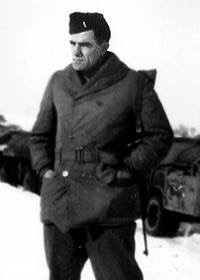
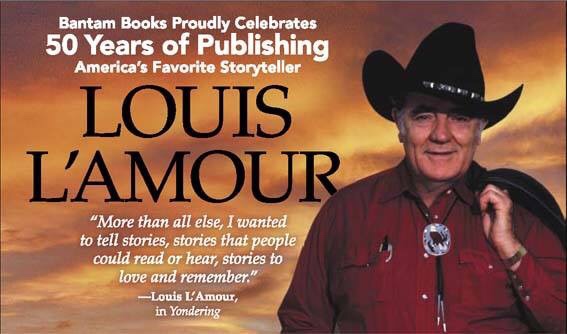
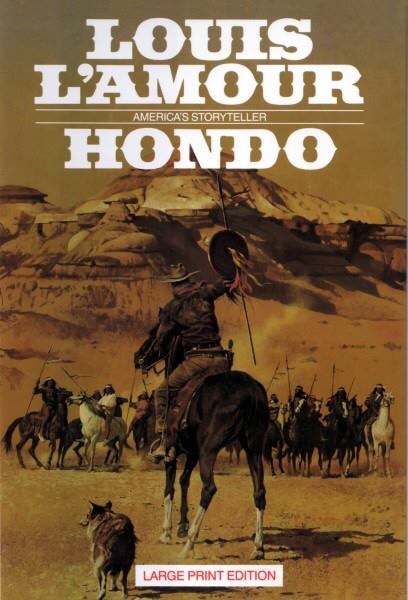
Louis L’Amour is born in Jamestown, North Dakota.

Ditching school at age 15, he spent the next twenty plus years traveling the world, working as a cowboy, a longshoreman, a sailor, prizefighter, miner, and a World War II tank crewman in Europe.

When he came home from the war, he began writing. 108 books and 225 million copies later, he was recognized as the most prolific Western writer in America.

His narrative was gritty and quick…and many of us loved them.

Many in Hollywood would be honored to portray his characters…it made some careers. Tom Selleck, Sam Elliott, John Wayne, George Peppard, James Stewart, Henry Fonda, Debbie Reynolds and so many others.

My second favorite movie, “How the West Was Won” was based on one of his books. What a life!

A Senseless End for a Pioneering American Naval Hero

Today in History, March 22, 1820:

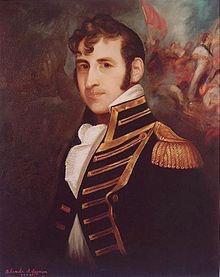
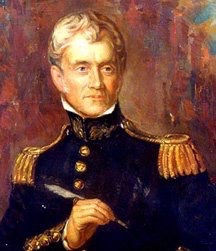
Stephen Decatur, Naval hero of the first and second Barbary Pirate wars, and of the War of 1812, hero and example to many of the U.S. Navy, is killed in a senseless duel.

In 1807 Commodore James Barron refused to defend his ship, Chesapeake, against British attack and was court-marshaled; Decatur sat on the court-marshal board.

Suspended from the Navy for 5 years, Barron chose to wait until after the War of 1812 to be recommissioned.

His cowardice was called, and he challenged Decatur, a former comrade, to a duel. Decatur, U. S. Navy hero, was mortally wounded. Such a shame. Decatur was a swashbuckler, a fierce fighter for his country.

“So. You’re the little woman who wrote the book that made this big war?” – A. Lincoln

Today in History, March 20, 1852:

“So…you’re the little woman who wrote the book that made this great war!”

President Abraham Lincoln greets Harriett Beecher Stowe at the Presidential Mansion in 1862, ten years after her novel “Uncle Tom’s Cabin” was first published.

I am amazed at the foresight and courage displayed by this woman, a school teacher turned author.

By her own admission, in the epilogue of the book, for the first part of her life, she knew of slavery, disapproved of it, but being a Northerner, it was distant and she felt that the problem would be resolved eventually on it’s own.

How many of today’s injustices do we see the same way? Between meeting some runaway slaves, becoming familiar with the Underground Railroad, and stories from her family and friends, and finally the Compromise of 1850 (in which the government promised to return runaway slaves in exchange for new limitations on slavery expansion), she became an avid abolitionist.

She wrote Uncle Tom’s Cabin to illustrate the aspects of slavery that most did not understand at that time.

As slaves, a mother’s children were often sold off, never to be seen again.

Women were sold into prostitution, to be used until their value had diminished.

If a good and kindly “master” came on hard times, he might sell a good man “down the river” to cruel and harsh masters, as “Uncle Tom” was.

With her novel, Mrs. Stowe humanized the slavery issue, brought it home to people and chastised them for not living up to their Christian values.

The novel would become the best selling novel of the 19th century and would inspire abolitionist views amongst Americans. It was certainly far from the only cause of the Civil War…but the novel played it’s part in American History.

One has to wonder if this “little woman” had any idea of the importance her words would have. If you haven’t read (or listened to) this novel, you should.ance her words would have. If you haven’t read (or listened to) this novel, you should.

Shared Army & Navy History

Today in History, March 16, 1802:

Connections through history.

The US Congress approves legislation creating the United States Military Academy at West Point, New York…now one of the oldest military academies in the world.

The post had been created during the Revolutionary War on the Hudson River…Gen. George Washington at one time used it as his command post…and Gen. Benedict Arnold betrayed his country when he connived with the British in an attempt to give up the post.

One of the first superintendents of the USMA, Sylvanus Thayer, is credited with establishing the high standards now famous for West Point.

One of his instructors, Dennis Hart Mahan, was so impressed with Thayer, he named his child after him…Arthur Thayer Mahan.

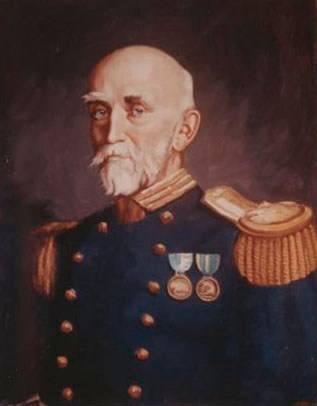
Arthur Thayer Mahan would go on to be the author and creator of US Naval strategy in the 19th and 20th Centuries. He authored the Influence of Sea Power Upon History, which was considered a Naval Bible by the world’s navies and was read by the world’s leaders, and thus influenced the creation modern navies.

The Eisenhower Tunnel

Today in History, March 15, 1968:

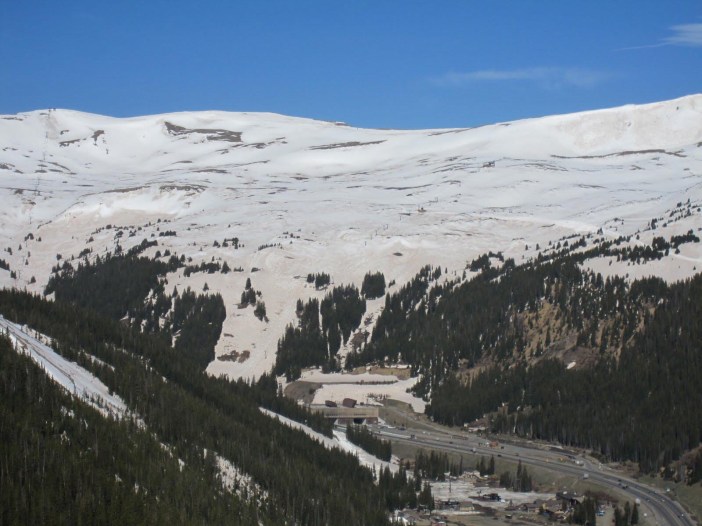
Construction begins on the Eisenhower Tunnel west of Denver, Colorado. The highest vehicle tunnel in the world, the tunnel cuts 1.6+ miles at over 11,000 feet, cutting through the Continental Divide and connecting Interstate 70. It takes much longer, and is much more dangerous to cross the Divide by driving over the mountain.

The tunnel was named after President Dwight Eisenhower, who was President in the 50’s when the Interstate road system was begun.

As a young Army Major in 1919 Eisenhower had been involved with a transcontinental convoy that traveled from Washington, DC to San Francisco. The convoy averaged 5 mph and faced much difficulty in navigating the country’s poor road system. This experience is why creating a modern, safe road system was one of President Eisenhower’s primary goals.

“It was so magnificent I could stay forever.”

Today in History, March 14, 1967:

“It was so magnificent I could stay forever”.

The Spring before his assassination, President John Fitzgerald Kennedy toured Arlington National Cemetery. He made the above comment while standing at the Custis-Lee Mansion, where Gen. Robert E. Lee had lived prior to the Civil War. I’ve been there, and can understand his feelings…it is a beautiful view. Unfortunately he would “stay forever” there far too soon. This is the site of his final resting place, marked by an eternal flame, where he was moved to on this date in 1967.

America’s Dogs Go to War

Today in History, March 13, 1942:

For my K-9 Officer friends and their partners.

The US Army Quarter Master Corps begins training dogs for service in the Army, Navy, Marines and Coast Guard as well.

German Shepherds, Belgian sheep dogs, Doberman Pinschers, Collies, Siberian Huskies, Malumutes and Eskimos were used for Patrol, Scout, Sentry, Messenger and Mine-detection duties.

The dogs were very valuable in alerting servicemen to approaching enemies.

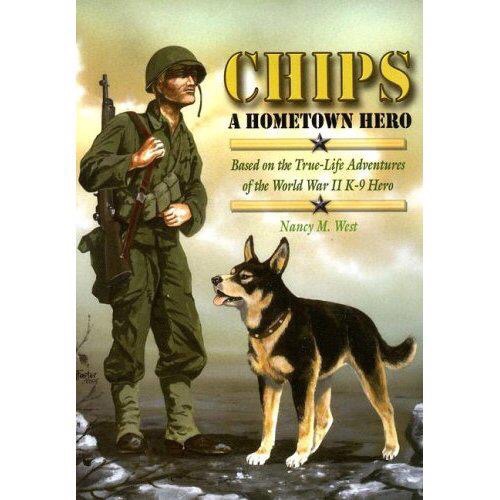
During the Italian campaign a German Shepherd named “Chips”, serving as a Scout with the 3rd Infantry Division, broke away from his handlers and by himself attacked a German machine gun nest, forcing the entire German unit to surrender.