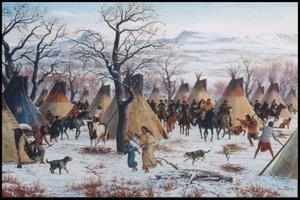
Two American “Royals” Killed on the Same Day

Today in History, November 27, 1868:

His story could make him the 19th-Century version of Joe Kennedy, Jr or John F. Kennedy.  He was born in 1844 into a family filled with Secretaries of the Treasury and Secretaries of State, wealthy bankers, and his grandfather, Alexander Hamilton, was a Founding Father and the first Secretary of the Treasury in President Washington’s cabinet.  And of course, Alexander Hamilton lost his bright future in a duel, killed by Vice-President Aaron Burr in 1804.  Both the Hamiltons and the McLanes were well placed.

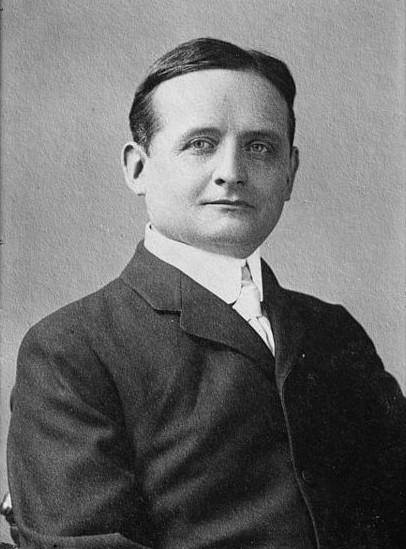
Louis McLane Hamilton had wealth, influence, a bright future, and according to his contemporaries, a high degree of character.  Joe and Jack Kennedy had used their influence to get INTO combat during WWII.  It cost Joe his life, and very nearly cost JFK his.  Likewise, young Louis Hamilton used his influence to get into combat during the Civil War when he was 17 and 18.  JFK had to use his father the former Ambassador’s influence to get an assignment in the Pacific.  Louis had a letter from President Lincoln himself to Secretary of War Edwin Stanton recommending his commission as an officer.  Louis didn’t waste what was given to him.  He fought with distinction during the Battle of Fredericksburg, the Battle of Chancellorsville, the Battle of Gettysburg, the Siege of Petersburg and Appomattox Courthouse.

After the war Hamilton continued his service, serving as a Lieutenant and a Captain in the 7th Calvary under Colonel George Armstrong Custer.  Hamilton commanded Fort Lyon in Colorado for a time, and fended off an attack led by Chief Pawnee Killer.  

On November 26th, 1868 he found himself assigned as “Officer of the Day”, an assignment which gave him responsibility for the 7th Cavalry’s supply train as Custer searched in Indian Territory for Southern Cheyenne warriors.  As Custer planned a pursuit, some of Hamilton’s command was taken to bolster the assault’s numbers.  True to his nature, Hamilton went to Custer and made his case…earnestly, insistently asking not to be left behind as his troops went into battle.  Custer was sympathetic to the request…he would make the same request before the Battle of the Little Bighorn.  Custer agreed to let Hamilton leave the wagon train and join his troops.

As a result, Captain Louis McLane Hamilton, Alexander’s grandson, was at the lead of his troops who, as it happened, were the first to attack Chief Black Kettle’s village along the Washita River.

“Keep cool, fire low, and not too rapidly” was the last thing Hamilton was heard to say before being shot in the chest, killed instantly, by one of the defenders firing from within a wigwam.  Hamilton the first person killed in the battle.

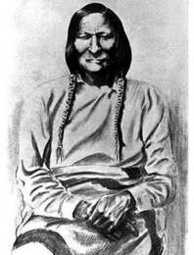
Elsewhere on the battlefield was Chief Black Kettle and his wife.  Not much is known about Chief Black Kettle prior to the mid 1850’s, but what is known that this leader in the Southern Cheyenne tribe often worked hard to keep the peace.  In 1864 he and his band were in Colorado when some settlers had been attacked.  The Governor declared any Indians who did not report to a military post would be considered hostile.  Chief Black Kettle led his band to Fort Lyon and came to an agreement with the commander there for his Southern Cheyenne to camp along Sand Creek in eastern Colorado.  This agreement didn’t prevent Colorado Militia Colonel Chivington, ambitious and about to lose his troops to the end of their enlistment, from attacking the peaceful encampment, which was complete with an American flag flying.  Many were killed, but Black Kettle and his wife managed to survive.

He was encamped with his people along the Washita River in present day Oklahoma for much the same reason, with the same results.  But this time his luck ran out.  As he and his wife fled, they were shot down and killed.
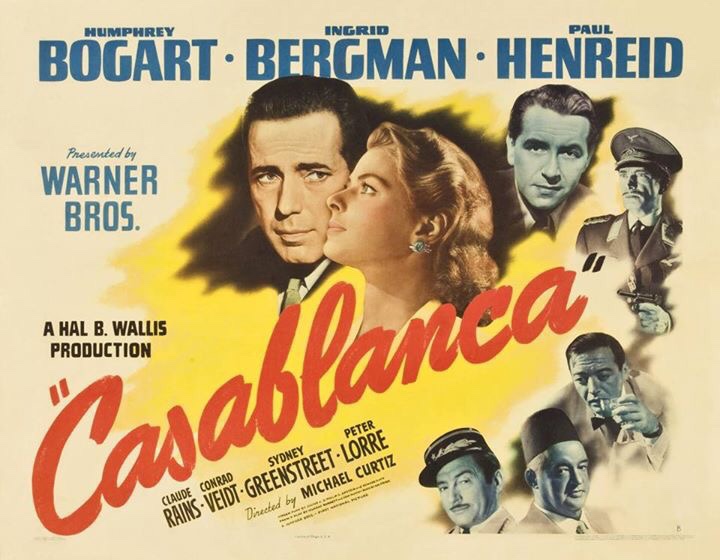
How Closely “Casablanca” Hit Home

Today in History, November 26, 1942:

The motion picture “Casablanca” premieres in New York City.  The movie that would become a screen classic would be released to theaters in the remainder of the country on January 23, 1943.

The film was set in Casablanca, Morocco in December, 1941.  This time frame is important to the viewer if not the players.  Rick Blaine is an exiled American who owns a high-end bar.  Between continuously matching wits with the local French authorities and Nazis, Rick manages to barter for immigration papers for those fleeing the Nazis and to deal with an old romance interest who re-enters his life…Ilsa.  “Of all the gin joints in all the towns in all the world, she walks into mine.”

The film is at heart a romance, but at the same time a gritty war thriller.  Humphrey Bogart was well accustomed to playing the heavy, and did so well.  Ingrid Bergman did an excellent job playing the femme fatale, but by the time the show is over, one is hard pressed not to find Claude Rains’ portrayal of Captain Louis Renault to be the most compelling.

The plethora of one-liners definitely added to place Casablanca at the top of any “greatest” list, even 75 years later.  Near the end of the film, Rick and Louis are caught at the airport by Nazi SS Major Strasser.  Louis ends up shooting the Major.  As Louis’ troops rush up in response to the shot, Louis says hastily, “Major Strasser’s been shot.  Round up the usual suspects.”

It is important to note the film was released less than a year after the Pearl Harbor attack at a time when the question of who would be victorious was still a very open discussion.  Those viewing the movie most likely had fathers, brothers and sons fighting on a steaming, miserable island named Guadalcanal or on ships in the same theater.  Less than a month earlier (November 8) American soldiers and sailors took part in the landings of Operation Torch assaulting French North Africa.  This would include fighting the Nazis and the Vichy French (French sympathetic to or under the thumb of the Nazis.)  These battles would include Morocco and the Naval Battle of Casablanca between Allied, German and Vichy French naval forces.

All of this was the backdrop for the premiere of Casablanca.  How much more real, how much more emotion, must have been involved seeing it for the first time in 1942.

You’ve Seen Much About Assassination Today – Some History About “Jack” Kennedy


Today in History, November 22, 1963:

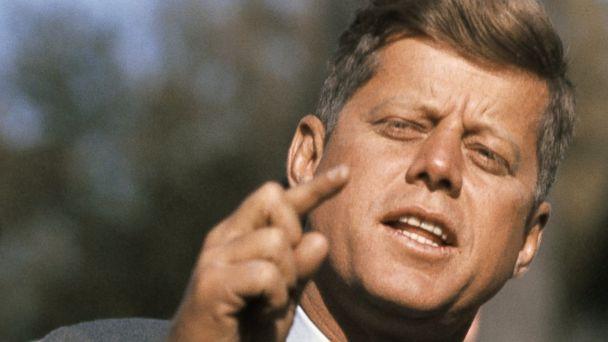
President John Fitzgerald Kennedy is assassinated in Dallas, Texas.  Thanksgiving must have been miserable in ’63.

This being the 55th anniversary of that terrible event, the coverage has been immense, so there isn’t much I could add about the event itself. And I would just as soon not mention the person who took JFK from us. So…a little history about JFK that not everyone may know.

To say that JFK came from a political family is an understatement. In the latter part of the nineteen century and early of the twentieth, both of his grandfathers were rivals in Massachusetts politics. John Francis “Honey Fitz” Fitzgerald rose from a Boston shopkeeper’s son to be Mayor, a US Representative and political boss, and was none to happy when PJ Kennedy’s son Joseph began courting his daughter Rose. PJ served in the Mass House and Senate and was also a political mover and shaker.

Nonetheless, Honey Fitz loved the many resulting grandchildren, doting on his namesake, John Fitzgerald Kennedy.

JFK’s father rose in politics as well, making note as an Irish Catholic appointed to Ambassador to England for FDR. Joe brought his children with him, and JFK watched the German bombing of England first hand. Joe was a controversial isolationist and did not have FDR’s trust.

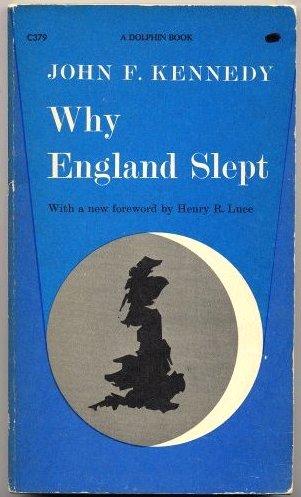
During his senior year at Harvard JFK would write a thesis called “Why England Slept” about England’s pre-war actions. Joe would see this published, although it didn’t win a Pulitzer like the 1957 “Profiles in Courage” by JFK…which Joe also made sure was acclaimed.

JFK’s older brother Joe was being groomed for high political office, but was killed in WWII while piloting a B-24 Liberator on a dangerous mission over Europe. So the mantle fell to “Jack”, also a war hero for his exploits in the Pacific Theater.

The Holland Tunnel – Innovation at Work


Today in History, November 21, 1927:

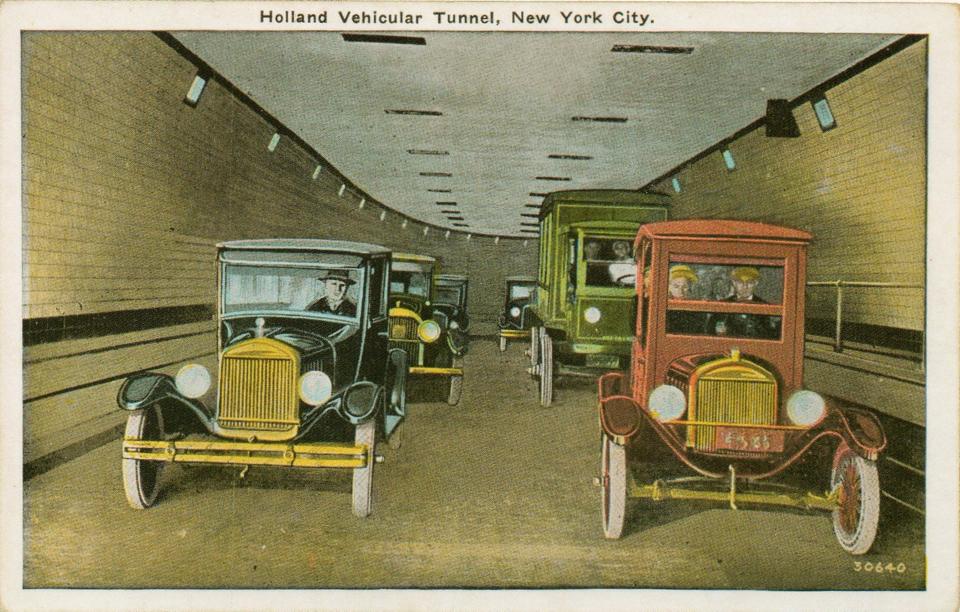
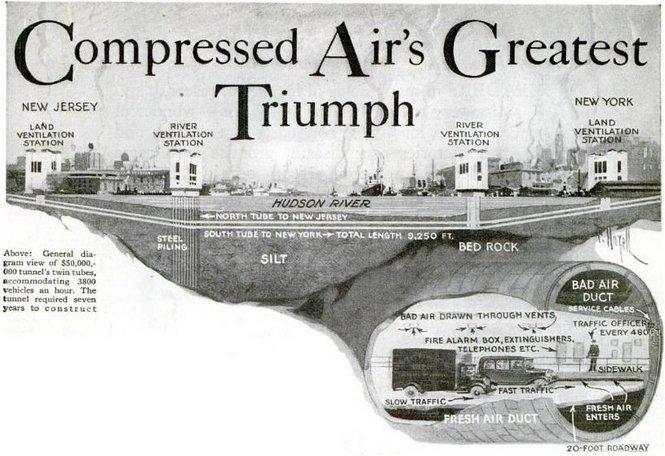
Time magazine places the recently opened Holland Tunnel between New York City and Jersey City on its cover. On its first day nearly 52,000 vehicles used the tunnel. Running a tunnel beneath the Hudson River, or any river, would have been suicidal before engineer Holland designed a ventilation system that took up four ten story towers, two on each end of the tunnel. Fresh air is pumped through vents at the bottom of the roadway while the air is drawn out simultaneously through vents in the ceiling. All of the air in the tunnel is changed every 90 seconds.

The Whaleship Essex

Today in History, November 20, 1820:

Loss of the whaleship Essex. Since 1711, the whaling industry had been an important aspect of the American economy. This was the time before crude oil, and the oil, blubber and bone from whales brought good money. Hundred of ships from New England made a living sailing to the Pacific and back.

The Essex had sailed from Nantucket and was hunting 2,000 miles west of the South American coast when and angry whale struck the ship twice, capsizing her and setting her twenty man crew adrift in open long boats.

During the next 83 days three of the men would be marooned on a South Pacific island. Only five others would survive after being picked up by other ships near the South American coast.

The ordeal would inspire Herman Melville’s novel “Moby Dick.”

“The world will little note, nor long remember what we say here…” And Yet…We Do

15095673_10205637473094905_7511930771750709076_n


Today in History, November 19, 1863:

“I should be glad, if I could flatter myself that I came as near to the central idea of the occasion in two hours, as you did in two minutes.” -Edward Everett, popular orator that spoke with President Lincoln at Gettysburg to commemorate those that died there during the pivotal Battle of Gettysburg earlier in the year.

President Lincoln spoke briefly, and his speech was criticized at the time by some media, but has become legendary for it’s prescience. See below for the full text….

Four score and seven years ago our fathers brought forth on this continent, a new nation, conceived in Liberty, and dedicated to the proposition that all men are created equal.

Now we are engaged in a great civil war, testing whether that nation, or any nation so conceived and so dedicated, can long endure. We are met on a great battle-field of that war. We have come to dedicate a portion of that field, as a final resting place for those who here gave their lives that that nation might live. It is altogether fitting and proper that we should do this.

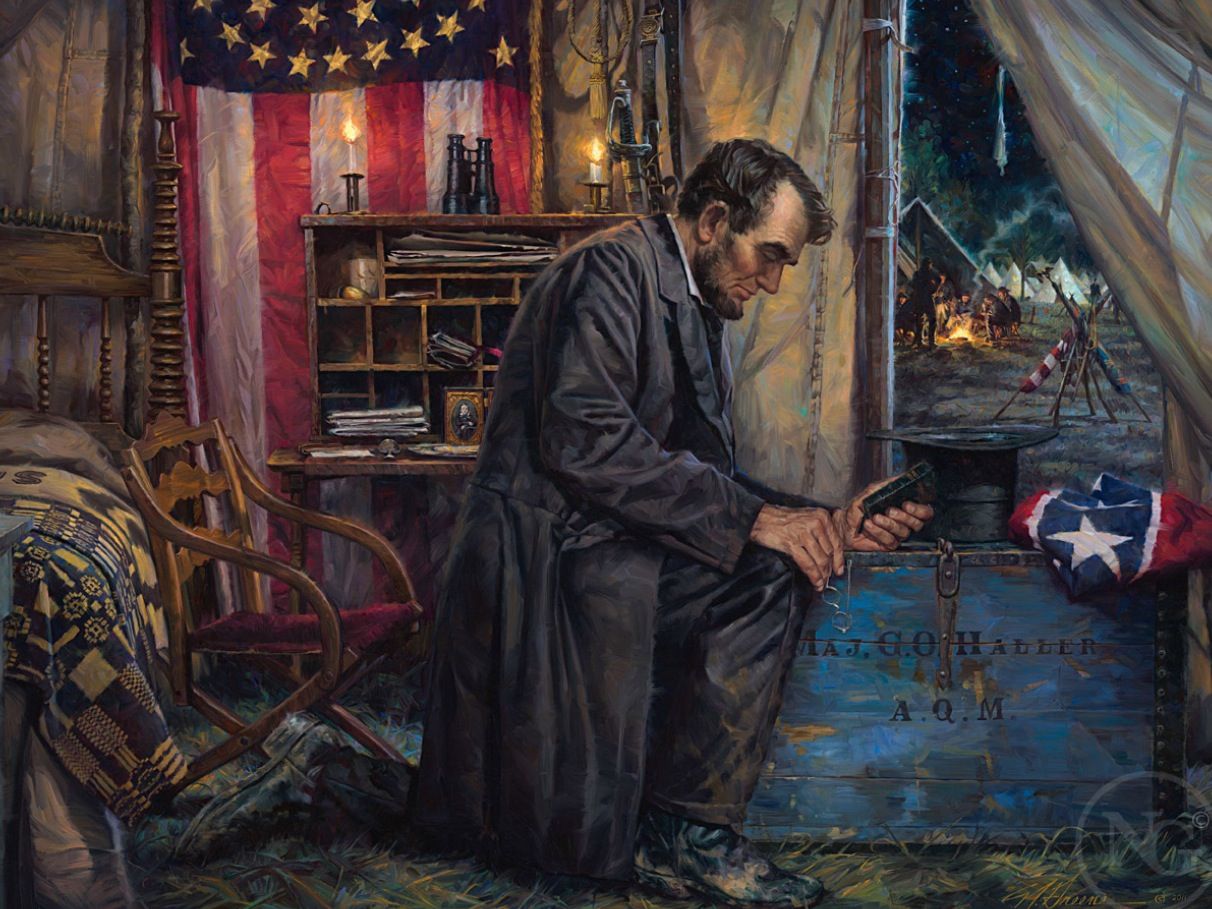
But, in a larger sense, we can not dedicate — we can not consecrate — we can not hallow — this ground. The brave men, living and dead, who struggled here, have consecrated it, far above our poor power to add or detract. The world will little note, nor long remember what we say here, but it can never forget what they did here. It is for us the living, rather, to be dedicated here to the unfinished work which they who fought here have thus far so nobly advanced. It is rather for us to be here dedicated to the great task remaining before us — that from these honored dead we take increased devotion to that cause for which they gave the last full measure of devotion — that we here highly resolve that these dead shall not have died in vain — that this nation, under God, shall have a new birth of freedom — and that government of the people, by the people, for the people, shall not perish from the earth.

Movin’ on Up?

Today in History, November 17, 1800:

The Sixth US Congress meets for the first time in the new Capitol of Washington, D. C. Five days later President John Adams addressed them for the first time in DC. I know there were political shenanigans then also, but one has to wonder what those Senators and Congressmen would think of the behavior of those that have assumed their roles today.

A Small Blue Cloud

Today in History, November 15: 1806 –

US Army Lt. Zebulon Pike was a brilliant, self-taught explorer. On this date he was on his second expedition to the West, searching for the headwaters of the Arkansas and Red Rivers.

When he observed a mountain in the distance which he described as looking like a “small blue cloud”, he told the Expedition they could reach the mountain, scale it, and return to camp by dinner time.

Never having seen a “14er” before, he had grossly misjudged the distance. He and his team had to shelter from the cold in a cave for the night. When they did reach the base of the mountain which would one day hold Pike’s name, he declared it could not be climbed.

After the discovery Pike and his expedition became lost, wandering until captured by a troop of Spanish soldiers who took them to Santa Fe before releasing them. Pike took advantage of this misfortune by mapping this valuable area also.

Pike would be made a Brigadier General during the War of 1812 during which he would be killed.