Peace in Space?

Today in History, October 10, 1967:

The Outer Space Treaty between the US, Great Britain, the USSR and others goes into effect. The treaty committed the signatories to not placing weapons of mass destruction in space or on the moon and other celestial bodies, for use or storage. Also that nations would not lay claim to celestial bodies, as they were the property of al mankind. Dr. No or Moonraker, Mr. Bond?

Magellan Sets Sail

Today in History, September 20, 1519:

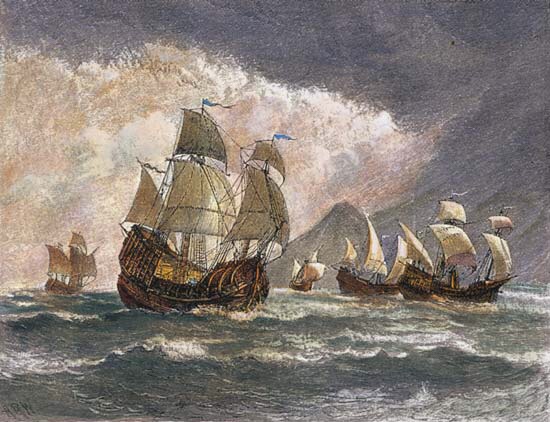
Just shy of 500 years ago, five ships set sail from Spain, led by Portuguese navigator Ferdinand Magellan, seeking a western passage to the “Spice Islands” of Indonesia.

Magellan persevered through lengthy explorations of rivers that did not lead to his destination, a mutiny by the captains of his ships, and finally…the discovery of the passage at the southern tip of South American which bears his name.

After transiting a straight that suffers some of the worst weather on Earth, his small fleet sailed across thousands of miles across an unknown Ocean which he named “Pacific” for its calm waters until they reached the Phillipines. There, Magellan was killed in combat with a native tribe. Two ships remained.

They made it to the Spice Islands and took on cargo. One made a failed attempt to sail back across the Pacific; the other completed the first circumnavigation of the globe to return to Spain.

Garfield’s Potential

Today in History, September 19, 1881:

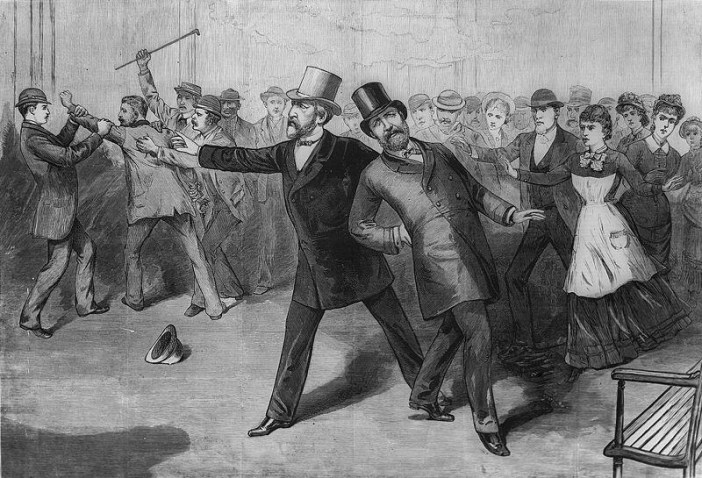
20th President James A. Garfield had been shot by an assassin on July 2. The assassin was a disgruntled man who thought he’d been owed a job in Garfield’s administration.

Doctors including Alexander Graham Bell (a friend) did everything they could to save the President, and he lingered until today’s date before succumbing to his wounds.

He only served as President for four months before being shot down, so the nation will never know what his potential may have been.

And if Garfield had lived, and served one or even two terms, how would it have affected the fortunes of his successors?

Happy Constitution Day!

Today in History, September 17: 1787 –

The Constitutional Convention draws to a close with the signing of the final draft of the United States Constitution.

“We the People of the United States, in Order to form a more perfect Union, establish Justice, insure domestic Tranquility, provide for the common defence, promote the general Welfare, and secure the Blessings of Liberty to ourselves and our Posterity, do ordain and establish this Constitution for the United States of America.” We owe so much to our nation’s founders and to this document. We must continue to defend it from it’s detractors.

Stockholm Syndrome

Today in History, August 23, 1973:

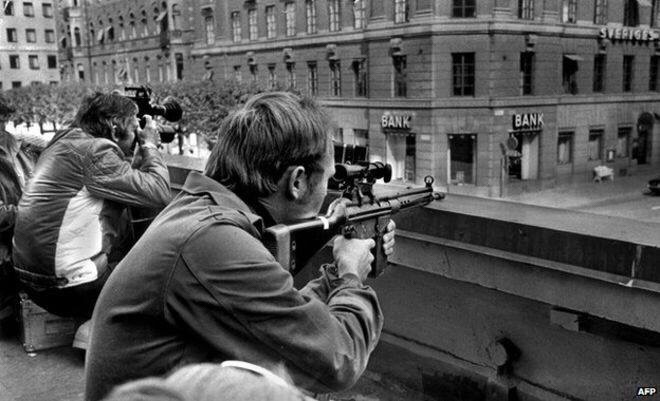
During a hostage situation resulting from a bank robbery of “Kreditbanken” in Normalmstorg, Stockholm, Sweden, the hostages become sympathetic to the robbery/hostage suspects, even defending them once they were taken into custody. Criminologist and psychiatrist Nils Berjerot termed it “Norrmalmstorgssyndromet”, which would be translated as Stockholm Syndrome. The syndrome is related not only to hostage situations, but also domestic violence situations. Freud explained it as a victim relating to the aggressor as a means to protect the ego, bonding with the aggressor to cease feeling like a victim.

Woolaroc Lands in Hawaii

Today in History, August 16, 1927:

“The Dole Air Race” ends in tragedy and glory. Depending on who you were.

James Drummond Dole, heir to the Dole Pineapple industry that had been initiated in the 19th century, sponsored an air race to prove that air travel could be made between the mainland and Honolulu. He had been inspired by Charles Lindbergh’s transatlantic flight. Whoever reached Honolulu first would win $25,000.

Several entrants would drop out before the flight even began, but of the eight that left the mainland, six would be lost without a trace.

Two Army Air Corps Lieutenant’s had already made the flight successfully…but since they landed at Wheeler Field rather than Honolulu, they were disqualified.

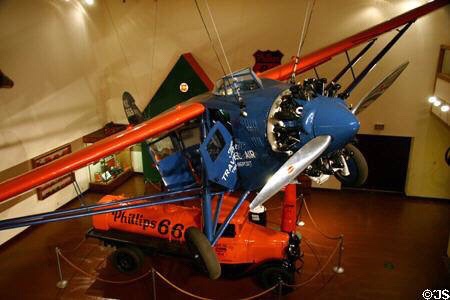
Two Travel Air 5000 monoplanes were sponsored by Oklahoma Oilman Frank Phillips…the “Oklahoma” and the “Woolaroc.” The Oklahoma had to turn back….but the Woolaroc, piloted by Arthur C. Goebel and William V. Davis, Jr. took the prize, being the first to arrive in Honolulu.

Once again, Oklahoma wins. You can visit the “Woolaroc”, at Woolaroc near Bartlesville.
The Second Seminole War Ends

Today in History, August 14, 1842:

After seven years of war on the Florida peninsula, the second Seminole War is declared to be at an end.

The war had begun when the US government attempted to enforce the Indian Removal Act and the Treaty of Ft. Gibson in which the Seminole Tribe was to move to the Creek Reservation west of the Mississippi River, in Indian Territory.

The tribe resisted with the leadership of Osceola beginning in 1835. Numerous battles ensued, but the government began to succeed with smaller raids and false truces with which they captured as many as 3-4,000 Seminoles, forcing their removal.

Osceola was captured in 1837 and imprisoned in Charleston, SC where he died.

Mount Rushmore

Today in History, August 10, 1927:

The Memorial at Mt. Rushmore is dedicated by President Calvin Coolidge. The memorial wouldn’t be declared complete until October 31, 1941, seven months after the man in charge of it’s carving, Gutzon Borglum, had died. His son Lincoln finished the project.

President Washington was chosen for obvious reasons, having led the battles that created our nation;

President Jefferson was chosen due to his instrumental work in creating our Declaration of Independence, which has inspired Democracy around the world;

President Lincoln was chosen for leading the nation through the Civil War, preserving the Union and abolishing slavery;

Theodore Roosevelt was chosen for leading the nation through the industrial revolution of the late 19th century, seeing to the construction of the Panama Canal.

An interesting aside…Mt. Rushmore is named for a young NYC attorney who visited the area in 1884 to check land ownership for some eastern investors. He was impressed with the mountain and asked prospectors what it was called…they replied that it had no name, but since he had asked, they would call it Rushmore Peak…and so it was.