The Untamed

Today in History, March 14: 1919:

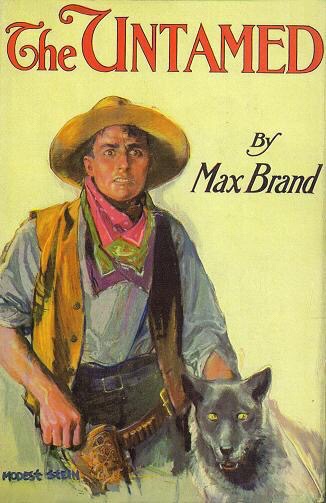
The first “Max Brand” western novel, “The Untamed” is published. Max Brand was a pen name for Frederick Faust, one of 21 that he used.

He never used his actual name, however, being embarrassed by his stories, which he saw as poor quality.

He also wrote medical dramas (Dr. Kildare) and spy thrillers under other names. The history channel reports that Faust / Brand wrote over 500 western serials and novels, making him “perhaps” the most prolific western writer of all time.

I thought perhaps Louis L’Amour would give him a run for his money, but found that L’Amour reached perhaps 135. The books made Faust incredibly rich (bringing him out of poverty); for all of the money he made from westerns, he disliked the west with a passion…most of his books were written from his Italian Villa and he spent most of his life in Europe, although born in Seattle and raised in California.

Uncle Sam Finds His Stride…


Today in History, March 13: 1852:

The first cartoon image of Uncle Sam appears in “The New York Lantern” newspaper, drawn by cartoonist Frank Henry Bellew. Uncle Sam had been used to represent the US Government for years, becoming most popular during the War of 1812, but Bellew’s was the first cartoon to portray him. The cartoon was critical of the US government, expressing that “John Bull” (representing the British government) was helping the US shipping industry while Uncle Sam stood by and did nothing for the industry. The use of Uncle Sam became popular when Samuel Wilson, who provided meat products to the military during the War of 1812. He stamped the products with “US” for United States. However when someone asked a worker what it stood for, the reply was “Uncle Sam” (for Sam Wilson). The moniker stuck.

“You May Cast Off, Buck, When You Are Ready.”

ron5-3MacArthur's_Escapept32220px-USS_Olympia_with_Dewey_at_Battle_of_Manila_bay_DSCN4191_at_Vermont_Statemanila bay


Today in History, March 11, 1942:

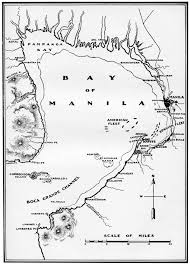
General Douglas MacArthur is evacuated from the Philippines at the order of President Franklin Roosevelt.  At the beginning of WWII the previous December the Japanese had invaded the Philippines; the American and Filipino forces, commanded by MacArthur, had been fighting off persistent advances ever since.  At the outset the American air forces had been almost completely destroyed on the ground, caught by surprise by the initial attacks.  Now they had been backed up to the peninsula of Bataan, and in the middle of the bay, the island of Corregidor.

General MacArthur was already quite famous when the war began; his father Arthur was also a noted American general, Douglas served in WWI and was in command in Washington, DC when protesting WWI veterans were dispersed during the Depression.  He and his father would become the first father and son to be awarded the Medal of Honor.

American morale was already suffering, and the President did not want an additional blow of MacArthur being taken prisoner when the Philippines fell, which was a foregone conclusion at this point.  So he ordered MacArthur to evacuate to Australia, leaving General Jonathan Wainwright in command of the fall.

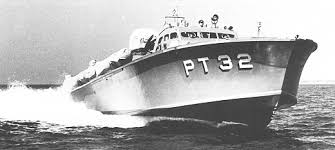
MacArthur had the choice to leave by submarine, aircraft, or by PT (patrol torpedo) boat.  He knew and trusted the commander of PT squadron 3, Lieutenant John D. Bulkeley, so he chose to leave by boat.

On the evening of March 11, 1942, Lt. Bulkeley’s PT-41 was alongside the north pier at Corregidor with General MacArthur and his family aboard, when the General looked to the Lieutenant and said, “You may cast off, Buck, when you are ready.”  Thus began a 600 mile run to Mindanao through minefields and enemy infested waters which MacArthur would later liken to a ride in a cement mixer.  Almost everyone was seasick.  Bulkeley would meet up with the remainder of his PT squadron, their decks filled with gasoline drums so they could make the trip.  It was a harrowing journey; from Mindanao MacArthur and his staff would continue the journey by air.

The journey, how it came to be, and it’s aftermath are all worth more detail.  But for this post, I can’t help but focus on MacArthur’s words as he set sail from his defeat in Manila Bay…

“You may cast off, Buck, when you are ready.”

General MacArthur was an intelligent, educated man, a West Point graduate and a fast climber through the ranks.  What was in his mind as he escaped one of the worst military defeats in American history that day?  The MacArthur family was also already a significant part of Philippine history.  Nearly forty-four years earlier, in 1898 during the Spanish-American War, Arthur MacArthur had been victorious during the Battle of Manila.  He would then command during the Philippine-American War and become the Military Governor General of the Philippines until he got sideways when the Civilian Governor of the Philippines, William Howard Taft.

At the outset of the Spanish-American War, the Philippines were a Spanish possession.  The war was significant because with it, America would become a player on the world stage, defeating one of the European colonial powers.

With the Battle of Manila Bay on May 1, 1898, the US Navy would show it’s mettle in easily defeating the Spanish fleet stationed there.  Admiral George Dewey commanded the US Asiatic Fleet from the bridge of his flagship, the USS Olympia.  As they approached the Spanish ships, Dewey spoke a now famous phrase to the commander of the Olympia, Captain Charles Gridley…

“You may fire when ready, Gridley.”

To enter Manila Bay from the South China Sea, Admiral Dewey and his fleet would have sailed past the island which guarded the entrance to the bay, Corregidor.  Hours before his famous victory, Admiral Dewey would have sailed within a few hundred yards of where MacArthur would stand in 1942, having lost all Dewey had gained.  In his mind’s eye, was he watching the Olympia pass by?

“You may cast off, Buck, when you are ready.”
You Can’t Cheat the Undertaker

Today in History, March 10: 1891:

Almon Brown Strowger, a Topeka, Kansas undertaker, felt that he was being cheated. His competitor’s wife happened to be the operator for the town’s telephone exchange; Almon suspected that each time someone rang the operator and asked for “the undertaker”, that she would route the calls to her husband, cheating Almon out of much needed business.

So, with several relatives, he strove to put her out of business by inventing the Strowger stepping switch, which made automated telephone exchanges feasible.

On today’s date he received a patent for his invention, and installed the first Exchange in La Porte, Indiana. In 1896 Strowger sold his patents for a pittance of $1,800 and eventually returned to undertaking. In 1916 his patents would be resold for $2.5 million.

Firestorm in Tokyo

Today in History, March 9: 1945:

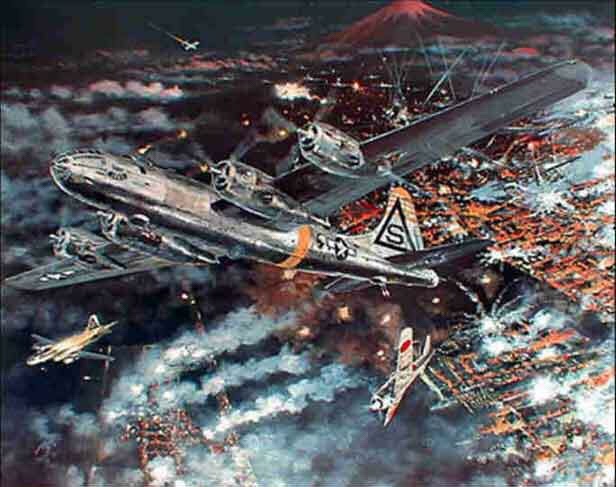
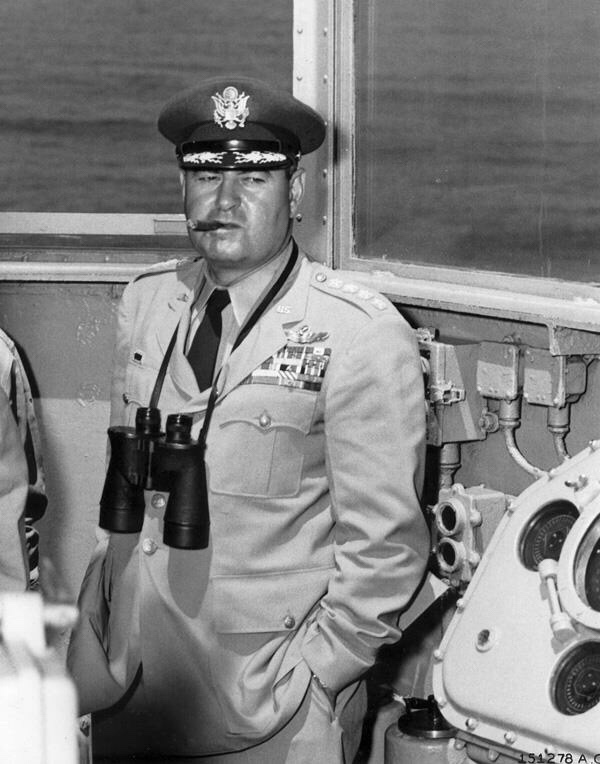
The Firebombing of Tokyo. General Curtis Lemay, hero of the air war in the Pacific, had been given the task of using American air power to end the war without losing untold numbers of American lives.

As part of that effort, on this date in 1945, over 300 B-29 Superfortress bombers took off from Tinian and Saipan in the Marianas en route to Tokyo. A little after midnight, they began dropping thousands of tons of incendiary bombs.

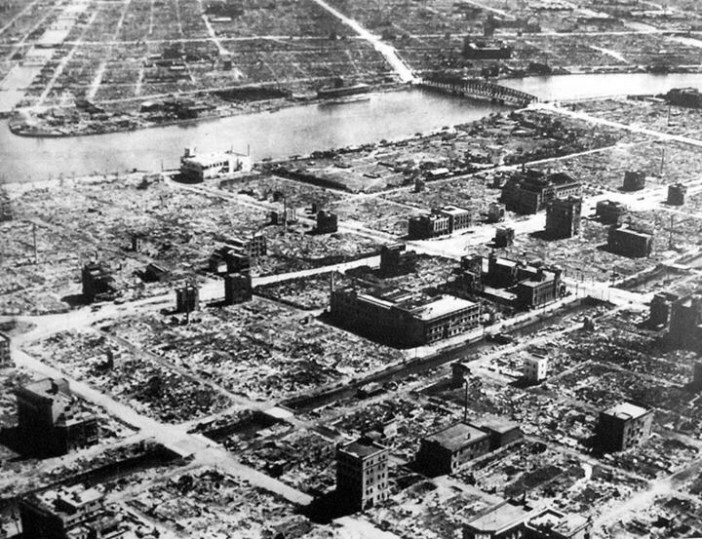
The result was a firestorm that engulfed 15 square miles of the city, which was composed mostly of wooden structures with paper walls. The numbers vary from 90,000 to 120,000, but the death toll was enormous. The citizens of Tokyo were unable to escape the flames fueled by 30 knot winds.

As much is made of the atomic bombs dropped on Hiroshima and Nagasaki, neither matched the death toll of the firestorm in Tokyo. The only difference was that the atomic attacks took one bomber with one bomb rather than thousands of bombs with hundreds of bombers.

“But if history teaches anything, it teaches that simpleminded appeasement or wishful thinking about our adversaries is folly. It means the betrayal of our past, the squandering of our freedom.” President Ronald Reagan

Today in History, March 8: 1983 – President Ronald Reagan gives his famous speech in which he labels the Soviet Union as an “Evil Empire” and warns against those who would compare them to our system of beliefs as equal to ours, and against complacency.

Costs of Appeasement

Today in History, March 7: 1936:

“If you French had intervened in the Rhineland in 1936 we should have been sunk and Hitler would have fallen” – German General Heinz Guderian, interviewed after WWII.

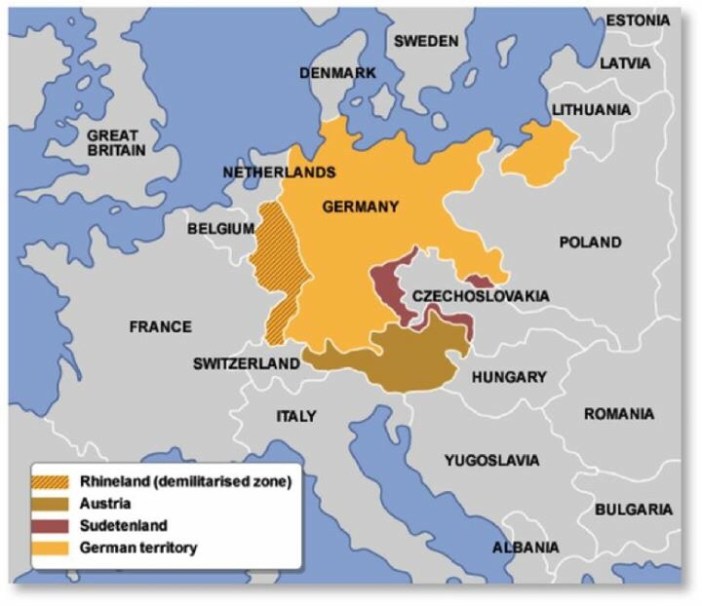
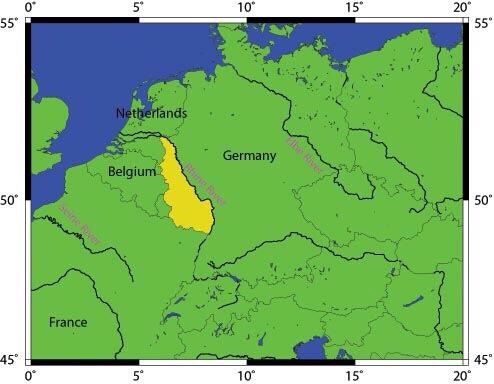
On this date, Germany “remilitarized” the Rhineland with a token force. It had been de-militarized after WWI to protect Germany’s neighbors.

In some skullduggery, Hitler claimed the people of the Rhineland were German peoples, and wanted the military presence. Now it was just a matter of seeing if anyone would call his hand.

In his memoirs, Hitler agreed with Guderian, saying that he had been very nervous in the 48 hours after the move.

Except for a few unheeded voices (Churchill), the governments of Europe refused to act, mostly for financial reasons. Bet they wished they could have had a “do over” on that decision.

Freedom From Want

Today in History, March 6: 1942 –

“The third is freedom from want—which, translated into world terms, means economic understandings which will secure to every nation a healthy peacetime life for its inhabitants—everywhere in the world.”

—Franklin Delano Roosevelt’s January 6, 1941

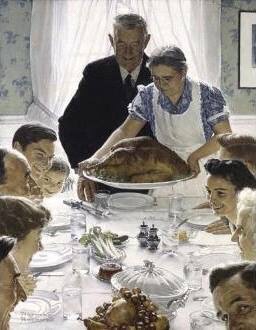
The third in a series of paintings by Norman Rockwell, based on President FDR’s Four Freedoms State of the Union address in 1941, entitled “Freedom From Want”, and alternatively famously known as “The Thanksgiving Picture” or “I’ll Be Home for Christmas” is published in the Saturday Evening Post.

The iconic painting included members of Rockwell’s family, which were photographed separately then included in the painting. The nation was at war, and the image was of those on the home front.

American’s could relate, but some Europeans were outraged as they were suffering daily bombings at the time.

The Boston Massacre

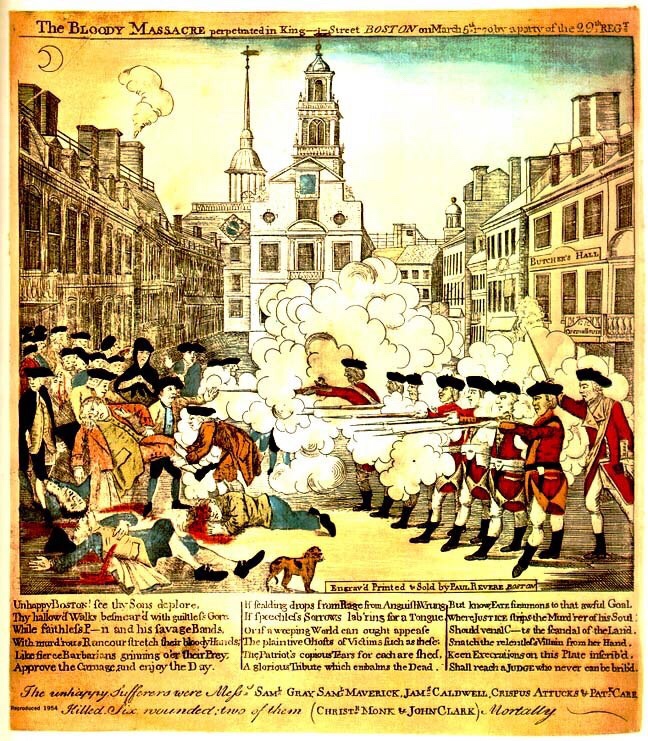
Today in History, March 5: 1770 – The Boston Massacre. American colonists, and Bostonians in particular, had been up in arms over unfair taxation without representation by their British rulers. Britain sent a contingent of soldiers to enforce the taxation and rules in Boston. After brawling with the “continentals” a few days before, they were faced with a crowd of citizens protesting outside of the Customs House. Being pelted with snowballs from the citizenry, they fixed bayonets. Most accounts are that a British soldier either slipped or was pelted with snowballs and his musket fired…then the rest of the soldiers began firing into the crowd. When it was over, five civilians were dead or dieing. Crispus Attucks, Patrick Carr, Samuel Gray, Samuel Maverick and James Caldwell. These are considered the first casualties in the American Revolution. Paul Revere made an engraving of the incident which was widely published (went viral in today’s parlance).

Historic Connections: Lincoln-Hay-Roosevelt

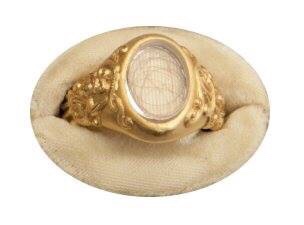
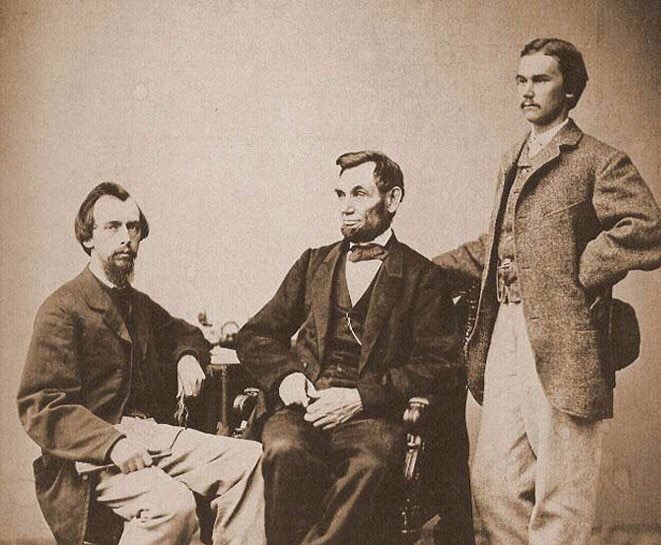
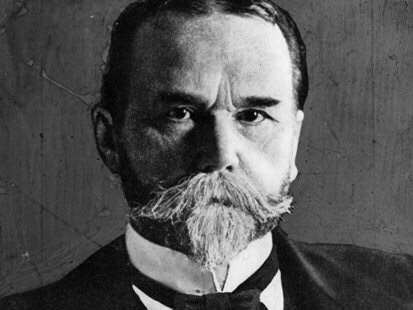
Today in History, March 4: 1861 (Lincoln Inauguration) / 1905 (Theodore Roosevelt Inauguration) – A very special connection between two Presidents, 40 years apart. As a young man in Illinois, John Hay got the chance of a lifetime. His friend John Nicolay was working at the law firm of Abraham Lincoln, Presidential candidate. When Lincoln was elected, Hay and Nicolay became his private secretaries in the Executive Mansion and became his confidants…he would stay up nights sharing stories with them and came to trust them; they helped to keep him balanced through the trials and tragedies of the Civil War. They, in turn nearly idolized him, referring to him as the Ancient One. When Lincoln was assassinated it devastated Hay. He recovered and went on to serve in numerous posts within the government, including the Ambassador to the Court of St. James (England); he was a successful author and journalist (remarkably understated..but I must keep this somewhat brief). He served several other presidents, becoming Secretary of State for President William McKinley. When McKinley was assassinated, Hay stayed on to serve in Theodore Roosevelt’s administration. He was largely responsible for the Open Door Policy in China and negotiated the Hay–Bunau-Varilla Treaty to build the Panama Canal. He initially thought TR a rogue cowboy, but as he grew to respect the President, they became fast friends. TR came to respect Hay’s experience and wisdom, and came to depend upon him. The night before TR was to be inaugurated for his second term, his first in which he was elected, John Hay sent TR a gift. A ring containing a strand of President Lincoln’s hair under glass, taken during his autopsy. Hay included a note:

“Dear Theodore:

The hair in this ring is from the head of Abraham Lincoln. Dr. Taft cut it off the night of the assassination, and I got it from his son-a brief pedigress.

Please wear it tomorrow; you are one of the men who most thoroughly understand and appreciate Lincoln.

I have had your mongram and Lincoln’s engraved on the ring.

Longas, O utiman, bone dux, ferias, Praestes Hesperia.

(Mayest thou, Good Captain, give long holiday to Hesperia!)

Yours affectionately, John Hay”

TR replied:

“Dear John, Surely no other President, on the eve of his inauguration, has ever received such a gift from such a friend. I am wearing the ring now; I shall think of it and you as I take the oath tomorrow. I wonder if you have any idea what your strength and wisdom and sympathy, what the guidance you have given me and the mere delight in your companionship, have meant to me these three and a half years?

With love and gratitude, Ever yours….”

What a life! A integral part of the story of two of our best presidents, and a key player in numerous historic decisions and events. Aside from the photos of the ring, there are photos of Hay in his youth, as an older man (he would die later in 1905), and even the photo of Lincoln’s funeral procession through New York City is important…in a window of one of the buildings to the left are two small boys watching the procession go by…young Theodore Roosevelt, Jr and his brother Elliott.