Vengeance is Mine, Saith Edwin Stanton

541968_2731686990141_322840196_n

Today in History, May 13: 1864 – A Union soldier is buried on the grounds of the Custis-Lee House, otherwise known as Arlington House. The adopted son of George Washington and Martha Custis-Washington had built the mansion in 1802. In 1831 his daughter, Mary Anna Custis married Lt. Robert E. Lee, and they lived in the home until 1861, when West Point graduate Lee resigned from the US Army and accepted the command of the Confederate Army.

1864 Secretary of War Edwin Stanton authorized the Lee’s property to become Arlington National Cemetery, so that Lee and his family could never again occupy the mansion. You can look out the front window of the mansion and see the major landmarks of Washington DC across the Potomac…it’s that close. Today, over 320,000 service men and women have been laid to rest at Arlington, including many of our nation’s most famous heroes from every war from the Revolution to Afghanistan. By the way, I took the photo I used…touring Arlington was a truly inspiring experience. To see the final resting place of so many of my heroes was an experience I’ll cherish forever.
The King is Gone

Today in History, May 13, 1975:  James had been born in 1905 on a farm near Kosse, Texas.  His father was an accomplished fiddle player and taught his son early…James mastered the instrument by age 10. 

Like many of his generation, James Robert Wills left home at 16 and began working odd jobs around the region. He got together with fellow musicians and made money playing at parties and dance clubs. 

By the 1930’s he had formed his now famous group, Bob Wills and the Texas Playboys. He incorporated a combination of jazz and swing into his country music during the big band era. With the exposure from playing in several Hollywood movies, the fast moving music he created gained national popularity, crossing genres. Some of his most popular hits were used in movies. 

In the late sixties Bob Wills was admitted into the Country Music Hall of Fame in recognition of how he had influenced the music industry. 

He passed on this day in 1975 after suffering a series of strokes. 

The Big E Joins the Navy


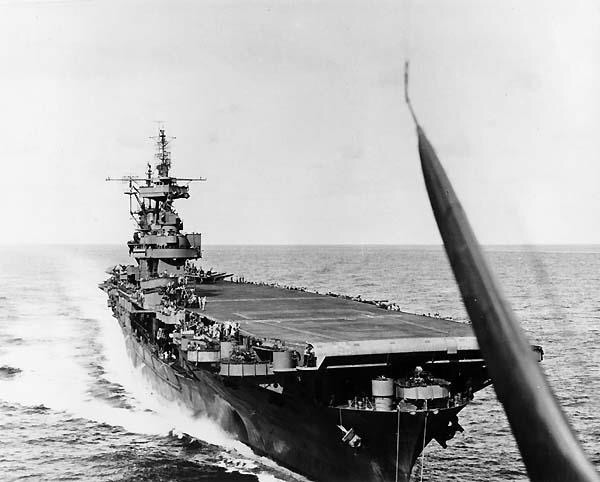
Today in History, May 12: 1938 – The USS Enterprise (CV-6) is commissioned into the US Navy. “The Big E” was the second of the Yorktown class of aircraft carriers; both of her sisters would be sunk during WWII. Enterprise won the title of the fightingest ship in the US Navy. Some of her air group flew into the middle of the battle at Pearl Harbor on Dec 7; had she not been delayed by bad weather, she would have been at her moorings there. By the war’s end the Enterprise had 20 Battle Stars, more than any other ship. She was everywhere…

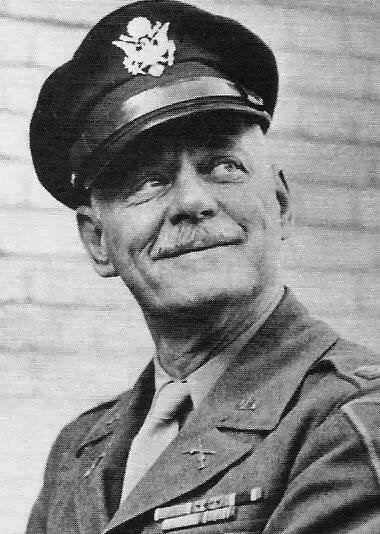
Stormin’ Norman


Today in History, May 12: 1932 – H. Norman Schwarzkopf looks down into the recently found shallow grave of infant Charles Lindbergh, Jr. in a field not far from the Lindbergh home. The Lindbergh baby had been kidnapped from his home on March 1st, the ransom paid, but the child was not returned to his parents. Schwarzkopf, a West Point graduate and WWI veteran, in 1921 had been appointed by the Governor of New Jersey to create, organize and train the New Jersey State Police. It was in this capacity that he led the investigation of the Lindbergh Kidnapping, the “Crime of the Century”. He would prove that the baby had been killed accidentally as he was being carried down a ladder from his second floor bedroom. When a new governor took office, he would be sacked. He would return to the US Army when WWII broke out, where he would be tasked to use his logistics and organizational talents to train the Iranian police, a country where the US was setting up railroads to supply the Soviet Union for the fight against Germany. After the war, Schwarzkopf would also help set up the security forces of the Shah. Two years after he investigated the Lindbergh kidnapping, his son, H. Norman Schwarzkopf, Jr. would be born. And as most know, “Stormin’ Norman” would follow his father to the middle east in the service of his country nearly six decades later.

Training Ground…


Today in History, May 11: 1846 – President James K. Polk asks for and is given a declaration of war against Mexico, beginning the Mexican-American War. The war would prove to be a training ground for a cadre of American officers that would fight in the coming US Civil War on both sides. Perhaps the Civil War lasted as long as it did because the combatants knew the tactics and personalities of those across the battlefield well, having grown up together. Ironically, two men (amongst others) shared the opinion that the Mexican-American war was unjust…a strong nation taking unfair advantage of a weaker nation…a young lawyer from Illinois who argued against the action and one of the young officers that fought valiantly in Mexico City, showing off his amazing horsemanship to win the battle. 15 years later Abraham Lincoln and Ulysses S. Grant would be fighting the Civil War…a war they believed in.

You Say Tomato, I say…Taxes!


Today in History, May 10: 1893 – The Supreme Court rules, in Nix v Hedden, that the tomato is a vegetable, not a fruit. This weighty issue came to the court via taxes being levied on vegetables by the the collector of the port of New York. The court’s logic…”Justice Gray, citing several Supreme Court cases (Brown v. Piper, 91 U.S. 37, 42, and Jones v. U.S., 137 U.S. 202, 216) stated that when words have acquired no special meaning in trade or commerce, the ordinary meaning must be used by the court. In this case dictionaries cannot be admitted as evidence, but only as aids to the memory and understanding of the court. Gray acknowledged that botanically, tomatoes are classified as a “fruit of the vine”; nevertheless, they are seen as vegetables because they were usually eaten as a main course instead of being eaten as a dessert.” So…there is precedence for…its not a mandate, its a tax…because we say so.

Captain Blood


Today in History, May 9: 1671 – Thomas Blood and three cohorts attempt to steal the Crown Jewels from the Tower of London. Blood, already a famous adventurer given the moniker “Captain Blood”, was an Irish noble whose land had been taken from him. He posed as a priest and convinced the Jewel House guard to surrender his pistols. He and his accomplices then set about taking the jewels. The guard’s son showed up and sounded the alarm. As Blood hammered the crown flat and attempted to flee, the Tower Guard caught them all. King Charles II was so impressed with Blood’s acts that he restored Blood’s lands and titles, made him a member of the king’s court and awarded him an annual pension.

The Wilderness

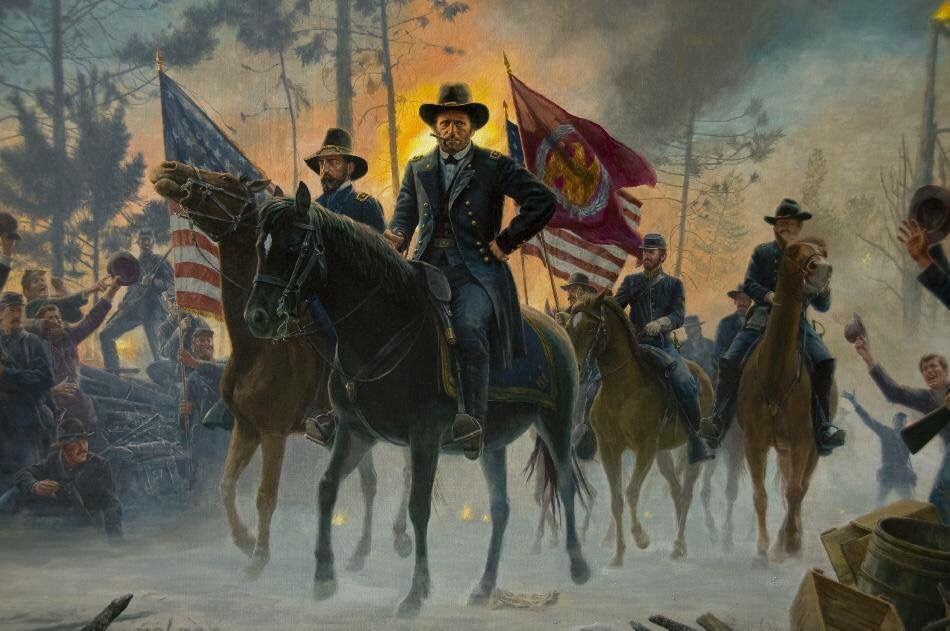
Today in History, May 7: 1864 – The Horrors of War. The Battle of the Wilderness comes to an end as Union Gen. US Grant disengages from the Army of Northern Virginia, attempting to flank them. The three day battle had taken place in a heavily wooded area near Spotsylvania. The Confederates minimized the superior numbers of the North by fighting here. The most horrific part of the battle was the wounded from both sides that were left on the battlefield. Neither side could risk moving in to rescue them…and the woods where they fought had been set on fire by the cannon fire during the battle. The helpless men cried for help that would not come…and many that could manage to do so shot themselves to avoid being burned alive as the fire overtook them.

The Crusading Commissioner

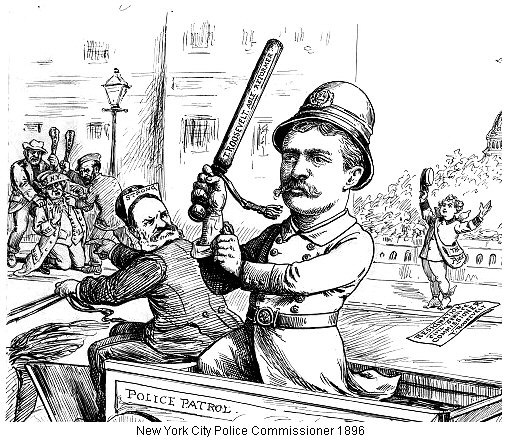
Today in History, May 6: 1895 – A former New York State Assembleyman who had been serving in DC of late is sworn in as a NYC Police Commissioner; one of several on the board. He would quickly be voted to be the President of the Police Commission.  Notably, he served on the commission with Frederick Dent Grant, son of former General and President US Grant. 

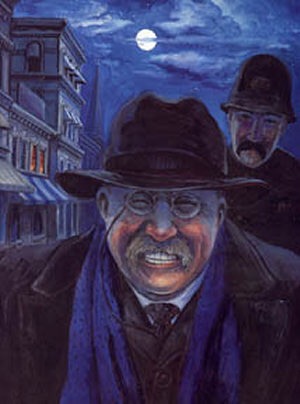
Theodore Roosevelt was out to make a name for himself, but also do some good; reform minded in light of recent events in the NYPD. 

He soon became a scourge for the officers as he began to conduct frequent walks through the streets at night, finding officers asleep or spending their time in bars rather than on patrol.  He also worked to weed out corruption, finding himself at odds with those that padded their salaries with bribe money. 

Roosevelt also found allies amongst those who appreciated his efforts not only for reform, but also to provide much needed training and equipment for the officers who wanted a more professional agency to emerge. 

He made a huge mistake in attempting to enforce a law in which bars must be closed on Sundays. Immigrants in the city worked 6 days a week, with only Sunday off to socialize and drink. The backlash cost TR’s Republican party in the next elections. 

Roosevelt would also be shaped during his midnight patrols and other tours. He would see the squalor that many lower income families endured, which would help drive his battles for better working conditions as President. 

Roosevelt would spend two years as NYPD Police Commissioner. The whirlwind that was his life would continue.  Back to DC as Assistant Secretary of the Navy, where he would drive the building of a 20th Century force, the Rough Riders and Cuba, Governor of NY, Vice President, then President…all by Sept 1901. 

We all must go Home

May 4, 1865. President Abraham Lincoln is buried in Springfield, Illinois, having been assassinated on April 14th. His 11-year-old son Willie, who had died during Lincoln’s term in office, is moved to be interned next to him. Lincoln’s funeral train stops in 180 communities along the path from Washington.