Costs of Appeasement

Today in History, March 7: 1936:

“If you French had intervened in the Rhineland in 1936 we should have been sunk and Hitler would have fallen” – German General Heinz Guderian, interviewed after WWII.

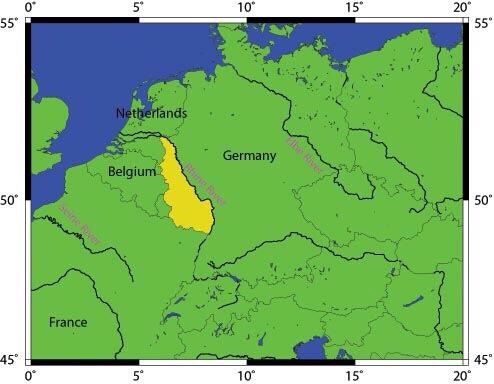
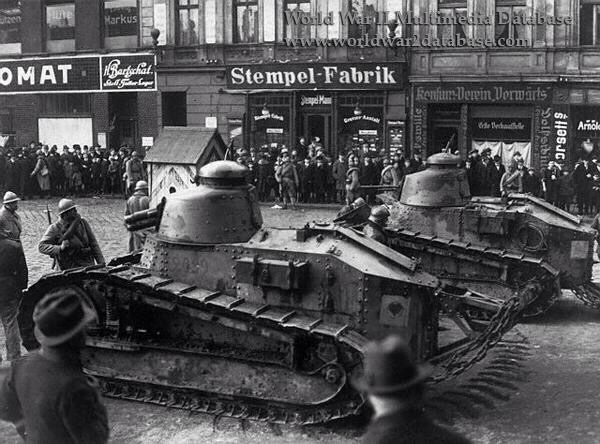
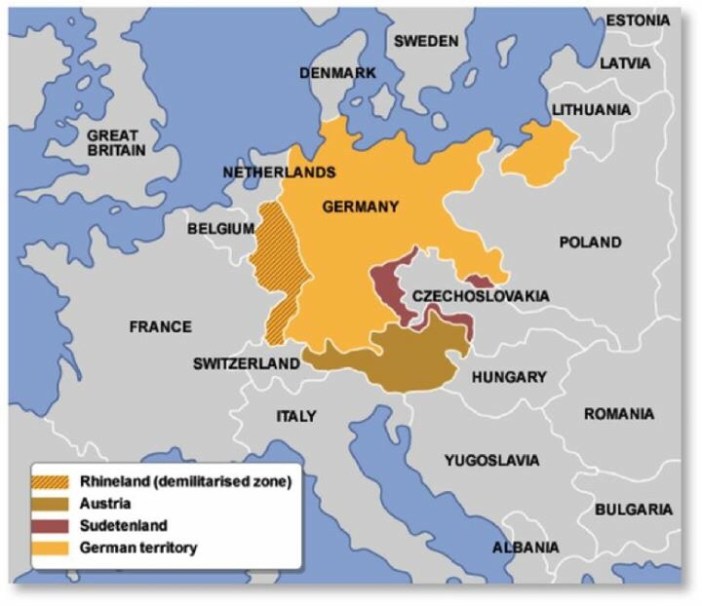
On this date, Germany “remilitarized” the Rhineland with a token force. It had been de-militarized after WWI to protect Germany’s neighbors.

In some skullduggery, Hitler claimed the people of the Rhineland were German peoples, and wanted the military presence. Now it was just a matter of seeing if anyone would call his hand.

In his memoirs, Hitler agreed with Guderian, saying that he had been very nervous in the 48 hours after the move.

Except for a few unheeded voices (Churchill), the governments of Europe refused to act, mostly for financial reasons. Bet they wished they could have had a “do over” on that decision.

Freedom From Want

Today in History, March 6: 1942 –

“The third is freedom from want—which, translated into world terms, means economic understandings which will secure to every nation a healthy peacetime life for its inhabitants—everywhere in the world.”

—Franklin Delano Roosevelt’s January 6, 1941

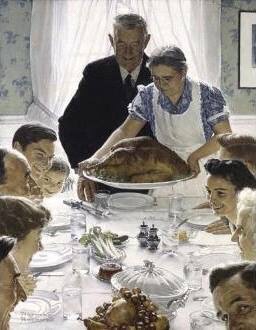
The third in a series of paintings by Norman Rockwell, based on President FDR’s Four Freedoms State of the Union address in 1941, entitled “Freedom From Want”, and alternatively famously known as “The Thanksgiving Picture” or “I’ll Be Home for Christmas” is published in the Saturday Evening Post.

The iconic painting included members of Rockwell’s family, which were photographed separately then included in the painting. The nation was at war, and the image was of those on the home front.

American’s could relate, but some Europeans were outraged as they were suffering daily bombings at the time.

The Boston Massacre

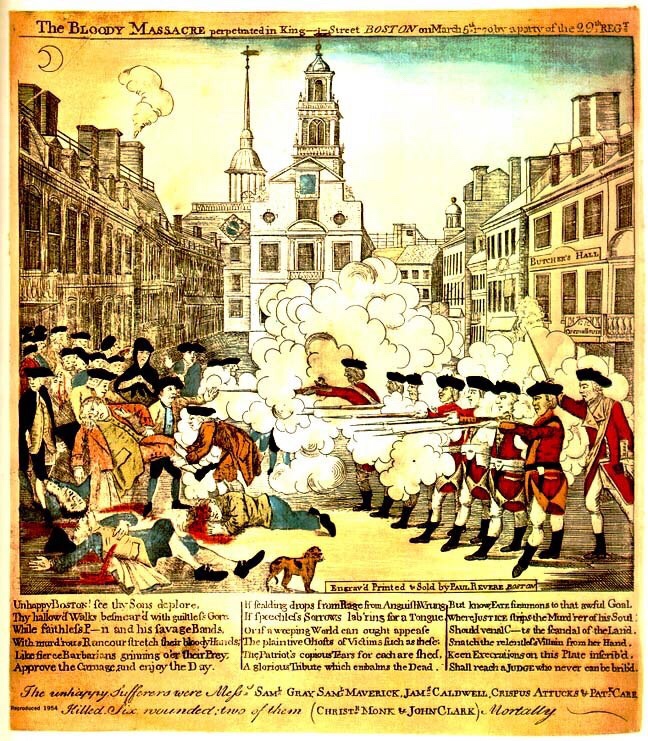
Today in History, March 5: 1770 – The Boston Massacre. American colonists, and Bostonians in particular, had been up in arms over unfair taxation without representation by their British rulers. Britain sent a contingent of soldiers to enforce the taxation and rules in Boston. After brawling with the “continentals” a few days before, they were faced with a crowd of citizens protesting outside of the Customs House. Being pelted with snowballs from the citizenry, they fixed bayonets. Most accounts are that a British soldier either slipped or was pelted with snowballs and his musket fired…then the rest of the soldiers began firing into the crowd. When it was over, five civilians were dead or dieing. Crispus Attucks, Patrick Carr, Samuel Gray, Samuel Maverick and James Caldwell. These are considered the first casualties in the American Revolution. Paul Revere made an engraving of the incident which was widely published (went viral in today’s parlance).

Historic Connections: Lincoln-Hay-Roosevelt

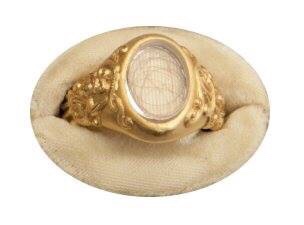
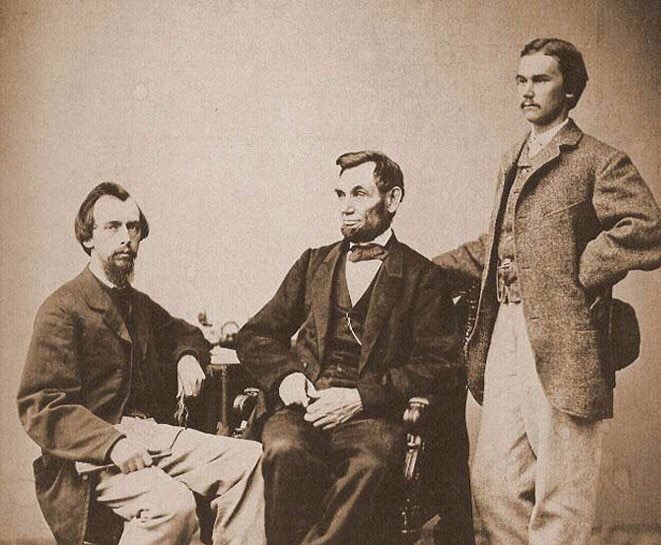
Today in History, March 4: 1861 (Lincoln Inauguration) / 1905 (Theodore Roosevelt Inauguration) – A very special connection between two Presidents, 40 years apart. As a young man in Illinois, John Hay got the chance of a lifetime. His friend John Nicolay was working at the law firm of Abraham Lincoln, Presidential candidate. When Lincoln was elected, Hay and Nicolay became his private secretaries in the Executive Mansion and became his confidants…he would stay up nights sharing stories with them and came to trust them; they helped to keep him balanced through the trials and tragedies of the Civil War. They, in turn nearly idolized him, referring to him as the Ancient One. When Lincoln was assassinated it devastated Hay. He recovered and went on to serve in numerous posts within the government, including the Ambassador to the Court of St. James (England); he was a successful author and journalist (remarkably understated..but I must keep this somewhat brief). He served several other presidents, becoming Secretary of State for President William McKinley. When McKinley was assassinated, Hay stayed on to serve in Theodore Roosevelt’s administration. He was largely responsible for the Open Door Policy in China and negotiated the Hay–Bunau-Varilla Treaty to build the Panama Canal. He initially thought TR a rogue cowboy, but as he grew to respect the President, they became fast friends. TR came to respect Hay’s experience and wisdom, and came to depend upon him. The night before TR was to be inaugurated for his second term, his first in which he was elected, John Hay sent TR a gift. A ring containing a strand of President Lincoln’s hair under glass, taken during his autopsy. Hay included a note:

“Dear Theodore:

The hair in this ring is from the head of Abraham Lincoln. Dr. Taft cut it off the night of the assassination, and I got it from his son-a brief pedigress.

Please wear it tomorrow; you are one of the men who most thoroughly understand and appreciate Lincoln.

I have had your mongram and Lincoln’s engraved on the ring.

Longas, O utiman, bone dux, ferias, Praestes Hesperia.

(Mayest thou, Good Captain, give long holiday to Hesperia!)

Yours affectionately, John Hay”

TR replied:

“Dear John, Surely no other President, on the eve of his inauguration, has ever received such a gift from such a friend. I am wearing the ring now; I shall think of it and you as I take the oath tomorrow. I wonder if you have any idea what your strength and wisdom and sympathy, what the guidance you have given me and the mere delight in your companionship, have meant to me these three and a half years?

With love and gratitude, Ever yours….”

What a life! A integral part of the story of two of our best presidents, and a key player in numerous historic decisions and events. Aside from the photos of the ring, there are photos of Hay in his youth, as an older man (he would die later in 1905), and even the photo of Lincoln’s funeral procession through New York City is important…in a window of one of the buildings to the left are two small boys watching the procession go by…young Theodore Roosevelt, Jr and his brother Elliott.
Veto Override

Today in History, March 3: 1845 – Congress overrides a Presidential Veto for the first time. Representative Jabez Huntington of Connecticut had authored a bill restricting the President from authorizing the building of ships for the Revenue Marine Service (precursor to the Coast Guard) unless the Congress had approved the funds first. President John Tyler, in an attempt to protect current contracts and Presidential prerogative, promptly vetoed the bill. On March 3rd, the last day of the 28th Congressional session, the Senate voted to override the veto unanimously, and the House voted 126-31 after midnight to override. Presidents have vetoed over 2,500 bills, with Congress overriding less than 5% of them.

Heck no…They All Have Guns! The Zimmerman Telegram

Today in History, March 1, 1917:

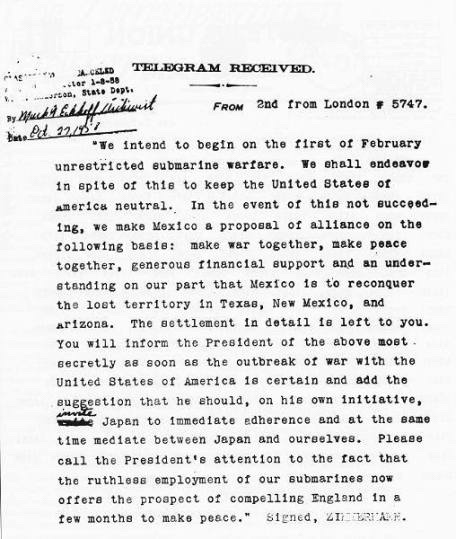
The Zimmermann Telegram is made public by the United States, on the authority of President Woodrow Wilson.

The German government had sent the telegram to their envoy in Mexico City in January, in anticipation of beginning unlimited submarine warfare in the North Atlantic Ocean on February 1st.

Germany wanted the United States, and her supply of men and materiel, to stay out of the war. And, should she enter the war, Germany wanted to limit her ability to assist Great Britain.

And that is what the Zimmermann Note was all about. It was an offer to the Mexican government; if Mexico would open up a “second front” for the United States by siding with Germany, the Germans would provide monetary support and promise to return Texas, New Mexico and Arizona to Mexico.

Germany hoped the second front would distract the Americans from shipping men and equipment to Britain, and that the sinking of what ships did venture forth by U-Boats would strangle the UK, forcing her to sue for peace.

The Mexican government actually established a committee to study the proposal…things had not been good between the US and Mexico, what with Gen. John Joseph “Black Jack” Pershing chasing Poncho Villa around Northern Mexico in recent years.

Mexico decided against the offer…because America was too powerful, because she would anger her neighbors, and (I find this VERY important), because they considered the fact that the citizens in the suggested states WERE ALL ARMED.

British intelligence managed to obtain a copy of the telegram and give it to the Americans. Our ancestors in the beginning of the 20th century shared our isolationist views and were not excited about involvement in a European War.

The release of the Zimmermann Telegram and unrestricted submarine warfare against our shipping helped change public opinion…and we were soon headed “over there”.

“A Decree For the Protection of the People and the State”…The Reichstag Fire Decree

Today in History, February 28, 1933:

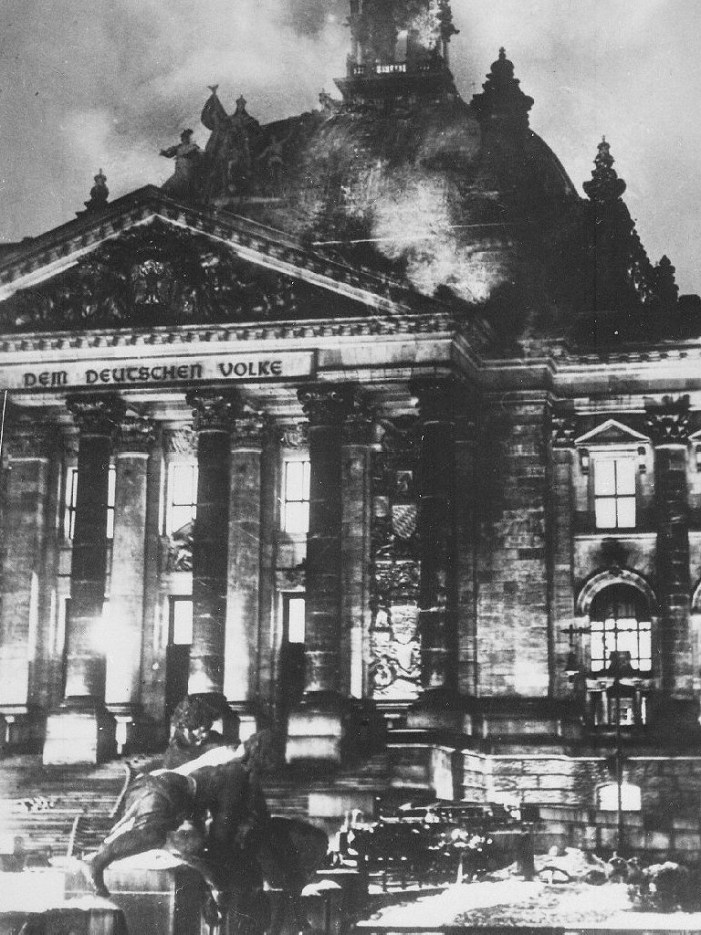
The Reichstag Fire Decree. On the night of February 27, 1933, the German Parliament, or Reichstag, was burned by arsonists.

The very next day (strike while the iron is hot) German President Paul Von Hindenburg, on the “advice” of Chancellor Adolph Hitler, issues the Reichstag Fire Decree “for the protection of the people and the state.”

The order suspended basic civil liberties guaranteed by the German Constitution.

The fire was blamed on the Nazi’s enemies, Communists. However it is likely the fire was contrived to justify the order, which began Hitler’s dictatorship.

The same type of maneuver would be used by the Nazis in September, 1939, to justify the invasion of Poland.

“Those who would give up essential liberty, to purchase a little temporary safety, deserve neither liberty nor safety.” – Benjamin Franklin

The Cooper Union Speech

Today in History, February 27: 1860:

“One of the most happiest and most convincing political arguments ever made in this City … No man ever made such an impression on his first appeal to a New-York audience.”

— Horace Greeley in his paper regarding “The Cooper Union Speech” by Abraham Lincoln.

A former Congressman and Illinois lawyer, Lincoln had been launched to the national stage by his debates with Stephen Douglas over the slavery question 2 years before, but he was still mostly unknown in the east.

A young Republican’s group in New York invited him to speak at Cooper Union’s Great Hall. The hall was not filled for the speech, but the text of it was given to Greeley’s and other’s papers; from there it was broadly published across the nation in pamphlet form.

Lincoln made convincing arguments that the Founding Fathers were against the expansion of slavery and desired it’s eventual end. At the same time he tried to convince Southerners that the Republican party did not wish to interfere in their affairs.

While in New York he had his photo taken by Matthew Brady, and the photo was used along with the pamphlet to broaden his recognition.

It is widely believed that the speech is what launched him into the Presidency.

He closed with a message to his colleagues:

“Neither let us be slandered from our duty by false accusations against us, nor frightened from it by menaces of destruction to the Government nor of dungeons to ourselves. Let us have faith that right makes might, and in that faith, let us, to the end, dare to do our duty as we understand it.”

Luftwaffe Reborn

Today in History, February 26: 1935:

Adolph Hitler secretly signed a decree creating the Luftwaffe, the German Air Force, and names Hermann Goering it’s commander. At the end of WWI the Treaty of Versailles signed between the combatants, including Germany, declared that Germany could have no military air service.

Hitler quietly built up what would become a larger, and more modern, air force while the rest of Europe and America let their forces languish.

Lufthansa, the civilian airline that was permitted, was used to provide flight training to the men that would become Luftwaffe pilots.

By September 1939 when the German Blitzkrieg swept across Poland, Denmark, Norway, Holland, Belgium and France, the Luftwaffe consisted of 1,000 modern fighter planes and 1,050 modern bombers.

This build up, and the build up of the Wehrmacht, all took place while the future allies practiced appeasement and protested verbally (the British had built up the Royal Air Force, but it was still much smaller than the Luftwaffe).

Caruso Came “Over Here” to Sing “Over There”. America

Today in History, February 25: 1873 – Enrico Caruso, considered to be the greatest tenor to ever live, is born in Naples, Italy. Caruso would perform in opera houses all over the world before finally coming to America in 1903; soon after he would make the Metropolitan Opera House in New York his home base. Soon he was recording records for the Victor Talking Machine Company, later RCA Victor. Caruso would be the first person to sell over a million records, demonstrating his wide-spread popularity. When “The Great War” came, he showed his patriotism to his adopted country by singing a rousing song that inspired many to enlist and told the Hun that Americans were coming “Over There, and we wouldn’t come back til it was over….over there.”