“Show Me a Hero…”

Today in History, January 3, 1944:

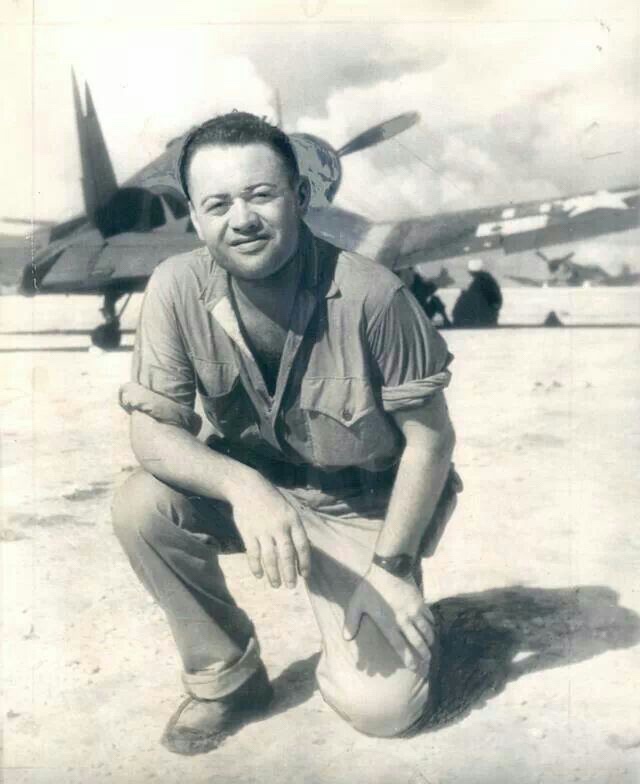
Moments after he became the top fighter ace in the Pacific Theater by shooting down his 26th enemy plane, USMC Major Gregory “Pappy” Boyington was himself shot down over the Japanese base of Rabaul.

He would be captured by the Japanese and held prisoner, brutally treated until rescued from a Japanese prisoner of war camp.

Boyington had been one of the American servicemen to resign their commissions to serve in the AVG, the American Volunteer Group, or “Flying Tigers” in China prior to America’s entry into the war. After Pearl Harbor he rejoined the Marines and fought in the Pacific. Boyington was a Medal of Honor recipient. A warrior. And a drunk. In his good will tours after the war, he stated bluntly, “Show me a hero, and I’ll show you a bum.”

Air Victories from WWII to Vietnam

Today in History, January 2, 1967:

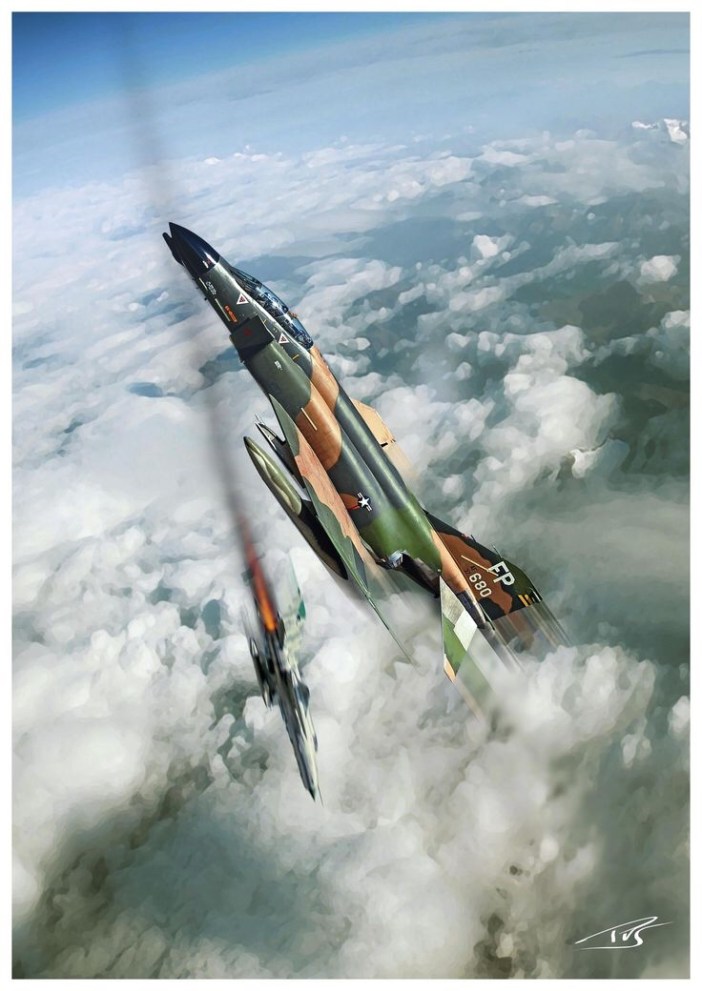
USAF Colonel Robin Olds shoots down his first MIG 21 in the Vietnam War.

This made him the first and only US airman to score aerial victories in both WWII and Vietnam.

In WWII he flew the twin engine P-38 Lightning and the P51 Mustang; in Vietnam the F4 Phantom.

He would shoot down 16 aircraft, making him a triple Ace.

Amazing Grace

Today in History, January 1: 1773 – Minister John Newton of Olny, Buckinghamshire, England first uses a hymn that he wrote with William Cowper that would later become known as Amazing Grace. He was inspired to write the hymn about renewal and redemption by his own life. Before finding God and being ordained, he had been an insubordinate sailor (impressed into the Royal Navy) and then becoming a slave trader. The hymn would not be matched the tune “New Britain” in America until 1835.

Auld Lang Syne

Today in History, December 31: 1929 – Guy Lombardo and The Royal Canadians perform “Auld Lang Syne” for the first time on the radio from The Roosevelt Grill in the Roosevelt Hotel, NYC. They would continue to do so on radio and television for the nearly half a century, even after Lombardo’s death in 1976, become an American standard.


Should old acquaintance be forgot,
and never brought to mind?
Should old acquaintance be forgot,
and old lang syne?

CHORUS:
For auld lang syne, my dear,
for auld lang syne,
we’ll take a cup of kindness yet,
for auld lang syne.

And surely you’ll buy your pint cup!
and surely I’ll buy mine!
And we’ll take a cup o’ kindness yet,
for auld lang syne.

CHORUS

We two have run about the slopes,
and picked the daisies fine;
But we’ve wandered many a weary foot,
since auld lang syne.

CHORUS

We two have paddled in the stream,
from morning sun till dine;
But seas between us broad have roared
since auld lang syne.

CHORUS

And there’s a hand my trusty friend!
And give me a hand o’ thine!
And we’ll take a right good-will draught,
for auld lang syne.

The Gadsden Purchase Drama

Today in History, December 30: 1853 –

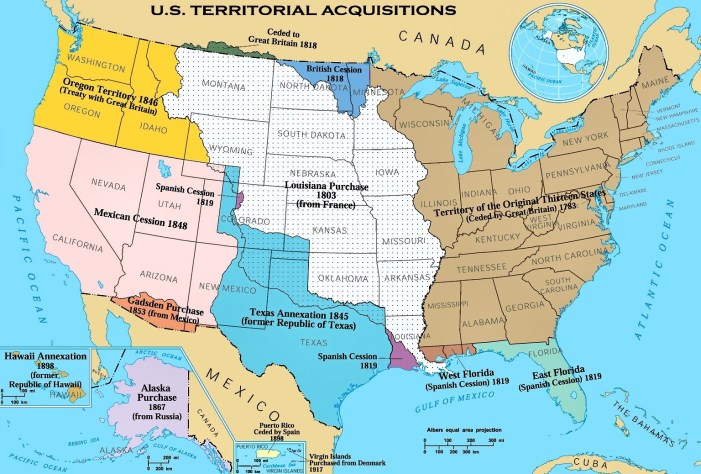
The Gadsden Purchase. The last major expansion of continental US territory takes place when US Ambassador to Mexico James Gadsden and Mexican President General Antonio Lopez de Santa Anna sign a treaty giving over a large segment of what is now New Mexico and Arizona from Mexico to the US for 15 million dollars to facilitate a southern US railroad, because a more northern route was too mountainous. The story seems pretty plain. But as I researched it, I found more and more intrigue and drama to be involved.

Gadsden was an ardent slavery proponent, sent on this mission by then US Secretary of War Jefferson Davis to negotiate the agreement on behalf of President Pierce. Gadsden and Davis, of course, shared views that more slave holding states should be added to the Union.

This was a point of major contention in the Congress, which debated the treaty extensively for those very reasons. Santa Anna, having lost badly in the war for the independence of Texas (Tejas) and the Mexican-American War, had been in and out of office repeatedly. Ironically, he was willing to sell additional Mexican territory to the United States so that he could afford to fund a Mexican army to defend against…the United States.

This last purchase established the current continental boundaries of our nation. Primarily because southern business interests didn’t want to depend upon a northern railroad route to ship their goods to California, not trusting the Yankees in this pre-Civil War era.

“A People’s Dream Died There…”

Today in History, December 29: 1890 –

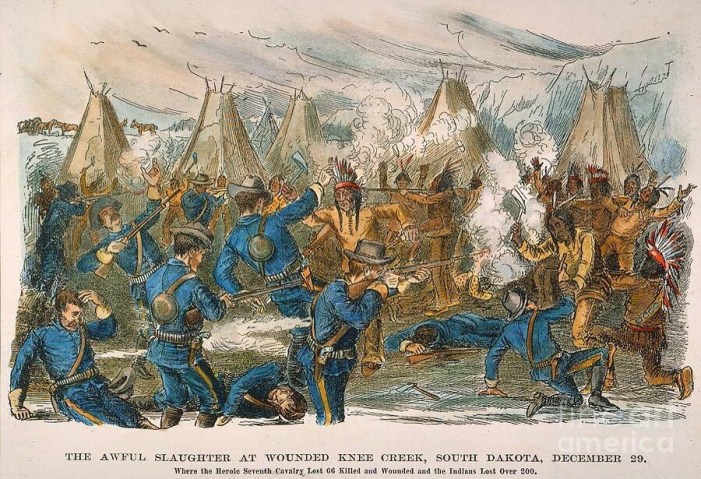
Massacre at Wounded Knee. “I did not know then how much was ended. When I look back now from this high hill of my old age, I can still see the butchered women and children lying heaped and scattered all along the crooked gulch as plain as when I saw them with eyes young. And I can see that something else died there in the bloody mud, and was buried in the blizzard. A people’s dream died there. It was a beautiful dream … the nation’s hope is broken and scattered. There is no center any longer, and the sacred tree is dead.” – Black Elk, Lakota Sioux Medicine Man.

“scuffle occurred between one warrior who had [a] rifle in his hand and two soldiers. The rifle was discharged and a battle occurred, not only the warriors but the sick Chief Spotted Elk, and a large number of women and children who tried to escape by running and scattering over the prairie were hunted down and killed.” – Gen. Nelson A. Miles, US Army.

Most of the Lakota were demoralized by life on the reservations due to the impoverished and bitter conditions. A new religious belief began to spring up and gave them hope…that by performing the Ghost Dance, their dead would return, the Bison would become plentiful again, and the white men would leave, allowing them to return to their former lives.

There were no plans to attack anyone, but the increasing fervor of the movement made the Indian Agent nervous and he called for military protection. It came in the form of the 7th Cavalry, Custer’s old command, and some of the soldiers at Wounded Knee had been with Capt. Benteen at Little Big Horn.

Earlier in December an attempt was made to arrest famed Sitting Bull at his home, who was not part of the movement. When he pulled away from one of those attempting to arrest him, he and several others were killed. Tensions rose…

On December 28th a contingent of the 7th intercepted a band of Lakota and escorted them to Wounded Knee Creek, where they all camped. On the 29th the remainder of the 7th arrived and surrounded the camp, supported by 4 rapid fire Hotchiss guns…

Col. James Forsyth ordered that the Indians be disarmed. Troopers moves about the encampment, seizing weapons. When they attempted to take Black Coyote’s rifle (he was deaf and didn’t understand their commands) he protested. A scuffle ensued and a shot was fired. Nobody knows if it was his rifle going off or a nervous participant, but that is all it took.

The troopers surrounding the camp opened fire with all they had, and chased fleeing men, women and children across the plains. When it was over 150 Lakota and 25 troopers lay dead. Most of the Sioux bodies would not be recovered until a blizzard occurring the next few days passed. This was the last battle (if you can call it that) of the Plains Indian Wars. Commanding Gen. Miles removed Forsyth from his command, but he would be reinstated.
“If I Am Judged By My Acts…”

Today in History, December 28, 1832:

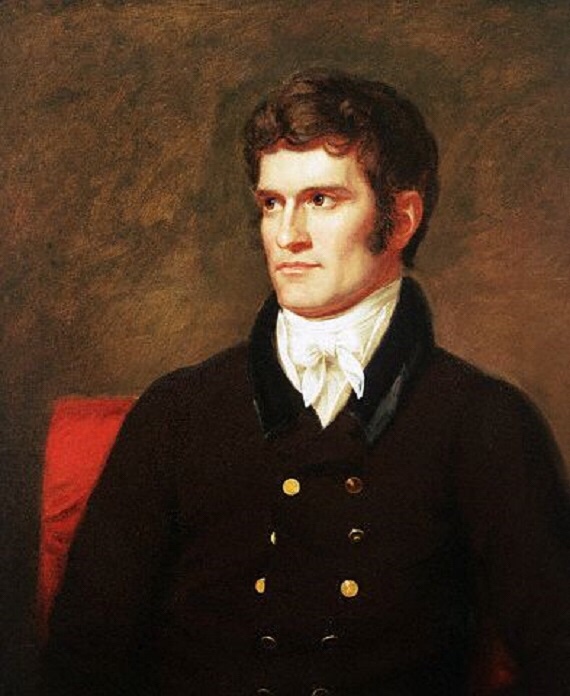
John C. Calhoun, 7th Vice President of the United States, resigns to take a Senate seat from his native South Carolina. Calhoun was a short step away from the Presidency, twice. He ran unsuccessfully in 1821, and had he been able to remain as Vice President to Andrew Jackson, he almost certainly would have been assured the nomination and perhaps the election after Jackson’s two terms had ended.

But Calhoun and Jackson would get cross-ways over accusations of adultery involving the wife of the secretary of war, along with most of Jackson’s cabinet. This and their differences over nullification (the belief that the states could nullify ANY act by the federal government-admittedly a simplified explanation, but accurate), led to Calhoun’s resignation.

Calhoun was a fierce proponent of state’s rights, and as a result, of slavery.

However, a comment shortly before his death showed his loyalties, “If I am judged by my acts, I trust I shall be found as firm a friend of the Union as any man in it. If I shall have any place in the memory of posterity it will be in consequence of my deep attachment to it.”

Calhoun felt himself a patriot. He is, perhaps, a reminder that we can disagree with someone politically without assuming they are otherwise.

Today in History, December 28: 1867 –

The United States annexes it’s first territory outside of the continental US, two tiny specs of coral land halfway to Asia in the Pacific, first known as the Brook Islands for the man who discovered them, later renamed Midway Atoll.

The Navy attempted unsuccessfully to build a coaling station on the island, and later the Commercial Pacific Cable Company used the island as a link for telegraph lines across the world’s largest ocean.

In 1903 President T. Roosevelt stationed 21 US Marines there to ward off poachers. In the 1930’s Pan American Airways began using Midway as one of the stations for its now romantically famous island hopping China Clipper. And of course the “Goony Bird” filled islands became known to most of us for it’s part during the Battle of Midway during WWII.

Manifest Destiny

Today in History, December 27: 1845 –

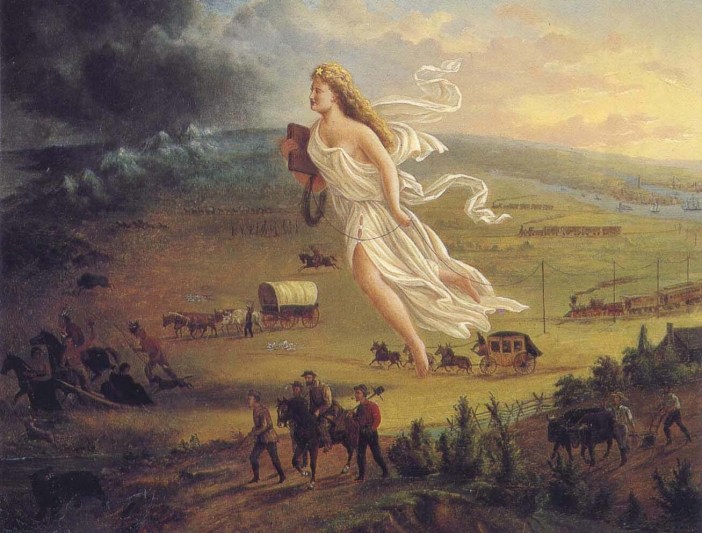
John L. Sullivan writes in the New York Morning News of “Manifest Destiny” regarding American expansion into the Oregon Territory after the session of Texas to the United States.

“And that claim is by the right of our manifest destiny to overspread and to possess the whole of the continent which Providence has given us for the development of the great experiment of liberty and federated self-government entrusted to us.”

The Trent Affair

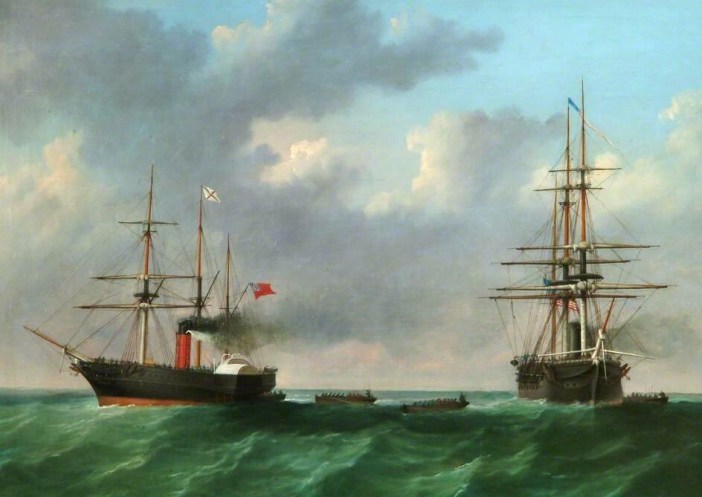
Today in History, December 26: 1861 – The “Trent Affair” ends with the release of Confederate envoys James Mason and John Slidell into British custody. Seems mundane initially, but this is a fascinating story that helps define American character. Earlier in the year, Union forces had been made aware that Confederate emissaries were being sent to Britain…believing that the desire for Southern cotton (King Cotton) by British merchants would inspire the UK Government to recognize the Confederacy as as separate nation, and to support her against the North. The USS San Jacinto, commanded by US Navy Captain Charles Wilkes, found the HMS Trent, a mail “packet” ship carrying Mason and Slidell to Britain to lobby for recognition and for support. He ordered the ship boarded and the envoys arrested as “contraband”, taking them to a Union port. Wilkes had led the American Exploring Expedition years earlier…science was his domain, not international relations. He created an international incident….the British were outraged that one of their ships had been boarded and her passengers seized. Ironically, by international law, had he seized the entire ship and brought her to port pending a trial, nobody would have been offended. US Secretary of State William Seward had to deal with the situation. American public sentiment was that the Southerners were taken legitimately. But if you looked at American history to that date…the Revolution had been won partially because Americans had gained foreign recognition by France. So was the Confederacy really doing anything that the Americans of the Revolution hadn’t done? Subsequently, the War of 1812 had been fought largely because Americans were tired of the British boarding their ships and seizing the ships crewmen. So could Capt. Wilkes’ actions be defended? Foremost in Seward’s thinking (and Lincoln’s) was that the Union would be hard pressed to win the Civil War if Britain came in on the side of the Confederacy, deciding that the CSA was a nation unto itself rather than a rebellious segment of one nation. In the end Seward voiced an eloquent conciliatory message to the British, released the Southern envoys to the British government, and avoided creating another enemy the North could not fight. Mason and Slidell continued on to Britain, but their efforts came to naught.