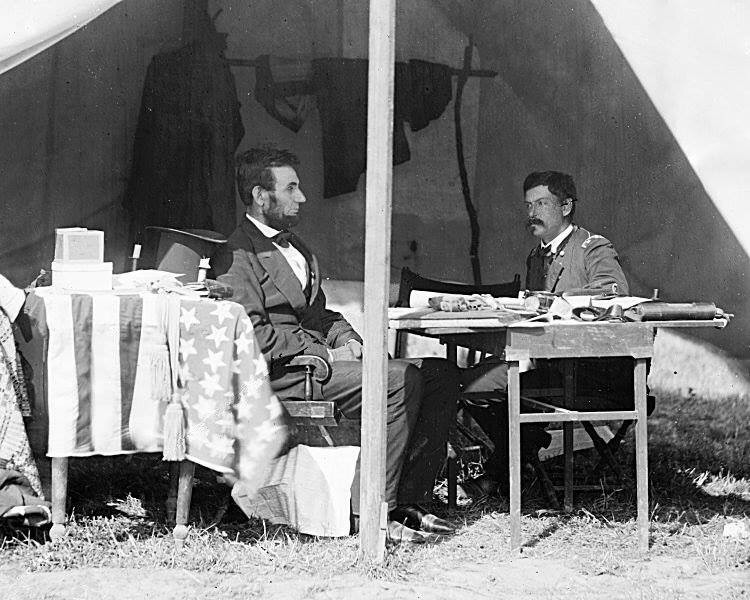
Today in History, November 5: 1862 – President Abraham Lincoln relieves Gen. George B. McClellan of the command of the Army of the Potomac for the second and last time. “Little Mac” was a great organizer, and drilled the army into a very competent force…but refused to use it. On numerous occasions Lincoln suggested, cajoled, asked, and ordered McClellan to take offensive action. Gen. McClellan always assumed his enemy had many more soldiers than they actually had and found excuses not to advance. Finally Lincoln had enough. McClellan, who referred to Lincoln as a well meaning gorilla, would run against his boss for President as an anti-war Democrat. I read and listen to a lot of history. It always bothers me when an author judges a leader rather than just reporting the facts…we weren’t there, and I’ve been “second guessed” myself. Gen. McClellan is my exception. I’ve read too many historical accounts, too many biographies in which he was mentioned. I don’t believe he was a coward. I don’t necessarily believe he was a traitor. But he repeatedly and adamantly acted against the interest of his government. I would love to know what was in his mind.
Air conditioning!

Today in History, November 4: 1939 – The first car with built in air conditioning is introduced at the 40th annual Automobile Show. While some after market companies had offered A/C for limousines earlier in the thirties, Packard was the first to offer the option of a “Weather Conditioner” to the average motorist. The unit took up nearly half of the car’s trunk space.
Yesterday’s Enemies
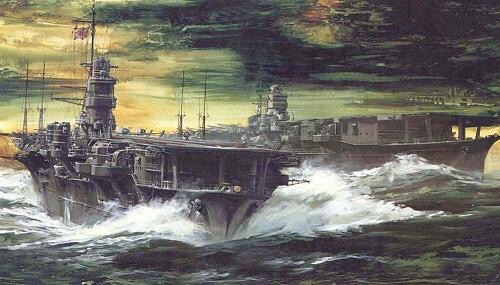
Today in History, November 3: 1941 – A Japanese military council makes the decision that Pearl Harbor should be bombed, and in 2 days time issues the order to the Imperial Combined Fleet to prepare for the attack on December 8th. Secret Order #1 also included plans for the bombing of the Philippines and Malaysia, amongst other Pacific installations.
The Japanese had been preparing for this assault for sometime…IJN pilots had been training since the spring for the special tactics needed to bomb in the shallow harbor in Hawaii. “Negotiations” continued with the American government, even as the Japanese fleet moved and prepared for the attack.
Yesterday’s enemies are often today’s strongest allies.
Hero John C. Freemont…Gets Himself Fired

Today in History, November 2: 1861 – President Lincoln relieves Gen. John C. Fremont of the command of the Western Department of the Union Army.
In his younger years Fremont had married Jessie Hart Benton, daughter of a successful US Senator. In the 1840’s he became an American hero exploring and mapping portions of the western US.
His popularity led him to become the first presidential candidate of the fledgling Republican Party, although he lost. While he and the second Republican candidate for president, Lincoln, may have shared political views, they didn’t share timing.
Fremont didn’t prove to be successful as a military commander in Missouri. As commander in the Western Department, he ordered all slaves in Missouri emancipated. Lincoln, who eventually would sign the Emancipation Proclamation, was not ready to do so in 1861 for fear that he would alienate the border states of Missouri, Kentucky, Delaware and Maryland, potentially losing their soldiers and resources to the Confederacy. Fremont refused an order to rescind his orders, and Lincoln fired him, a risky political move in itself due to Freemont’s popularity and connections.
Fremont was given a Mountain command in the east, but quit that when he became subordinate to Gen. Pope, who he felt he outranked. That ended his Civil War career, but he would eventually become Governor of Arizona territory. He passed away in New York in 1890.
Sherlock Holmes
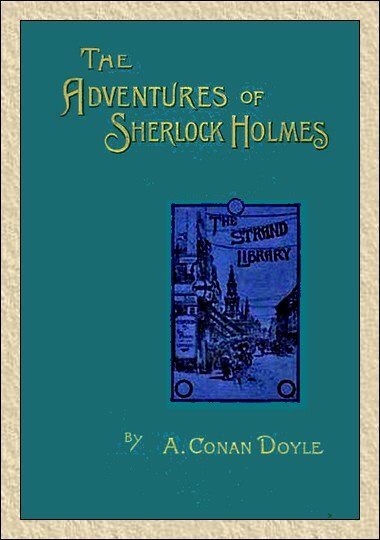
Today in History, October 31: 1892 – “The Adventures of Sherlock Holmes”, the first of Sir Arthur Conan Doyle’s novels featuring the super sleuth, is published. Doyle based Holmes’ character on one of his professors from the University of Edinburgh, Dr. Joseph Bell, who displayed remarkable deductive abilities. Doyle had been publishing stories about Sherlock Holmes in “The Strand” magazine since 1887.
“that grinning, glowing, globular invader of your living room is an inhabitant of the pumpkin patch”… Still true
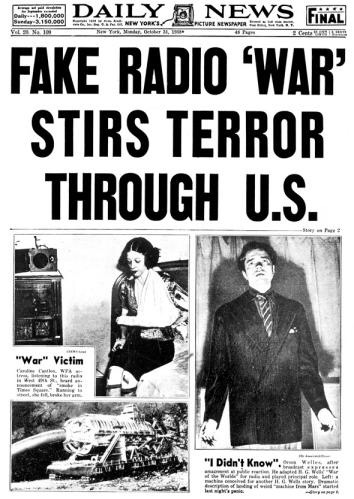
Today in History, October 30: 1938 – “The War of the Worlds”. For Halloween, Orson Welles had produced a radio show based on a nineteenth century novel by H.G. Wells. After a disclaimer preceding the show, it was designed as if the events were actually occurring, as if newsmen were reporting an actual invasion of the Earth by Martians….
Unfortunately, most Americans were listening to another popular radio show as The War of the Worlds began, and tuned in AFTER the disclaimer. As many as a million people thought they had actually tuned into coverage of aliens landing and assaulting the planet. The show described people all over the country fleeing in terror; which actually did occur since so many thought it was real. Part way through the show, Welles was informed of the mass panic and interrupted the show with another disclaimer….”This is Orson Welles, ladies and gentlemen, out of character to assure you that The War of The Worlds has no further significance than as the holiday offering it was intended to be: the Mercury Theatre’s own radio version of dressing up in a sheet and jumping out of a bush and saying “Boo!” Starting now, we couldn’t soap all your windows and steal all your garden gates by tomorrow night, so we did the best next thing. We annihilated the world before your very ears, and utterly destroyed the C. B. S. You will be relieved, I hope, to learn that we didn’t mean it, and that both institutions are still open for business. So goodbye everybody, and remember, please, for the next day or so the terrible lesson you learned tonight: that grinning, glowing, globular invader of your living room is an inhabitant of the pumpkin patch, and if your doorbell rings and nobody’s there, that was no Martian — it’s Halloween.”
It was 1938. Unfortunately, within a year, the world would find the horrors they imagined were all too real; but they didn’t need aliens in WWII.
Liberty Enlightening the World
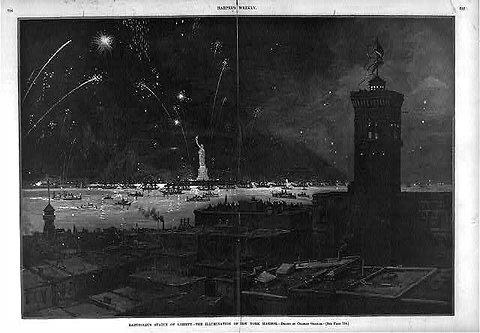
Today in History, October 28: 1886 – “Not like the brazen giant of Greek fame, With conquering limbs astride from land to land;
Here at our sea-washed, sunset gates shall stand
A mighty woman with a torch, whose flame
Is the imprisoned lightning, and her name
Mother of Exiles. From her beacon-hand
Glows world-wide welcome; her mild eyes command
The air-bridged harbor that twin cities frame.
“Keep, ancient lands, your storied pomp!” cries she
With silent lips. “GIVE ME YOUR TIRED, YOUR POOR,
YOUR HUDDLED MASSES YEARNING TO BREATHE FREE,
THE WRETCHED REFUSE OF YOUR TEEMING SHORE.
SEND THESE, THE HOMELESS, TEMPEST TOST TO ME,
I LIFT MY LAMP BESIDE THE GOLDEN DOOR!”
—Emma Lazarus, 1883
“Liberty Enlightening the World” a statue gifted to America by France in recognition of the two nation’s alliance during the Revolutionary War, is dedicated in New York harbor. The dedication was presided over by President Grover Cleveland.
Desperate Courage – The Battle Off Samar

Today in History, October 25: 1944 –
A desperate fight for survival, The Battle off Samar. The Battle off Samar was only one of several major naval conflicts that constituted the Battles of Leyte Gulf.
Gen. Douglas MacArthur had returned to the Philippines and invaded Leyte. His invasion was supported by what is likely the largest assembled fleet in history. In the days since the invasion began, the Japanese Navy had sent 3 battle groups to intercede. One group of Battleships, cruisers and destroyers were to approach the landing forces in Leyte Gulf through Surigao Strait, another built around the massive IJN Yamato was to approach via San Bernadino Strait, and the last, built around Fleet Carriers with few planes left, was to sail far to the north and make sure they were seen, so that major US forces defending the thin skinned landing ships would leave them unprotected.
The Japanese fleet approaching through Surigao Strait was decimated by American Battleships raised from the mud of Pearl Harbor in the last Battleship vs Battleship engagement in history (US Cruisers and Destroyers were key also).
Admiral Kurita’s force around Yamato was bombed on the 24th and turned back. Admiral William F. Halsey, known to Americans and Japanese for his aggressive nature, “By the time we’re done, the Japanese language will be spoken only in hell” commanded the US 3rd fleet…4 battle groups of 4 fast carriers each, and another of fast battleships. He took the bait, going after the Japanese carriers that were actually playing no combative part in the battle. This left only cargo ships, small combatants, and “Jeep Carriers”, or Escort Carriers…basically cargo ships with a flight deck built atop their small, thin hulls.
The escort carriers were tasked with close support for troops ashore, and were not equipped with ammunition for a sea battle. So far, I’ve just set the stage for the events of the Battle off Samar Island…now for the good part. There were 3 small escort carrier task forces left in Leyte Gulf…Taffy 1, Taffy 2 and Taffy 3. As they began operations on the morning of the 25th, Admiral Clifton “Ziggy” Sprague and the men of Taffy 3 were shocked to find that IJN Admiral Kurita’s task force of fast battleships, cruisers and destroyers, who had turned around in the night, bearing down on them. Reference “Last Stand of the Tincan Sailors” by James Hornfischer, although I knew about this battle, I found out much more, and Oklahoma connections. The entirety of Taffy 3…6 jeep carriers, 2 Fletcher class destroyers and 3 destroyer escorts…did not match the tonnage of the Yamato alone. And Yamato was joined by several other Battleships, Cruisers and destroyer task forces. The Japanese could manage much more speed than the small American ships, and their guns (18 inch for the Yamato, 14 and 8 inch for the others, out-ranged the American’s 5 inch guns by MILES. As the long range rifles (22 miles avg) began dropping shells around the carriers and destroyers, Admiral Sprague ordered the small destroyers and destroyer escorts to lay smoke and attempt to delay the inevitable. Oklahoman Harold Kite, loading a 5 inch gun on the stern of the carrier USS Fanshaw Bay, watched the tiny escort ships turning to race towards the huge enemy ships, and likened them to the horses that had raced across the plains of central Oklahoma as he was growing up, and marveled at their courage. The closest escort ship to the Japanese fleet, the USS Johnston, was commanded by another Oklahoman…Commander Ernest E. Evans, known to his Annapolis classmates as “Chief” for his Cherokee heritage. His crew knew what they were in for. Cmdr. Evans had been there for the American defeat during the Guadalcanal campaign, and took his warrior heritage seriously. When he took command of the Johnston, he told her crew, “This is going to be a fighting ship. I intend to go in harm’s way, and anyone who doesn’t want to go along had better get off right now. Now that I have command of a fighting ship, I will never retreat from an enemy force.” See comments for much more.
And he didn’t. Under the fire of longer range, larger guns and other fast destroyers, he raced in close, ordering his gun crews to fire constantly, which they did with amazing effect, and launched his small ship’s torpedoes against the enemy, achieving strikes that disabled cruisers. Fighting to the end, Evans was looking after the survivors of his sinking ship when a Japanese shell destroyed the part of the superstructure he was in, and he went down with his ship. The other American destroyers and destroyer escorts (even smaller) followed suit, delaying the Japanese ships and confusing them to the point that the Japanese thought they were actually fighting American cruisers and fast carriers…heavies in Navy parlance.
The Jeep carrier’s aircrews were launched in desperation as the battle began…armed with whatever they had…depth charges, anti-personnel bombs, but nothing that was designed to sink ships. The aircrews, flying torpedo bombers, dive bombers and fighter planes, attacked the Japanese ships with desperate ferocity. They dropped the depth charges as best they could beneath enemy ships, dropped their bombs, then came back and made runs against the enemy ships without arms because it would mean the IJN ships had to evade (and slow down) since they didn’t know there were no torpedoes or bombs on the American aircraft. One pilot, out of ammunition, flew alongside a Japanese heavy, opened his canopy, and emptied his .38 revolver into the ship’s bridge to the amazement of her crew. The flyers then flew to a land base on Leyte and re-armed to attack again. In the end, Admiral Kurita, believing he was attacking a much larger force, ordered his massive force to turn about and retreat.
As for Halsey, who couldn’t leave even his Battleships, or even 4 of his 16 Carriers to defend the Taffy’s and the all but defenseless cargo ships in Leyte Gulf….he received a dispatch from his boss, Admiral Chester W. Nimitz, asking, “Where is Task Force 34? All the world wonders.” The story is that “all the world wonders” was just jibberish added to transmissions to confuse the enemy…but the result was an angry Halsey throwing his cap to the deck and spewing a string of invectives. Of the destroyers, including the Johnston and the Samuel B. Roberts that went down in the battle? Amazingly, many of their crew were lost to sharks before they were rescued in the days hence, the result of faulty reports of their locations. So many brave heroes.
An Impactful Day
Today in History, October 26:
Such a huge day! I couldn’t pick. So…
1774 – The First Continental Congress adjourns. They hadn’t yet declared Independence, but…
1775 – King George III of Great Britain goes before Parliament to declare that the American colonies are in rebellion and to order a military response.
1825 – The Erie Canal, man-made water passage from Albany, New York to Lake Erie, opens.
1861 – The Pony Express ends it’s 18 month run.
1881 – The Gunfight at the O.K. Corral in Tombstone, AZ.
1940 – The P-51 famous Mustang makes it’s maiden flight.
1942 – During the Guadalcanal Campaign, the Battle of the Santa Cruz Islands takes place…The USS Hornet is sunk and the USS Enterprise, now the only American carrier in the Pacific to hold the line against the Japanese, is badly damaged.
1944 – The Battle of Leyte Gulf, the largest sea battle in history encompassing several days, comes to an end with Japanese defeat.
1958 – A Pan American Airways Boeing 707 makes the aircraft’s first commercial flight between New York and Paris.
Band of Brothers at Agincourt
Today in History, October 25: 1415 –
600 years ago, The Battle of Agincourt. During the Hundred Years War, English King Henry V had invaded France. On this date, Saint Crispin’s Day, his army was exhausted after a 250 mile march, sick and vastly outnumbered by a well rested French Army which included many noblemen (Knights).
Henry decided that waiting would only make things worse, and began the battle. He protected his Archer’s, armed with Longbows, and they once again proved their worth, cutting down the French knights and the majority of the French Army. At the end of the day, there were 6,000 French casualties to 400 English.
Shakespeare’s play included a rousing speech by Henry V, now famous of course, for “And Crispin Crispian shall ne’er go by, From this day to the ending of the world, But we in it shall be remembered- We few, we happy few, we band of brothers!” Among so many that can, in the time since, share in the Brotherhood of St. Crispin’s Day, are the Cavalry of the “Charge of the Light Brigade” during the Crimean War (1854) and the Sailors, Airmen, Marines and Soldiers who fought in the largest Naval Battle in History at Leyte Gulf (1944).
 Mark Loves History!