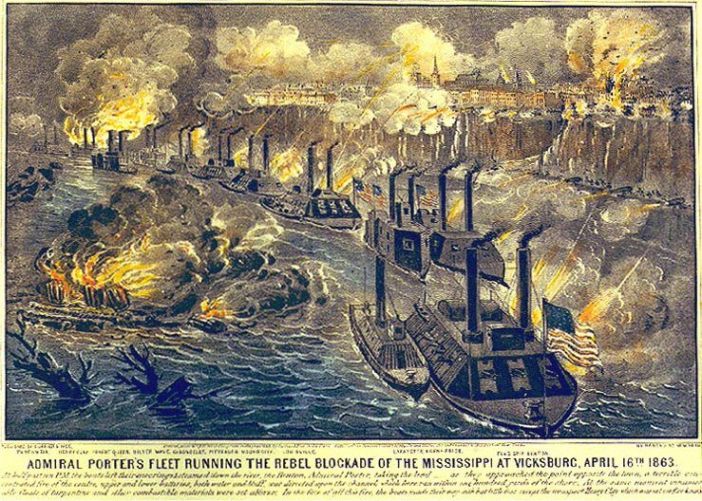
Running Vicksburg….

292277_2585002523121_1216574598_n

Today in History, April 16: 1863 – Navy. Littoral. Riverine. Inter-branch cooperation. Amphibious. Most of these terms are not recognized by most until World War II or Vietnam. But they became reality much earlier…in The Civil War. Union Generals Grant and Sherman had been trying to take Vicksburg, Mississippi for six months without success. Grant tried to move his troops past Vicksburg on the Louisiana side, but the swampy terrain made it slow going. So, thinking “outside the box”, he called upon the Navy…He and Navy Admiral David Dixon Porter designed to have Grant’s soldiers moved south past the batteries at Vicksburg via the Mississippi River, using numerous Ironclads, Riverboats, and barges. The idea was to sneak past the Confederate cannon..but the rebels spotted the passing ships and a battle ensued. One ship and two barges were lost, but the vast majority of Grant’s forces made it to their destination. They then lay siege to Vickburg, which they had now cut off from reinforcement or resupply. By July 4th, Vicksburg fell to Grant and Sherman’s forces. When we think of the US Navy, we think of Frigates, Ships of the Line, Battleships, or Aircraft Carriers, depending on the time in history, sailing the seas. But many of our Navy’s victories were won in shallow waters or on rivers. The Navy used “Littoral”, or shallow water ships, and “Riverine”, or river tactics in numerous conflicts. Vicksburg and other Mississippi Civil War battles displayed the use of Navy – Army cooperation.

Great Flood of ’27

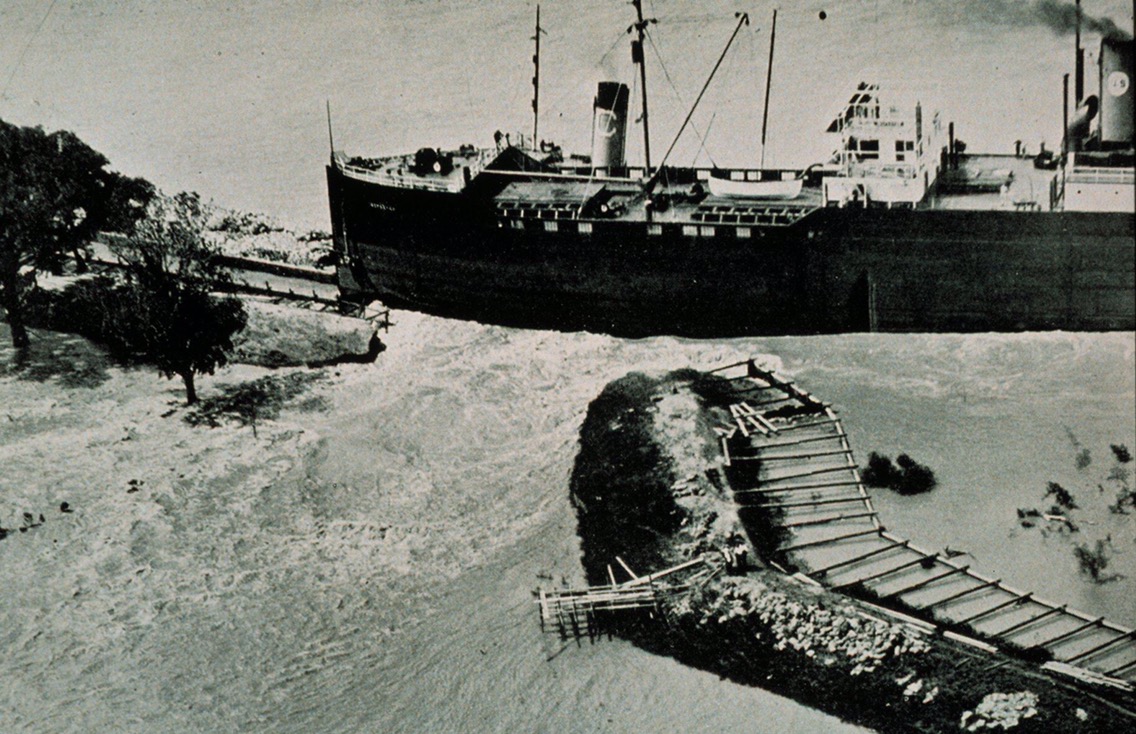
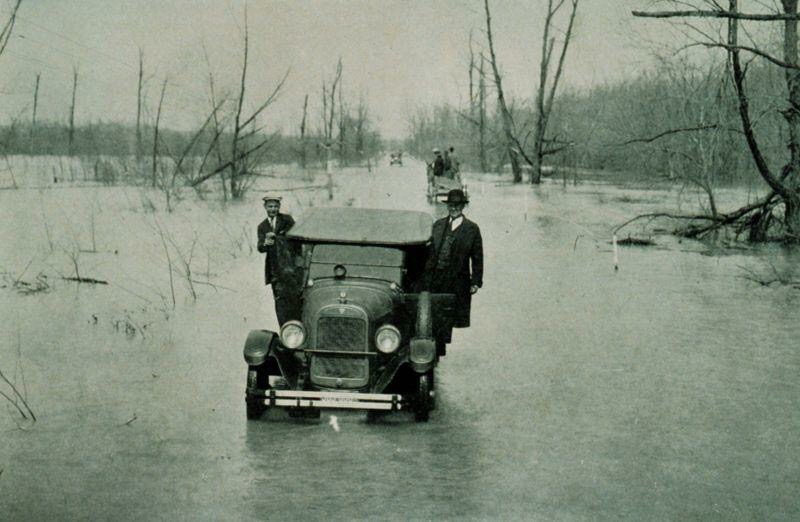
Today in History, April 15: 1927 – “”The roaring Mississippi River, bank and levee full from St. Louis to New Orleans, is believed to be on its mightiest rampage…All along the Mississippi considerable fear is felt over the prospects for the greatest flood in history.” –The Memphis Commercial Appeal. The rains had been pouring down almost continuously across the Mississippi River Valley (yes that includes Oklahoma) for almost a year. On this day in 1927 the rains increased. Rivers all over the mid-west, already swollen past capacity, emptied into the Mississippi River. Soon the levies began to break all along the river, inundating the rich farmland on either side of the river’s normal course. Over 27,000 square miles were covered in 30 feet of water, a stretch at points 90 miles wide. To draw a comparison, Oklahoma covers nearly 70,000 sq. miles…so picture, if you can, everything in Oklahoma east of I-35 under 30 feet of water. Only 250 people lost their lives, a miracle considering that nearly 1,000,000 people lived in the affected region. It was the worst river flood in American history; and still is. http://youtu.be/ouWcmvYDfy4

O Captain, My Captain!

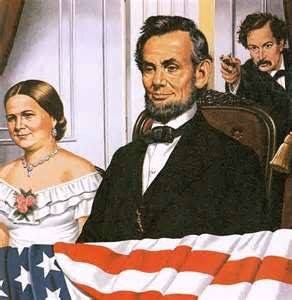
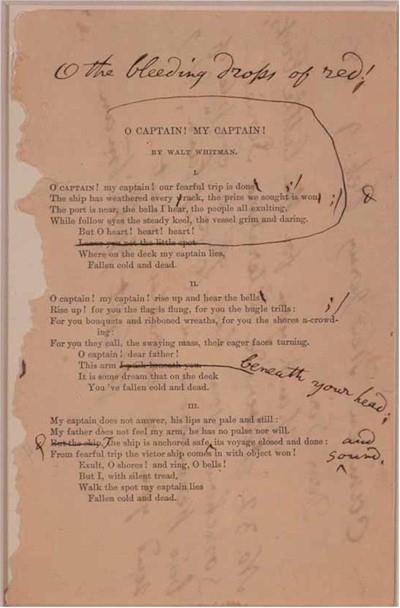
Today in History, April 14: 1865 – President Lincoln is assassinated at Ford’s Theater in DC.  He would die the next morning in a home accross the street. A few months later poet Walt Whitman would publish a poem which would voice the mood of the nation. 
    O Captain! My Captain! our fearful trip is done;

    The ship has weather’d every rack, the prize we sought is won;

    The port is near, the bells I hear, the people all exulting,

    While follow eyes the steady keel, the vessel grim and daring:
        But O heart! heart! heart!

        O the bleeding drops of red,

        Where on the deck my Captain lies,

        Fallen cold and dead.
    O Captain! my Captain! rise up and hear the bells;

    Rise up—for you the flag is flung—for you the bugle trills;

    For you bouquets and ribbon’d wreaths—for you the shores a-crowding;

    For you they call, the swaying mass, their eager faces turning;
        O captain! dear father!

        This arm beneath your head;

        It is some dream that on the deck,

        You’ve fallen cold and dead.
    My Captain does not answer, his lips are pale and still;

    My father does not feel my arm, he has no pulse nor will;

    The ship is anchor’d safe and sound, its voyage closed and done;

    From fearful trip, the victor ship, comes in with object won;
        Exult, O shores, and ring, O bells!

        But I, with mournful tread,

        Walk the deck my captain lies,
            Fallen cold and dead.

The Roman Catholic Relief Act

Today in History, April 13: 1829 – The Roman Catholic Relief Act is passed by the English Parliament, topping of efforts at Catholic Emancipation in Britain. Irish Catholic Daniel O’Connell had won election to a seat in the Westminster Parliament the year before, but could not take his seat due to centuries old laws forbidding it. The Duke of Wellington and Sir Robert Peel, the Home Secretary supported O’Connell’s efforts to overturn the laws. Their support was mostly to prevent revolt, not necessarily out of sympathy (Peel had challenged O’Connell to a duel in 1815). It took a threat of resignation by Prime Minister Wellington to gain passage in the House of Lords and Royal assent from King George IV.

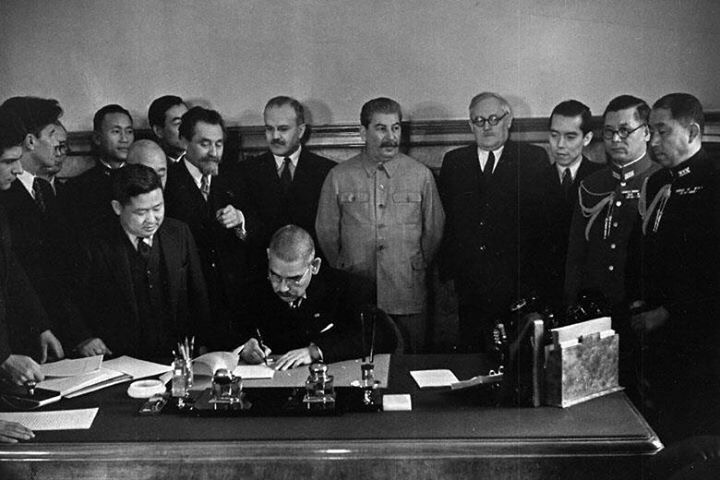
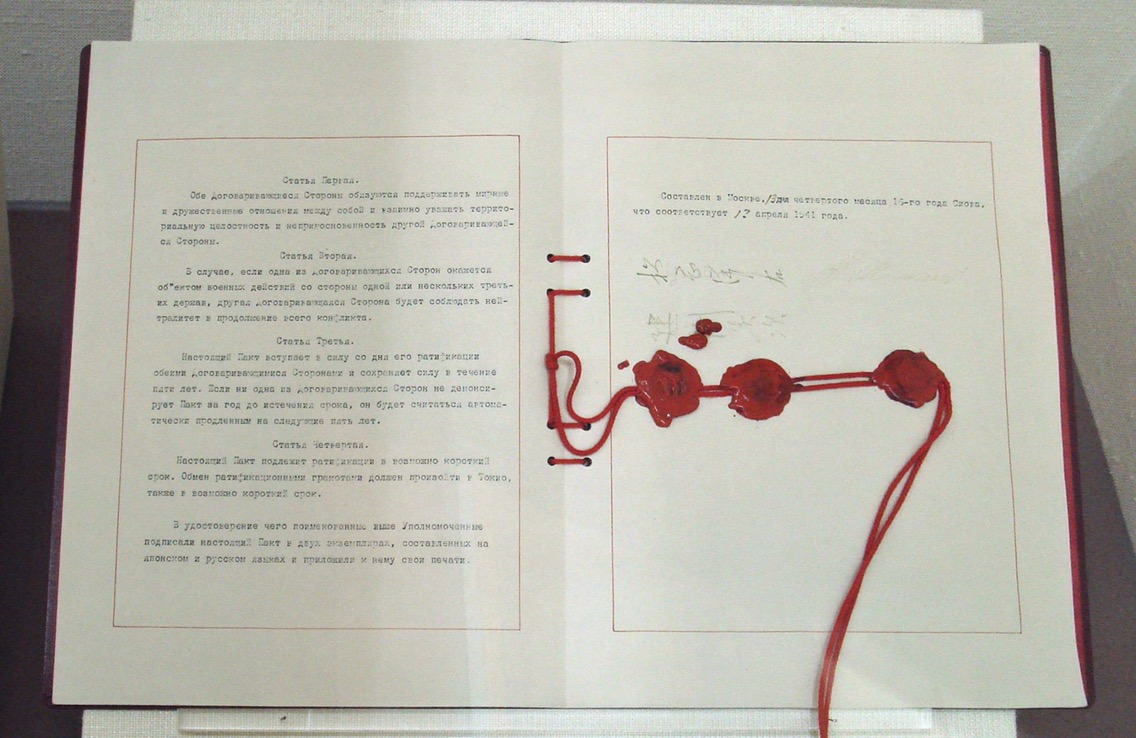
Today in History, April 13: 1941 – The Russian and Japanese governments sign a non-aggression treaty. The treaty gave both nations much needed cover. The Russians didn’t have to fight the Japanese in Manchuria, freeing up hundreds of thousands of troops to fight the Germans. The Japanese, likewise, freed up hundreds of thousands of troops to fight the Americans. FDR encouraged Stalin at Malta to declare war on Japan after the defeat of Germany. They did so, conveniently, between the atomic bombings of Hiroshima and Nagasaki, ostensibly after the war was over, invading Manchuria and demanding the northern islands of Japan for their “effort”.

Today in History, April 12: 1864 – “The river was dyed with the blood of the slaughtered for two hundred yards. The approximate loss was upward of five hundred killed, but few of the officers escaping. My loss was about twenty killed. It is hoped that these facts will demonstrate to the Northern people that negro soldiers cannot cope with Southerners.” –Confederate Gen. Nathan Bedford Forrest describing the attack (massacre) at Ft. Pillow, 40 miles north of Memphis, Tennessee. Forrest was a very successful Cavalry commander, making raids behind enemy lines that kept the Union army on it’s heels. During one of those raids he decided to attack Fort Pillow, wanting to collect it’s livestock and supplies for his army. There are no indications that he knew more than that the fort was protected by a force of about 600, which he felt he could defeat. Ft. Pillow was defended by an approximately equal amount of white and “colored” Union soldiers. During the attack, they initially refused to surrender, because Confederates had threatened to kill any black Union soldiers, or return them to slavery, rather than take them prisoner. There is no documentation that the acts at Ft. Pillow were policy rather than blood lust…but in the end, at least 80% of the “colored” troops were hunted down, shot, bayoneted, burned alive, murdered by Forrest’s troops. The rebels did not attempt to maintain the fort, leaving it the same day. This is certainly a sad day in American history. For anyone finding excuses, Forrest was, after the war, the first Grand Wizard of the Ku Klux Klan. President Lincoln and his cabinet discussed how to respond…some wanting to treat Confederate prisoners with the same “tolerance”. In the end, the act did not have the effect Forrest desired…”Colored” regiments led the way into Richmond on it’s surrender, and were present at Appomattox.

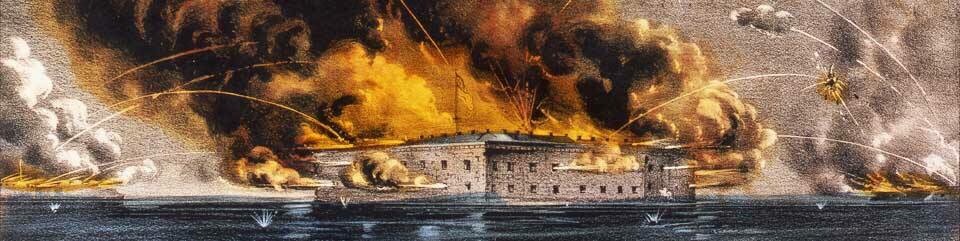
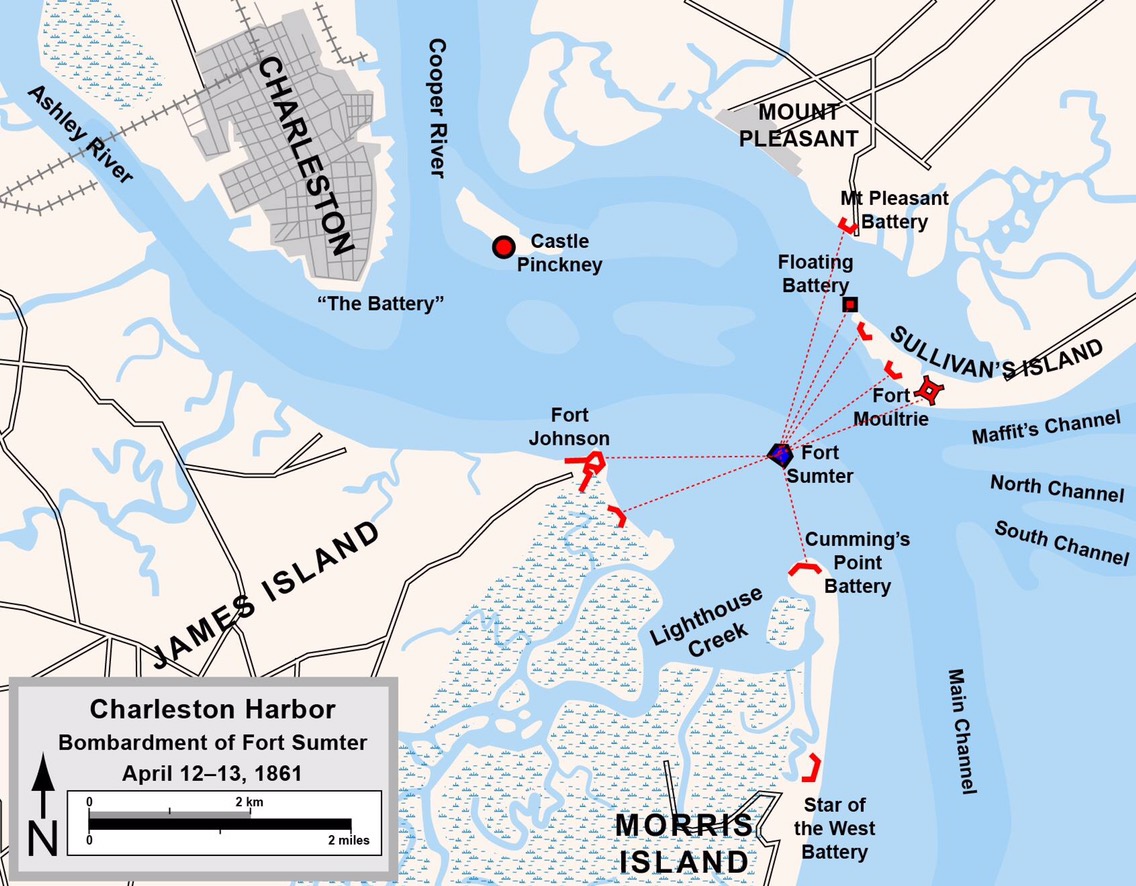
Today in History, April 12: 1861 – South Carolina batteries fire on the Union held Ft. Sumter in Charleston Harbor. This began the American Civil War, although it will depend upon who you ask which side started the conflict. Most historians will say that Gen. P.G.T. Beauregard’s order for the bombardment began the war. Some in the South still refer to the war as the “War of Northern Aggression”, and consider that the fact the Union refused to leave the fort in what they considered sovereign South Carolina territory as the trigger. When President Lincoln took office, closed his inaugural address, ” In your hands, my dissatisfied fellow-countrymen, and not in mine, is the momentous issue of civil war. The Government will not assail YOU. You can have no conflict without being yourselves the aggressors. You have no oath registered in heaven to destroy the Government, while I shall have the most solemn one to “preserve, protect, and defend it.” 34

  I am loath to close. We are not enemies, but friends. We must not BE enemies. Though passion may have strained it must not break our bonds of affection. The mystic chords of memory, stretching from every battlefield and patriot grave to every living heart and hearthstone all over this broad land, will yet swell the chorus of the Union, when again touched, as surely they will be, by the better angels of our nature.”

Today in History, April 11: 1803 – Instrumental in establishing the US Patent system, John Stevens receives a patent for the first screw driven, steam powered boat, or steamboat. The son of a member of the Continental Congress, A Captain and later Colonel in the Continental Army, Stevens turned his talents to inventions after the war. Robert Fulton would win the most fame for the steamship, but it was Stevens who first tied steam power to propeller driven naval craft. He would be best known as the father of the American railroad for steam powered railroad engines. Not nearly as famous as George Washington, or other American heroes…but how much more impact did Stevens have on the world with his inventions? He and his contemporaries took us from a world of sail to paddle wheeled steamships, to ironclads, to battleships, liners, supertankers, and more.

Climate Change – Tambora

Today in History, April 10: 1815 – The Mt. Tambora volcano eruption of 1815 spews between 19 and 38 cubic miles of “ejecta” material into the atmosphere over a three month period beginning today. The explosion was heard 1,200 miles away (if it had occurred in Las Vegas, we in Tulsa would have heard it). Approximately 72,000 people died as a resort, the majority from starvation and disease as the climate was changed world wide. Crops failed all across the Northern Hemisphere and there was no real summer that year. Tambora was the largest eruption in recorded history.

Appomattox Courthouse; The Beginning of the End

Today in History, April 9: 1865 – One of the most momentous events in American history. After years of foiling every move the Union made, Confederate Gen. Robert E. Lee had finally been run to ground. Countless Yankee Generals had been bested by him, but he had finally met his match…not tactically, but in determination, by Lt. Gen. Ulysses S. Grant. At Appomattox Courthouse, Virginia, Lee, his army starving and with nowhere else to run, in spite of the fact that he would “rather die a thousand deaths”, agreed to surrender the Army of Northern Virginia to Grant. Lee arrived in his best uniform; Grant, typically, arrived in a muddy private’s uniform. Grant offered terms that included Confederate officers keeping their horses and sidearms, enlisted men keeping their horses so that they could farm their land, as long as they agreed to abide by their paroles and obey the laws of the land. Lee was very appreciative of these terms, saying they would be helpful to his army, men he loved. As Lee mounted his horse and left the site of the surrender, Union soldiers began to cheer. Grant quickly silenced them, reminding them that the Confederates were once again their countrymen. The surrender document was signed in the home of Wilmer McLean. Ironically, in the first battle of the war, First Bull Run, or First Manassas if you are from the South, Confederate Gen. P.G.T. Beauregard’s headquarters were in McLean’s home in Manassas, where cannon shot destroyed part of the house. McLean moved south to Appomattox Courthouse to keep his family safe. So, as is said, the Civil War began in Wilmer McLean’s front yard, and ended in his parlor.

Lee was given the opportunity by Grant to allow one of his subordinates to accept the surrender…to avoid humiliation. Lee refused…his FATHER, Light Horse Harry Lee, had been with Washington at Yorktown and witnessed the ungentlemanly act of British Gen. Lord Cornwallis sending a subordinate to surrender his sword to Washington. Lee refused to dishonor his family name by repeating the act. Grant did not require Lee to surrender his sword, but Lee was the man that represented his army at Appomattox Courthouse. Both gentlemen, North and South, maintained their honor.

Other notables at the meeting were Captain Robert Todd Lincoln, the President’s son.  Robert had insisted on serving despite his father’s reservations, so Grant found a place for him on his staff.  Major Gen. Phillip Sheridan, who had been a very successful commander and who would one day command all of the US Army.  Also Grant’s adjutant, Ely S. Parker, a Seneca Indian who was chosen to write out the surrender because he had the best hand writing of those present.

Poor McLean’s woes were not over, either.  Officers present made off with almost everything except the wallpaper in the room to remember the occasion.