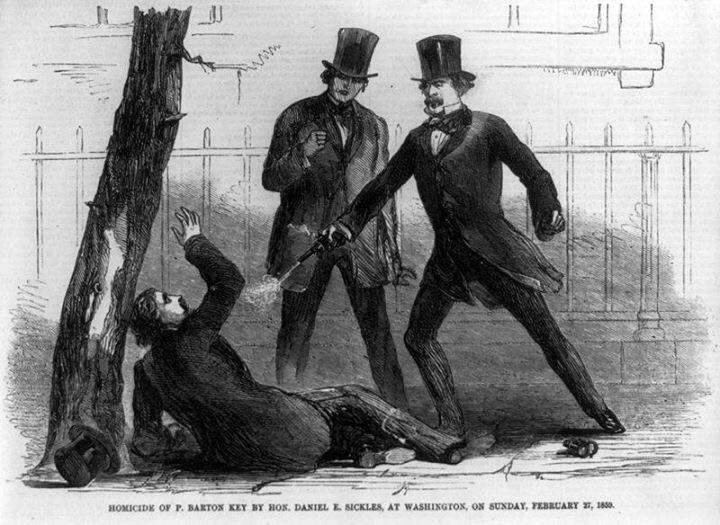

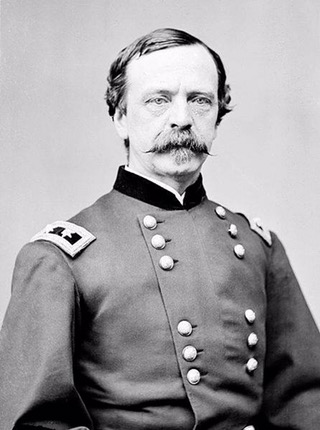
 Today in History, February 19: 1859 – New York Congressman Daniel E. Sickles is acquitted of murder using a temporary insanity defense, the first time this defense was used in US courts. Sickles was quite a character…he had been censored by Congress more than once, most prominently for having brought a known prostitute into the House chamber, and then taking her to England and introducing her to Queen Victoria while his wife was at home pregnant. Despite this, he was enraged when his wife confessed to him that she had been carrying on an affair with the District Attorney for the District of Columbia, Phillip Barton Key II (Francis Scott Key’s son…you know..the Star Spangled Banner author). Sickles confronted Key in Lafayette Square, across the street from the Executive Mansion (White House) and shot him dead. Sickles then went to the Attorney General’s home, turned himself in and confessed. Future Secretary of War Edwin M. Stanton defended Sickles at his trial, painting the wife as a cheating harlot, and securing Sickles’ acquittal. Sickles went back to his wife, which enraged his supporters much more than the murder. When the Civil War began, Sickles used his influence to recruit NY volunteers and gain a political generalship, something that was possible in those days. With no military experience he actually made a good accounting of himself in several battles. Ironically, his most controversial act was yet to come. At the pivotal Battle of Gettysburg, his III Corps was assigned a portion of the Union lines on Cemetery Ridge. On his own he decided to move his unit forward to higher ground, which thinned his lines and left a gap in the Union lines, and blatantly ignored the orders of the commander of the Army of the Potomac, General Meade. Confederate General James Longstreet’s Corps attacked and decimated Sickles’ command, costing Sickles his leg. The controversy amongst historians is whether Sickles sacrifice of his Corps helped or hurt the Union’s chances of victory. In the end the Union could count Gettysburg as a victory, but in my humble opinion, the ambitious Sickles had little to do with it. He put it at risk. In his later years Sickles served as Minister to Spain (continuing his womanizing there) and returned to the legislature. He spent much effort in creating the Gettysburg National Military Park and in denigrating Gen. Meade, while promoting himself as the true reason for the victory at Gettysburg. After lobbying for 34 years, he was awarded the Medal of Honor for his bravery in the battle. Perhaps most telling is the fact that there are memorials to almost all of the generals involved in the battle at the Park, but not for Sickles. Good or bad, between his killing of Francis Scott Key’s son, his pioneering use of the insanity defense, and his military career, Sickles’ story is fascinating.
Reversal of Fortunes Among Friends


Today in History, February 18, 1862: “I know you are separated from your people, and perhaps you need funds. My purse is at your disposal.” Union General Ulysses Grant to Confederate General Simon Bolivar Buckner as Buckner prepared to board a river boat taking him north to a Yankee prison.
On February 16, 1862 after a hard-fought battle and investment, Confederate Fort Donelson in Tennessee had surrendered to Union forces. Tennessee was a strategic area in the Civil War, providing resources, people and a launching point to move against the rest of the South. General U.S. Grant had been little known to the public before this battle, but the battle would change all that. He coordinated with the US Navy to bombard Ft. Donelson and surround the 12,000 men there. After assaults and counter assaults, the Confederate commanders came to the realization loss of the fort was a foregone conclusion, a tragedy for the South. Gen. Simon Bolivar Buckner was actually third in command. His superiors resigned their positions so they could sneak out and escape. Col. Nathan Bedford Forrest took some of his Cavalry and fled also, leaving Buckner to stay with his men and surrender.
Buckner sent a note through the lines asking Grant for terms. And here is where Grant became famous. He wrote out his response for delivery to Buckner,
“No terms except unconditional and immediate surrender can be accepted. I propose to move immediately upon your works.”
In a time when furloughs and exchanges were common in battle, Buckner found the response to be “ungenerous and unchivalrous.” Yet he had no choice, his only option was surrender. Having had little but bad news for some time, the Northern papers seized upon the victory. They used Grants initials to rename him “Unconditional Surrender Grant.” Turns out it wasn’t the first name others had changed his name for him, but that’s another story. The public was finding out something those serving with Grant had learned…he was unpretentious, unceremonious and tenacious. He got results. President Lincoln would eventually say of him, “I can’t spare this man; he fights.”
If you want History to be more than dates on a page, watch out for the back stories…the facts that bring out the humanity in what you’re reading.
The story reads good already. But lets dig further.
When Grant was younger, he wanted an education. His father worked hard and secured him an appointment to West Point. Initially, Grant didn’t want to go. But once in, he liked it. His uncanny horsemanship impressed fellow cadets and instructors. And he made friends among the other cadets, including Simon Bolivar Buckner, who was attending at the same time.
Grant and Buckner, among many other officers in the US Army, served together and performed heroics in the Mexican-American War of 1846-1848.
After that conflict Grant found himself assigned to the frontier in California, where he missed his family grievously and took to drink. In July of 1854 he suddenly resigned his commission from the Army and sought transport home.
Grant found himself in New York without even enough money to get a meal or pay for a room. And then he happened upon an old classmate and friend, Simon Bolivar Buckner. The two enjoyed a visit, talked old times and Buckner, who was doing much better financially, paid for his friend’s room and board.
In the intervening years until 1861 and the beginning of the Civil War, Grant was somewhat of a hard luck case. He tried farming, he tried real estate, nothing worked. When the war began he was working for his brothers and his father in a store as a clerk.
When Southern states began seceding many in the US Army that were from those states, resigned their commissions and joined the Confederate Army, including Buckner. Thus the old friends found themselves on opposite sides. And Grant sought out Buckner before he went off to prison in an attempt to return an old favor.
Grant, of course, would become commander of all Union Armies and eventually President. Buckner would eventually be exchanged for a Union general officer and continue to serve in the Confederate Army. He surrendered in New Orleans in 1865 for a second time. He would become Governor of Kentucky among other political successes. In 1904 he visited the White House and asked President Theodore Roosevelt to appoint his son to West Point. TR quickly agreed. Gen. Simon Bolivar Buckner Jr would be killed at Okinawa in WWII, the highest ranking officer killed by enemy fire in WWII.
An American Success Story
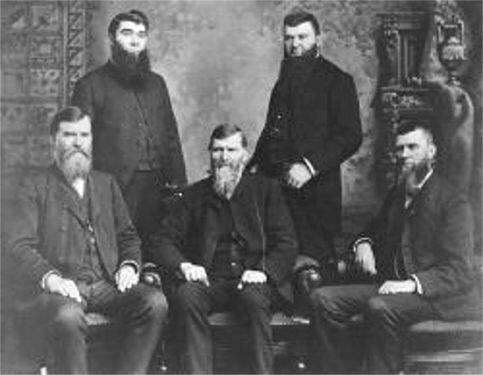


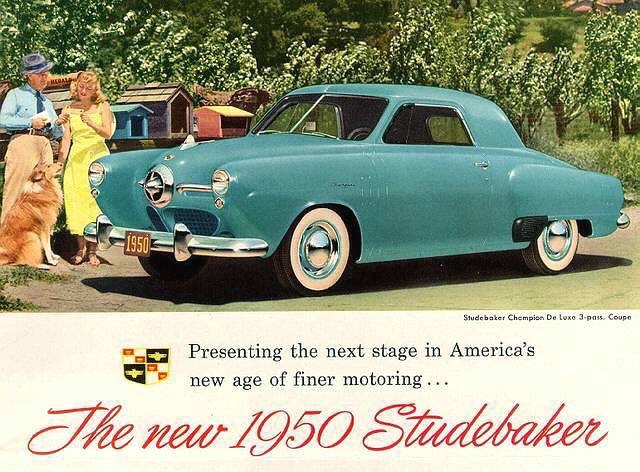 Today in History, February 16: 1852 – The five brothers, Henry, Clement, John Mohler, Peter Everst and Jacob Franklin, had been taught the skill of wagon making by their parents, who had been taught by their parents, who had arrived in America in 1736. They began their combined business on this date in 1852, and soon they were providing fully half of the wagons used for the migration west, and a quarter of those in the nation. They made bank during the Civil War, selling wagons to the Union Army. Their business continued to thrive…those beautiful red 1900 model wagons pulled by the Budweiser Clydesdales…are Studebakers. When motorized vehicles came to be, the Studebaker Company began making first electric and then gasoline cars. The company would last until 1957, having a reputation for quality and class in their cars.
A Combative Congress…American Tradition
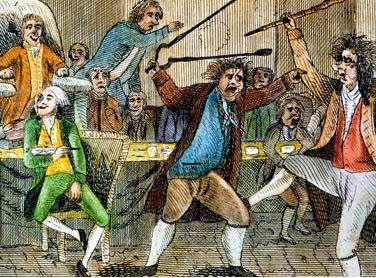
Today in History, February 15: 1798 – Combat on the House Floor. Matthew Lyon was a Democratic-Republican from Vermont. Roger Griswold was a Federalist Representative from Connecticut. Two weeks earlier, the two had argued on the house floor, Griswold commented about allegations of cowardice about Lyon during the Revolution; Lyon responded by spitting tobacco juice on Griswold. When the House failed to censure Lyon for the “gross indecency”, it infuriated Griswold. On this date he ambushed Lyon at his desk on the House floor, beating him about the head and shoulders with his wooden cane. Lyon retreated to a fireplace, where he took up a pair of tongs to combat the assault. Other Representatives had to separate the two. A vote was held to expel both of them, but it failed, 73-21. This would certainly not be the last physical fight in Congress.
“There is a curse on this House”
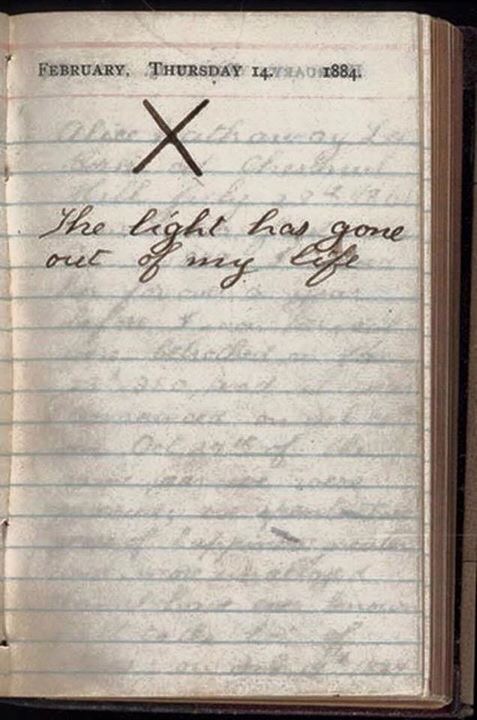

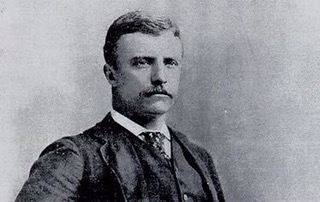 Today in History, February 14: 1884 – 25 year old Theodore Roosevelt was at work in the New York Assembly in Albany fighting for a reform bill when he received an urgent telegram to return to his home in New York. When he reached his front door his brother Elliott greeted him, “There is a curse on this house”. Their mother Mittie was suffering from Typhoid fever, and Teddy’s wife Alice, who had given birth to her namesake just two days earlier, was suffering from Bright’s Disease. TR went up and down the stairs to be with them. Mittie died first, followed within hours by Alice. Roosevelt was devastated. His diary entry for that date was simply a large X and the note, “The light has gone out of my life”. He could never speak of his first wife again, not even mentioning her in his autobiography. When he returned to the legislature, even his detractors treated him with deference for a time because of the tragedy. He soon left the Assembly, left the infant Alice with his sister Bamie and struck out west to the Dakotas to escape. He would become a rancher and a sheriff, and make many friends who would later be “Rough Riders” with him. In ’86 he returned east, re-entered politics and re-married. His daughter Alice became famous for outlandish behavior, dealing with her own demons due to the temporary abandonment and a new family. Adversity affects us all differently. One has to wonder if TR would have accomplished all that he did if this tragedy hadn’t driven him west and altered his life.
Saint Valentine
 Today in History, February 14: 278 AD – Valentine is beaten to death, then be-headed in Rome. Roman Emperor Claudius II (The Cruel) was overseeing several bloody wars at once. He was having trouble keeping soldiers in his armies, and believed that it was because the men were too loyal to wives and families. So, he outlawed marriage…A priest, Valentine, continued marrying people in secret. When he was found out, Claudius ordered him executed. He was arrested and brought before the Prefect, who ordered him beaten to death and then be-headed. The Catholic church later declared Valentine to be a Saint for his sacrifice.
“Rendezvous”


Today in History, February 13: 1822 – Missouri Lt. Governor William Ashley, already an enterprising entrepreneur in the gunpowder business, posts an advertisement in the Missouri Gazette and Public Advisor seeking 100 men to volunteer for an expedition up the Missouri River as fur trappers. The expedition first tried to setting up a trading post on the Yellowstone River in Montana, but the Arikara Indians, firmly entrenched in the fur trading business themselves, kept raiding the post to eliminate the competition. Ashley then set upon a new idea; he told his trappers, including Jim Bridger, Jedediah Smith, James Beckwourth (first African-American mountain man) to go overland by horse into the mountains to trap, and once a year they would meet at a location set by Ashley for a “Rendezvous”, where they would spend several weeks trading their furs for supplies…and taking the opportunity for a rare socializing event, spent mostly intoxicated. The Mountain Men sold their furs to Ashley for a tidy profit, and then disappeared into the wilderness again. Ashley spent two years at this venture, making a huge profit, then sold his Rocky Mountain Fur Company and returned to politics, serving terms in the House and the Senate. But the Rendezvous system carried on for years in the fur trade.
The Beauty of the West brought to the World


Today in History, February 12: 1837 – Thomas Moran is born in Bolton, England. Moran would immigrate to America, and as an American became an accomplished artist. In 1871 he accompanied the U.S. Geological Survey of the Territories, and along with photographer William Henry Jackson created images of the West. Jackson took Moran’s paintings back east after the expedition, and Moran’s paintings soon convinced Congress to approve the creation of the Yellowstone National Park. Moran brought the incredible images of the west home to Americans and inspired many to be pioneers.
O Captain! My Captain!
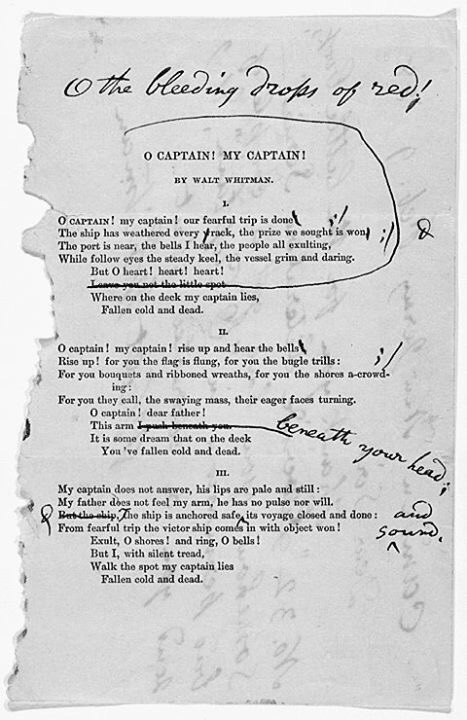 Today in History, February 9: 1888 – Poet Walt Whitman writes a note to the publishers of the Riverside Literature Series #32, correcting their printing of the poem that he had written amid his, and the nation’s grief over the assassination of President Abraham Lincoln in 1865.
O CAPTAIN! my captain! our fearful trip is done;
The ship has weathered every rack, the prize we sought is won;
The port is near, the bells I hear, the people all exulting,
While follow eyes the steady keel, the vessel grim and daring.
But O heart! heart! heart!
O the bleeding drops of red!
Where on the deck my captain lies,
Fallen cold and dead.
Overcoming Adversity
 Today in History, February 5: 1934 – Baseball Hall of Fame member Henry “Hank” Aaron is born in Mobile, Alabama. Aaron taught himself how to play the game as a boy since his school didn’t have a team, playing in sandlot games. He began playing professionally in the early fifties, and by 1974 had broken Babe Ruth’s record of 714 home runs. He finished his playing career in 1976 with 755 home runs and became part of the Braves’ management.
 Mark Loves History!