Today in History, September 3: 1861 – Unintended consequences. At the outset of the Civil War, Kentucky declared itself neutral, primarily because the state had an almost equal allegiance to both sides. President Lincoln, on precarious footing with the border states, was careful to respect the neutrality. Kentucky covered key geography and the North couldn’t afford to push it to the South.
Confederate General Leonidus Polk (2nd cousin to President Polk), was not quite as politically astute, making one of the worst blunders of the war. He made the decision to secure the strategic town of Columbus, Kentucky. The act pushed the fence sitting Kentucky government to the other side, and they asked for Federal protection from the Confederate “invaders”. This came in the form of Gen. US Grant’s Army forcing Polk out.
While there were Kentucky units that fought for both the Union and the Confederacy, the state itself was now officially Union.
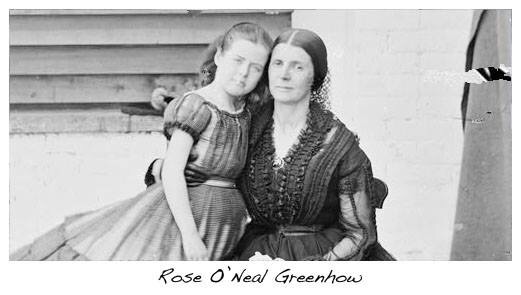
Today in History, August 23: 1861 – Widow and Washington, D. C. socialite Rose O’Neal Greenhow is arrested and placed under house arrest in her home by Allan Pinkerton and his agents. Her story exemplifies the atmosphere at the outbreak of the Civil War. Many of those loyal to the Confederacy went south, but many stayed put.
Mrs. Greenhow, a fiercely loyal Confederate spy, used her intellect, her many connections and her wiles to provide information to Confederate Gen. PGT Beauregard prior to the Civil War’s first battle (First Battle of Bull Run or First Manassas) which contributed greatly to a Southern win, such as it was.
She continued to obtain and sneak out information, but Pinkerton was pretty smart himself and after surveillance and investigating, built his case. Even under house arrest she continued her operations and eventually she and her young daughter “Little Rose” were imprisoned. The conditions were horrible, the child often going hungry. Rose remained arrogant and rebellious throughout and in 1862 was paroled and sent South.
She would then be sent to Europe in an attempt to gain support for the Confederacy. Sailing for home in 1864, she was almost there when a Union ship appeared. Rather than be taken prisoner again, she attempted to swim to shore, but drowned in the process.
Today in History, August 22: 1851 – Members of the New York Yacht Club had designed and built a radically new yacht and named it “America”.
They sailed it across the Atlantic and challenged the old world sailing experts in The Royal Yacht Squadron’s “One Hundred Guinea Cup”. Seeing her speed, nobody would challenge her until the final day in the final 53 mile race around the Isle of Wight. After she sailed across the finish line 18 MINUTES ahead of her nearest competitor.
Queen Victoria, watching, asked, “Who came in second?”, and was answered with, “There is no second, your Majesty.” The British, rewarding the cup to “The America”, changed the name of the race to “The America’s Cup”.
The America would be sold to several different private owners in the coming years, would serve as a combatant for the Confederacy in the US Civil War as a blockade runner, be sunk, raised by the Union, once again renamed America, and serve as a blockade ship, sinking blockade runners.
The US Navy would use her as a training ship, she would once again see private hands and then be given back to the Navy.
Unfortunately she fell into disrepair and the shed she was kept in collapsed on her in the 1940’s. She and the shed were scrapped. What a shame.
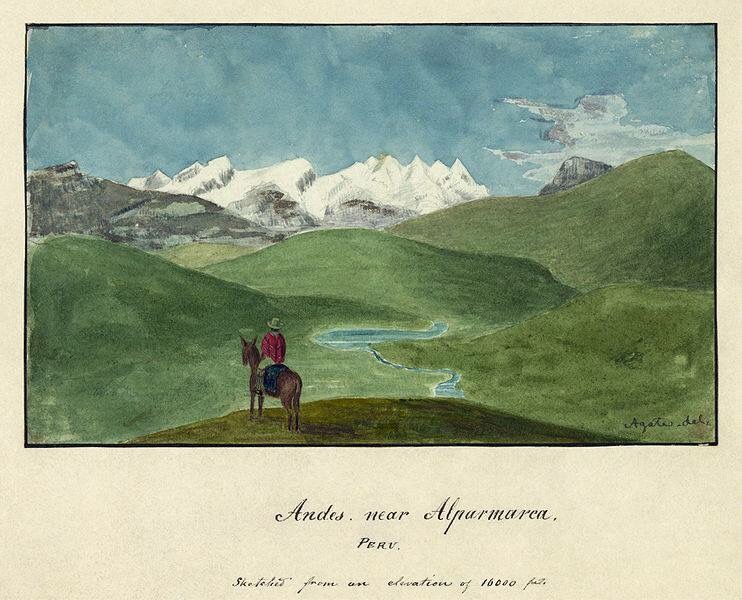
Today in History, August 18: 1838 – At Hampton Roads, Virginia, The United States Exploring Expedition, consisting of USS Vincennes, USS Porpoise and others, weighs anchor and begins a four year adventure. The US government had made the decision to fund a scientific venture around the world, but specifically to explore the Pacific. Also known as the “Ex. Ex.” and the Wilkes Expedition after it’s commander, US Navy Lt. Charles Wilkes, the group of sailors, scientists and artists would face terrible weather, murderous natives, intrigue and sometimes poor leadership.
Not all of their ships, nor all of their crews would make it home. On the way they discovered parts of Antarctica, previously unknown species and islands. They collected thousands of samples, many of which would be lost.
America was placed on the scientific map by the men of the expedition. If you want a good read, it’s “Sea of Glory” by Nathaniel Philbrick, which details their exploits.
Wilkes place in history did not end with the Expedition. He would operate in the Naval Observatory in Washington on the scientific side. Then during the Civil War he would create an international incident when he commanded ships which would stop an English ship and sieze two Confederate emissaries enroute to London. The US would eventually release the Confederates…preventing England’s entrance into the war.
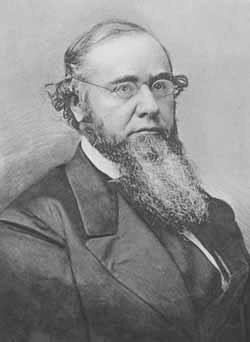
Today in History, August 12: 1867 – “Hon. EDWIN M. STANTON, Secretary of War.
Sir: By virtue of the power and authority vested in me as President by the Constitution and laws of the United States, you are hereby suspended from office as Secretary of War, and will cease to exercise any and all functions pertaining to the same.
You will at once transfer to General Ulysses S. Grant, who has this day been authorized and empowered to act as Secretary of War ad interim, all records, books, and other property now in your custody and charge.
ANDREW JOHNSON”
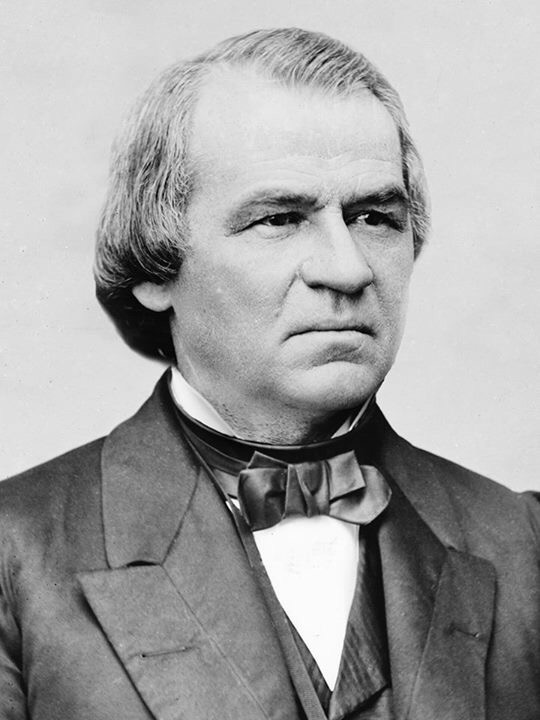
Volatile politics is nothing new in America. For his second term, President Lincoln had chosen Democrat Andrew Johnson as his vice President because he was from a border state, loyal to the Union, but a Southerner.
When Johnson assumed office after Lincoln’s assassination, he did not enforce reconstruction in the South as strongly as Lincoln’s contemporaries in the cabinet and the Congress wanted. The battle was ongoing, with Congress passing the Tenure of Office Act to prevent Johnson from firing cabinet members that did not agree with him.
Most prominent was Secretary of War Edwin M. Stanton. On this date Johnson suspended Stanton and replaced him with the popular Gen. Ulysses S. Grant, who resigned the position once Congress reconvened and voted not to remove Stanton. Stanton refused to leave, to the point that in February of 1868 when Johnson formally fired him, Stanton barricaded himself in his office in the War Department.
The “radical” Republicans in the House voted to impeach Johnson over the ordeal, but the Senate, after a lengthy trial, kept him in office.
Today in History, August 5: 1864 – “Damn the Torpedoes! Full Speed Ahead!” New Orleans had been captured from the Confederacy in 1862, leaving Mobile Bay as the only source of foreign supplies for the South, via blockade runners (like the fictional Rhett Butler). On this date the Union Navy sent a fleet of ships led by ironclads into Mobile Bay, fighting a squadron of Confederate Ships and two “batteries” or forts with cannon, and a withering fire that almost immediately sank the USS Tecumseh, an ironclad. The Union fleet began to scatter, until the US Navy’s first Rear Admiral, David Glasgow Farragut inspired them on to victory with his now historic courageous command. By the way, “torpedoes” in 1864 were not propelled explosives as we know of them today, but what we know as mines. This would not be the only battle that would lead to Farragut’s lasting legacy with the US Navy.
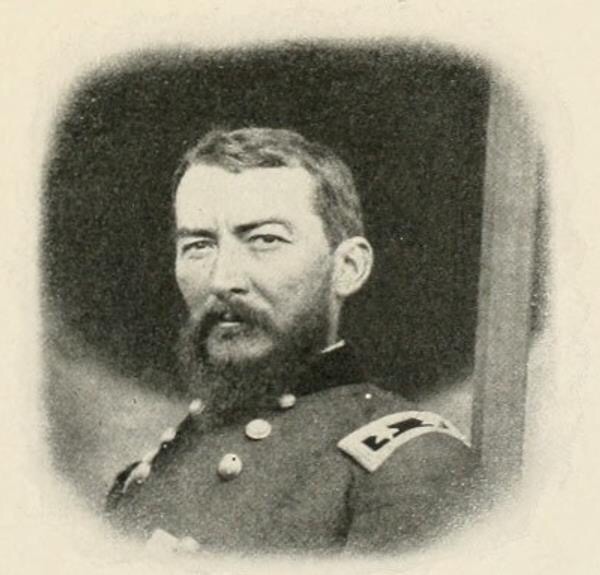
Today in History, August 1: 1864 – Over the objections of Secretary of War Edwin M. Stanton, who thought he was too young for the command of an army, Gen. Ulysses S. Grant names Gen. Phillip Sheridan as commander of the Army of the Shenandoah. Throughout the war, each time the Union began to encroach on the Confederate capitol at Richmond, Virginia, the South would send an army through the Shenandoah Valley to threaten Washington, DC, forcing the Union to protect it’s own capitol. Grant didn’t fall for this, however as he lay siege to Petersburg, which protected Richmond. The Confederacy sent Gen. Jubal Early through the Valley to threaten DC. The Shenandoah was not only the route north for the Confederate armies, it was the “bread basket” for the south, much as the midwest is for the country now. Grant sent Sheridan to command a new Valley of the Shenandoah, and ordered him, “The people should be informed that so long as an army can subsist among them recurrences of these raids must be expected, and we are determined to stop them at all hazards. … Give the enemy no rest … Do all the damage to railroads and crops you can. Carry off stock of all descriptions, and negroes, so as to prevent further planting. If the war is to last another year, we want the Shenandoah Valley to remain a barren waste.” The Confederates called Sheridan’s campaign “The Burning”, precursor to the scorched earth campaign that Sherman enforced in Georgia. Sheridan not only drove Early from the valley, but lay waste to all resources in the Shenandoah, depriving the South of the much needed resources. Lincoln, Stanton, and Grant sang his praises, as did the nation.
Today in History, July 4: This is my favorite day of the year to post, not only because it is America’s birthday, but because the date is so rich in American History.
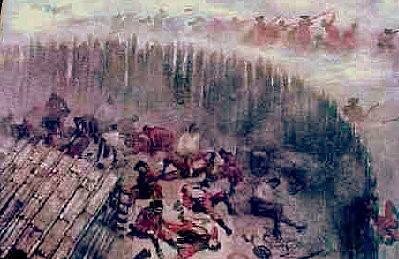
1754 – During the French and Indian Wars, a young colonial member of the British Army abandons “Fort Necessity” after surrendering it to the French the day before. The officer, 22-year-old Lt. George Washington had also commanded British forces in the first battle of the war on the American continent weeks before. The French and Indian Wars were only part of a global conflict between England and France, the Seven Years War. His experience here would serve Washington well in our War for Independence.
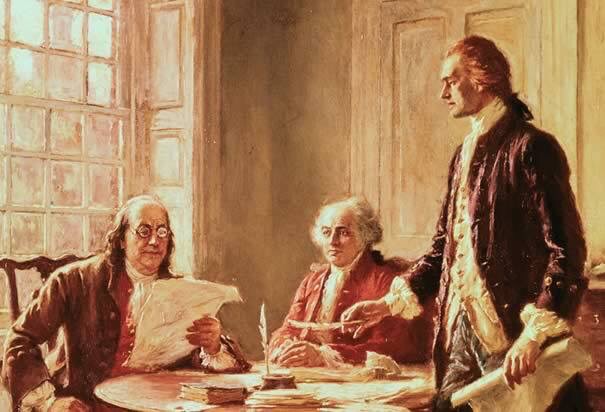
1776 – The second Continental Congress adopts the Declaration of Independence from England after years of conflict as colonists, “We hold these truths to be self-evident, that all men are created equal, that they are endowed by their Creator with certain unalienable Rights, that among these are Life, Liberty and the pursuit of Happiness.”
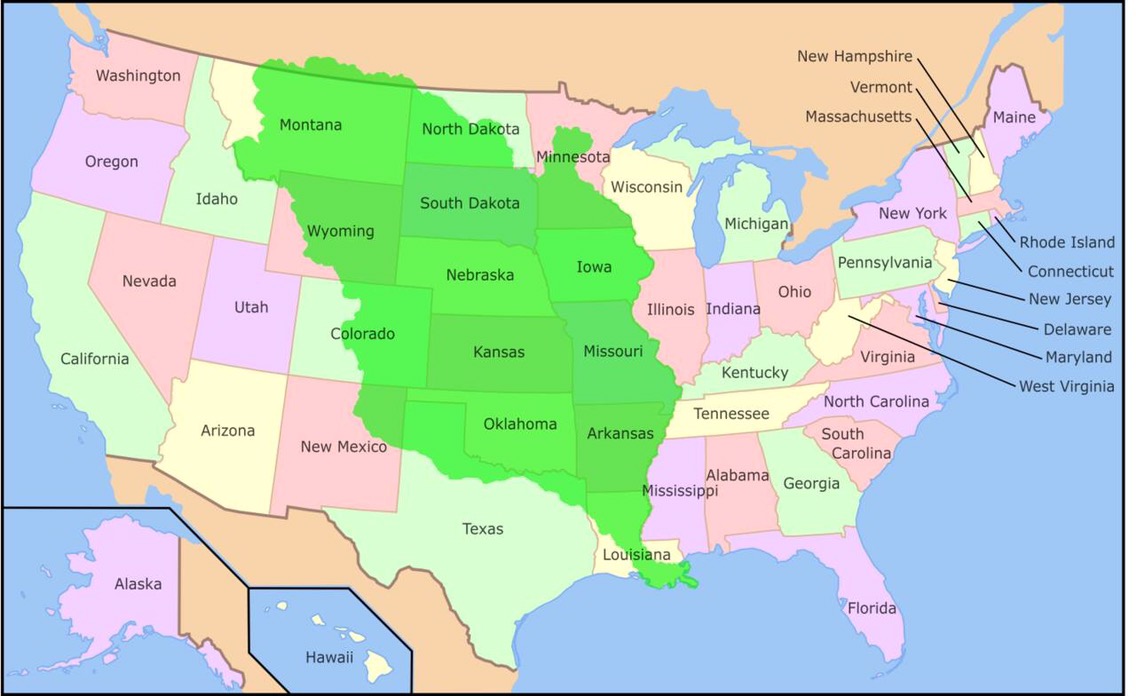
1803 – President Thomas Jefferson announces the signing of a treaty in Paris formalizing the Louisiana Purchase, effectively doubling the size of the United States in one day for $15M.
1826 – 50 years after the adoption of the Declaration of Independence, two of it’s signers, second President John Adams and third President Thomas Jefferson, die on the same day. The two had become bitter political enemies for years (Adams a devout Federalist, Jefferson an equally devout state’s rights man, in addition to vicious political vitriol the two had exchanged). But in 1812 they made amends and began a years’ long correspondence, making them good friends again. It is said that Adams’ last words were, “Jefferson survives”. He was wrong, Jefferson had died five hours before. Many Americans at the time saw their death on the same day 50 years after the Nation’s birth as a divine sign.
1863 – Confederate General John C. Pemberton surrenders Vicksburg, Mississippi to Union General Ulysses S. Grant. Pemberton had sent a note asking for terms on the 3rd, and initially Grant gave his usual “unconditional surrender” response. He then thought about what he would do with 30,000 starving Southern troops, who he had lay siege to since May 18th, and granted them parole, accepting the surrender on the 4th. The capture of Vicksburg effectively secured the main artery of commerce for the Union and cut off of the Confederate states west of the Mississippi (and their supplies) from the South. Grant’s parole of the rebels would come back to haunt him, as the Confederacy did not recognize it’s terms and many of the parolees fought again…which came back to haunt the Confederacy because as a result the Union stopped trading prisoners. Celebrated as a great victory by the North, but by Vicksburg not so much. The Citizens of the Southern city had to take to living in caves during the siege as US Navy and Army continuously bombarded their homes. Starving and desperate, they saw Grant’s waiting a day to accept surrender as malicious. Independence Day would not be officially celebrated in Vicksburg for a generation.
1863 – On the same day, half a continent away, Confederate General Robert E. Lee led his defeated Army of Northern Virginia south away from the Battle of Gettysburg, Pennsylvania. This was no small matter…”Bobby Lee” had been out-foxing and out-maneuvering multiple Union Generals practically since the war began. No official surrender here…Lee’s army would survive to fight another day. While both battles were turning points, they did not spell the end of the South as many believe. There were years of hard, bitter fighting still to come with ghastly losses in life and injury. Gettysburg was, however, the last serious attempt by the South to invade the North.
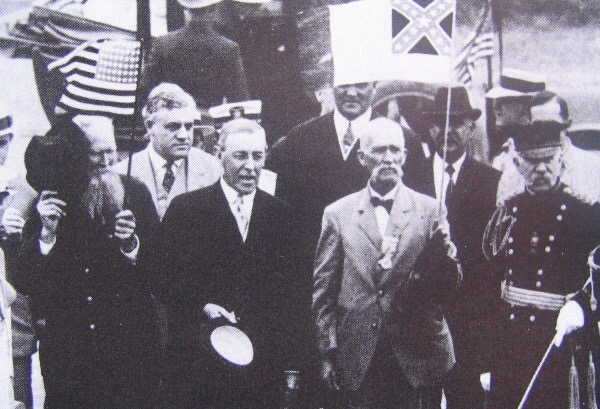
1913 – President Woodrow Wilson addresses the Great 50 Year Reunion of Gettysburg, attended by thousands of Veterans from both sides, who swapped stories, dined together…and it would seem, forgave for a time.
1939 – “I consider myself the luckiest man on the face of the Earth”. After 17 years as a beloved member of Major League Baseball, New York Yankee Lou Gehrig stands in Yankee Stadium and says goodbye to his fans, having been diagnosed with a terminal disease that now bears his name. I doubt there was a dry eye in the house. I’ve posted the video below.
God Bless America! And thank you to our service men and women that continue to make our freedoms possible.
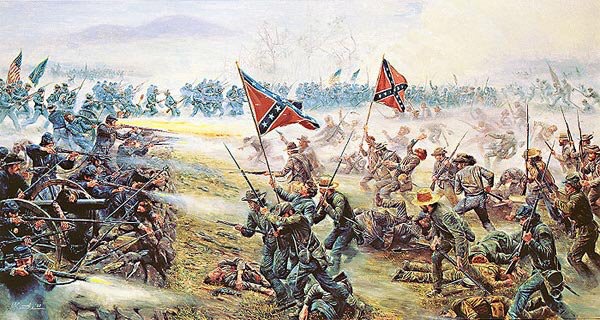
Today in History, July 3: 1863 – Pickett’s Charge, the 3rd and last day of the Battle of Gettysburg. Confederate Gen. Robert E. Lee had assaulted the Union positions on the left and the right; today he ordered an artillery barrage and an all out frontal assault on the Union center on Cemetery Ridge, which seems to be prophetic. Gen. George Pickett and his superior, Gen. Longstreet had doubts, but when it looked as if the Yankees were retreating, they implemented Lee’s command. 12,500 rebels assaulted the ridge…to do so they had to climb over a fence and advance nearly a mile across open ground to reach the ridge…but the Union troops were not retreating, and they had held most of their cannon fire during the Confederate barrage.
The Union troops opened up with a fierce cannon barrage of their own, coupled with intense rifle fire. The few Confederates that reached the Union positions had left fully half of their brethren dead or injured on the field. After this massacre, Lee rode out onto the field, reassuring his men, “This has all be my fault”. It was not a self-pitying statement; it was reassurance to his adoring men that the failure was not theirs to carry. The ever resourceful Lee had to retreat, and Union Gen. Meade’s Army was in no shape to pursue. The Union lost 23,000 dead and wounded, the South 25,000+. It would be hard to say who “won” with those numbers, but i there was a winner, it was the Union. Lee and the South would never again be able to take the offensive against the North. On the 4th, Pickett wrote to his fiancee, “It is all over now. Many of us are prisoners, many are dead, many wounded, bleeding and dying. Your soldier lives and mourns and but for you, my darling, he would rather be back there with his dead, to sleep for all time in an unknown grave.”
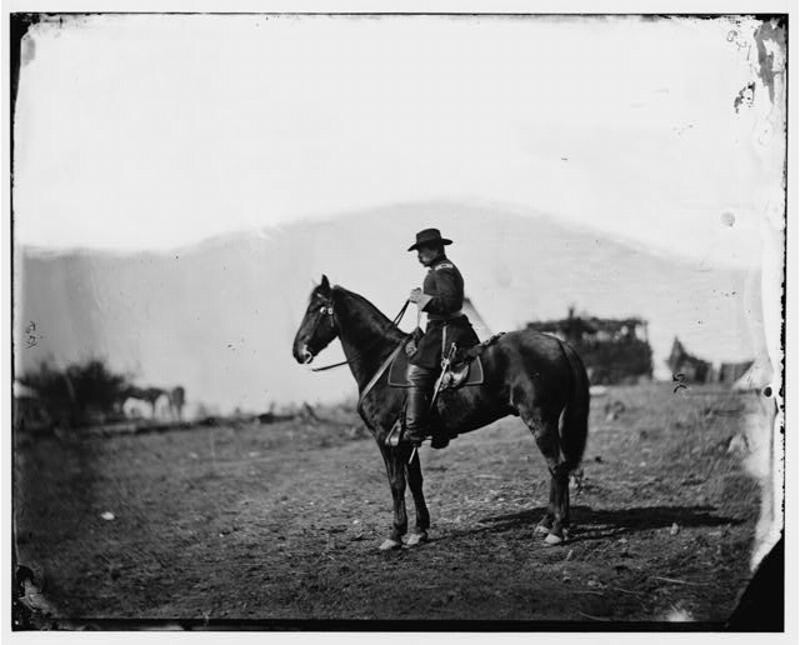
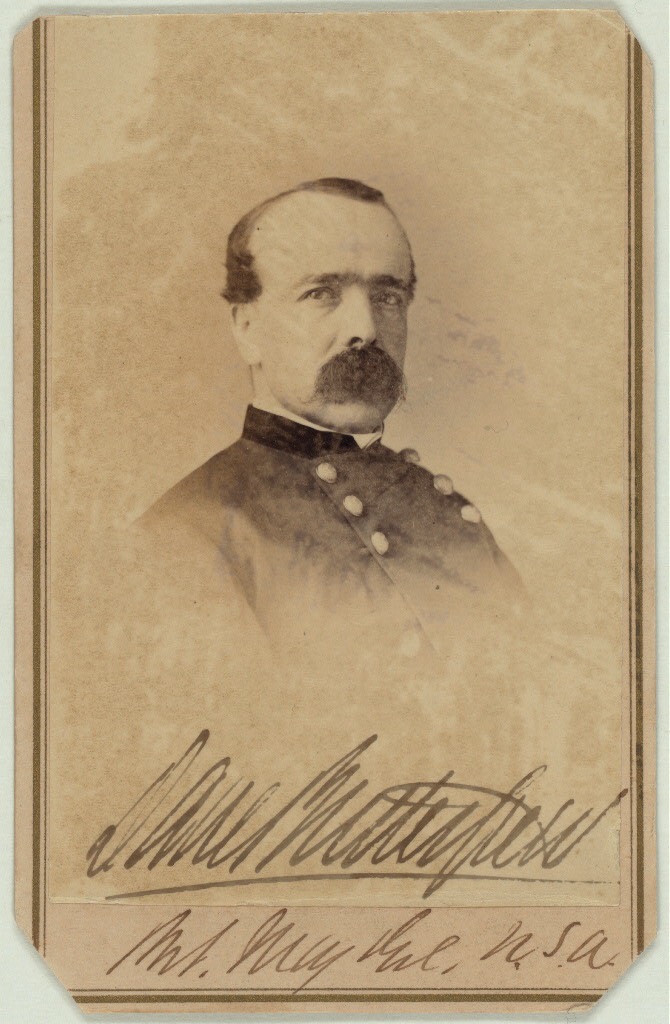
Today in History, July 2: 1862 – Union Colonel Daniel Butterfield (breveted to Brigadier General), unhappy with the signal being given for “Lights Out” for his brigade, pens a new one which he gave to the brigade bugler. Sounded for the first time that night in its new form, what would be known as “Taps” was quickly taken up by other brigades, North and South because of its haunting 24 notes.
There are many versions of wording for Taps, but these are the most meaningful to me:
Fading light,
Falling night,
Trumpet calls as the sun sinks from sight,
Sleep in peace, comrades dear,
God is near…
The tune now is much more than “Lights Out”, serving as a final honor at the services for servicemen and servicewomen, and police officers.














 Mark Loves History!