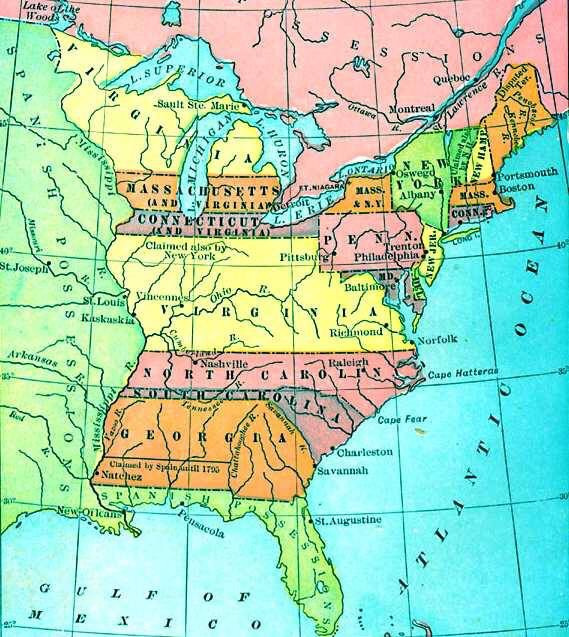
Today in History, September 9: 1776 – The Continental Congress declares that henceforth the “United Colonies” shall be known as the “United STATES of America”.
Tag: Congress
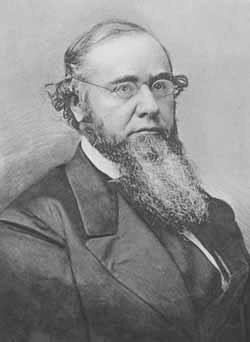

Today in History, August 12: 1867 – “Hon. EDWIN M. STANTON, Secretary of War.
Sir: By virtue of the power and authority vested in me as President by the Constitution and laws of the United States, you are hereby suspended from office as Secretary of War, and will cease to exercise any and all functions pertaining to the same.
You will at once transfer to General Ulysses S. Grant, who has this day been authorized and empowered to act as Secretary of War ad interim, all records, books, and other property now in your custody and charge.
ANDREW JOHNSON”
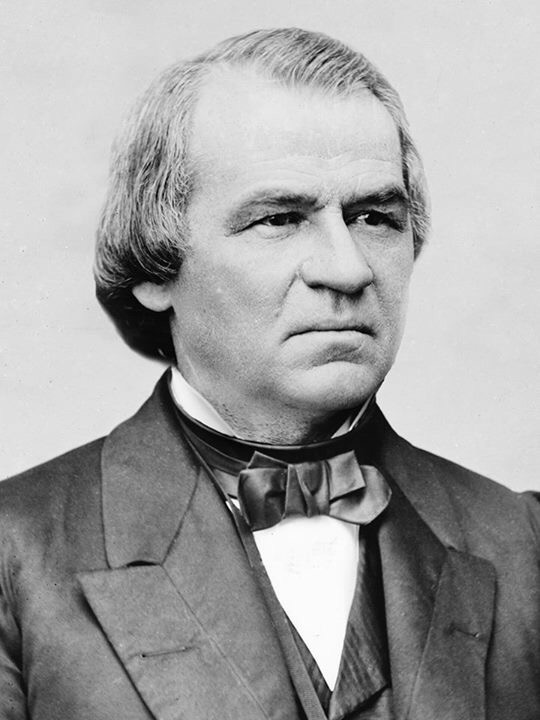
Volatile politics is nothing new in America. For his second term, President Lincoln had chosen Democrat Andrew Johnson as his vice President because he was from a border state, loyal to the Union, but a Southerner.
When Johnson assumed office after Lincoln’s assassination, he did not enforce reconstruction in the South as strongly as Lincoln’s contemporaries in the cabinet and the Congress wanted. The battle was ongoing, with Congress passing the Tenure of Office Act to prevent Johnson from firing cabinet members that did not agree with him.
Most prominent was Secretary of War Edwin M. Stanton. On this date Johnson suspended Stanton and replaced him with the popular Gen. Ulysses S. Grant, who resigned the position once Congress reconvened and voted not to remove Stanton. Stanton refused to leave, to the point that in February of 1868 when Johnson formally fired him, Stanton barricaded himself in his office in the War Department.
The “radical” Republicans in the House voted to impeach Johnson over the ordeal, but the Senate, after a lengthy trial, kept him in office.
Life, Liberty and the Pursuit of Happiness. A Date Full of Historic Significance!





Today in History, July 4: This is my favorite day of the year to post, not only because it is America’s birthday, but because the date is so rich in American History.
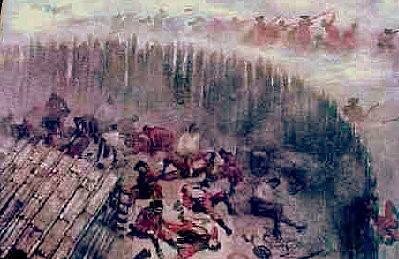
1754 – During the French and Indian Wars, a young colonial member of the British Army abandons “Fort Necessity” after surrendering it to the French the day before. The officer, 22-year-old Lt. George Washington had also commanded British forces in the first battle of the war on the American continent weeks before. The French and Indian Wars were only part of a global conflict between England and France, the Seven Years War. His experience here would serve Washington well in our War for Independence.
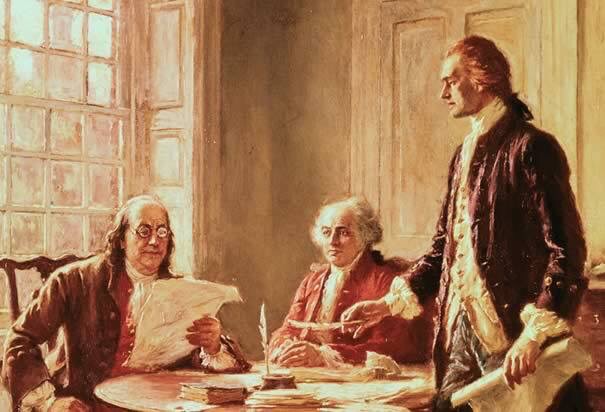
1776 – The second Continental Congress adopts the Declaration of Independence from England after years of conflict as colonists, “We hold these truths to be self-evident, that all men are created equal, that they are endowed by their Creator with certain unalienable Rights, that among these are Life, Liberty and the pursuit of Happiness.”
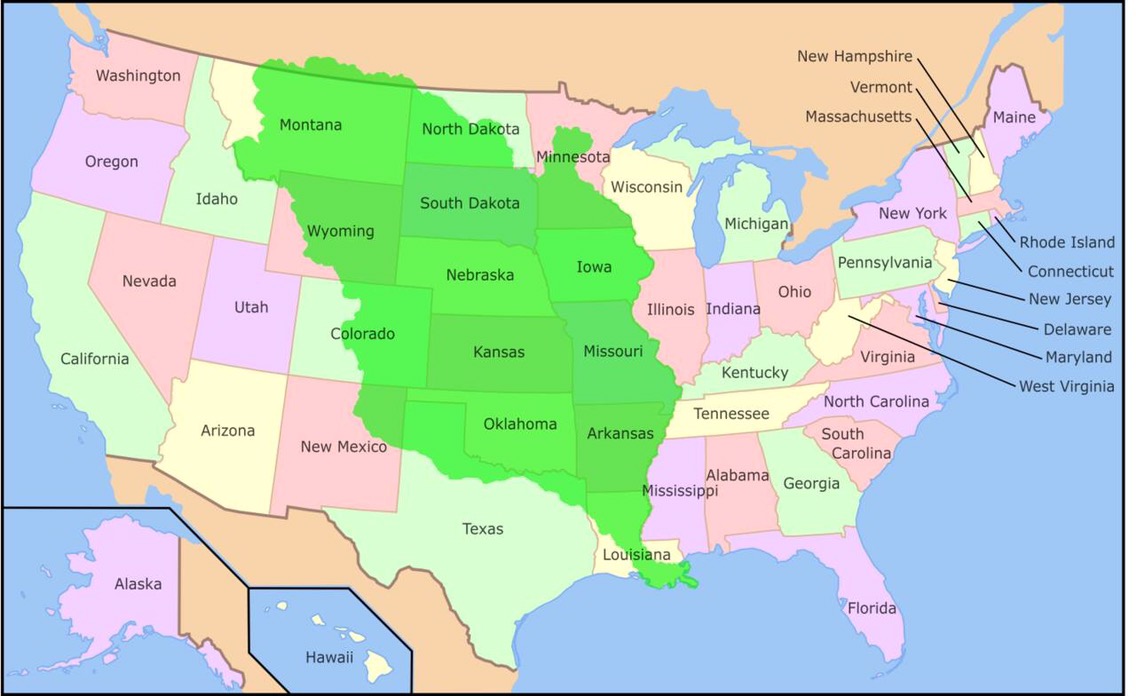
1803 – President Thomas Jefferson announces the signing of a treaty in Paris formalizing the Louisiana Purchase, effectively doubling the size of the United States in one day for $15M.
1826 – 50 years after the adoption of the Declaration of Independence, two of it’s signers, second President John Adams and third President Thomas Jefferson, die on the same day. The two had become bitter political enemies for years (Adams a devout Federalist, Jefferson an equally devout state’s rights man, in addition to vicious political vitriol the two had exchanged). But in 1812 they made amends and began a years’ long correspondence, making them good friends again. It is said that Adams’ last words were, “Jefferson survives”. He was wrong, Jefferson had died five hours before. Many Americans at the time saw their death on the same day 50 years after the Nation’s birth as a divine sign.
1863 – Confederate General John C. Pemberton surrenders Vicksburg, Mississippi to Union General Ulysses S. Grant. Pemberton had sent a note asking for terms on the 3rd, and initially Grant gave his usual “unconditional surrender” response. He then thought about what he would do with 30,000 starving Southern troops, who he had lay siege to since May 18th, and granted them parole, accepting the surrender on the 4th. The capture of Vicksburg effectively secured the main artery of commerce for the Union and cut off of the Confederate states west of the Mississippi (and their supplies) from the South. Grant’s parole of the rebels would come back to haunt him, as the Confederacy did not recognize it’s terms and many of the parolees fought again…which came back to haunt the Confederacy because as a result the Union stopped trading prisoners. Celebrated as a great victory by the North, but by Vicksburg not so much. The Citizens of the Southern city had to take to living in caves during the siege as US Navy and Army continuously bombarded their homes. Starving and desperate, they saw Grant’s waiting a day to accept surrender as malicious. Independence Day would not be officially celebrated in Vicksburg for a generation.
1863 – On the same day, half a continent away, Confederate General Robert E. Lee led his defeated Army of Northern Virginia south away from the Battle of Gettysburg, Pennsylvania. This was no small matter…”Bobby Lee” had been out-foxing and out-maneuvering multiple Union Generals practically since the war began. No official surrender here…Lee’s army would survive to fight another day. While both battles were turning points, they did not spell the end of the South as many believe. There were years of hard, bitter fighting still to come with ghastly losses in life and injury. Gettysburg was, however, the last serious attempt by the South to invade the North.
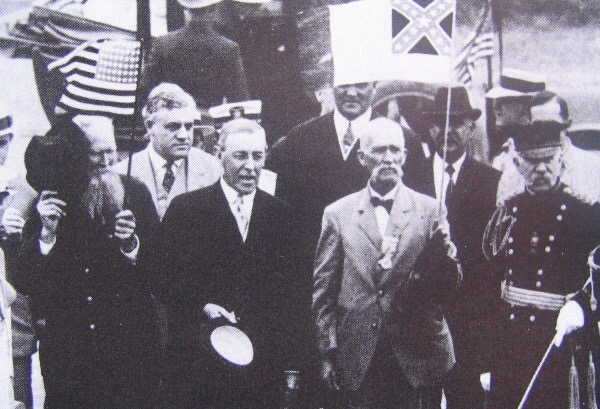
1913 – President Woodrow Wilson addresses the Great 50 Year Reunion of Gettysburg, attended by thousands of Veterans from both sides, who swapped stories, dined together…and it would seem, forgave for a time.
1939 – “I consider myself the luckiest man on the face of the Earth”. After 17 years as a beloved member of Major League Baseball, New York Yankee Lou Gehrig stands in Yankee Stadium and says goodbye to his fans, having been diagnosed with a terminal disease that now bears his name. I doubt there was a dry eye in the house. I’ve posted the video below.
God Bless America! And thank you to our service men and women that continue to make our freedoms possible.
A Brilliant and Rebellious Orator

Today in History, May 29: 1736/1765 – Founding father Patrick Henry is born in Studley, Virginia (you can’t make this stuff up) in 1736.
On his 29th birthday, as a Representative in the Virginia House of Burgesses, he presented the Virginia Resolves on the Stamp Act…a response to British taxation without representation of the colonies. The next day he gave a speech which riled his contemporaries. Remember that at this time he and all colonists were proudly British subjects:
“Caesar had his Brutus, Charles the First his Cromwell, and George the Third—” when, it is reported, voices cried out, “Treason! treason!” “—and George the Third may profit by their example! If this be treason…make the most of it.”
This brought a backlash for which he apologized. He was not calling for the King’s assassination, but saying he should pay heed to history.
His most famous speech, of course, came during the second Continental Congress:
“Gentlemen may cry, Peace, Peace —
but there is no peace. The war is actually begun!
The next gale that sweeps from the north will bring to our ears the clash of resounding arms!
Our brethren are already in the field! Why stand we here idle? What is it that gentlemen wish? What would they have?
Is life so dear, or peace so sweet, as to be purchased at the price of chains and slavery?
Forbid it, Almighty God! I know not what course others may take but as for me,
Give me liberty or give me death!”
“Damn Fools” in the Senate


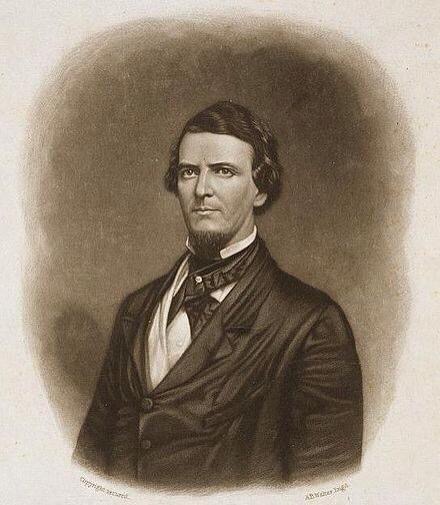

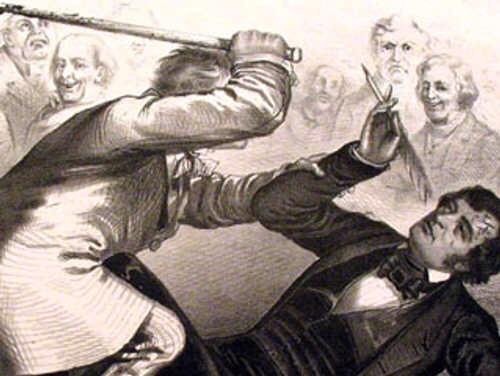
Today in History, May 22: 1856 – Remember when politics used to involve honorable statesmen, not like the politicians we see today? If you do, then standby…its an illusion. On May 20, 1856 US Senator Charles Sumner, a free soil Democrat and later Republican from Massachussetts, had given a firey speech entitled “Crime Against Kansas” about the violence in that state over slavery. A devout abolitionist, he excoriated the south, in particular Senator Andrew Butler of South Carolina, who he likened to a pimp abusing a prostitute (slavery). This enraged Butler’s nephew, Senator Preston Brooks. When Sen. Stephen Douglas heard the speech, he commented, “this damn fool Sumner is going to get himself shot by some other damn fool.” On the 22nd, Brooks entered the Senate chamber with two other Southern Senators, found Sumner at his desk writing and proceeded to bludgeon him nearly to death with his heavy metal tipped cane while Sumner was trapped within his desk, defenseless. Southerners hailed Brooks a hero, Northerners called him a coward. One of these, Republican Representative Anson Burlingame called him such on the House floor. Brooks challenged Burlingame to a duel. When Burlingame actually accepted and showed up, Brooks did not. Sumner would suffer debilitating pain for the rest of his life from his injuries, but would recover to become a key proponent of abolitionist policies during reconstruction, living until 1872. Brooks on the other hand died in January 1857, less than a year after the attack, of the croup.
This was not the first incident of violence in Congress, and would not be the last.
…the right of the people to keep and bear Arms, shall not be infringed.

Today in History, May 19: 1986 – President Ronald Reagan signs the “Firearms Owners Protection Act” in to law. The Legislation, while effectively banning machine guns from private ownership, primarily responded to complaints from the public and the nascent NRA regarding abuses of the “Gun Control Act of 1968.”
The act by Congress attempted to protect the rights of peaceful firearms owners and also those possessing Federal Firearms Licenses (FFL), or firearms dealers.
A Combative Congress…American Tradition
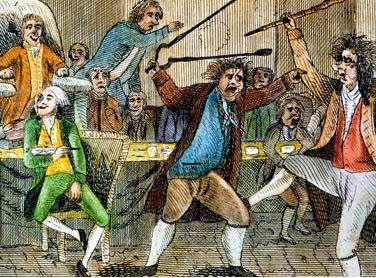
Today in History, February 15: 1798 – Combat on the House Floor. Matthew Lyon was a Democratic-Republican from Vermont. Roger Griswold was a Federalist Representative from Connecticut. Two weeks earlier, the two had argued on the house floor, Griswold commented about allegations of cowardice about Lyon during the Revolution; Lyon responded by spitting tobacco juice on Griswold. When the House failed to censure Lyon for the “gross indecency”, it infuriated Griswold. On this date he ambushed Lyon at his desk on the House floor, beating him about the head and shoulders with his wooden cane. Lyon retreated to a fireplace, where he took up a pair of tongs to combat the assault. Other Representatives had to separate the two. A vote was held to expel both of them, but it failed, 73-21. This would certainly not be the last physical fight in Congress.
 Mark Loves History!