D-Day, the 6th of June

Today in History, June 6, 1944:

The skies overhead filled with aircraft…thousands of bombers, transports, fighters. The British populace watched the boys board transport ships bound for France…and wept. Their towns, so long filled with those damned Americans were now quiet and empty. They wouldn’t be coming back. Many would fill cemeteries across Europe; others would be headed home for the US after fighting their way to Germany.

In America, as the news was broadcast that the invasion had begun at long last, businesses, theaters, and other workplaces emptied and closed…and the churches filled to capacity.

Americans prayed for their sons, husbands and fathers. I’m sure they prayed not to see the Western Union courier on their street in the coming days.

The Allies had been planning, working for and arguing over this day since America had entered the war. Americans had wanted to make the assault on Europe as early as 1942. Stalin in Russia had been pushing for another front to be opened to relieve pressure on his country which had suffered incredible losses.

The British General Staff and Churchill had won the argument, which saw to fighting in Africa, Sicily and Italy first.

By 1944, as America provided more and more supplies…and troops…to the war, the invasion of France was planned.

The largest, most complex invasion in history began on June 6, 1944 with Americans, British, Canadians and troops from the occupied nations of Europe.

The world was saved by boys who should have lived long, happy lives.

We owe a debt we cannot possibly repay.

On that day, my father would be recognizing his 17th birthday. I don’t know when he shipped out, but that is the year he began his service in the Pacific.

Defeat? Or Victory at Dunkirk

Today in History, May 26: 1940 – Operation Dynamo, or the Evacuation of the British Expeditionary Force from France at Dunkirk, begins. The BEF had been sent to France after years of appeasement, when Hitler had invaded Poland in September of 1939. On May 10th Germany invaded France, which, although considered the largest army in Europe, promptly folded like an old lawn chair. The British, French and Belgian troops retreated to Dunkirk, where they faced certain defeat. The idea now was the evacuate across the English Channel, but the first day’s effort on saw the evacuation of 9,000 or so men. A call for assistance went out, and every Royal Navy vessel that could sail, every civilian yacht, fishing vessel and others that could sail for Dunkirk, did so. In the end, 9 days later, more than 338,000 soldiers had been rescued; the best and brightest of the British armed forces that would be needed in the years to come.

The British Arrive in Australia…Again…Amy Johnson


Today in History, May 24, 1930:

British aviation pioneer and adventurer Amy Johnson lands in Darwin, Northern Territory, Australia, completing an 11,000 mile solo flight from England.  She was the first woman to do so.  She made the flight in a de Havilland DH.60 Gipsy Moth biplane.

Amy Johnson went on to set several other records during the 1930’s, including flights to Moscow, Japan and South Africa.

When England entered World War II in 1939 she signed up for the Air Transport Auxiliary, flying RAF aircraft from their production sites to their airfields.  On January 5, 1941 she was conducting one of these flights when her aircraft crashed into the Thames estuary.  Despite heroic efforts by a nearby ship, she was drowned in the tragedy…her remains never recovered.  An officer on the ship who dived in to save her died a few days later as a result of his time in the freezing waters.

The circumstances of her demise are somewhat mysterious.  The initial story was her aircraft went down in bad weather, however a sailor has since come forward saying he had shot her down after she failed to respond with proper codes, believing her aircraft to be the enemy.  He stated investigating officers told him and others to remain silent.

A woman air pioneer who set amazing records and died under mysterious circumstances in WWII.  Such incredible similarities to Amelia Earhart.

Churchill Becomes Prime Minister

Today in History, May 10, 1940:

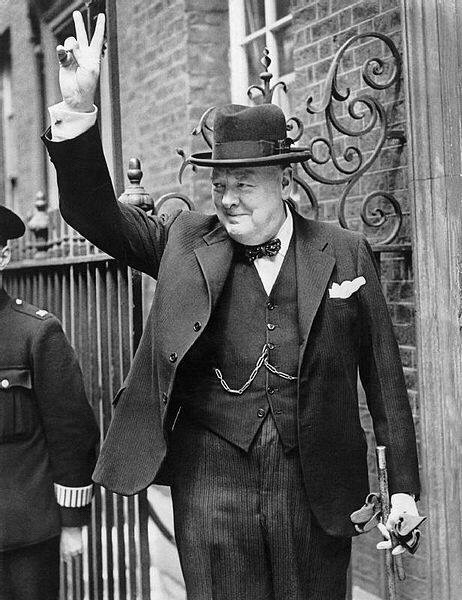
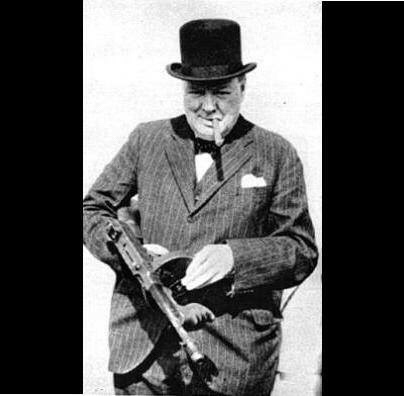
Sir Winston Churchill is made Prime Minister of England, a post he had long desired, but not necessarily under these circumstances. Churchill had been a member of the British government since the turn of the century, as his father had before him.

Due to politics, he had been abandoned to the political “wilderness” in the early 30’s…still a member of the House of Commons, but not of HMG…Her Majesty’s Government.

Throughout the 30’s he repeatedly called for beefing up the military to prepare for German aggression…and was repeatedly denied…cast as a crank looking for attention. It wasn’t until the Germans actually took France that his countrymen realized that Neville Chamberlain was the crank and that “Winston” knew what he was talking about.

On this date they cast their lot with him…and he did not disappoint.

The Treaty of Windsor

Today in History, May 9, 1386:

A Treaty of Alliance is ratified at Windsor between King Richard II of England and King John I of Portugal.

The Treaty is the longest alliance still in effect. It came about because the Portuguese needed military assistance in defense against their neighbor Castile (Spain) and England needed the Naval assistance of Portugal against France. Portugal’s sea power was at that time stronger than that of the English.

The treaty was strengthened by the marriage of John I of Portugal to Philippa, daughter of the Duke of Lancaster.

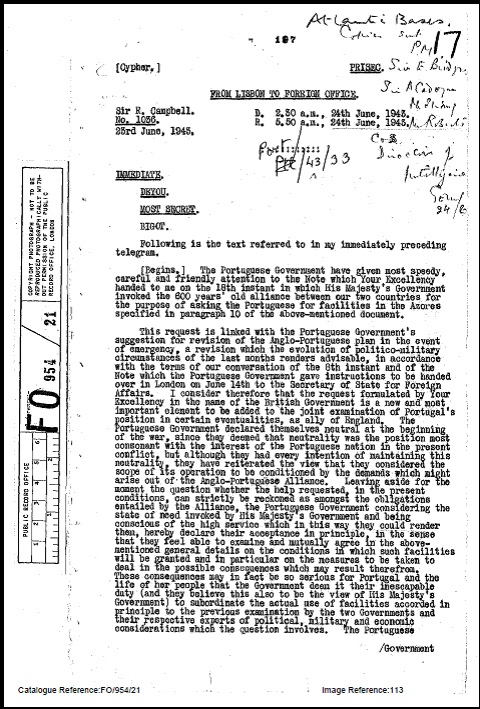
The Alliance was again called upon to thwart a Spanish invasion of Portugal in the 1760’s, to fend off Napoleon in the early 19th century, then in WWII when Portugal provided intel and air bases in the Azores to England and America. Air patrols from the Azores were important in the Battle of the Atlantic. The air bases were again provided to England during the Falkland Islands War.

Sir Winston Churchill, Knight of the Garter

Today in History, April 24, 1953:

British Prime Minister Winston Spencer Churchill is Knighted by Queen Elizabeth II, making him a Knight of the Garter.

The Queen had wanted to make Churchill a Knight as Duke of London, a new and dynamic position, but he declined since this would require his son and other descendants to live at a certain financial level that they may not be able to sustain.

Born in 1874, Churchill had served with distinction in the Boer War as a young man, been a major player in the First World War as Lord of the Admiralty, and then been banished to the political “wilderness” for ten years leading into WWII. During those years, he constantly preached a message of military preparedness to his contemporaries…acts that made him a laughing stock…the Nazis only wanted peace and he was a militant nut. Once the realities set in with Hitler’s invasion of several European neighbors, Britons turned to Churchill for their salvation, and he proved himself up to the task.

What an amazing amount of History Sir Winston and Queen Elizabeth have been a part of!

“Don’t Fire Unless Fired Upon. But if They Mean to Have a War, Let it Begin Here.”

Today in History, April 19: 1775 – The Midnight Ride continues. Paul Revere and his fellow rider, William Dawes meet up while warning Lexington of the approaching British soldiers. They had stopped at several villages between there and Boston spreading the alarm.

In each village additional riders would set off in all directions to spread the word for minutemen to converge on Lexington and Concord. Village cannons were fired so they would be heard in neighboring villages…a pre-arranged signal. The system was so efficient that before the British soldiers were even disembarking from their boats, still miles away, hundreds of Patriots were converging on the British target of munitions at Concord. Unbeknownst to them, their mission had already been rendered moot. The “rebels”, long aware of the British plans, had already dispersed and hidden the munitions. Revere and Dawes had already warned Samuel Adams and John Hancock, who had been taken elsewhere to prevent their arrest.

In Lexington Revere and Dawes met up with Dr. Samuel Prescott, who had been visiting his fiance. The three set out for Concord to warn them. On the road they encountered an British patrol and were captured. As they were being taken to a nearby meadow Prescott shouted, “Put on!” (scatter, run for it). He and Revere rode off in opposite directions. Prescott jumped his horse over a neaby stone fence and was off into the night. Dawes escaped, but lost his horse, leaving him on foot. Revere made his second escape of the night, as he’d nearly been captured in Charleston earlier. However he soon came upon a group of British officers and was captured again. He would eventually be released, but without his horse. Precott, a Concord native familiar with the area, quickly made his way to Concord and warned them, then continued on to warn others.

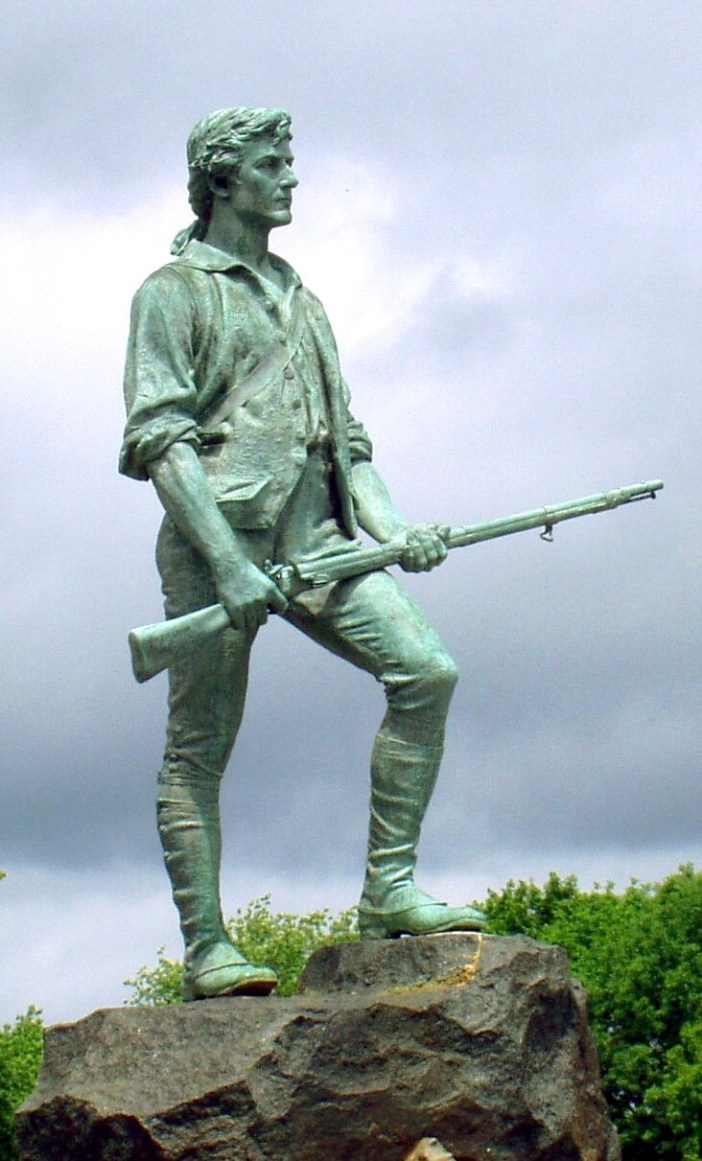
“Don’t fire unless fired upon, but if they mean to have a war, let it begin here.” –Militiaman Capt. John Parker, to his troops on Lexington Green. When the 700 British troops reached Lexington, they were confronted with a mere 77 minutemen who had managed to convene there. Capt. Parker, knowing that the British mission had already been rendered pointless, was not eager to risk the lives of is men. He had them form in ranks on Lexington Green, where they could give an expression of dissention without blocking the road to Concord. The British commander decided to confront them anyway. With an expression of great insult, the British commander ordered the “damned rebels” to disperse. Parker directed them to do so as the well trained British regulars approached. Nobody knows who fired the “shot heard ’round the world”. The Americans, of course, believe it was and over eager British soldier; the British believe it was from a minuteman; some speculation is that it was fired from the safety of a nearby tavern. Whoever fired that first shot, it resulted in the British cutting down nearly a dozen minutemen, and one injured British soldier. The British then marched past the dead and injured on their way to Concord. http://youtu.be/wAFz5YNCTGc

The Brits, emboldened, marched on Concord. When they got there they were confronted with more than 300 minutemen. The outcome was quite different than at Lexington. The British were quickly repelled, and decided to return to Boston. As they completed the long march back to Boston, the minutemen continuously fired upon them from behind trees, rocks, fences, etc. By the time the regulars made it back to Boston, they had lost over 300 men.

Why was it the “shot heard ’round the world”? Not just because of the American Revolution. The acts of the revolutionaries did not affect only the “Colonies”. The French were encouraged to aid the Americans with their fleet eventually. Other portions of the British Empire were encouraged to revolt. King George didn’t know it, but on this date, thanks to a few farmer and merchant “peasants”, the sun had begun to set on the British Empire.

Six Frigates…The US Navy Makes a Name for Itself

Today in History, March 27: 1794:

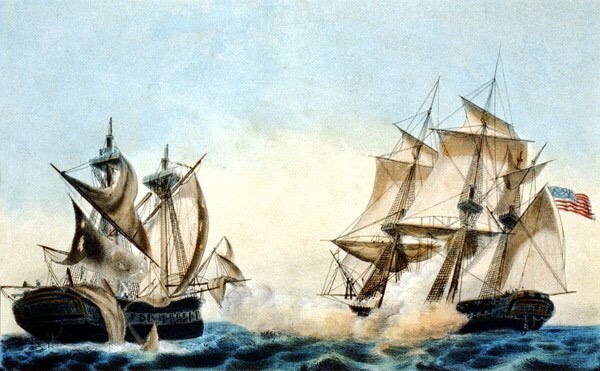
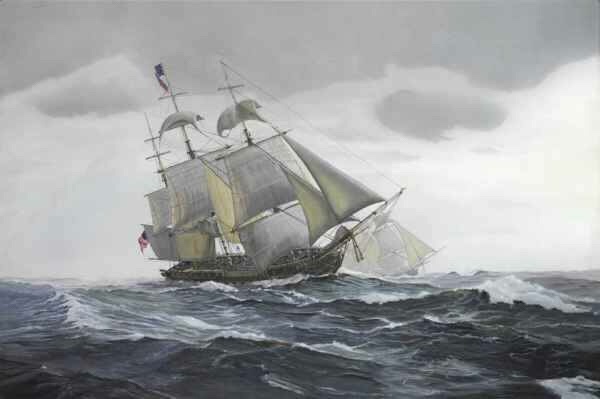
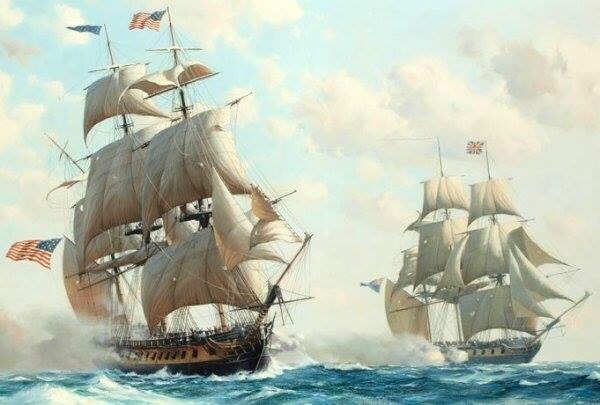
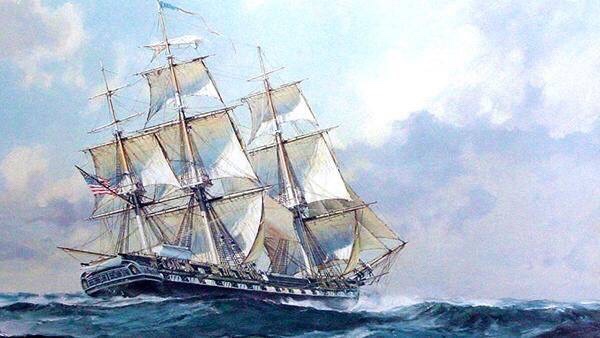
President Washington signs the Naval Act of 1794, ordering the construction of 6 Frigates capable of high speed and of holding their own against “ships of the line.”

After the Revolutionary War, America didn’t feel it needed a navy; after having several ships seized by Barbary pirates, and after abuses by the Royal Navy, the administration and Congress came to the realization that America needed a navy to protect it’s shipping.

Thus the USS Constitution (Old Ironsides, oldest commissioned US Navy vessel), USS Constellation, USS President, USS Congress, USS United States and the USS Chesapeake began their illustrious Naval careers.

Give Me Liberty, or Give Me Death!

Today in History, March 23: 1775 – “Is life so dear, or peace so sweet, as to be purchased at the price of chains and slavery? Forbid it, Almighty God! I know not what course others may take; but as for me, GIVE ME LIBERTY, OR GIVE ME DEATH!” Patrick Henry implores his fellow legislators at the Virginia Convention for separation from England. Henry, the son of Scottish immigrant, had failed at business twice before becoming a successful lawyer. He became part of the Virginia legislature and soon became a talented politician. Considered one of the Founding Fathers, he risked his life to see America free. After freedom was won, he was an ardent opponent to the federalist system, believing any affront to states rights would destroy individual rights.

Ride, Boldly Ride…

Today in History, March 20, 1616:

Gaily bedight,

A gallant knight,

In sunshine and in shadow,

Had journeyed long,

Singing a song,

In search of Eldorado.

But he grew old—

This knight so bold—

And o’er his heart a shadow—

Fell as he found

No spot of ground

That looked like Eldorado.

And, as his strength

Failed him at length,

He met a pilgrim shadow—

‘Shadow,’ said he,

‘Where can it be—

This land of Eldorado?’

‘Over the Mountains

Of the Moon,

Down the Valley of the Shadow,

Ride, boldly ride,’

The shade replied,—

‘If you seek for Eldorado!’

-Edgar Allen Poe

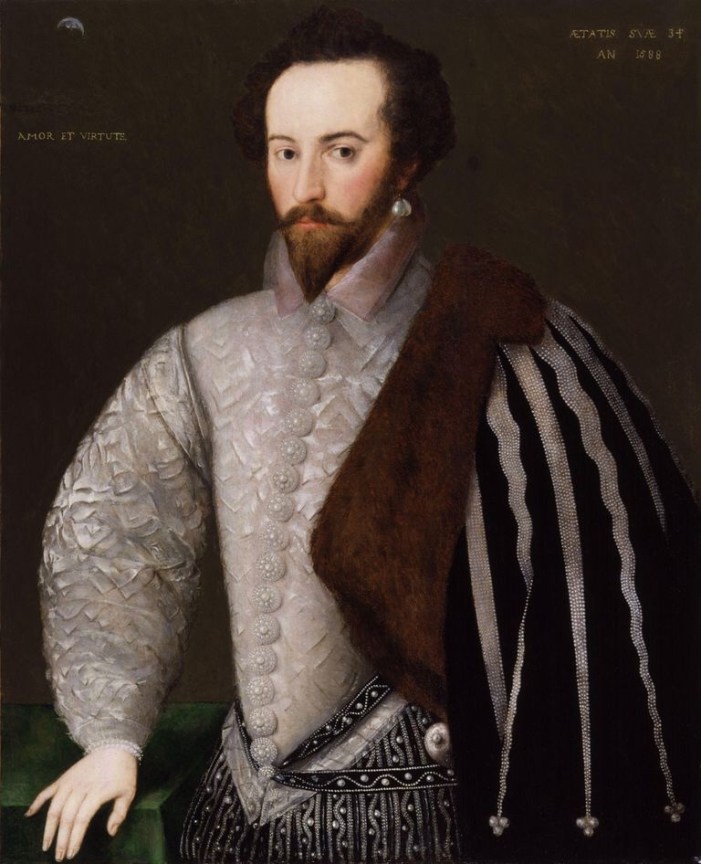
On this date in 1616, Sir Walter Raleigh, English courtier and explorer, was released from confinement in the Tower of London (for the second time) so he could lead an expedition to the Americas in search of the fabled City of Gold, Eldorado (for the second time.)

In his lifetime Sir Raleigh explored Virginia, being instrumental in its settlement. He also was instrumental in popularizing the import and use of tobacco in England.

During his second search for Eldorado some of his men raided a Spanish outpost, which violated a treaty of peace between the two nations.

As a consequence, when he returned home, he was arrested and executed.