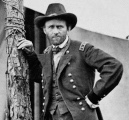
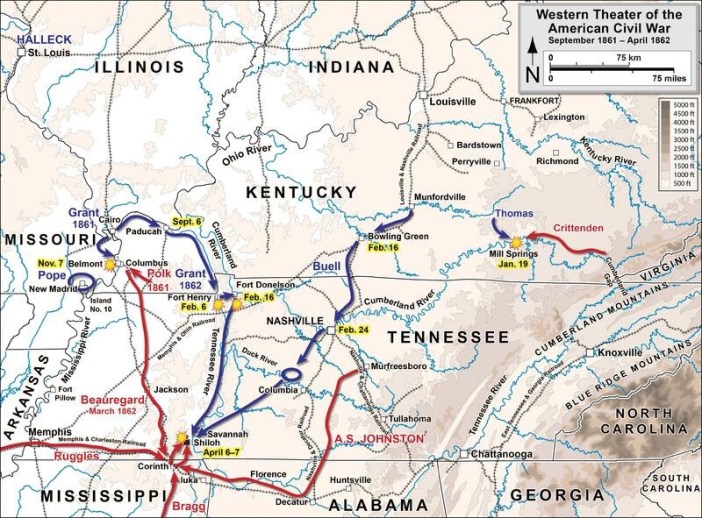
Shiloh

Today in History, April 7, 1862:

The Battle of Shiloh comes to and end with a Union “Victory”. Union Gen. US Grant had moved his army into Tennessee and was preparing his next campaign.

But Confederate Gen. Albert Sidney Johnston, considered second only to Robert E. Lee by both armies, had different ideas. His troops, in addition to those of CSA Gen. Pierre G. T. Beauregard almost literally caught the Northern Army sleeping….attacking in the morning and routing the Yankees.

The Confederates, always hungry due to their lack of supplies, actually stopped to eat the breakfasts the Union soldiers left in flight. The battle was vicious all through the day. But by the morning of the 7th, Grant had been reinforced by Gen. Buell’s Corps, and Grant quickly turned the rebels back. Shiloh was not so much a victory as a recovery for the North.

But the North nearly lost it’s best commander in the aftermath, as the press excoriated Grant as a drunk who was asleep at the wheel. President Lincoln answered the charges by saying that he could not spare Grant, “he fights” and offering to buy his other generals the brand of whiskey Grant used. In truth Grant had taken to drink when missing his family during his pre-war assignment in California, but was always focused during the Civil War Campaigns.

During the battle, Albert Sydney Johnston was mortally wounded. He died looking in fascination at the sky above.

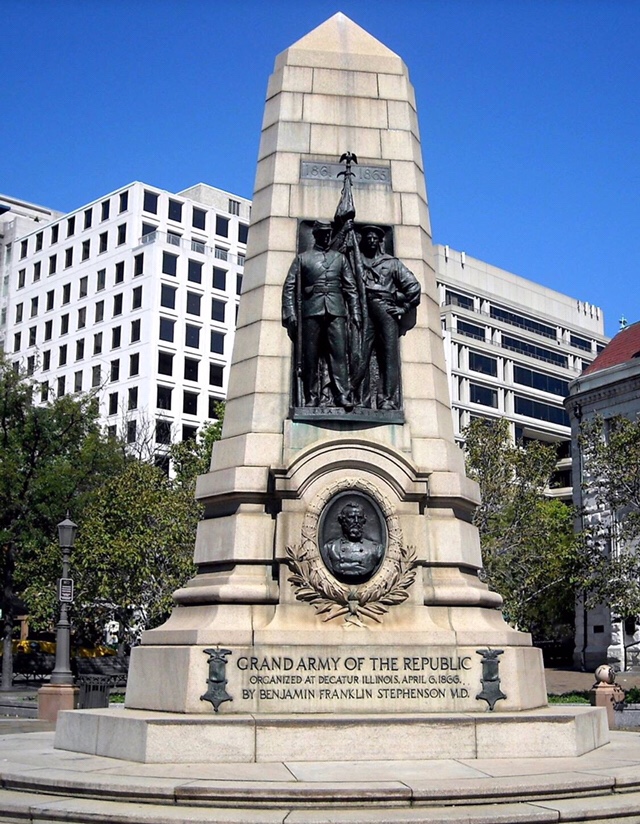
The Grand Army of the Republic

Today in History, April 6, 1866:

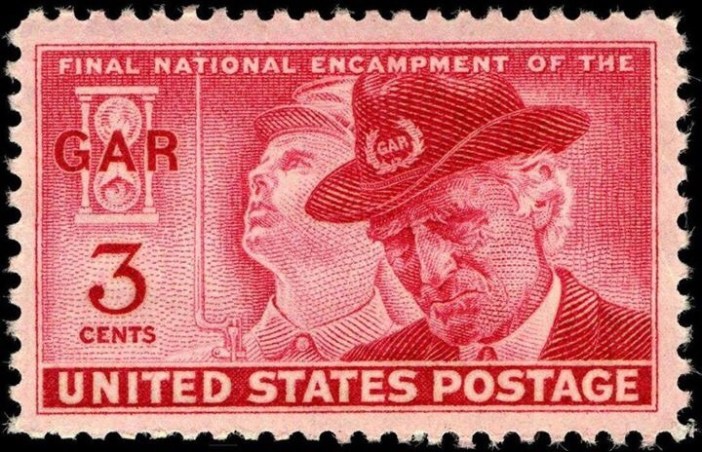
Fraternity, Charity and Loyalty.” The Grand Army of the Republic is formed in Decatur, Illinois, bringing together a Fraternal organization of veterans of the Union (US) Army, Navy, Marines, and “Revenue Cutter Service” (Coast Guard) from the Civil War.

Admittedly an arm of the Republican Party, the GAR was one of the first bi-racial fraternal organizations in the US…white and black veterans worked together to gain veteran’s pensions, elect Republican Presidents Grant, Hayes, Garfield, Harrison and McKinley, all Civil War veterans.

At it’s high point, the organization had 490,000 members; it passed with it’s last member’s death in 1956, to be replaced by the “Sons of Union Veterans of the Civil War.

Honorable Brothers and Enemies at the Same Time…

Today in History, February 18, 1862:

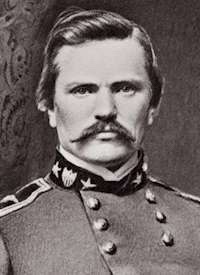
“I know you are separated from your people, and perhaps you need funds.  My purse is at your disposal.”  Union General Ulysses Grant to Confederate General Simon Bolivar Buckner as Buckner prepared to board a river boat taking him north to a Yankee prison.

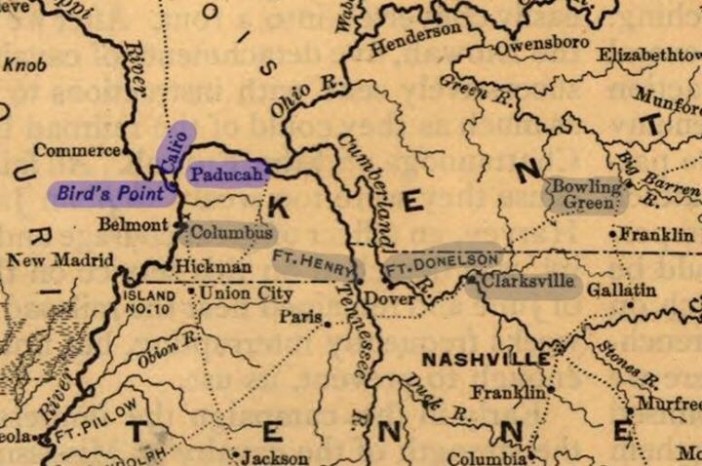
On February 16, 1862 after a hard-fought battle and investment, Confederate Fort Donelson in Tennessee had surrendered to Union forces.

Tennessee was a strategic area in the Civil War, providing resources, people and a launching point to move against the rest of the South.

General U.S. Grant had been little known to the public before this battle, but the victory would change all that.  He coordinated with the US Navy to bombard Ft. Donelson and surround the 12,000 men there.  After assaults and counter assaults, the Confederate commanders came to the realization loss of the fort was a foregone conclusion, a tragedy for the South.

Gen. Simon Bolivar Buckner was actually third in command.  His superiors resigned their positions so they could sneak out and escape.  Col. Nathan Bedford Forrest took some of his Cavalry and fled also, leaving Buckner to stay with his men and surrender.

Buckner sent a note through the lines asking Grant for terms.  And here is where Grant became famous.  He wrote out his response for delivery to Buckner,

No terms except unconditional and imme­diate surrender can be accepted. I propose to move immediately upon your works.

In a time when furloughs and prisoner exchanges were common in battle, Buckner found the response to be “ungenerous and unchivalrous.”  Yet he had no choice, his only option was surrender.  Having had little but bad news for some time, the Northern papers seized upon the victory.

They used Grant’s initials to rename him “Unconditional Surrender Grant.”  Turns out it wasn’t the first time others had changed his name for him, but that’s another story.

The public was finding out something those serving with Grant had learned…he was unpretentious, unceremonious and tenacious.  He got results.  President Lincoln would eventually say of him, “I can’t spare this man; he fights” in defense of Grant’s reported drinking problem.

If you want History to be more than dates on a page, watch out for the back stories…the facts that bring out the humanity in what you’re reading.

The story reads good already.  But lets dig further.

When Grant was younger, he wanted an education.  His father worked hard and secured him an appointment to West Point.  Initially, Grant didn’t want to go.  But once in, he liked it.  His uncanny horsemanship impressed fellow cadets and instructors.  And he made friends among the other cadets, including Simon Bolivar Buckner, who was attending at the same time.

Grant and Buckner, among many other officers in the US Army, served together and performed heroics in the Mexican-American War of 1846-1848.

After that conflict Grant found himself assigned to the frontier in California, where he missed his family grievously and took to drink.  In July of 1854 he suddenly resigned his commission from the Army and sought transport home.

Grant found himself in New York without even enough money to get a meal or pay for a room.  And then he happened upon an old classmate and friend, Simon Bolivar Buckner.

The two enjoyed a visit, talked old times and Buckner, who was doing much better financially, paid for his friend’s room and board.

In the intervening years until 1861 and the beginning of the Civil War, Grant was somewhat of a hard luck case.  He tried farming, he tried real estate, nothing worked.  When the war began he was working for his brothers and his father in a store as a clerk.

When Southern states began seceding many in the US Army that were from those states, resigned their commissions and joined the Confederate Army, including Buckner.  Thus the old friends found themselves on opposite sides.

Thus, after the Battle at Fort Dolelson, Grant sought out Buckner before Buckner boarded the boat taking him off to prison in an attempt to return an old favor. Buckner, ever the gentleman, politely refused the return of the kindness.

Grant, of course, would become commander of all Union Armies and eventually President.

Buckner would eventually be exchanged for a Union general officer and continue to serve in the Confederate Army.

He surrendered in New Orleans in 1865 for a second time.  He would become Governor of Kentucky among other political successes.

In 1904 he visited the White House and asked President Theodore Roosevelt to appoint his son to West Point.  TR quickly agreed.

His son, Gen. Simon Bolivar Buckner Jr would be killed at Okinawa in WWII, the highest ranking officer killed by enemy fire in WWII.

US Weather Service

Today in History, February 9: 1870 –

President US Grant signs a joint resolution of Congress creating The US Weather Bureau. The Bureau was initially placed under the Secretary of War, in the belief that weather watch stations placed on military bases across the interior would give warning to the east coast of approaching weather fronts. The Bureau had several incarnations as it grew with technology. Today it is part NOAA, the National Oceanic and Atmospheric Administration…the Bureau has saved countless lives with it’s continued advancements in warning capabilities.

Bad Choices, Bigger Picture

Today in History, December 17: 1862 – Even our heroes make misguided decisions. Gen. Ulysses S. Grant issues General Order 11, expelling all Jewish people from the area he commands, Tennessee, Mississippi and Kentucky. During the war, trade in the South’s staple, Cotton, was severely restrained, which of course led to a black market trade. It became a real problem for the Union Army in the west. Grant felt it was being driven by Jewish profiteers and ordered them expelled. After complaints from the Jewish community and Congress, President Lincoln quickly rescinded the order. Grant would go on to gain Lincoln’s…and the nation’s trust. But this was not his finest moment.

The Right Man for the Job


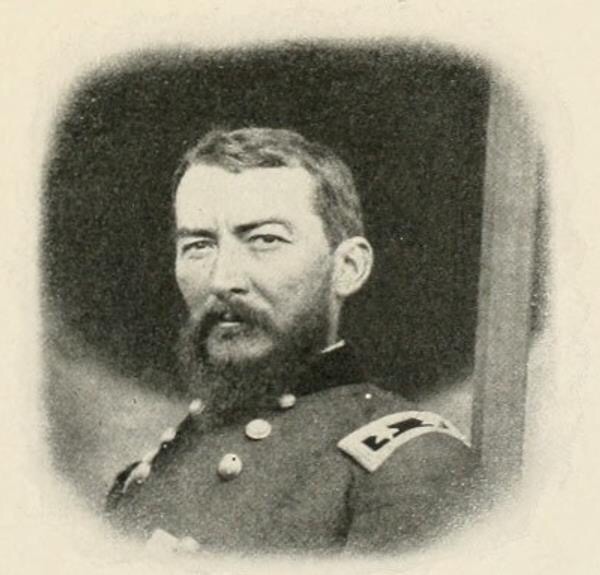
Today in History, August 1: 1864 – Over the objections of Secretary of War Edwin M. Stanton, who thought he was too young for the command of an army, Gen. Ulysses S. Grant names Gen. Phillip Sheridan as commander of the Army of the Shenandoah. Throughout the war, each time the Union began to encroach on the Confederate capitol at Richmond, Virginia, the South would send an army through the Shenandoah Valley to threaten Washington, DC, forcing the Union to protect it’s own capitol. Grant didn’t fall for this, however as he lay siege to Petersburg, which protected Richmond. The Confederacy sent Gen. Jubal Early through the Valley to threaten DC. The Shenandoah was not only the route north for the Confederate armies, it was the “bread basket” for the south, much as the midwest is for the country now. Grant sent Sheridan to command a new Valley of the Shenandoah, and ordered him, “The people should be informed that so long as an army can subsist among them recurrences of these raids must be expected, and we are determined to stop them at all hazards. … Give the enemy no rest … Do all the damage to railroads and crops you can. Carry off stock of all descriptions, and negroes, so as to prevent further planting. If the war is to last another year, we want the Shenandoah Valley to remain a barren waste.” The Confederates called Sheridan’s campaign “The Burning”, precursor to the scorched earth campaign that Sherman enforced in Georgia. Sheridan not only drove Early from the valley, but lay waste to all resources in the Shenandoah, depriving the South of the much needed resources. Lincoln, Stanton, and Grant sang his praises, as did the nation.

Running the Table


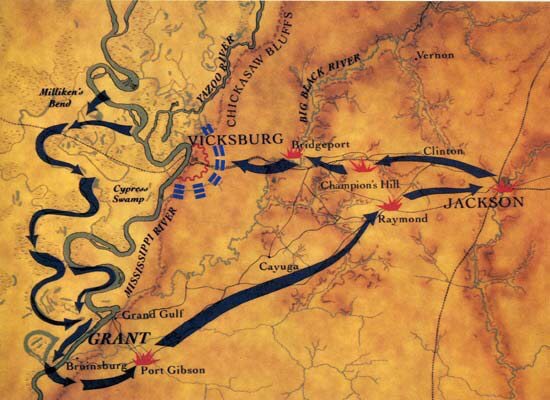
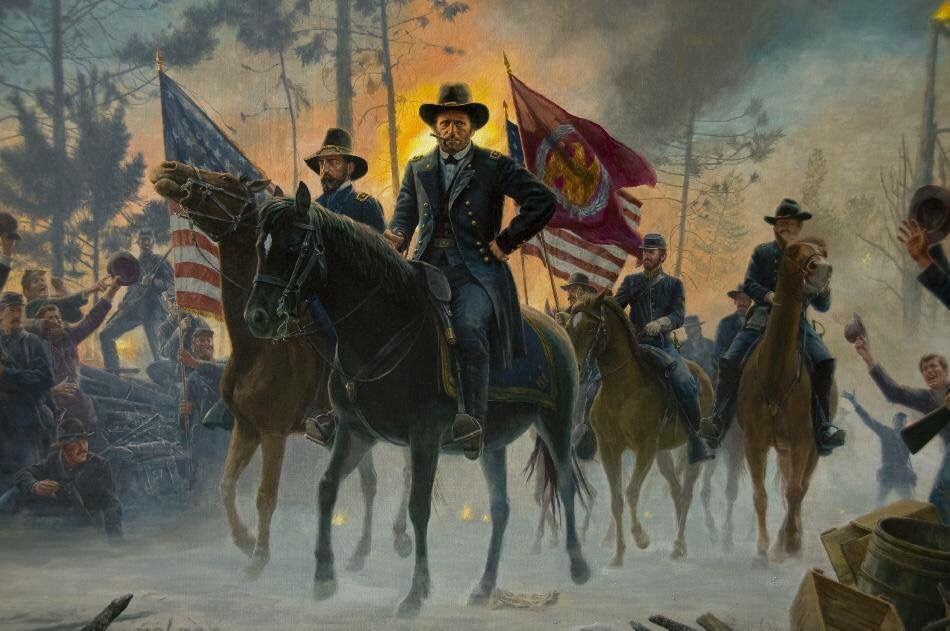
Today in History, May 18: 1863 – Running the Table. Gen. Grant had plan for Vicksburg and Admiral David Dixon Porter’s fleet had run past of the guns at that fortress city. In the interim between then and today’s date, Grant’s army was taken across the Mississippi from several victories in Louisiana, won five major victories in Mississippi, including taking the capitol of Jackson. He pushed Confederate Gen. John C. Pemberton back to the Big Black River Bridge, which Pemberton burned on the 14th during his retreat to Vicksburg.

Pemberton could no longer face Grant in the field, having lost three quarters of his army. Grant had the bridge rebuilt by the 18th, and the siege of Vicksburg had begun. Grant made two unsuccessful attempts to take the city and then determined to have no more losses, lay siege to the city. The siege involved entrenchments, mines and bombardment by land based artillery as well as by Admiral Porter’s ships. The civilians and soldiers in the city had to live underground. By July 4th, his troops and civilians starving and demoralized, Pemberton agreed to surrender. Grant initially demanded his trademark “Unconditional Surrender”, then reconsidered. Even after having lost 3/4 of it’s manpower, Pemberton’s army still numbered 30,000 famished troops. He decided instead to utilize a long respected military method of “paroling” the rebel troops. That meant that they would be freed as long as they never took up arms against the Union again. It would have taken months and a great deal of manpower Grant did not want to expend to move 30,000 prisoners north. The Confederates agreed to the terms. Yet many of them were back in battle against Union troops by September. This ended the act of paroling for the remainder of the war. After Vicksburg and Port Hudson fell in July, President Lincoln proclaimed, “”The Father of Waters again goes unvexed to the sea.” This victory was considered the turning point in the Civil War; Union control of the Mississippi not only allowed US Navy movement and resupply all along it’s course, it effectively cut the Confederacy in half, depriving it of the resources and armies of the west. This battle is also largely the reason Grant was advanced to command of all Union Armies…as Lincoln said, “I cannot spare this man…he fights!” A quality the President found lacking in many of his other Generals.

The Wilderness

Today in History, May 7: 1864 – The Horrors of War. The Battle of the Wilderness comes to an end as Union Gen. US Grant disengages from the Army of Northern Virginia, attempting to flank them. The three day battle had taken place in a heavily wooded area near Spotsylvania. The Confederates minimized the superior numbers of the North by fighting here. The most horrific part of the battle was the wounded from both sides that were left on the battlefield. Neither side could risk moving in to rescue them…and the woods where they fought had been set on fire by the cannon fire during the battle. The helpless men cried for help that would not come…and many that could manage to do so shot themselves to avoid being burned alive as the fire overtook them.

Running Vicksburg….

292277_2585002523121_1216574598_n

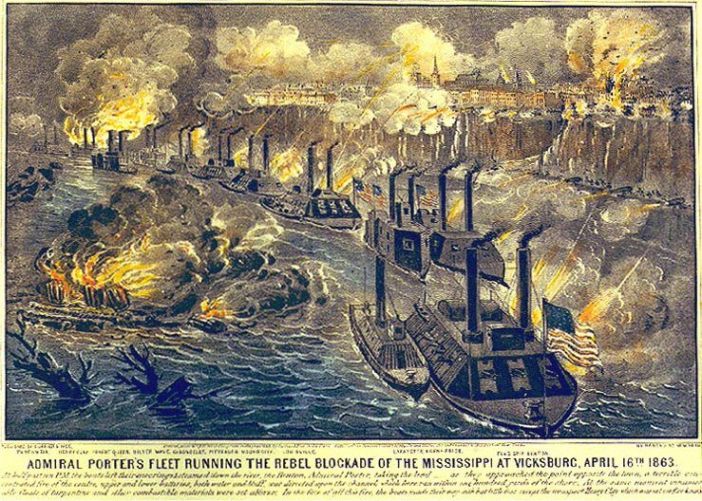
Today in History, April 16: 1863 – Navy. Littoral. Riverine. Inter-branch cooperation. Amphibious. Most of these terms are not recognized by most until World War II or Vietnam. But they became reality much earlier…in The Civil War. Union Generals Grant and Sherman had been trying to take Vicksburg, Mississippi for six months without success. Grant tried to move his troops past Vicksburg on the Louisiana side, but the swampy terrain made it slow going. So, thinking “outside the box”, he called upon the Navy…He and Navy Admiral David Dixon Porter designed to have Grant’s soldiers moved south past the batteries at Vicksburg via the Mississippi River, using numerous Ironclads, Riverboats, and barges. The idea was to sneak past the Confederate cannon..but the rebels spotted the passing ships and a battle ensued. One ship and two barges were lost, but the vast majority of Grant’s forces made it to their destination. They then lay siege to Vickburg, which they had now cut off from reinforcement or resupply. By July 4th, Vicksburg fell to Grant and Sherman’s forces. When we think of the US Navy, we think of Frigates, Ships of the Line, Battleships, or Aircraft Carriers, depending on the time in history, sailing the seas. But many of our Navy’s victories were won in shallow waters or on rivers. The Navy used “Littoral”, or shallow water ships, and “Riverine”, or river tactics in numerous conflicts. Vicksburg and other Mississippi Civil War battles displayed the use of Navy – Army cooperation.

Appomattox Courthouse; The Beginning of the End

Today in History, April 9: 1865 – One of the most momentous events in American history. After years of foiling every move the Union made, Confederate Gen. Robert E. Lee had finally been run to ground. Countless Yankee Generals had been bested by him, but he had finally met his match…not tactically, but in determination, by Lt. Gen. Ulysses S. Grant. At Appomattox Courthouse, Virginia, Lee, his army starving and with nowhere else to run, in spite of the fact that he would “rather die a thousand deaths”, agreed to surrender the Army of Northern Virginia to Grant. Lee arrived in his best uniform; Grant, typically, arrived in a muddy private’s uniform. Grant offered terms that included Confederate officers keeping their horses and sidearms, enlisted men keeping their horses so that they could farm their land, as long as they agreed to abide by their paroles and obey the laws of the land. Lee was very appreciative of these terms, saying they would be helpful to his army, men he loved. As Lee mounted his horse and left the site of the surrender, Union soldiers began to cheer. Grant quickly silenced them, reminding them that the Confederates were once again their countrymen. The surrender document was signed in the home of Wilmer McLean. Ironically, in the first battle of the war, First Bull Run, or First Manassas if you are from the South, Confederate Gen. P.G.T. Beauregard’s headquarters were in McLean’s home in Manassas, where cannon shot destroyed part of the house. McLean moved south to Appomattox Courthouse to keep his family safe. So, as is said, the Civil War began in Wilmer McLean’s front yard, and ended in his parlor.

Lee was given the opportunity by Grant to allow one of his subordinates to accept the surrender…to avoid humiliation. Lee refused…his FATHER, Light Horse Harry Lee, had been with Washington at Yorktown and witnessed the ungentlemanly act of British Gen. Lord Cornwallis sending a subordinate to surrender his sword to Washington. Lee refused to dishonor his family name by repeating the act. Grant did not require Lee to surrender his sword, but Lee was the man that represented his army at Appomattox Courthouse. Both gentlemen, North and South, maintained their honor.

Other notables at the meeting were Captain Robert Todd Lincoln, the President’s son.  Robert had insisted on serving despite his father’s reservations, so Grant found a place for him on his staff.  Major Gen. Phillip Sheridan, who had been a very successful commander and who would one day command all of the US Army.  Also Grant’s adjutant, Ely S. Parker, a Seneca Indian who was chosen to write out the surrender because he had the best hand writing of those present.

Poor McLean’s woes were not over, either.  Officers present made off with almost everything except the wallpaper in the room to remember the occasion.