The Antiquities Act

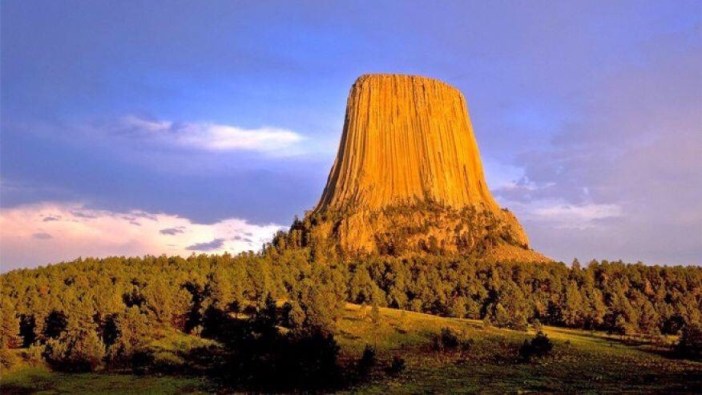
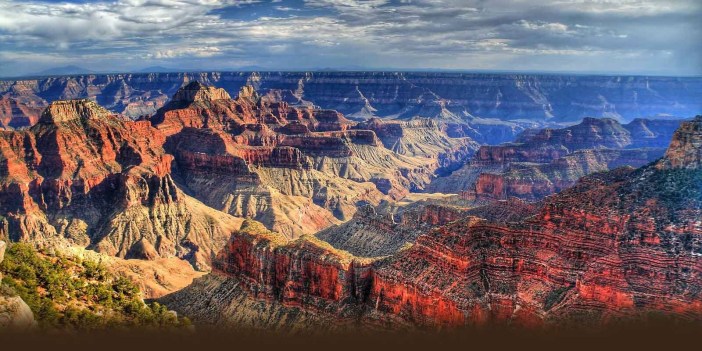
Today in History, June 8: 1906 – The Antiquities Act of 1906 is signed into law by President Theodore Roosevelt after being passed by Congress. In the preceding years historic sites had been discovered in the west, and of course, they were soon raided by thieves, vandals and historians from other countries. The Act was designed to protect these places as National Monuments, to be named either by the President or Congress. Roosevelt, a historian, quickly took advantage of the new power, naming 18 Monuments before his Presidency ended, including (first) Devil’s Tower, Muir Woods, The Grand Canyon, Chaco Canyon and the Petrified Forest. The Act has become more controversial in the years since FDR named The Grand Teton National Monument (near Jackson Hole, Wyoming) in 1943.

The Lee Resolution – and You Can’t Pick Your Family

Today in History, June 7, 1776:

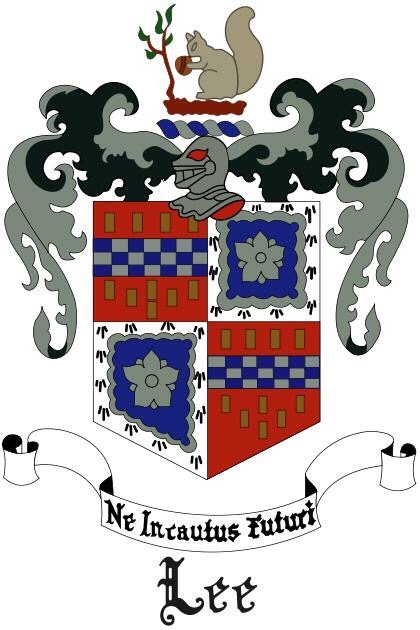
The Lee Resolution.

“Resolved, That these United Colonies are, and of right ought to be, free and independent States, that they are absolved from all allegiance to the British Crown, and that all political connection between them and the State of Great Britain is, and ought to be, totally dissolved. That it is expedient forthwith to take the most effectual measures for forming foreign Alliances. That a plan of confederation be prepared and transmitted to the respective Colonies for their consideration and approbation.”

Continental Congress member Richard Henry Lee, reperesentative from the Virginia Colony, proposes independence from Great Britain after receiving orders to do so from the Virginia Convention. It would take until July, after efforts by John Adams, Sam Adams, and Lee, to gather enough votes to pass the resolution as the Declaration of Independence.

The Lee family would fight in the revolution for Union and Independence. All families are complicated. I would love to know what Richard would have to say about his great-nephew Robert E. Lee fighting so hard to dissolve the Union Richard and his family fought so hard to create.

D-Day, the 6th of June

Today in History, June 6, 1944:

The skies overhead filled with aircraft…thousands of bombers, transports, fighters. The British populace watched the boys board transport ships bound for France…and wept. Their towns, so long filled with those damned Americans were now quiet and empty. They wouldn’t be coming back. Many would fill cemeteries across Europe; others would be headed home for the US after fighting their way to Germany.

In America, as the news was broadcast that the invasion had begun at long last, businesses, theaters, and other workplaces emptied and closed…and the churches filled to capacity.

Americans prayed for their sons, husbands and fathers. I’m sure they prayed not to see the Western Union courier on their street in the coming days.

The Allies had been planning, working for and arguing over this day since America had entered the war. Americans had wanted to make the assault on Europe as early as 1942. Stalin in Russia had been pushing for another front to be opened to relieve pressure on his country which had suffered incredible losses.

The British General Staff and Churchill had won the argument, which saw to fighting in Africa, Sicily and Italy first.

By 1944, as America provided more and more supplies…and troops…to the war, the invasion of France was planned.

The largest, most complex invasion in history began on June 6, 1944 with Americans, British, Canadians and troops from the occupied nations of Europe.

The world was saved by boys who should have lived long, happy lives.

We owe a debt we cannot possibly repay.

On that day, my father would be recognizing his 17th birthday. I don’t know when he shipped out, but that is the year he began his service in the Pacific.

War to Peace…Gen. George Marshall

Today in History, June 5, 1947:

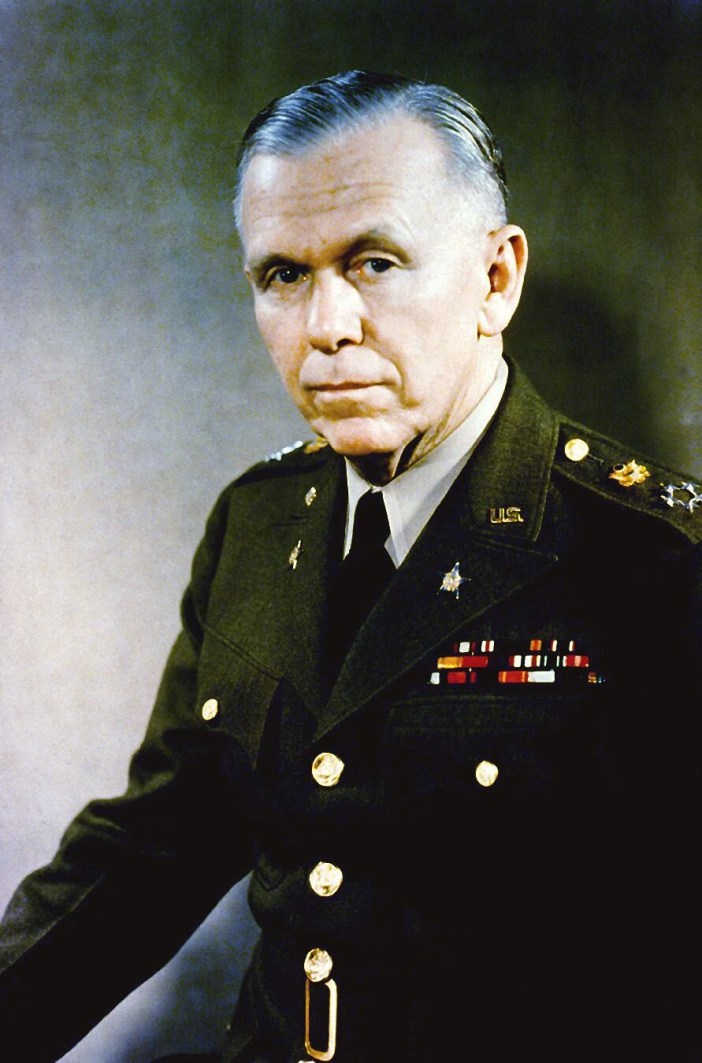
George Catlett Marshall, Jr, who as Chief of Staff of the US Army during WWII was instrumental in defeating the Axis powers, is now US Secretary of State.

On this date he gives a speech at Harvard University and outlines the reasons that the US should provide monetary and physical support to the European nations decimated by the war. Germany and the other nations of Europe were struggling to rebuild their economies, their infrastructure and their ability to operate as governments.

These same countries had been left to fend for themselves after WWI, and radicals like Hitler took advantage of their desperation to bring the world into WWII. The new “bad influence” was communism and Marshall recognized that the same thing could happen all over again. Congress acted on his recommendations and passed the Economic Cooperation Act, or The Marshall Plan. By 1952 the US had spent over 12 Billion dollars to rebuild Europe, likely preventing another global conflict.

The US Camel Corps – In New Mexico – The USS Supply – A Bizarre Adventure

Today in History, June 4, 1855:

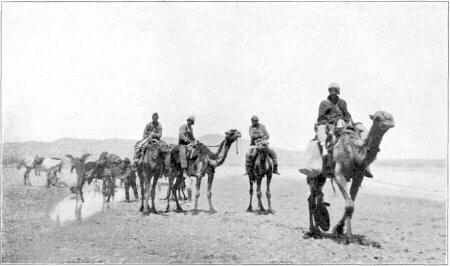
US Army Major Henry C. Wayne sails aboard the USS Supply (commanded by US Navy Lt. David Dixon Porter) for the Middle East to purchase camels that would become part of the US Camel Corps. Either he or Gen. Edward Beale had convinced US Secretary of War Jefferson Davis that the animals would be perfect for transportation in the American Southwest.

70 camels would eventually be part of the Corps, and they WERE perfect for transporting supplies long distances…but they were also cranky and difficult to manage, and scared the Army’s horses. When the US Civil War began, the project was largely forgotten as the new Union Secretary of War, Edwin M. Stanton, didn’t support it. Feral camels were seen roaming the Southwestern United States as late as 1941 as a result.

You may have noticed some other interesting names mentioned. David Dixon Porter was part of an already famous naval family…Farragut. David would serve with distinction in the Civil War.

The USS Supply. If her planks could have talked. The Mexican-American War….she was instrumental. Through her life she make numerous trips to the Levant…served in South Africa, South America, Brazil…she was part of two Expeditions Commodore Mathew C. Perry made to Japan, sailing into Odo Harbor on the Historic dates.

Then Supply returned and became part of the swashbuckling adventures during the Civil War Blockading Squadrons.

Today in History, June 3, 1888:

“Casey at the Bat”, by Ernest Thayer, is first published in the San Francisco Examiner.

The outlook wasn’t brilliant for the Mudville Nine that day;

The score stood four to two, with but one inning more to play,

And then when Cooney died at first, and Barrows did the same,

A sickly silence fell upon the patrons of the game.

A straggling few got up to go in deep despair. The rest

Clung to that hope which springs eternal in the human breast;

They thought, if only Casey could get but a whack at that –

They’d put up even money, now, with Casey at the bat.

But Flynn preceded Casey, as did also Jimmy Blake,

And the former was a pudding and the latter was a fake;

So upon that stricken multitude grim melancholy sat,

For there seemed but little chance of Casey’s getting to the bat.

But Flynn let drive a single, to the wonderment of all,

And Blake, the much despised, tore the cover off the ball;

And when the dust had lifted, and the men saw what had occurred,

There was Jimmy safe at second and Flynn a-hugging third.

Then from 5,000 throats and more there rose a lusty yell;

It rumbled through the valley, it rattled in the dell;

It knocked upon the mountain and recoiled upon the flat,

For Casey, mighty Casey, was advancing to the bat.

There was ease in Casey’s manner as he stepped into his place;

There was pride in Casey’s bearing and a smile on Casey’s face.

And when, responding to the cheers, he lightly doffed his hat,

No stranger in the crowd could doubt ’twas Casey at the bat.

Ten thousand eyes were on him as he rubbed his hands with dirt;

Five thousand tongues applauded when he wiped them on his shirt.

Then while the writhing pitcher ground the ball into his hip,

Defiance gleamed in Casey’s eye, a sneer curled Casey’s lip.

And now the leather-covered sphere came hurtling through the air,

And Casey stood a-watching it in haughty grandeur there.

Close by the sturdy batsman the ball unheeded sped-

“That ain’t my style,” said Casey. “Strike one,” the umpire said.

From the benches, black with people, there went up a muffled roar,

Like the beating of the storm-waves on a stern and distant shore.

“Kill him! Kill the umpire!” shouted someone on the stand;

And it’s likely they’d a-killed him had not Casey raised his hand.

With a smile of Christian charity great Casey’s visage shone;

He stilled the rising tumult; he bade the game go on;

He signaled to the pitcher, and once more the spheroid flew;

But Casey still ignored it, and the umpire said, “Strike two.”

“Fraud!” cried the maddened thousands, and echo answered fraud;

But one scornful look from Casey and the audience was awed.

They saw his face grow stern and cold, they saw his muscles strain,

And they knew that Casey wouldn’t let that ball go by again.

The sneer is gone from Casey’s lip, his teeth are clenched in hate;

He pounds with cruel violence his bat upon the plate.

And now the pitcher holds the ball, and now he lets it go,

And now the air is shattered by the force of Casey’s blow.

Oh, somewhere in this favored land the sun is shining bright;

The band is playing somewhere, and somewhere hearts are light,

And somewhere men are laughing, and somewhere children shout;

But there is no joy in Mudville — mighty Casey has struck out.
Terrorism 1919 Style

Today in History, June 2, 1919:

Galeanist Anarchists set off 8 bombs almost simultaneously across the country. They were communist sympathetic anarchists that were trying to kill leaders they thought were preventing the over throw of the US government.

In April they had sent 36 mail bombs to government and industrial leaders including John D. Rockefeller, Supreme Court Justice Oliver Wendell Holmes, J. P. Morgan, US Attorney General A. Mitchell Palmer, US Secretary of Labor William B. Wilson amongst many others.

During the June 2nd bombings, they again targeted one of their primary enemies, Attorney General Palmer, at his home. The bomb killed the bomber when it went off prematurely, injured his housekeeper and his wife, and did significant damage to his home. His neighbors that lived across the street at the time barely escaped injury or death themselves, as they had walked past the front of Palmer’s front door minutes before the explosion occurred.

One of the bomber’s body parts was found on their doorstep. Interesting how closely fate comes to changing vast segments of history; the neighbors that barely escaped were Assistant Secretary of the Navy Franklin Delano Roosevelt and his wife Eleanor. Palmer was famous for the Palmer Raids, which targeted radical foreign anarchists for arrest and deportation and which helped launch the career of J. Edgar Hoover.

The Johnstown Flood

Today in History, May 31, 1889:

The Johnstown Flood. The area east of Pittsburgh in Pennsylvania had received record rainfall; it was already a miserable day. But it would get increasing worse.

14 miles above Johnstown was an earthen dam which had come into disrepair. The dam was owned and maintained by a hunting and fishing club made up of wealthy investors, including Andrew Carnegie.

With the heavy rainfall, the South Fork Dam collapsed and 3.8 BILLION gallons of water rushed down the valley. Amongst all of the debris gathered by the torrent were 33 train engines. The 30,000 people of Johnstown had no warning when the water and debris reached them. Over 2200 men, women and children perished as the town was virtually washed away.

The combination of trains, trees, houses and steel from a factory slammed into a bridge and a temporary dam was created….which caught fire. Many who had survived the raging waters burned to death before the bridge finally broke.

There are so many more fascinating, heart-wrenching details in this story. If you would like to learn more, I suggest one of the first books by one of my favorite Historians…David McCullough.

Defending Her Honor…

Today in History, May 30: 1806:

Andrew Jackson engages in a duel to defend the honor of his wife.

He had married her with the understanding that her divorce was final, which it was not.

Challenged by a reporter, he fought a duel to defend her and killed Charles Dickinson to defend her.

Oddly enough, on May 29th, 1780, only a day before this event in history, Jackson had been one of the few to evade “Tarleton’s Quarter” as British Lt. Col. Banastre Tarleton had butchered those that surrendered at Waxhaws during the Revolutionary War.

The experience added to the brutality in which future General and President Jackson acted during the War of 1812 and during his Presidency in regards to the British, which he despised. During the Revolutionary War he lost his parents and his brother, which led him to despise the British.

Conquering Everest

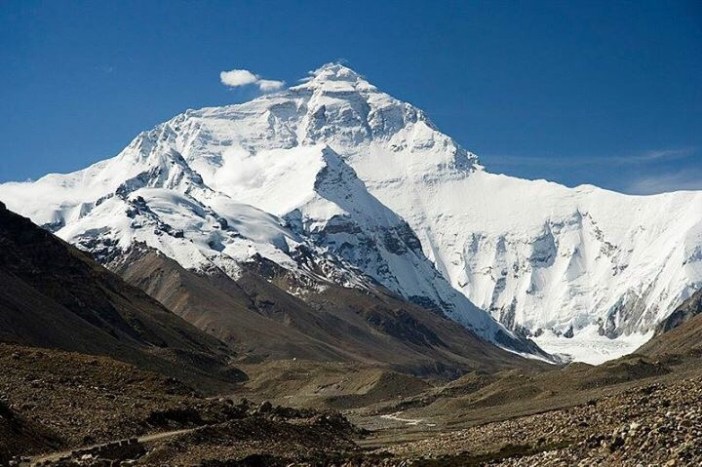
Today in History, May 29: 1953 – Sir Edmund Hillary and Nepalese Sherpa Tenzing Norgay are the first to reach the summit of Mount Everest, the tallest peak in the world. Hillary began as a poor son of a New Zealand farmer, and ended as a hero of the English realm. He also took part in expeditions to the South Pole among other expeditions.