“Sleep in Peace, Comrades Dear…”


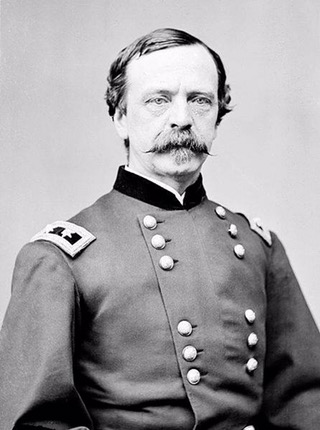
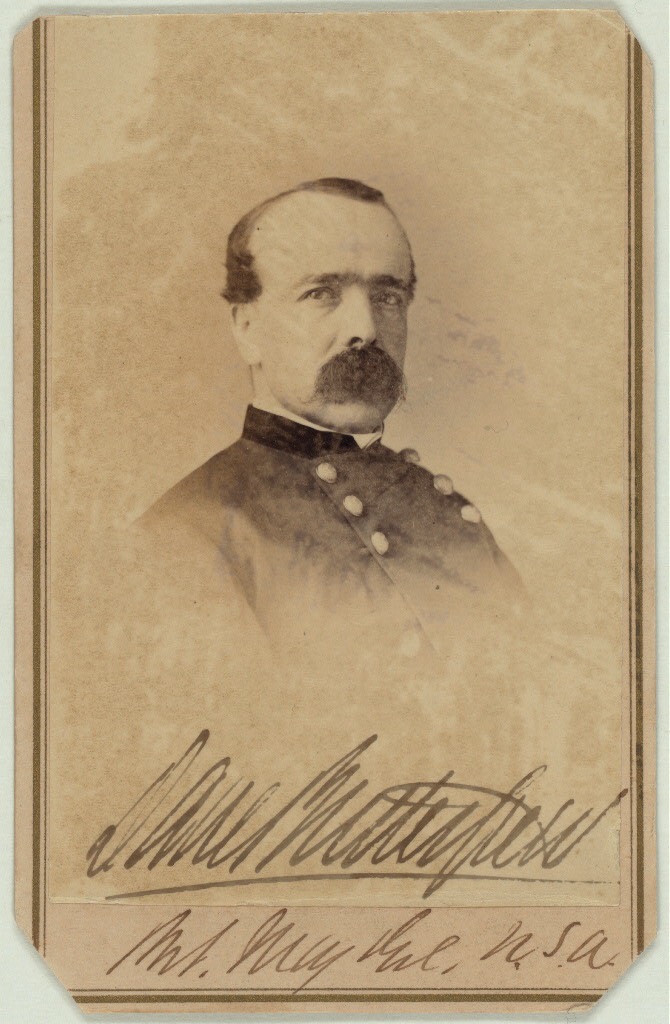
Today in History, July 2: 1862 – Union Colonel Daniel Butterfield (breveted to Brigadier General), unhappy with the signal being given for “Lights Out” for his brigade, pens a new one which he gave to the brigade bugler. Sounded for the first time that night in its new form, what would be known as “Taps” was quickly taken up by other brigades, North and South because of its haunting 24 notes. 

There are many versions of wording for Taps, but these are the most meaningful to me:

  • Fading light, 
  • Falling night,
  • Trumpet calls as the sun sinks from sight,
  • Sleep in peace, comrades dear, 
  • God is near…

The tune now is much more than “Lights Out”, serving as a final honor at the services for servicemen and servicewomen, and police officers. 

Disaster on the Potomac

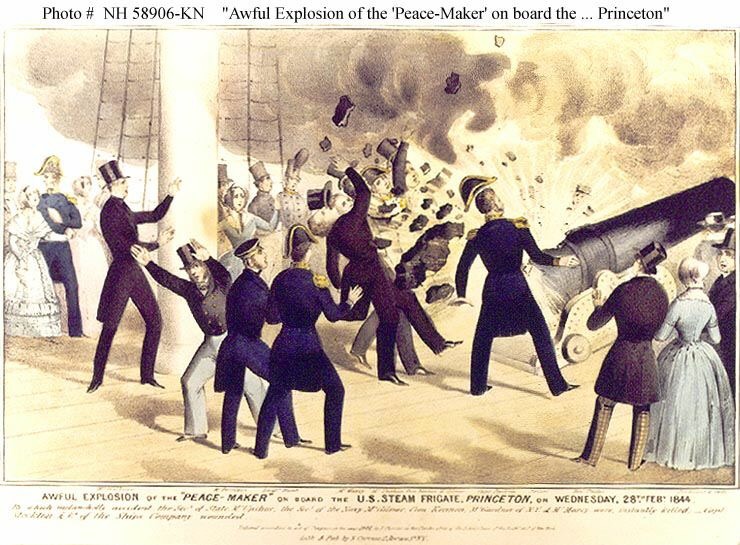
Today in History, February 28: 1844 – The Peacemaker Disaster. President Tyler, Secretary of State Abel Upshur, Secretary of the Navy Thomas Gilmer, New York financier David Gardiner, his daughter Julia and several hundred other dignitaries are aboard the new steamship USS Princeton sailing on the Potomac River to review the ship and her new 14 inch guns. The guns had already been fired twice in demonstration, and the party had moved below decks. One of the dignitaries suggested firing the “Peacemaker” one more time in honor of George Washington. Once the observers had moved back upstairs the gun was fired…and exploded. 6 were killed, including Upsher, Gilmer and Gardiner. 20 others were injured including famous Senator Thomas Hart Benton and Captain Robert F. Stockton. President Tyler, below decks, escaped injury. When Julia Gardiner head of her father’s death, she fainted, falling into Tyler’s arms. Tyler, a 54-year-old widower, had already proposed marriage to 20-year-old Julia; they were married four months later. The disaster led to re-engineering of naval guns and the processes used in their construction, making them much safer.

“Let this great wonder of nature remain as it now is. Do nothing to mar its grandeur, sublimity and loveliness. You cannot improve on it. But what you can do is to keep it for your children, your children’s children, and all who come after you, as the one great sight which every American should see.” -President Theodore Roosevelt

grand-canyon-lighting

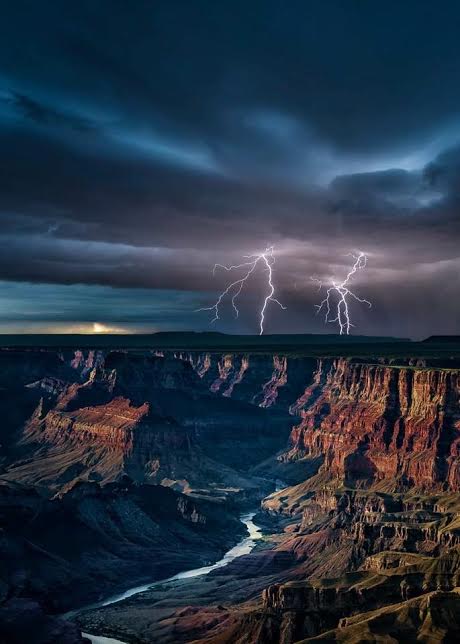
Today in History, February 26: 1919 – President Woodrow Wilson designates the Grand Canyon as a National Park. His nemesis and predecessor, President Theodore Roosevelt, had designated the Grand Canyon as a National Monument in 1908. Thanks, guys!

“Where Else Would We Find Him?”

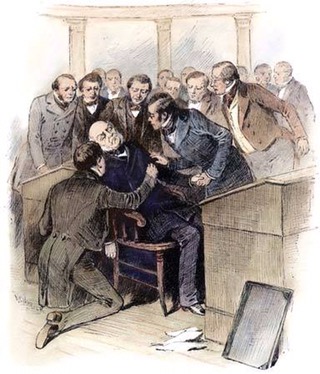
Today in History, February 21: 1848 – “Where else would we find him?” Former President, former Secretary of State, Former US Senator from Massachusetts, current Representative to the House John Quincy Adams, collapses after suffering a stroke while vehemently stating his opinion on the House floor. Adams had, by most reports, been a mediocre President. However he had authored the Monroe Doctrine telling European nations that America was in charge of police actions in the Western Hemisphere; he had served as the Ambassador to the Court of St. James (England); had negotiated the ceding of Florida to the US from Spain; had acted as the attorney for the slaves in the Amistad Trial; stated his vehement abolitionist views, and served 17 years in the House after his Presidency…because that’s what a servant to the people was supposed to do. His contemporaries were not surprised that he would die while serving the people. He was carried to the office of the Speaker of the House, where he would die two days later. What an example!

Where There’s a Will…

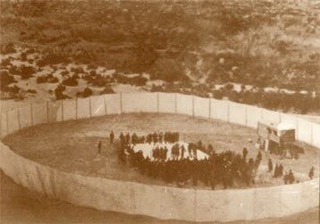
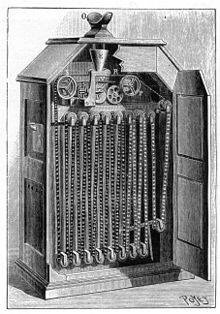
Today in History, February 21: 1896 – It was illegal. The Governor of Texas called a special session of the legislature specifically to make sure it didn’t happen in Texas. The Governor of Arkansas threatened to enlarge the state penitentiary to hold anyone that was involved. The Federal Government ruled that it would NOT happen in Indian Territory. No other state would step up to allow it. But the promoters were tenacious…and Judge Roy Bean had a reputation for making money. The World Championship Boxing champion from 1895 had retired…after watching his sparring partner being dropped within seconds by a young up-and-comer Irish boxer named Peter Maher. So the challenger, Australian Bob Fitzsimmons wanted to fight Maher. In an attempt to find a place for the “prize fight”, which was illegal in the US and Mexico, So Judge Roy Bean and other promoters arranged for the viewers to meet in El Paso, where they would be taken to a secret location for the fight. Would it be on a barge in the Gulf? A special train left El Paso and stopped at Langtry, Texas. The entire party…fighters, promoters, audience, soldiers, Texas Rangers, soon found themselves at a ring Bean had set up on a sandbar in the middle of the Rio Grande River…where the Army, the Rangers and the Mexican Federales could not stop it. Within seconds, Fitzsimmons, bruised by a quick attack by Maher, blitzed in return and took Maher down, becoming the World Heavyweight Champion before the Edison Kinetoscope could even be set up to film the event.

An American Hero

Today in History, February 20: 1942 – Lt. Edward “Butch” O’Hare saves his ship. The USS Lexington was initiating a raid on Rabaul, a Japanese stronghold. However the Task Force was spotted, and many Japanese aircraft were sent to destroy the valuable aircraft carrier. Lt. O’Hare was part of the “CAP”, or Combat Air Patrol for the Lexington (CV-2).

O’Hare singe-handedly shot down five of the attacking “Betty” bombers, effectively saving his ship, one of the few aircraft carriers the United States had available at the time. This also made him the US Navy’s first ace of WWII. About a year later, O’Hare, ever the hero, would be lost in unknown circumstances in one of the first night time fighter operations. O’Hare Airport in Chicago is named for Butch. What many people don’t know is that this American hero, who gave the “last full measure of devotion” for his country, was the son of a gangster. His father had been Al Capone’s lawyer. The senior O’Hare (Fast Eddie), according to the story, had exchanged his testimony against Capone for a chance for his son to enter the Naval Academy. He paid with his life, gunned down by Capone’s thugs. As a result, thousands of American sailors aboard the Lexington were saved due to Butch’s heroism.

Sickles, Key, & Stanton

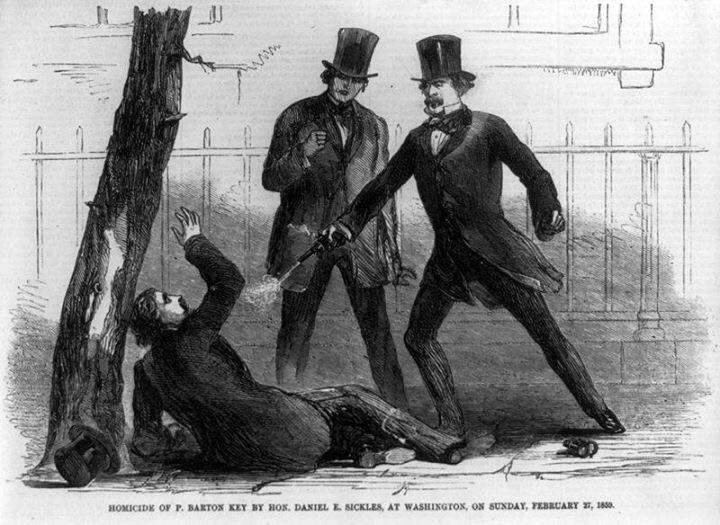
Today in History, February 19: 1859 – New York Congressman Daniel E. Sickles is acquitted of murder using a temporary insanity defense, the first time this defense was used in US courts. Sickles was quite a character…he had been censored by Congress more than once, most prominently for having brought a known prostitute into the House chamber, and then taking her to England and introducing her to Queen Victoria while his wife was at home pregnant. Despite this, he was enraged when his wife confessed to him that she had been carrying on an affair with the District Attorney for the District of Columbia, Phillip Barton Key II (Francis Scott Key’s son…you know..the Star Spangled Banner author). Sickles confronted Key in Lafayette Square, across the street from the Executive Mansion (White House) and shot him dead. Sickles then went to the Attorney General’s home, turned himself in and confessed. Future Secretary of War Edwin M. Stanton defended Sickles at his trial, painting the wife as a cheating harlot, and securing Sickles’ acquittal. Sickles went back to his wife, which enraged his supporters much more than the murder. When the Civil War began, Sickles used his influence to recruit NY volunteers and gain a political generalship, something that was possible in those days. With no military experience he actually made a good accounting of himself in several battles. Ironically, his most controversial act was yet to come. At the pivotal Battle of Gettysburg, his III Corps was assigned a portion of the Union lines on Cemetery Ridge. On his own he decided to move his unit forward to higher ground, which thinned his lines and left a gap in the Union lines, and blatantly ignored the orders of the commander of the Army of the Potomac, General Meade. Confederate General James Longstreet’s Corps attacked and decimated Sickles’ command, costing Sickles his leg. The controversy amongst historians is whether Sickles sacrifice of his Corps helped or hurt the Union’s chances of victory. In the end the Union could count Gettysburg as a victory, but in my humble opinion, the ambitious Sickles had little to do with it. He put it at risk. In his later years Sickles served as Minister to Spain (continuing his womanizing there) and returned to the legislature. He spent much effort in creating the Gettysburg National Military Park and in denigrating Gen. Meade, while promoting himself as the true reason for the victory at Gettysburg. After lobbying for 34 years, he was awarded the Medal of Honor for his bravery in the battle. Perhaps most telling is the fact that there are memorials to almost all of the generals involved in the battle at the Park, but not for Sickles. Good or bad, between his killing of Francis Scott Key’s son, his pioneering use of the insanity defense, and his military career, Sickles’ story is fascinating.

Reversal of Fortunes Among Friends

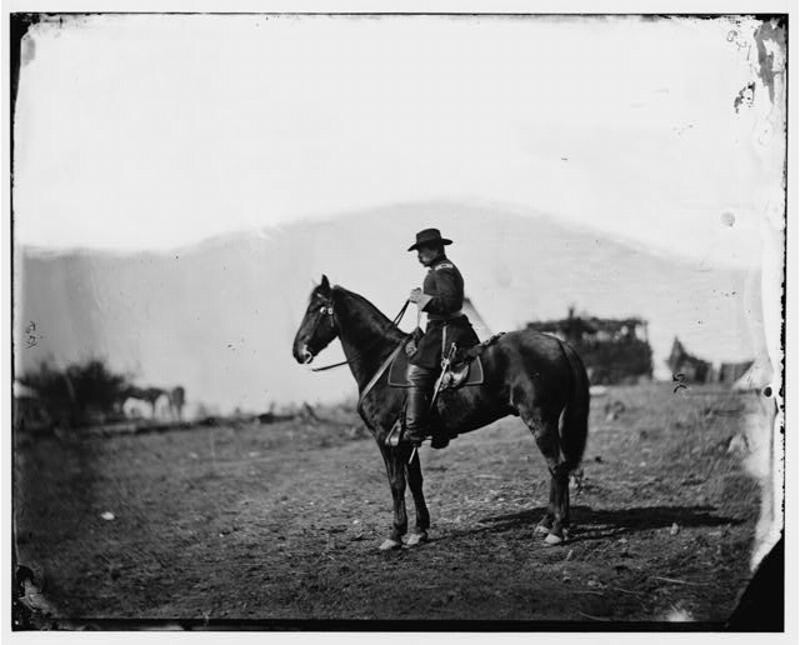
Today in History, February 18, 1862:  “I know you are separated from your people, and perhaps you need funds.  My purse is at your disposal.”  Union General Ulysses Grant to Confederate General Simon Bolivar Buckner as Buckner prepared to board a river boat taking him north to a Yankee prison.

On February 16, 1862 after a hard-fought battle and investment, Confederate Fort Donelson in Tennessee had surrendered to Union forces.  Tennessee was a strategic area in the Civil War, providing resources, people and a launching point to move against the rest of the South.  General U.S. Grant had been little known to the public before this battle, but the battle would change all that.  He coordinated with the US Navy to bombard Ft. Donelson and surround the 12,000 men there.  After assaults and counter assaults, the Confederate commanders came to the realization loss of the fort was a foregone conclusion, a tragedy for the South.  Gen. Simon Bolivar Buckner was actually third in command.  His superiors resigned their positions so they could sneak out and escape.  Col. Nathan Bedford Forrest took some of his Cavalry and fled also, leaving Buckner to stay with his men and surrender.

Buckner sent a note through the lines asking Grant for terms.  And here is where Grant became famous.  He wrote out his response for delivery to Buckner,

No terms except unconditional and imme­diate surrender can be accepted. I propose to move immediately upon your works.

In a time when furloughs and exchanges were common in battle, Buckner found the response to be “ungenerous and unchivalrous.”  Yet he had no choice, his only option was surrender.  Having had little but bad news for some time, the Northern papers seized upon the victory.  They used Grants initials to rename him “Unconditional Surrender Grant.”  Turns out it wasn’t the first name others had changed his name for him, but that’s another story.  The public was finding out something those serving with Grant had learned…he was unpretentious, unceremonious and tenacious.  He got results.  President Lincoln would eventually say of him, “I can’t spare this man; he fights.”

If you want History to be more than dates on a page, watch out for the back stories…the facts that bring out the humanity in what you’re reading.

The story reads good already.  But lets dig further.

When Grant was younger, he wanted an education.  His father worked hard and secured him an appointment to West Point.  Initially, Grant didn’t want to go.  But once in, he liked it.  His uncanny horsemanship impressed fellow cadets and instructors.  And he made friends among the other cadets, including Simon Bolivar Buckner, who was attending at the same time.

Grant and Buckner, among many other officers in the US Army, served together and performed heroics in the Mexican-American War of 1846-1848.

After that conflict Grant found himself assigned to the frontier in California, where he missed his family grievously and took to drink.  In July of 1854 he suddenly resigned his commission from the Army and sought transport home.

Grant found himself in New York without even enough money to get a meal or pay for a room.  And then he happened upon an old classmate and friend, Simon Bolivar Buckner.  The two enjoyed a visit, talked old times and Buckner, who was doing much better financially, paid for his friend’s room and board.

In the intervening years until 1861 and the beginning of the Civil War, Grant was somewhat of a hard luck case.  He tried farming, he tried real estate, nothing worked.  When the war began he was working for his brothers and his father in a store as a clerk.

When Southern states began seceding many in the US Army that were from those states, resigned their commissions and joined the Confederate Army, including Buckner.  Thus the old friends found themselves on opposite sides.  And Grant sought out Buckner before he went off to prison in an attempt to return an old favor.

Grant, of course, would become commander of all Union Armies and eventually President.  Buckner would eventually be exchanged for a Union general officer and continue to serve in the Confederate Army.  He surrendered in New Orleans in 1865 for a second time.  He would become Governor of Kentucky among other political successes.  In 1904 he visited the White House and asked President Theodore Roosevelt to appoint his son to West Point.  TR quickly agreed.  Gen. Simon Bolivar Buckner Jr would be killed at Okinawa in WWII, the highest ranking officer killed by enemy fire in WWII.


An American Success Story

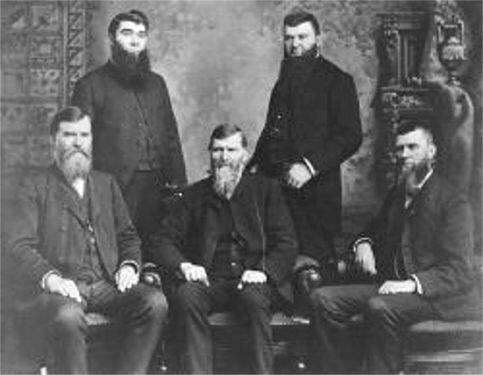
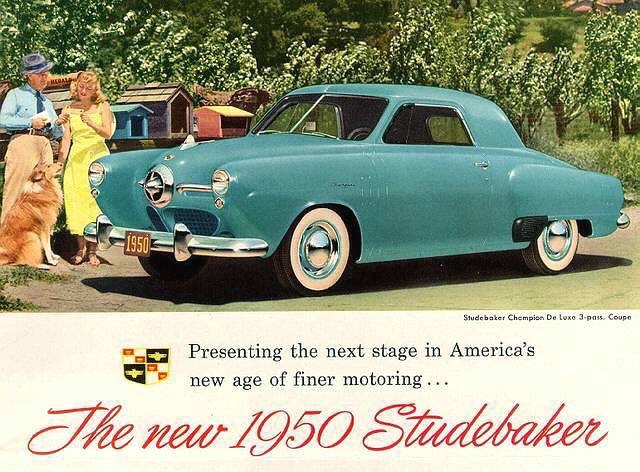
Today in History, February 16: 1852 – The five brothers, Henry, Clement, John Mohler, Peter Everst and Jacob Franklin, had been taught the skill of wagon making by their parents, who had been taught by their parents, who had arrived in America in 1736. They began their combined business on this date in 1852, and soon they were providing fully half of the wagons used for the migration west, and a quarter of those in the nation. They made bank during the Civil War, selling wagons to the Union Army. Their business continued to thrive…those beautiful red 1900 model wagons pulled by the Budweiser Clydesdales…are Studebakers. When motorized vehicles came to be, the Studebaker Company began making first electric and then gasoline cars. The company would last until 1957, having a reputation for quality and class in their cars.

A Combative Congress…American Tradition

11230221_10203966341997672_3026968112306696422_n

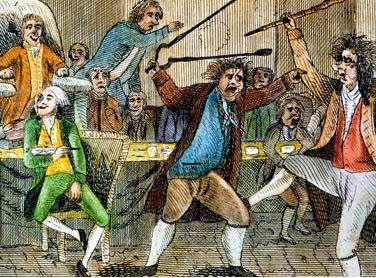
Today in History, February 15: 1798 – Combat on the House Floor. Matthew Lyon was a Democratic-Republican from Vermont. Roger Griswold was a Federalist Representative from Connecticut. Two weeks earlier, the two had argued on the house floor, Griswold commented about allegations of cowardice about Lyon during the Revolution; Lyon responded by spitting tobacco juice on Griswold. When the House failed to censure Lyon for the “gross indecency”, it infuriated Griswold. On this date he ambushed Lyon at his desk on the House floor, beating him about the head and shoulders with his wooden cane. Lyon retreated to a fireplace, where he took up a pair of tongs to combat the assault. Other Representatives had to separate the two. A vote was held to expel both of them, but it failed, 73-21. This would certainly not be the last physical fight in Congress.