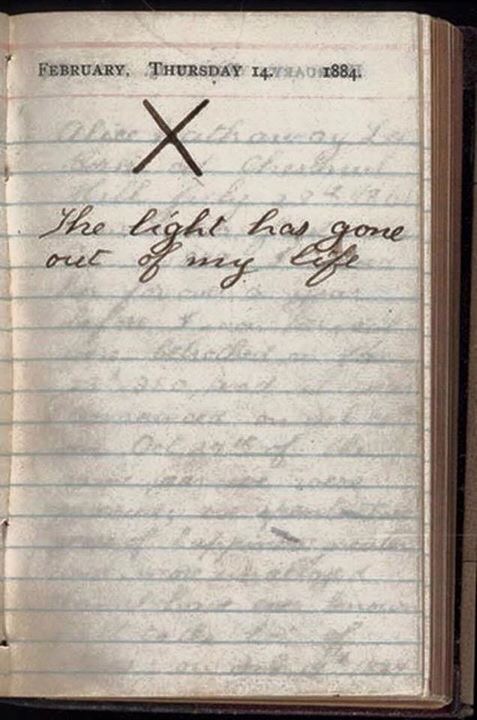

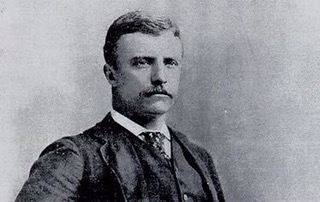
 Today in History, February 14: 1884 – 25 year old Theodore Roosevelt was at work in the New York Assembly in Albany fighting for a reform bill when he received an urgent telegram to return to his home in New York. When he reached his front door his brother Elliott greeted him, “There is a curse on this house”. Their mother Mittie was suffering from Typhoid fever, and Teddy’s wife Alice, who had given birth to her namesake just two days earlier, was suffering from Bright’s Disease. TR went up and down the stairs to be with them. Mittie died first, followed within hours by Alice. Roosevelt was devastated. His diary entry for that date was simply a large X and the note, “The light has gone out of my life”. He could never speak of his first wife again, not even mentioning her in his autobiography. When he returned to the legislature, even his detractors treated him with deference for a time because of the tragedy. He soon left the Assembly, left the infant Alice with his sister Bamie and struck out west to the Dakotas to escape. He would become a rancher and a sheriff, and make many friends who would later be “Rough Riders” with him. In ’86 he returned east, re-entered politics and re-married. His daughter Alice became famous for outlandish behavior, dealing with her own demons due to the temporary abandonment and a new family. Adversity affects us all differently. One has to wonder if TR would have accomplished all that he did if this tragedy hadn’t driven him west and altered his life.
Tag: History
“Rendezvous”


Today in History, February 13: 1822 – Missouri Lt. Governor William Ashley, already an enterprising entrepreneur in the gunpowder business, posts an advertisement in the Missouri Gazette and Public Advisor seeking 100 men to volunteer for an expedition up the Missouri River as fur trappers. The expedition first tried to setting up a trading post on the Yellowstone River in Montana, but the Arikara Indians, firmly entrenched in the fur trading business themselves, kept raiding the post to eliminate the competition. Ashley then set upon a new idea; he told his trappers, including Jim Bridger, Jedediah Smith, James Beckwourth (first African-American mountain man) to go overland by horse into the mountains to trap, and once a year they would meet at a location set by Ashley for a “Rendezvous”, where they would spend several weeks trading their furs for supplies…and taking the opportunity for a rare socializing event, spent mostly intoxicated. The Mountain Men sold their furs to Ashley for a tidy profit, and then disappeared into the wilderness again. Ashley spent two years at this venture, making a huge profit, then sold his Rocky Mountain Fur Company and returned to politics, serving terms in the House and the Senate. But the Rendezvous system carried on for years in the fur trade.
Rescue Mission
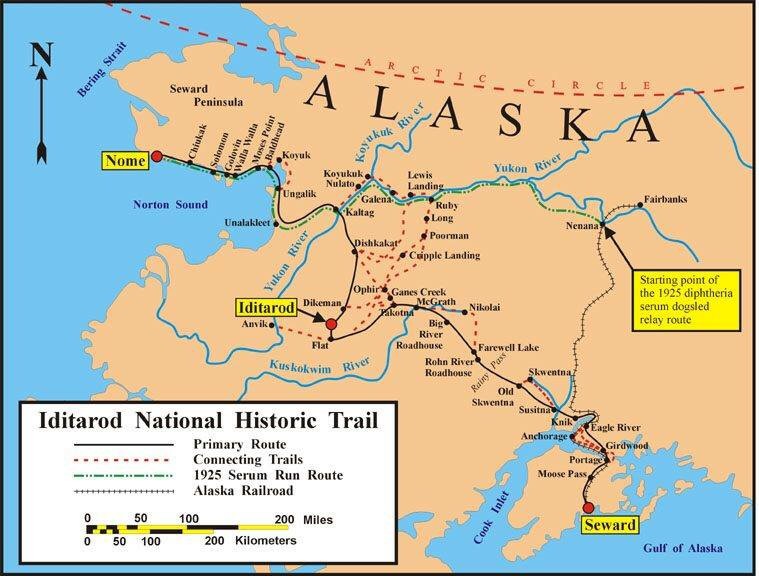
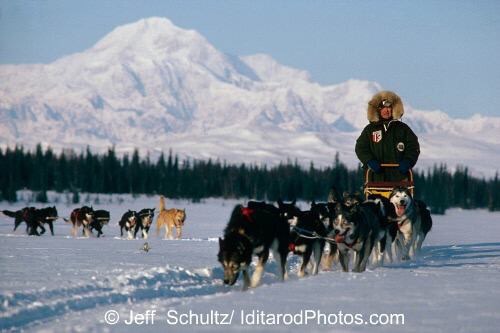
Today in History, February 2: 1925 – The children were dying. The last ship had left, and they were iced in. They may as well be living on Mars, considering the distance and conditions. It was 50 below, windswept and icy. By the time the ice thawed and the next ship arrived, they would most likely all be dead, here within a few miles of the North Pole. A diphtheria epidemic had begun in Nome, Alaska. The only doctor, in desperation, sent a telegraph, “An epidemic of diphtheria is almost inevitable here STOP I am in urgent need of one million units of diphtheria antitoxin STOP Mail is only form of transportation STOP I have made application to Commissioner of Health of the Territories for antitoxin already STOP There are about 3000 white natives in the district.” The native population was unaccustomed to disease…and would most likely be wiped out completely. Supplies of medicine were sent to the Port of Seward, and after many rough men and their teams of Huskies forced their way across 674 miles of the most harsh territory on Earth, the antidote was delivered to Nome on this date in 1925. Had it been a decade in the future, an aircraft could have easily delivered the medicine, but not in 1925. Then it took heroes to save 10,000 souls and perhaps more had the virus spread in the region. A hazardous trip across mountain ranges and frozen tundra that normally took 30 days was made in FIVE…because it had to be. Thus was born the modern Iditarod Race, to commemorate the event.
The Importance of the Court
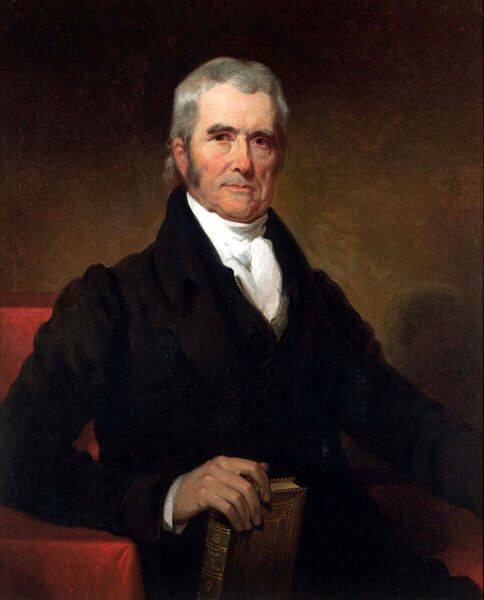 Today in History, January 31: 1801 – John Marshall is appointed as the fourth Chief Justice of the US Supreme Court. His decisions would make the Supreme Court the true 3rd segment of the American Government, a “check and balance” of the other two. This only gives us faith in our government when the court makes decisions based on law, and not on politically biased opinions. Marshall, the longest serving Chief Justice, would serve for 34 years, taking part in over 1,000 decisions. He would affect law through six presidencies.
Bleeding Kansas Joins the Union

Today in History, January 29: 1861 – Kansas enters the Union as a free state. Plain, flat Kansas has played a very large role in the formation of our nation.
I wasn’t there but a little while when I went to help a feller shingle a roof. It was about eight o’clock in the mornin’, and I was sittin’ there on the roof just lookin’ out at those miles and miles of prairies, and way off in the distance I see somethin’ about the size of a cigar standin’ up on the horizon. It didn’t seem to get no bigger and after I watched it a while I says to the feller, ‘Look at that thing out there, don’t it look funny.’ He looked where I was pointin’ and he says ‘Know what that is? That’s the freight train comin’ in.’ Well, we worked all mornin’ and we went in and was eatin’ dinner when we heard that train pull into the depot.
“Mr. Botsford on Travel—Kansas,” Art Botsford, Interviewee; Francis Donovan, Interviewer; Thomaston, Conn., December 27, 1938. American Life Histories: Manuscripts for the Federal Writers’ Project, 1936-1940. Manuscript Division
“Bloody Kansas” had fought the battle between abolishionists and slavery proponents from Missouri throughout the 1850’s. It’s internal battle was a precursor to the Civil War, during which the entire nation would battle for it’s very life over the unholy concept of one man owning another.
Around the World in 72 Days

Today in History, January 25, 1890 – Courageous, Crusading journalist Nellie Bly (Elizabeth Cochran-Seaman) arrives home after traveling around the world in 72 days by ship, horse, rickshaw…any means necessary. Nellie Bly (pen name) worked for the New York World, and had set out to prove that Jules Verne’s fictional Phileas Fogg could have traveled “Around the World in 80 Days.” Anything a man can do…
Her adventures were covered by Joseph Pulitzer’s New York World through dispatches, articles upon her return, and in the novel she would write.
Ms. Bly had already made a name for herself by going undercover to expose the practices at a Women’s Insane Asylum. She would complete numerous other exposes into other realms as well.
Swashbuckling Was Real

Today in History, January 8: 1815 – The Battle of New Orleans. American Major General Andrew Jackson’s forces (approximately 4,700) defeat British Major General Edward Pakenham’s forces (8,000). The British were attempting to fight their way into New Orleans but first had to defeat the “Jackson Line” of defensive works lined with artillery, US Army regulars, Kentucky and Tennessee Militia, Freedmen, Native Americans and even the pirate Jean Lafitte and his men. The British were confident of a quick victory, attacking in the morning under the cover of fog. But the fog cleared and Pakenham’s men were cut to pieces by grapeshot (anti-personnel artillery) and the marksmanship of the Americans. Pakenham, a veteran of numerous campaigns worldwide (Brother-in-law to the Duke of Wellington), was knocked from his horse by grapeshot which struck him in the leg, then hit in the arm, and finally, as he climbed on his aide-de-camp’s horse was struck in the spine, wounding him mortally. Most of the British officers were killed and their troops, not knowing whether to charge or retreat, were being decimated in the open field until another general arrived and ordered a retreat. If you have time to read more, the story is fascinating on both sides. The battle was fought approximately 2 weeks after the Treaty of Ghent was signed, initiating the end of the War of 1812, but of course none of the parties in Louisiana knew that. Jackson would ride the fame of the victory into the Executive Mansion.
Jackson had plenty of reason to hate the British. During the Revolutionary War, when he was 13 and 14, he and his brother were captured by the British, tortured and scarred. Young Andrew was beaten because he obstinately refused to shine a British Officer’s boots. Jackson’s brother Robert would die soon after release, his mother would die of Cholera while treating American soldiers injured during the war; he was orphaned as a result. I’m sure his hatred of the Crown contributed to the crushing defeat at New Orleans.
When Jackson was elected President, his supporters literally climbed through the windows and trashed the White House. He fought continuously with the Washington elite over several issues, most notably the banking system.
Pioneers in Amusement, Electricity & Abuse

Today in History, January 4: 1903 – Captured as a child in Southeast Asia, then smuggled to America and sold into slavery. Ironically named after a character from “Uncle Tom’s Cabin”, Topsy was forced to perform for crowds in a circus. On one occasion, a drunken spectator found his way into her tent and tormented her…teased her and burned her with his cigar…and ended up dead when she defended herself. Her owners took the opportunity to label her as a killer as advertising. When another incident occurred, they sold her to a menagerie at Coney Island. Her trainer, also a drunk, stuck her with a pitchfork while trying to make her work and was confronted by a police officer who objected (damned cops). The trainer, in anger, set her loose to rampage through Coney Island and later rode her to the police station to batter at the entrance. Through the fault of her captors, Topsy had by now gained such a bad reputation that she couldn’t even be given away. So her captors made even more money…advertising her execution. On this date, monitored by the ASPCA, she was fed poisoned carrots, then wired up and electrocuted by the Edison Electric Company (who also filmed the video below to commemorate the event). To make sure she was dead, ropes pulled by steam engines then strangled Topsy the elephant for 10 minutes. Ain’t we proud?
Nothing Lives Long. Except the Earth and the Mountains. -Death song of Chief White Antelope, age 75


Today in History, November 29: 1864 – The Sand Creek Massacre.
As the morning was dawning over the sleepy village, Chief Black Kettle saw them approaching, and hoisted the Stars and Stripes above his Tipi as a sign of brotherhood and peace. And then the blue coated soldiers began firing.
The Cheyenne and Arapaho of Colorado had settled in for the winter along a bend in Sand Creek in eastern Colorado. Resources in the barren area were in short supply and they expected a harsh time. 900-1,000 people in hundreds of Tipis, although many were out hunting buffalo that morning.
The Civil War raged further east, and in Colorado and New Mexico a few months previous. Colonel John Chivington of the Colorado Volunteers had fought in those battles, but now was looking for a new fight. After a family of settlers was killed, allegedly by Arapaho or Cheyenne, the Governor tasked Chivington with raising a regiment to defend against hostile Indians. But his regiment’s enlistment was nearly up and he hadn’t found any. So he took over 700 troops to attack the peaceful village along Sand Creek.
After the attack on the settlers, the white authorities told the peaceful Indians to encamp at military forts and facilities where they would be protected. Chief Black Kettle had spoken to the commander of a nearby fort seeking to comply. He was told to keep his people at Sand Creek until the commander received further orders, and they would be safe.
Hundreds of women and children dropped to their knees in front of the soldiers that morning, imploring them for mercy. There was no mercy given as the women and children were shot down or had their skulls caved in. Many then ran for the creek where they sought cover, or fled north. For the next several hours Chivington’s soldiers chased them down and killed as many as they could.
Seeing what was happening, Chief White Antelope approached the soldiers, folded his arms, and began singing his death song, “Nothing lives for long. Except the Earth and the Mountains.”
Chief Black Kettle carried his wounded wife and fled north towards another band of Cheyenne. He would make his way to Oklahoma, where he led his people to again attempt peaceful existence. He would live two days shy of four years more…when he and his wife would be chased down and killed by soldiers of George Custer’s command at the Massacre along the Washita River.
One of the Union officers present that day refused to follow commands and ordered his company not to fire; and tried to save some of the victims. Captain Silas Soule was career Army and recognized the cowardly acts being carried out. The next day he wrote a letter to a Major friend of his back east, telling of the horrific behavior of Chivington’s “mob”. He told of women and children having their brains bashed in. He said that Chiefs had their ears and genitals cut off as trophies, and all those killed were scalped. The crazed killers cut out many of the women’s genitalia as souvenirs.
Chivington would escape court martial by resigning from the Volunteers. But even during the Civil War, the government and the people were aghast at the atrocities carried out at Sand Creek, and Congressional hearings were held in 1865, which Captain Soule testified at against Chivington. For his trouble he was gunned down in the street in Denver a few months later. His murderers were never prosecuted.
The assault was intended to force peace for the nascent settlements in Colorado. It had exactly the opposite effect, as the Cheyenne Dog Soldiers and others fought a decade’s long war with the settlers, their trust of the white people destroyed.
The story was eventually almost forgotten, and was a touchy subject when it was spoken of. However Colorado eventually began to come to terms with this dark part of its history, and in 2007 the Sand Creek Massacre National Historic Site was established, run by the National Park Service. Many visit the site in homage to the approximately 200 Native Americans who died that day.
Several of the sites I read in preparation for this posting indicated the subject was not covered much until the 2000’s. However if you read (or watch) James Michener’s “Centennial”, you’ll find that he covered the events very well, just with a change in names.
“Now look! That damned cowboy is President of the United States!” -Sen. Mark Hanna


Today in History, September 14: 1901 – About a year earlier, Senator Mark Hanna had been discussing with other high-powered Republican leaders whether or not to enlist New York Governor Theodore Roosevelt to be the Vice-Presidential nominee for President William McKinley’s second term. Hanna made no bones about his opposition, “Don’t any of you realize there’s only one life between this madman and the presidency?” But, other political leaders from New York state wanted the head-strong reformer out of their governor’s office, and most felt he would be rendered harmless as VP. However this former NYC Police Commissioner, Under Secretary of the Navy, Colonel of the Rough Riders and yes, Cowboy, was wildly popular and would be a boon for the ticket. When named, TR set records on the campaign trail.
On today’s date in 1901 President McKinley succumbed to infection from his wounds from being shot by an anarchist at the Pan-American Exposition in Buffalo, New York. McKinley had prided himself on shaking as many hands as possible, and was prepared to shake his assassin’s hand when shot by a concealed .32 revolver.
It initially looked as if President McKinley would recover, so Roosevelt left his side in Buffalo and joined his family mountain climbing in the Adirondacks. When the first messenger ran up the mountain to inform TR that the President had taken a turn for the worse, he decided to stay with his family. When the second messenger came up the mountain to say the President was dying, Roosevelt left immediately. He once gain set records in wild wagon rides to make it to the nearest train station and return to McKinley’s side. It was not to be….WM had passed while TR was on his wild ride down the mountain.
Theodore Roosevelt paid his respects at the residence where McKinley’s body laid, then was sworn in as the youngest President at a friends home in Buffalo in a small ceremony.
When TR asked Mark Hanna for his support, Hanna had two conditions…that Roosevelt would continue McKinley’s policies (sort of did) and…if Roosevelt would stop calling Hanna the “old man”, Hanna would stop referring to TR by the nickname he hated, “Teddy.” Hanna gave his support, but the nicknames continued.
 Mark Loves History!