The Battle of New Orleans

Today in History, January 8, 1815:

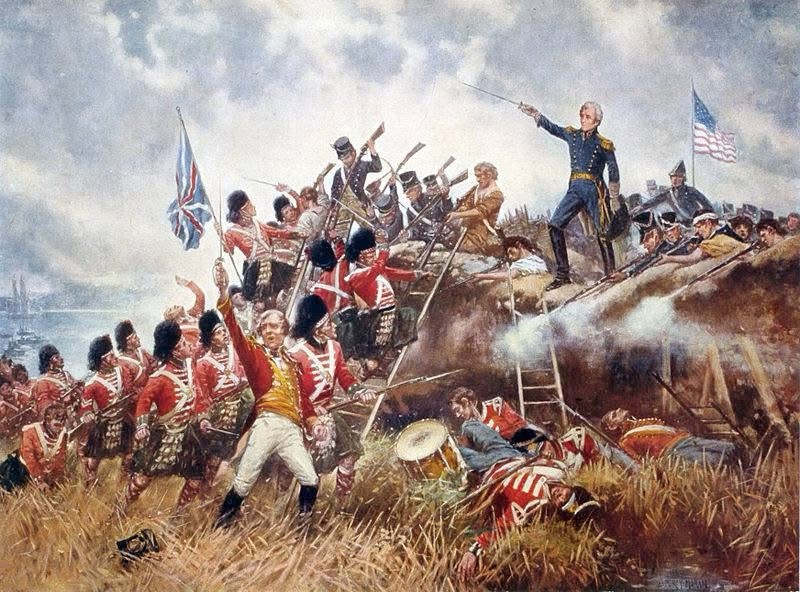
The Battle of New Orleans.

American Major General Andrew Jackson’s forces (approximately 4,700) defeat British Major General Edward Pakenham’s forces (8,000).

The British were attempting to fight their way into New Orleans but first had to defeat the “Jackson Line” of defensive works lined with artillery, US Army regulars, Kentucky and Tennessee Militia, Freedmen, Native Americans and even the pirate Jean Lafitte and his men.

The British were confident of a quick victory, attacking in the morning under the cover of fog. But the fog cleared and Pakenham’s men were cut to pieces by grapeshot (anti-personnel artillery) and the marksmanship of the Americans.

Pakenham, a veteran of numerous campaigns, was knocked by his horse by grapeshot which struck him in the leg, then hit in the arm, and finally, as he climbed on his aide-de-camp’s horse was struck in the spine, wounding him mortally.

Most of the British officers were killed and their troops, not knowing whether to charge or retreat, were being decimated in the open field until another general arrived and ordered a retreat.

The battle was fought approximately 2 weeks after the Treaty of Ghent was signed, initiating the end of the War of 1812, but of course none of the parties in Louisiana knew that.

Jackson would ride the fame of the victory into the Executive Mansion.

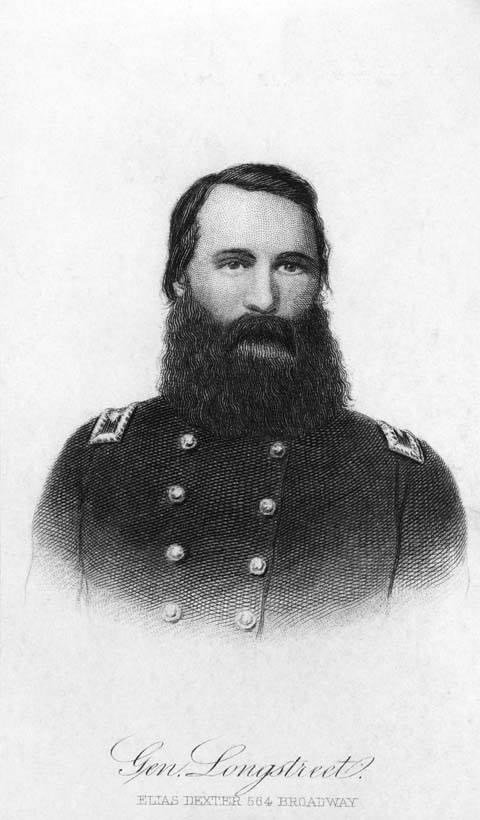
James Longstreet – American

Today in History, January 8, 1821:

James Longstreet is born in near Edgefield, South Carolina.

Longstreet is an excellent example of the paradox of the 19th century. He graduated West Point, fought gallantly in the Mexican-American War at the Battle of Chapultepec; he was close friends with Ulysses Grant, serving as best man at Grant’s wedding.

After such loyal service to the US Army, in 1861 he resigned his commission and joined the Confederacy.

He fought in most of the major battles in the eastern area and some in the west. Aside from Robert E. Lee, he was likely the most respected and successful Southern General.

Yet after the war, he determined to do the best he could by his countrymen. He joined the Republican Party and returned his loyalty to the government.

The Republican party had been the entity that had pursued the war in the North, so his detractors excoriated him for this act…but in his statements he wanted to use the power of the Republican party to maintain Southern rights and desires.

Jubal Early and others claimed he was responsible for the loss at Gettysburg (he was not).

Much like Lee, whether you agree with what he fought for or not, Longstreet appeared to be a “Southern Gentleman”, and gained the admiration of the soldiers that served with him.

And For Your Trouble…

Today in History, January 8: 1642 – Italian astronomer Galileo Galilei dies in Italy at age 77. Considered the father of astronomy, Galileo was the first to use a telescope, enabling him to makes several stellar discoveries. This included the ability to confirm that the earth rotated around the sun, rather than the other way around. He published his findings and for his trouble, in 1633 (Inquisition) he was convicted of heresy, sentencing him to house arrest (due to his advanced age) until his death.

Swashbuckling Was Real

1560490_10200342992376196_1011282728_n

Today in History, January 8: 1815 – The Battle of New Orleans. American Major General Andrew Jackson’s forces (approximately 4,700) defeat British Major General Edward Pakenham’s forces (8,000). The British were attempting to fight their way into New Orleans but first had to defeat the “Jackson Line” of defensive works lined with artillery, US Army regulars, Kentucky and Tennessee Militia, Freedmen, Native Americans and even the pirate Jean Lafitte and his men. The British were confident of a quick victory, attacking in the morning under the cover of fog. But the fog cleared and Pakenham’s men were cut to pieces by grapeshot (anti-personnel artillery) and the marksmanship of the Americans. Pakenham, a veteran of numerous campaigns worldwide (Brother-in-law to the Duke of Wellington), was knocked from his horse by grapeshot which struck him in the leg, then hit in the arm, and finally, as he climbed on his aide-de-camp’s horse was struck in the spine, wounding him mortally. Most of the British officers were killed and their troops, not knowing whether to charge or retreat, were being decimated in the open field until another general arrived and ordered a retreat. If you have time to read more, the story is fascinating on both sides. The battle was fought approximately 2 weeks after the Treaty of Ghent was signed, initiating the end of the War of 1812, but of course none of the parties in Louisiana knew that. Jackson would ride the fame of the victory into the Executive Mansion.

Jackson had plenty of reason to hate the British.  During the Revolutionary War, when he was 13 and 14, he and his brother were captured by the British, tortured and scarred.  Young Andrew was beaten because he obstinately refused to shine a British Officer’s boots.  Jackson’s brother Robert would die soon after release, his mother would die of Cholera while treating American soldiers injured during the war; he was orphaned as a result. I’m sure his hatred of the Crown contributed to the crushing defeat at New Orleans.

When Jackson was elected President, his supporters literally climbed through the windows and trashed the White House.  He fought continuously with the Washington elite over several issues, most notably the banking system.