The Great Marianas Turkey Shoot

Today in History, June 19, 1944:

Reversal of Fortunes, exhibited by “The Great Marianas Turkey Shoot”, or the First Battle of the Philippine Sea.

US Marines, supported by their parent service, the US Navy, are invading Saipan and other islands in the Marianas Islands, which is such a threat to Japan that the Imperial Japanese Navy finally comes out to fight a definitive battle.

When the war began the Japanese had the most advanced aircraft available, while the US Navy lagged sorely behind. The Japanese Zero, for example, was much faster and more maneuverable than the American Wildcat fighter. But by 1944 the American industrial complex had engaged fully. As late as 1943 the USS Enterprise stood alone in the Pacific against numerous IJN Carriers.

But by June of 1944 the Americans put to sea 15 Aircraft Carriers in 4 Task Groups equipped with modern aircraft that far out matched Japan’s aircraft, which had not been updated since the war began. In addition, Japan’s air service had lost nearly all of it’s experienced pilots, while the Americans had thousands of combat hardened, well-trained pilots and crews.

When the IJN sent it’s carriers and their crews against TF 58, they were massacred. In two days the Japanese lost over 400 aircraft and their crews, 3 aircraft carriers they could not spare, and the Americans lost 29 aircraft (some of the crews were rescued) and no ships. So many Japanese aircraft fell from the skies that a Lexington pilot referred to it as an old time turkey shoot, and the name stuck.

The air crews of the task force had been launched late in the day on the 20th to attack the Japanese fleet. When they returned, it was well after dark and they began landing their planes in the sea, unable to see the carriers well enough for landings aboard.

With the threat from enemy submarines and aircraft during the war, blackout conditions were the rule. Admiral Marc Mitscher wasn’t going to lose his boys and their planes, however. With his order the fleet lit up, and the planes began landing on fumes.

“That Guy” Who Always Seems to be There…and Its Not Always the Glorious Jobs that Render Success…


Today in History, May 28, 1917:

300 miles south of Greenland, a few sailors aboard a US Navy “oiler”, the USS Maumee AO-2, made history with an act which would greatly affect history.

The logistics of keeping fleets supplied at sea was nothing new, but it did have extreme restrictions.  The Navy had tackled the problem in order to display its reach with the around the world tour of the Great White Fleet in 1907-1909, but that had been a task of loading enough coal on board to keep the ships moving.

The Maumee, when commissioned in 1914, was the Navy’s first diesel powered surface ship.  When the United States joined the fight in WWI, she was sent to a point off Greenland to do something which had never been done before…refuel ships while underway at sea.  Her first customers were six Destroyers on their way to England.  They performed the task successfully, and continued refueling ship that weren’t “log-legged” enough to make the trip.

I’ve written before about someone who always seemed to be mentioned when reading Army history about others during the 19th Century…General Nelson A. Miles.  Often he was the guy “cleaning up” an issue or who “also” played an important part.

Well, here is “that guy” for the US Navy in the 20th Century.  He became more famous, of course, but not for everything he should have.

When the Maumee was commissioned, a young Lieutenant was named her Executive Officer because he was an expert in her diesel engine technology.  He was still the Exec when she performed her ground breaking refueling tasks.  Chester Nimitz played an integral part.  Because of his expertise with diesel engines, Nimitz would also play a key part in the development of the Navy’s submarine fleet.

In 1938 the Chief of Naval Operations, Admiral William Leahy, ordered the commander of TF 7 to develop procedures for refueling larger ships, such as battleships, cruisers and carriers while underway at sea.  That, of course, was now Rear Admiral Nimitz.

When the US joined in WWII after the attack on Pearl Harbor, they called Nimitz from a job in DC to command the Pacific Fleet.  Now he was in charge of taking the war to Japan.  A job that required a lot of logistics, including vast advancements in refueling huge fleets at sea.  The underway processes would be key in famous battles such as the Coral Sea, Midway, the Doolittle Raid and many others.  One of the first at-sea casualties in the fleet would be an oiler during the Coral Sea battle.

In 1944 another huge leap was made.  Admiral Raymond Spruance was tasked with performing raids on Japan to minimize air attack threats during the invasions of Iwo Jima and Okinawa.  (His boss was Nimitz.)  He had a problem which had to be solved.  The Navy had underway refueling down to an art.  However his fleet of Aircraft Carriers would “shoot” through their on-board supply of munitions (bombs, torpedoes, bullets) in about three days.  After the three days, they would have to make a 12 day trip to Ulithi Atoll and back for resupply.  This would keep them on station and in the war only six days out of a month.

As Leahy had, Spruance ordered his staff to develop processes to resupply ammunition, food stocks, etc. while underway.  Which they did.  It was a dangerous undertaking, moving bombs across decks of moving ships and across winches between ships, but they did it.  Now, after spending their ammo, the fleet would sail overnight to meet the supply ships, refuel, re-arm and re-supply while underway from different supply ships while underway, and be back in the fight within two days.

After the war, inventive officers asked to design ships which could replenish ships underway using a “one-stop shop” method…where one supply ship would resupply fuel, ammo and other needed supplies in one pass.  The Navy’s new CNO approved heartily…of course…Fleet Admiral Chester W. Nimitz.

The Navy has made huge advancements since, and in recent years has improved their resupply capabilities even more.  They have the massive Gerald Ford carriers to plan for.

The US military’s ability to reach out and touch someone anywhere in the world, would not be possible without the innovations which allow them to resupply on the move…anywhere.

We almost didn’t have “Chester” to help make all of these advancements for the Navy.  In 1907, young Ensign Nimitz ran his Destroyer, the USS Decatur, aground and was found guilty of hazarding his ship during the subsequent court martial.  As we have seen during recent events, this normally would mean a swift end to one’s Naval career.  Thank God the Navy brass saw fit to give Nimitz another chance.

Women’s Army Corps

Today in History, May 15, 1942:

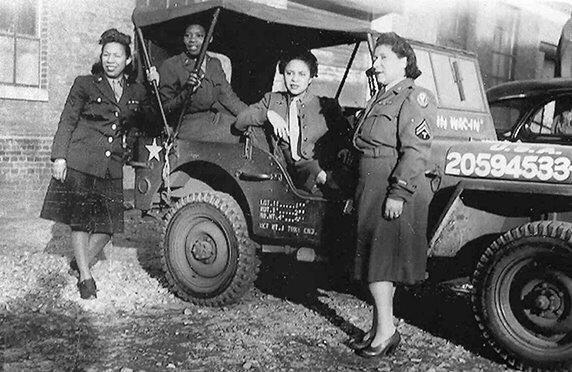
President Franklin Roosevelt signs a bill passed the previous day creating the Women’s Army Auxiliary Corps.

The bill had been put forward by Massachusetts Representative Edith Nourse Rogers in mid-1941, who had seen women volunteer in the first World War…on their own dime and without compensation or benefits. The bill lingered until after the attack on Pearl Harbor, when it was taken more seriously.

The many women who served as WACS and WAVES (Navy) during WWII were paid and received benefits, although not as much as the men. It would be decades before they received pensions.

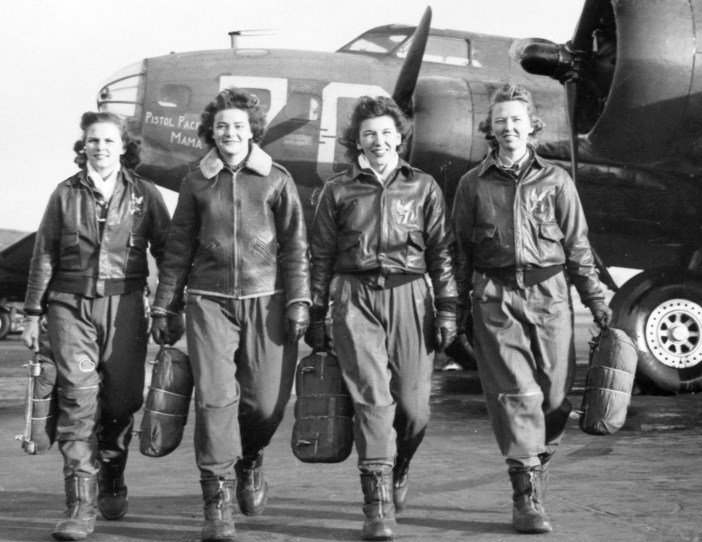
Their service was to be in non-combat roles…secretarial, air traffic control, ferrying aircraft, and hundreds of other positions.

While the inclusion of the hundreds of thousands of women in the military was a huge step forward for a nation which had only given women the vote two decades before, it was still repleat with gender bias. Women could not command men.

The move also was born of necessity, rather than revolutionary thinking. It had the full support of the Army’s commanding General, George C. Marshall, who testified before Comgress on behalf of the legislation.

Marshall expected the “Two-Ocean War” to quickly overwhelm the nation’s ability to provide “manpower”. He believed women already trained in administrative jobs would be more efficient and effective than men.

While the women served in “non-combat” roles as operators, etc, you can’t serve in a combat zone without the risks of combat. WACS were killed in action. One source indicated 16.

Confederate Big Easy Defenseless

Today in History, April 25, 1862:

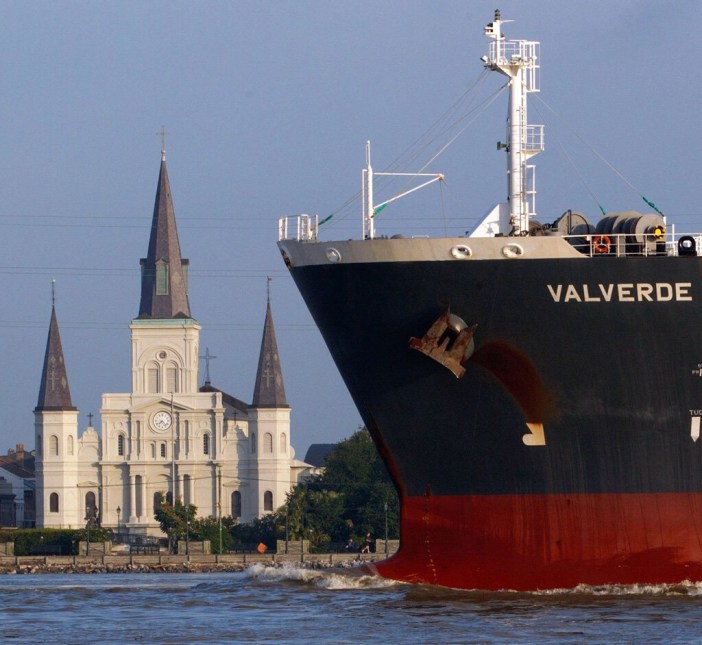
Have you ever walked along the levee in the French Quarter in New Orleans, Louisiana? If you have, it’s difficult not to be awed when you look UP at the top of the levee and see a ship floating across the water…well above you.

The view makes it very obvious how incredibly vulnerable the city is to the Mighty Mississippi and the massive ships sailing her channel.

On this date in 1862 Union Admiral David Farragut had already led his fleet of US Navy ships past Ft. Jackson and Ft. St. Phillips below the Crescent City, he and his crews blew past nascent the Confederate “Navy” and placed their heavy guns off of New Orleans.

The New Orleans military, government and citizens were told…it was obvious…if they didn’t surrender, the US Navy would fire DOWN into the wooden structures of the Quarter….they may, if necessary, blast a hole in the levee and simply let nature flood out the defenders.

Confederate General Mansfield Lovell told Major Moore what would happen if resisted. So they stalled while Lovell shipped his troops and equipment north by rail to Vicksburg.

Finally on April 29 the residents folded. By May 2 the Confederates relinquished the largest, most industrial, cosmopolitan city in the Confederacy. Remember the rivers were the thoroughfares in the 1800’s.

The Union now had control of NOLA’S resources, and now the Union could ship supplies north from the Gulf as far as Vicksburg and north to south.

The War had seen a major change. And the citizens of New Orleans would find peace with General Butler worse than war with Farragut. But thats a different story.

Victory and Assassination

Today in History, April 4: 1865:

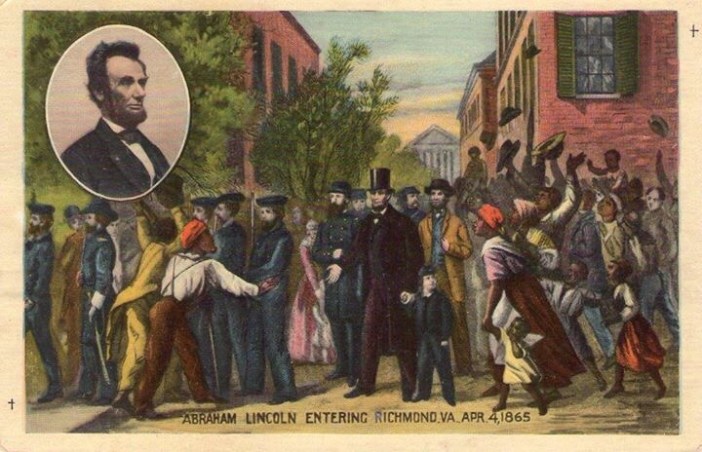
150 years ago today. President Lincoln enters Richmond, the Confederate Capitol. Lincoln had been at City Point when informed that Richmond had been taken the day before by Union Army forces.

He immediately sailed on the USS Malvern, Flag Officer David Dixon Porter’s flagship for Richmond. After he disembarked, he was initially escorted through crowds by a contingent of sailors, who were very relieved when they were met by a group of Union Cavalry to assist in escorting the President to the home of Confederate President Jefferson Davis.

Many former slaves attempted to pay homage to Lincoln, who would not allow it. Onlookers watched from the windows and street corners.

At Davis’ house, Lincoln sat in Davis’ chair, then toured the house.

When later asked by Union Gen. Weitzel how the conquered rebels should be treated, Lincoln indicated that he would not give an order in that regard, but that his advice would be to, “Let them up easy….let them up easy”.

As for the nervous sailors and cavalrymen that escorted him? As it turns out, Lincoln was safer in the Confederate capitol that his own. He had only ten days until he would be assassinated.

103 years later to the day, another man dedicated to civil rights and the advancement of justice, Dr. Martin Luther King, Jr. would be assassinated in Memphis, Tennessee.

April is a Historic month with many stories to tell.

Six Frigates…The US Navy Makes a Name for Itself

Today in History, March 27: 1794:

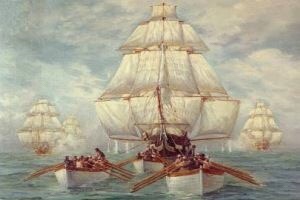
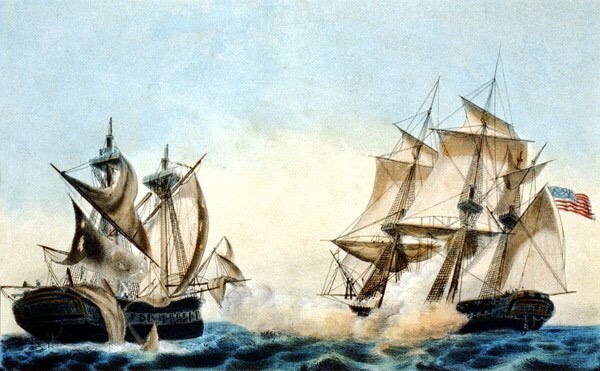
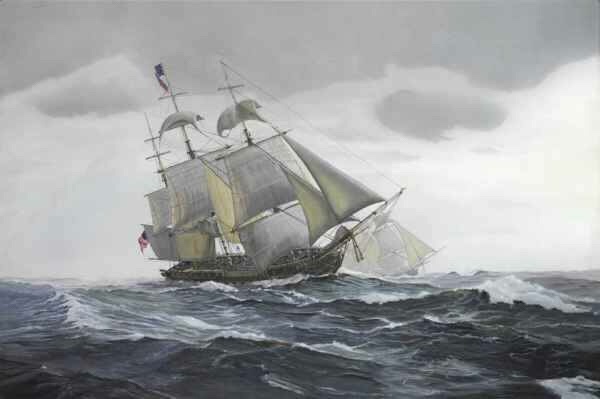
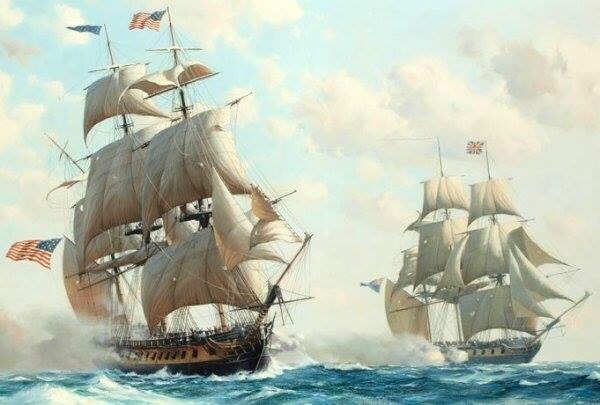
President Washington signs the Naval Act of 1794, ordering the construction of 6 Frigates capable of high speed and of holding their own against “ships of the line.”

After the Revolutionary War, America didn’t feel it needed a navy; after having several ships seized by Barbary pirates, and after abuses by the Royal Navy, the administration and Congress came to the realization that America needed a navy to protect it’s shipping.

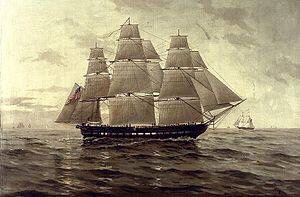
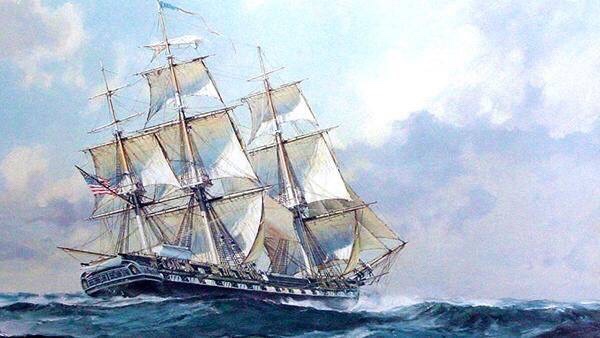
Thus the USS Constitution (Old Ironsides, oldest commissioned US Navy vessel), USS Constellation, USS President, USS Congress, USS United States and the USS Chesapeake began their illustrious Naval careers.

The Birth of Naval Aviation. Samuel Langley and Theodore Roosevelt Together Again…

530155_2490408238323_104830550_n

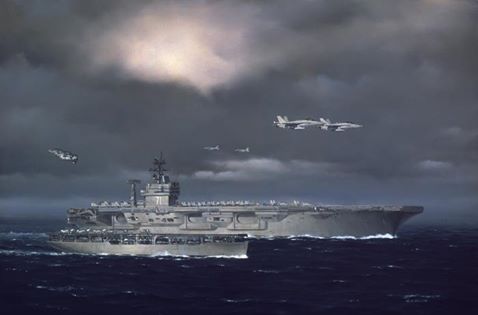
Today in History, March 25: 1898 – Assistant Secretary of the Navy Theodore Roosevelt (that crazy cowboy) proposes that the Navy investigate the use of a flying machine being researched by Samuel Langley. As a result, congress authorized $50,000 to support Langley’s design. This was nearly a decade before the Wright Brothers accomplished the first manned, powered flight, but many people had been working on the challenge for years. Langley’s, and Roosevelt’s insight was the beginning of US Naval Aviation. Check out this print by R.G. Smith, which portrays the 1st US aircraft carrier, the USS Langley (CV 1), and the nuclear powered aircraft carrier USS Theodore Roosevelt (CVN 71) cruising together. Of course this is inspired imagination…Langley, converted to a sea plane tender, was lost in WWII.

The Langley was converted from the Collier USS Jupiter in 1920. By WWII she had been converted to a seaplane tender, her larger subsequent sisters taking on the aircraft carrier role. Attempting to deliver p-40 fighter planes to Java, on February 27, 1942 she was attacked by Japanese aircraft and damaged so badly she had to be scuttled.

Submarine on Submarine…The USS Batfish

Today in History, February 12, 1945:

The USS Batfish, an American Balao class fleet submarine, sinks it’s second Japanese submarine within three days. She would sink three Japanese submarines during her WWII career.

Sinking another submarine is quite an accomplishment, accounting for range, depth and speed with the technology of the time.

The Batfish had an active Naval career. If you’d like to see her, she lives on as a war memorial in Muskogee, Oklahoma. We’re pretty proud of her.

http://www.history.navy.mil/danfs/b3/batfish-i.htm

“The Way to Disarm is to Disarm” -US Sec of State Charles Evans Hughes

Today in History, February 6, 1922:

The Washington Naval Treaty of 1922 is agreed to by the remaining Navy powers from WWI. It would be a year until all the signatories had done so, but their representatives in DC made the agreement today.

It should have been perfect, as it had that one thing necessary for a successful negotiation: Everyone agreed, nobody was happy.

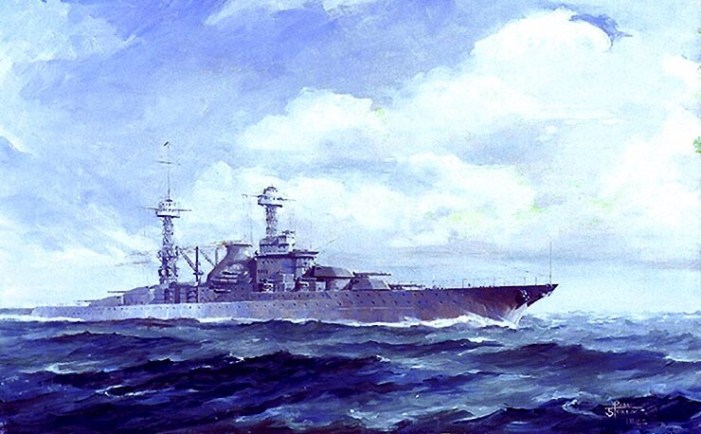
It agreed that certain capital ships would be limited by number and tonnage. Battleships and Battlecruisers would be limited.

The ratio of Navy size would be 5-5-3-1.75-1.75…England-US-Japan-France-Italy. So you can see why nobody was happy.

This was the nuclear limitations treaty of the 20’s.

Here are the many consequences of the treaty:

New Battleships could only be of a certain tonnage with guns no more than 16 in. In the mid 30’s Japan began ignoring the limitations, so for the beginning of WWII, American BB’s were seriously undersized compared to the monsters Yamato and Musashi. But that wouldn’t last long.

After WWI several of the nations had battlecruisers under construction…they could either scrap them or convert them to “less valuable” warships…Aircraft Carriers. This were born Akagi, Kaga, Lexington and Saratoga. More carriers of limited tonnage could be buit…this were born the Ranger, Yorktown, Enterprise and Hornet; Shokaku, Zuikaku and others.

After nearly two decades of intrigue, cheating, etc, as a result of the Washington Naval Treaty, Japanese flyers sank obsolete Battleships at Pearl Harbor, with planes from carriers.

The American carriers who amswered back, and unfortunately the USN and IJN traded losses fairly evenly…until only one US Carrier was left to counter the Japanese fleet in the Pacific.

But as the Japanese sailors in DC in 1922 had predicted, due to massive American industrial might, within a year of that carrier finding herself alone, the Enterprise was joined bu over a dozen modern, huge carriers of the Essex class and fast new Battleships.

The Importance of Being Thorough…

Today in History, February 1, 1942:

Less than two months after the bombing of Pearl Harbor, the US Navy strikes back.

Task Forces built around the USS Yorktown (CV-5) and USS Enterprise (CV-6) sped in quickly in cover of darkness, then struck at Japanese air bases and shipping in the Marshall Islands. The US aircrews made repeated sorties against the islands throughout the day, until Admiral William Halsey decided they had pressed their luck enough and ordered a withdrawal…the carriers and their support ships were valuable and in short supply.

The air raid did little damage…however it was a tremendous morale booster for the military and the folks at home, and brought home the realization to the Japanese that they could be “touched.”

Now for a History link…I love those. While the US had significant facilities in parts of the Pacific, they had spent little in Japanese held areas before the war.

The command staff and they flyers involved were using the very latest charts and maps they had of Kwajalein Atoll and the Marshall Islands…they were at least 100 years old in 1942.

In 1838, wanting to join the scientific communities of the European nations, the United States authorized and supplied six ships commanded by Lt. Charles Wilkes to explore the Antarctic region, the Northwest and Western coastal regions of the US and the Pacific.

During a more than 3 year circumnavigation of the world, the “US Ex Ex”, or US Exploring Expedition collected more than 4,000 scientific samples, documented their contacts with peoples along their route, and meticulously charted the many islands, bays, inlets, etc they found. Wilkes was very dedicated to this portion of the Expedition, much to the annoyance of the scientists aboard.

Wilkes lengthy US Navy career would bring him to fame again during the Civil War with the Trent Affair…but that’s another story.

As he was charting the Marshalls, his intent was for whalers and other ships to make use of his efforts…he almost certainly couldn’t imagine massive ships carrying aircraft which would drop explosives on the Pacific paradise 100 years hence.