Shortening the War with Tech

Today in History, January 5, 1943:

The light cruiser USS Helena is the first to utilize an anti-aircraft shell equipped with the newly invented radio proximity fuse to shoot down a Japanese dive bomber attacking American ships.

Prior to this anti-aircraft fire had been somewhat inaccurate. The proximity fuse used radio waves projected from the fuse to detonate the shell when it came within range of the enemy aircraft.

Now gunners only had to get their ammunition aimed toward the enemy aircraft, getting the range didn’t matter. The invention is credited with shortening WWII by a year and saving countless lives as a result.

Savannah Falls…

Today in History, December 29, 1778:

It appears Christmas time is not lucky for Savannah, Georgia in war time. On this date in 1778 British forces over powered the Colonials and took the city; they would hold the city, despite a seige by American and French forces, until the end of the Revolutionary War.

86 years later on Dec. 22, 1864, Union forces under William T. Sherman would take Savannah again, presenting it as a “Christmas gift” to President Lincloln during the American Civil War.

Standing Up For Religious Freedom in Early America

Today in History, December 27, 1657:

The Flushing Remonstrance.

Director-General of New Netherland Peter Stuyvesent had banned the practice of any religion other than that of the Dutch Reform Church.

Flushing, New Netherland, now Queens, New York, was then a Dutch colony. Stuyvesent diligently enforced his edict, imprisoning or banishing those that dared practice their own religions, including Quakers.

On this date 26 English colonists in Flushing signed a written protest and sent it to the Director-General protesting the mistreatment of the Quakers, though none of the signers were Quaker.

Four of them were arrested and/or banished for their trouble, and the law remained in place. The remonstrance is considered a pre-cursor to our own religious freedoms, and is remarkable for it’s eloquence and because none of the signers stood to personally gain by their acts.

Stuyvesent would eventually be ordered by the Dutch home government to end his persecution of other religions.

In part…”Therefore if any of these said persons come in love unto us, we cannot in conscience lay violent hands upon them, but give them free egresse and regresse unto our Town, and houses, as God shall persuade our consciences, for we are bounde by the law of God and man to doe good unto all men and evil to noe man. And this is according to the patent and charter of our Towne, given unto us in the name of the States General, which we are not willing to infringe, and violate, but shall houlde to our patent and shall remaine, your humble subjects, the inhabitants of Vlishing.”

Jean Baptiste Charbonneau – Our Decisions Affect Our Children…

Today in History, December 23, 1829:

Prince Paul Wilhelm of Wurttemberg leaves St. Louis and heads up the Missouri River. This was actually the second exploration of the American wilderness by the scientifically inclined German prince.

But a side note is what I find fascinating… Several years earlier, in 1822, the Prince had undertaken his first expedition into the west. To do so he needed the permission of the Superintendent of Indian Affairs in St. Louis, William Clark of “Lewis and Clark” fame, who had originally explored the West.

Clark had a foster son, the son of an Indian girl who had greatly assisted the Lewis and Clark Expedition: Sacagawea. Her son, Clark’s foster son, was Jean Baptiste Charbonneau.

Clark was so impressed with the Prince that when the Prince completed his first expedition in 1822, he allowed Jean (age 16) to accompany the Prince to Europe.

The young Jean was the Prince’s constant companion as they toured Europe and North Africa. Jean learned French, German and Spanish and became quite cosmopolitan. The trip back to the wild of America in 1829 was taken in order to bring Jean back to his home with Clark.

An interesting story, and what I take from it is the impact of decisions we make on our fate and the fate of those around us. Sacagawea could have led out her life quietly; but she made a decision that led her son on an odyssey she likely could never have imagined.

The Thirteenth Amendment & The House of Representatives

Today in History, December 18, 1865:

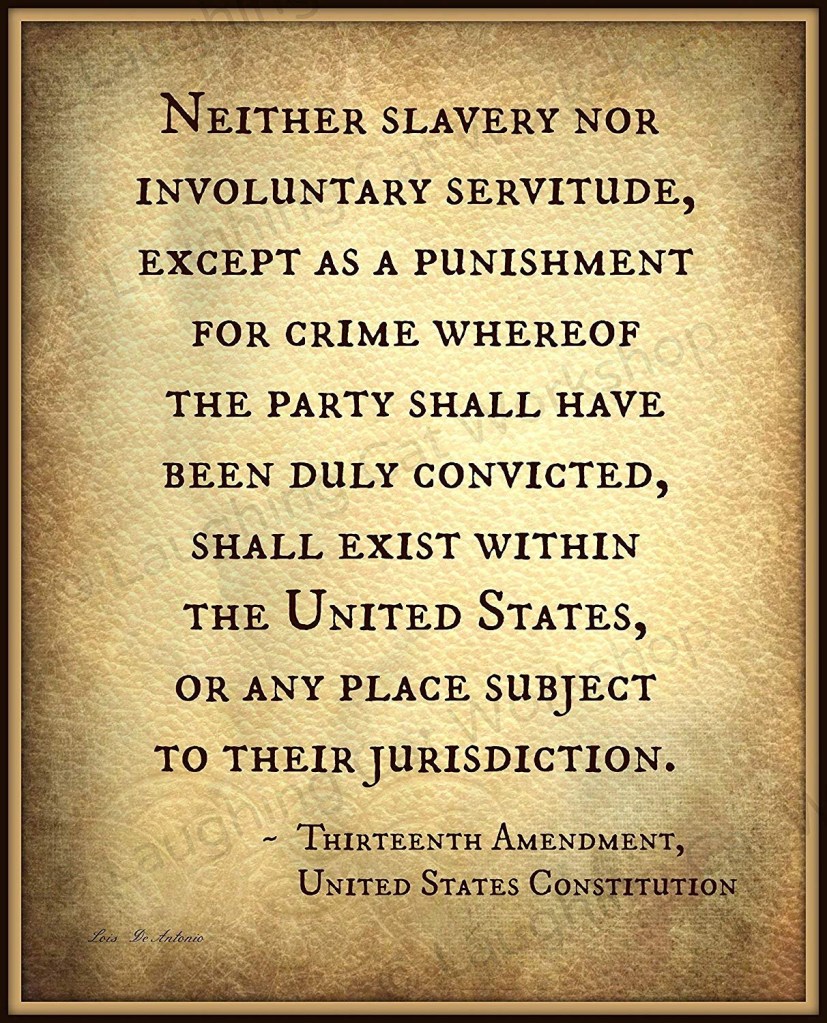
The US House of Representatives passes the 13th Amendment to the Constitution, abolishing slavery in the United States. “Neither slavery nor involuntary servitude…shall exist within the United States, or any place subject to their jurisdiction.” The issue had divided the nation from its inception due to its inherent disagreement with our founding principles….

The Republican Party had been founded by break-away former members of the Whig party, who had formed the new party in the 1850’s because of their abolitionist beliefs. The Civil War had begun because of the election of the first Republican President, Abraham Lincoln; the largely Democrat South believed abolition was eminent due to his election and seceded from the Union rather than give up their slaves. Republican Lincoln did in fact enact the Emancipation Proclamation in 1863, freeing slaves in southern states, an admittedly partial measure. For his efforts a Democrat radical assassinated him in 1865 before he could see the realization of the 13th Amendment. Lincoln had wanted the measure to be bi-partisan in an effort to re-unite the nation. Although he wouldn’t live to see it, he got his wish, to an extent. 7 Democrats abstained from voting rather that be a part of freeing the slaves, but the measure still passed due to a Republican majority and partial Democrat support. Angry southern Democrats would go on to form the KKK, resulting in another century of violence before civil rights measures were finally passed.

The Boston Tea Party – Saying No to Tyranny

Today in History, December 16, 1773:

The Boston Tea Party. In an effort to bolster the struggling British East India Company, the British Parliament passed the Tea Act of 1773, refunding taxes the company paid in England while retaining those paid by American colonists. The debate concerning taxation without representation had been raging for years, and this was, in a way, the last straw. In several cities protests had forced cargo ships to return to England with their holds still full of tea. But in Boston the British Governor of Massachusetts refused to allow 3 ships there to leave. So on this date Sam Adams led a contingent of the Sons of Liberty, dressed as Mohawk Indians aboard the ships and dumped their cargo of tea into Boston Harbor. This enraged Parliament, whose responses would light the fuse on the American Revolution.

Farewell

Today in History, December 4, 1783:

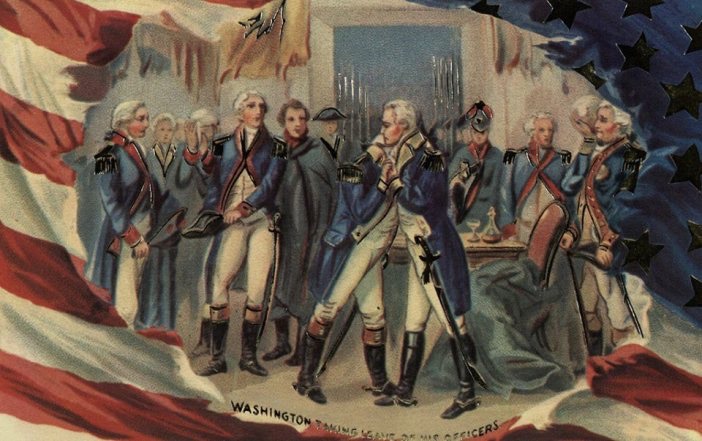
General George Washington, veteran of the French and Indian War, leader of his men from Bunker Hill to Valley Forge to Yorktown, with all of the hardships involved, announces to his officers that he is resigning his commission and returning to civilian life at the Fraunces Tavern in New York City.

“With a heart full of love and gratitude, I now take leave of you. I most devoutly wish that your latter days may be as prosperous and happy as your former ones have been glorious and honorable.”

Washington then took a moment with each of his officers alone. There was not a dry eye in the house, including the future President…George Washington….wept.

Where Have the “Tough as Nails” Presidents Gone?

There have been several courageous or (I dislike the term) “Badass” Presidents in our history.

They are missed.

January 30, 1835:

Outside the Capitol building in DC a man with two pistols approached President Andrew Jackson…and fired both pistols. Fortunately both misfired and war-hero Jackson, not knowing if the would-be assassin had other weapons, proceeded to use his heavy cane to beat the laundry off of the bad guy until other arrived to secure him.
August, 1864:

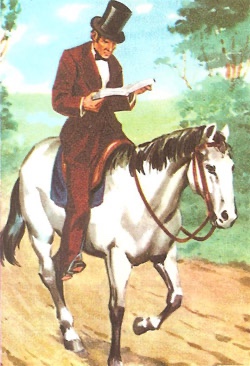
President Lincoln had a habit of relaxing at the “Soldier’s Home” to get away from the madhouse. One night he was riding back to the Executive Mansion, by himself, when someone took a shot at him, putting a hole through his hat.

As Lincoln loped up to a young sentry, the sentry noticed the President was missing his trademark hat. Lincoln explained what happened…and then swore the youth to secrecy. No point working the people (and I’m sure the excitable Mary Lincoln) up and causing a panic.

October 14, 1912:

Theodore Roosevelt is running for a third term in Milwaukee. As he enters his car in front of his hotel, the madman pointed a pistol and shot TR in the chest.

Wounded, TR had the where-with-all to save the Assassin from lynching by the angry supporters who captured him. Then TR inspected his injuries…a thick manuscript and glasses case slowed down the bullet, but it still entered his chest. Being a hunter and combat vet, he took note that he wasn’t coughing up blood. Thus assured he wasn’t shot through the lung, he insisted on finishing a lengthy speech before going to the hospital. “It takes more than that to kill a bull moose!”

February 15, 1933:

The President-elect Franklin Roosevelt is in Miami riding with the Chicago mayor (Cermak) when a man fires numerous shots at them. FDR is not hit. However, though handicapped he emulated his cousin, seeing to the care of the assassin and staying by the side of the dying Cermak.
March 30, 1981:

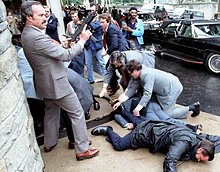
Ronald Reagan is in DC when an assassin approached and began shooting, striking the elderly enigmatic Chief Executive and others. Seriously wounded, Reagan is rushed to George Washington hospital where he entertains the medical staff with one-liners. “Honey, I forgot to duck!” And “I hope there aren’t any Democrats in the operating room”. The chief surgeon assured him, “Mr. President, today we are ALL Republicans.”

Where have such men gone? I believe they are out there. We just have to advance them.

Not in My Backyard…Get Off My Lawn!!

Today in History, December 2, 1823:

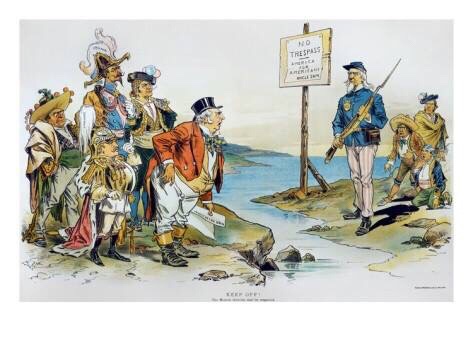
President James Monroe announces in his State of the Union address what will become known as the Monroe Doctrine…telling the European powers that America would not interfere in European conflicts (we didn’t want to and did not have the means anyway), and that America would police the western hemisphere…Europeans were to stay out. We couldn’t really enforce this doctrine at the time, but it was to England’s benefit…so the Royal Navy did so for us.

In 1904, when European powers attempted to collect on supposed debts the Americas, Theodore Roosevelt added the Roosevelt Corollary to the Monroe Doctrine. The Corollary again told outsiders that if there were problems in finances in Western Hemisphere countries, the US would handle it.

The Doctrine has been tested repeatedly over the years, most notably and dangerously during the Cuban Missile Crisis of 1962 when the Soviet Union attempted to place nuclear missiles 90 miles off America’s southern shores. President Kennedy responded with a Naval Embargo, and after a few days Soviet leaders blinked.

Desist from Treasonable Acts and Doings…

Today in History, November 30, 1776:

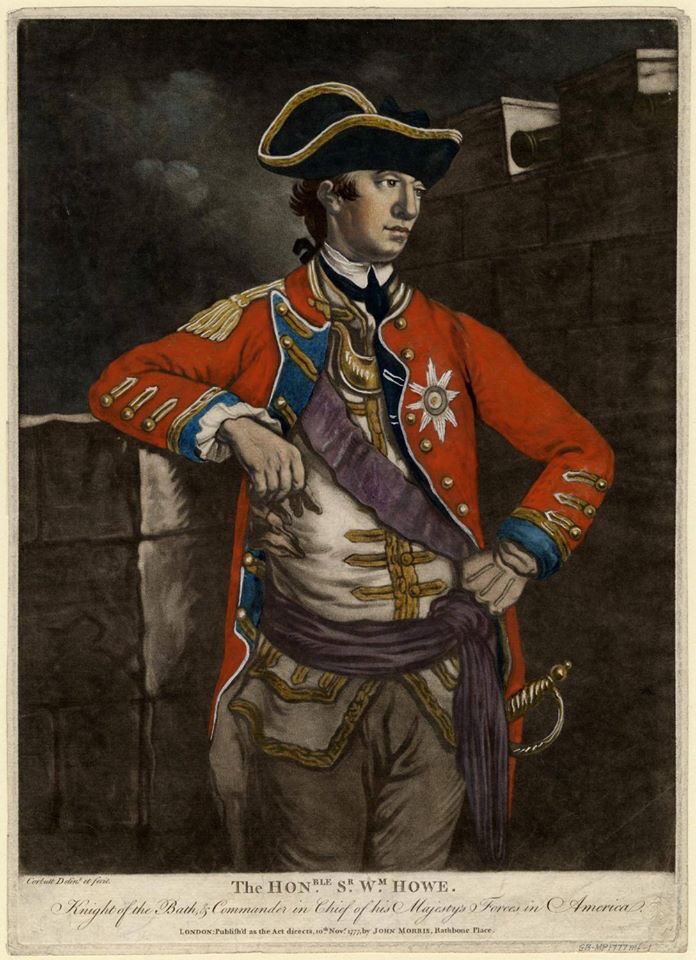
The Howe Brothers, Admiral Richard and General William, in command of the Engliah Army and Navy in the Americas issue a proclamation that American colonists who will “desist from treasonable acts and doings” would receive a pardon.

Of course, most of the colonists were determined. After the British signed the Treaty of Paris in 1783, those “Tories” that had accepted the offer, mostly New Yorkers, were evacuated by the British to Canada.