The Great Gettysburg Reunion

Today in History, June 25, 1913:

“We have found one another again as brothers and comrades in arms, enemies no longer, generous friends rather, our battles long past, the quarrel forgotten—except that we shall not forget the splendid valor.” –President Woodrow Wilson.

The Great Civil War Reunion at Gettysburg, Pennsylvania. Nearly half a century after the end of the Civil War, aged men and women who had been sworn enemies, who had lost loved ones on both sides of the great conflict, began to gather at Gettysburg for a reunion to honor those they had lost…and each other.

Men missing limbs commiserated with each other, slapped backs, shared stories, joined together as brothers…Union, Confederate, White, Black, recognized that the War was history and they were comrades again. If men and women that were so committed to killing each other could do this….can’t we?

The USS Kearsarge Ends CSS Alabama’s Run

Today in History, June 19, 1864:

The Battle off Cherbourg. In 1861 the screw sloop CSS Alabama was launched in England, which was just the beginning of the intrigue involving the Confederate cruiser that wreaked havoc on Union shipping until her demise on this date in 1864.

The British gov’t had ordered no ships be built or sold to the rebels, but the company that built the Alabama did so clandestinely. During the intervening years the Alabama, which had both steam engines and sails, circled the globe sinking Union merchant shipping (60 at least) and a Union warship.

She had put in at Cherbourg, France for much needed repairs, but was rebuffed. Before she could leave, the Union screw sloop USS Kearsarge arrived outside the harbor.

Capt. Charles Pickering and many other Union Captains had been searching for the infamous Alabama and Capt. Raphael Semmes for years. Semmes set out to engage the Kearsarge, firing the first shot. The two ships parried, but the Kearsarge had some advantages; powerful new “Dahlgren” guns and chains draped over her sides for protection. Within an hour the Kearsarge’s crew sent the Alabama to the bottom. Semmes escaped on a passing British ship to England with 41 of his crew.

The Great Marianas Turkey Shoot

Today in History, June 19, 1944:

Reversal of Fortunes, exhibited by “The Great Marianas Turkey Shoot”, or the First Battle of the Philippine Sea.

US Marines, supported by their parent service, the US Navy, are invading Saipan and other islands in the Marianas Islands, which is such a threat to Japan that the Imperial Japanese Navy finally comes out to fight a definitive battle.

When the war began the Japanese had the most advanced aircraft available, while the US Navy lagged sorely behind. The Japanese Zero, for example, was much faster and more maneuverable than the American Wildcat fighter. But by 1944 the American industrial complex had engaged fully. As late as 1943 the USS Enterprise stood alone in the Pacific against numerous IJN Carriers.

But by June of 1944 the Americans put to sea 15 Aircraft Carriers in 4 Task Groups equipped with modern aircraft that far out matched Japan’s aircraft, which had not been updated since the war began. In addition, Japan’s air service had lost nearly all of it’s experienced pilots, while the Americans had thousands of combat hardened, well-trained pilots and crews.

When the IJN sent it’s carriers and their crews against TF 58, they were massacred. In two days the Japanese lost over 400 aircraft and their crews, 3 aircraft carriers they could not spare, and the Americans lost 29 aircraft (some of the crews were rescued) and no ships. So many Japanese aircraft fell from the skies that a Lexington pilot referred to it as an old time turkey shoot, and the name stuck.

The air crews of the task force had been launched late in the day on the 20th to attack the Japanese fleet. When they returned, it was well after dark and they began landing their planes in the sea, unable to see the carriers well enough for landings aboard.

With the threat from enemy submarines and aircraft during the war, blackout conditions were the rule. Admiral Marc Mitscher wasn’t going to lose his boys and their planes, however. With his order the fleet lit up, and the planes began landing on fumes.

General Slocum

Today in History, June 15, 1904:

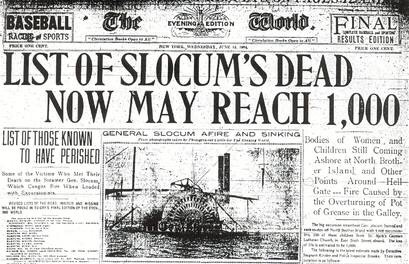
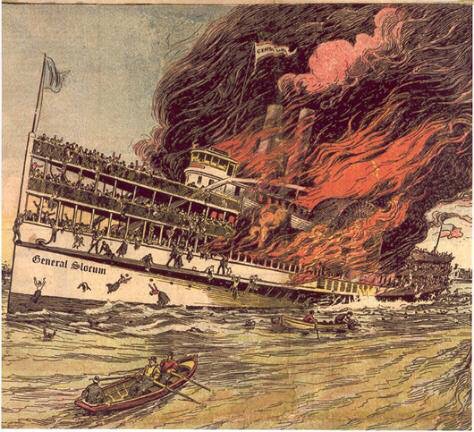
The General Slocum Disaster. The St. Mark’s German Lutheran Church charters the River Boat General Slocum to transport their teachers and children across the East River to Brooklyn to hold their annual picnic.

Keep in mind this was 1904, and Brooklyn was not part of a metropolis. One of the 1,360 passengers, a child, went to the boat’s captain to report that he had seen fire in a room below decks. The Captain responded basically with “go away kid”. By the time the crew found the fire, it was too late.

The Captain, Captain Van Schaik, decided to beach to boat on an island rather than at a dock where fire crews could have assisted with the fire. The boat’s rescue boats were tied down tight, so they couldn’t be used. The life preservers were not buoyant, so the children that donned them sank to the bottom of the river.

Over 1,000 of the passengers were either burned to death or drowned in the conflagration. The “Knickerbocker Company” was charged, but only the Captain actually served any time for the disaster. President Theodore Roosevelt fired the inspector responsible for the safety of the General Slocum.

“Mr. Gorbachev, Tear Down This Wall”

Today in History, June 12, 1987:

President Ronald Reagan had taken actions that helped win the Cold War that our nation had fought for forty years, brought back our economy, and on this date traveled to Berlin. He was received by Germans with the same fervor as when Kennedy spoke there years earlier when he spoke those now famous words, “Mr. Gorbachev, tear DOWN this wall.”

Nazi Atrocities

Today in History, June 10, 1944:

Oradour-sur-Glane, France. Elements of the Nazi SS, acting on belief that one of their officers had been captured by members of the French Resistance, rounded up every citizen of the town and 6 hapless passersby. They locked all of the women and children in a church, then took all of the men to barns, where machine gun nests were already set up. The men were intentionally shot in the legs so that they would die more slowly…once they were all unable to move, the Nazis poured gasoline over them and set the barns afire.

They then returned to the church, where they set off an incendiary device inside. As the church burned, women and children tried to climb out of windows…where they were machine-gunned. 642 innocent civilians were slaughtered.

1944 – Distomo, Greece. In retaliation for a partisan attack, German SS troops go house to house in the village (whose residents had nothing to do with the attack), killing every man woman and child, totaling 218 dead in the end. They disemboweled one infant in front of his family and committed numerous other atrocities before burning the village.

The Antiquities Act

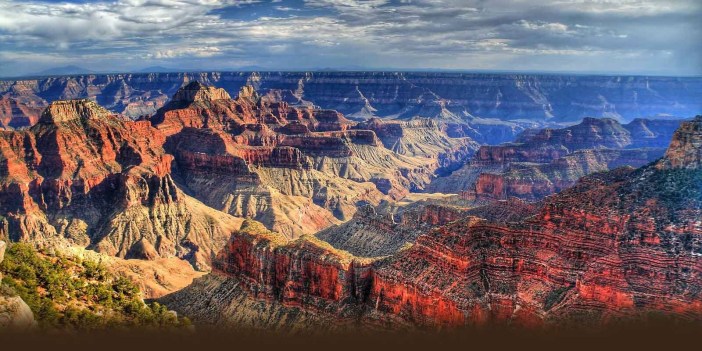
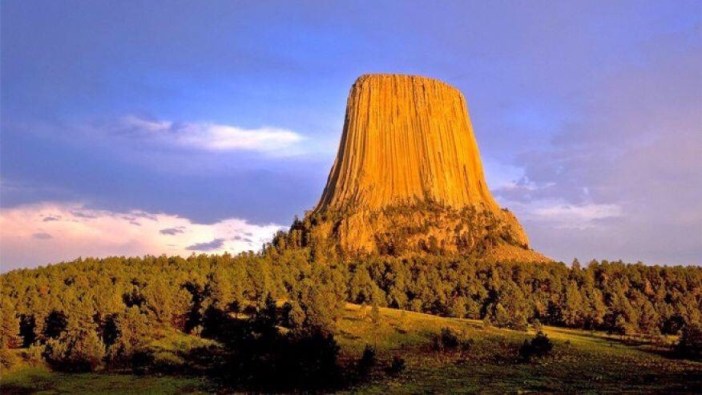
Today in History, June 8: 1906 – The Antiquities Act of 1906 is signed into law by President Theodore Roosevelt after being passed by Congress. In the preceding years historic sites had been discovered in the west, and of course, they were soon raided by thieves, vandals and historians from other countries. The Act was designed to protect these places as National Monuments, to be named either by the President or Congress. Roosevelt, a historian, quickly took advantage of the new power, naming 18 Monuments before his Presidency ended, including (first) Devil’s Tower, Muir Woods, The Grand Canyon, Chaco Canyon and the Petrified Forest. The Act has become more controversial in the years since FDR named The Grand Teton National Monument (near Jackson Hole, Wyoming) in 1943.

War to Peace…Gen. George Marshall

Today in History, June 5, 1947:

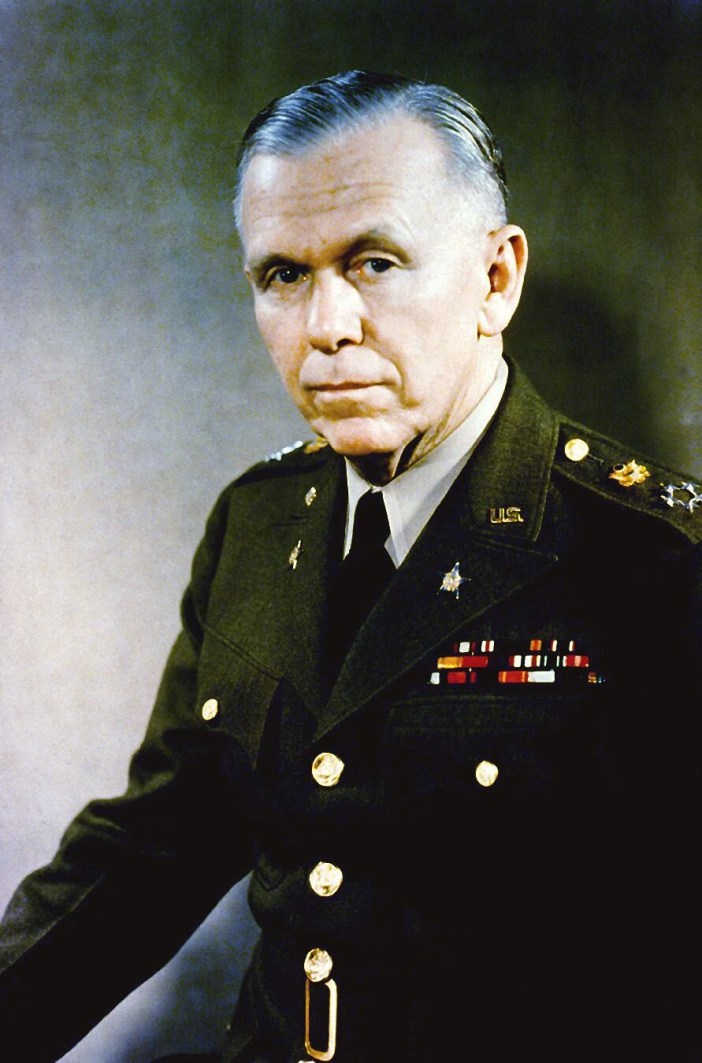
George Catlett Marshall, Jr, who as Chief of Staff of the US Army during WWII was instrumental in defeating the Axis powers, is now US Secretary of State.

On this date he gives a speech at Harvard University and outlines the reasons that the US should provide monetary and physical support to the European nations decimated by the war. Germany and the other nations of Europe were struggling to rebuild their economies, their infrastructure and their ability to operate as governments.

These same countries had been left to fend for themselves after WWI, and radicals like Hitler took advantage of their desperation to bring the world into WWII. The new “bad influence” was communism and Marshall recognized that the same thing could happen all over again. Congress acted on his recommendations and passed the Economic Cooperation Act, or The Marshall Plan. By 1952 the US had spent over 12 Billion dollars to rebuild Europe, likely preventing another global conflict.

“That Guy” Who Always Seems to be There…and Its Not Always the Glorious Jobs that Render Success…


Today in History, May 28, 1917:

300 miles south of Greenland, a few sailors aboard a US Navy “oiler”, the USS Maumee AO-2, made history with an act which would greatly affect history.

The logistics of keeping fleets supplied at sea was nothing new, but it did have extreme restrictions.  The Navy had tackled the problem in order to display its reach with the around the world tour of the Great White Fleet in 1907-1909, but that had been a task of loading enough coal on board to keep the ships moving.

The Maumee, when commissioned in 1914, was the Navy’s first diesel powered surface ship.  When the United States joined the fight in WWI, she was sent to a point off Greenland to do something which had never been done before…refuel ships while underway at sea.  Her first customers were six Destroyers on their way to England.  They performed the task successfully, and continued refueling ship that weren’t “log-legged” enough to make the trip.

I’ve written before about someone who always seemed to be mentioned when reading Army history about others during the 19th Century…General Nelson A. Miles.  Often he was the guy “cleaning up” an issue or who “also” played an important part.

Well, here is “that guy” for the US Navy in the 20th Century.  He became more famous, of course, but not for everything he should have.

When the Maumee was commissioned, a young Lieutenant was named her Executive Officer because he was an expert in her diesel engine technology.  He was still the Exec when she performed her ground breaking refueling tasks.  Chester Nimitz played an integral part.  Because of his expertise with diesel engines, Nimitz would also play a key part in the development of the Navy’s submarine fleet.

In 1938 the Chief of Naval Operations, Admiral William Leahy, ordered the commander of TF 7 to develop procedures for refueling larger ships, such as battleships, cruisers and carriers while underway at sea.  That, of course, was now Rear Admiral Nimitz.

When the US joined in WWII after the attack on Pearl Harbor, they called Nimitz from a job in DC to command the Pacific Fleet.  Now he was in charge of taking the war to Japan.  A job that required a lot of logistics, including vast advancements in refueling huge fleets at sea.  The underway processes would be key in famous battles such as the Coral Sea, Midway, the Doolittle Raid and many others.  One of the first at-sea casualties in the fleet would be an oiler during the Coral Sea battle.

In 1944 another huge leap was made.  Admiral Raymond Spruance was tasked with performing raids on Japan to minimize air attack threats during the invasions of Iwo Jima and Okinawa.  (His boss was Nimitz.)  He had a problem which had to be solved.  The Navy had underway refueling down to an art.  However his fleet of Aircraft Carriers would “shoot” through their on-board supply of munitions (bombs, torpedoes, bullets) in about three days.  After the three days, they would have to make a 12 day trip to Ulithi Atoll and back for resupply.  This would keep them on station and in the war only six days out of a month.

As Leahy had, Spruance ordered his staff to develop processes to resupply ammunition, food stocks, etc. while underway.  Which they did.  It was a dangerous undertaking, moving bombs across decks of moving ships and across winches between ships, but they did it.  Now, after spending their ammo, the fleet would sail overnight to meet the supply ships, refuel, re-arm and re-supply while underway from different supply ships while underway, and be back in the fight within two days.

After the war, inventive officers asked to design ships which could replenish ships underway using a “one-stop shop” method…where one supply ship would resupply fuel, ammo and other needed supplies in one pass.  The Navy’s new CNO approved heartily…of course…Fleet Admiral Chester W. Nimitz.

The Navy has made huge advancements since, and in recent years has improved their resupply capabilities even more.  They have the massive Gerald Ford carriers to plan for.

The US military’s ability to reach out and touch someone anywhere in the world, would not be possible without the innovations which allow them to resupply on the move…anywhere.

We almost didn’t have “Chester” to help make all of these advancements for the Navy.  In 1907, young Ensign Nimitz ran his Destroyer, the USS Decatur, aground and was found guilty of hazarding his ship during the subsequent court martial.  As we have seen during recent events, this normally would mean a swift end to one’s Naval career.  Thank God the Navy brass saw fit to give Nimitz another chance.

“This damn fool Sumner is going to get himself shot by some other damn fool.” – Sen. Stephen Douglas

Today in History, May 22, 1856:

Years before the Civil War. On May 20, 1856 US Senator Charles Sumner, a free soil Democrat and later Republican from Massachussetts, had given a firey speech entitled “Crime Against Kansas” about the violence in that state over slavery.

A devout abolitionist, he excoriated the south, in particular Senator Andrew Butler of South Carolina, who he likened to a pimp abusing a prostitute (slavery).

This enraged Butler’s nephew, Senator Preston Brooks. When Sen. Stephen Douglas heard the speech, he commented, “this damn fool Sumner is going to get himself shot by some other damn fool.”

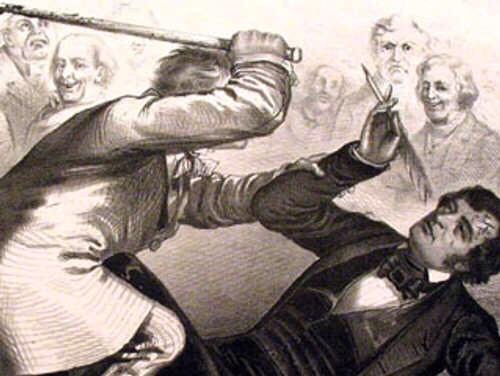
On the 22nd, Brooks entered the Senate chamber with two other Southern Senators, found Sumner at his desk writing and proceeded to bludgeon him nearly to death with his heavy metal tipped cane while Sumner was trapped within his desk, defenseless.

Southerners hailed Brooks a hero.

Northerners called him a coward. One of these, Republican Representative Anson Burlingame called him such on the House floor.

Brooks challenged Burlingame to a duel. When Burlingame actually accepted and showed up, Brooks did not.

Sumner would suffer debilitating pain for the rest of his life from his injuries, but would recover to become a key proponent of abolitionist policies during reconstruction, living until 1872.

Brooks on the other hand died in January 1857, less than a year after the attack, of the croup.