Friendly Fire Changes History

Today in History, May 2, 1863:

He was, in today’s vernacular, the epitome of a “nerd”. He had an odd, ungainly walk, was very strict in his interpretations of religion, and either ignored or did not see his contemporaries and his students mocking him and laughing at him behind his back for his awkwardness.

He graduated from West Point, served with distinction in the Mexican-American War, and then became a professor at the Virginia Military Institute (VMI). He was a terrible teacher, and mocking him became a tradition amongst the students.

Then the Civil War came. Thomas Jackson didn’t have any particular political views, but he was true to his “country” of Virginia. So he served, proving to be efficient at training brigades at drill and military movements.

While still considered ungainly, Jackson earned the faith of his men by always being at the front, without guile, without fear. At the First Battle of Manassas (Bull Run for the Union, Confederates called it Manassas), he did the same.

One of his contemporaries from the Mexican-American War, Gen. Bernard Bee, rallied his own men by shouting, “There is Jackson standing like a stone wall. Let us determine to die here, and we will conquer. Rally behind the Virginians!” And they did, and the battle was won.

The awkward Thomas J. Jackson had transformed into the legend of “Stonewall” Jackson and he would soon become the right hand man of Gen. Robert E. Lee. After many battles won, on today’s date, during the Battle of Chancellorsville, Jackson was returning to his camp at night when he was taken for a Yankee soldier and accidentally shot by a sentry. Within a few days, one of the South’s greatest heroes would die of his injuries.

Lee in particular would mourn the loss of a valued lieutenant, and would miss him during battles to come, particularly Gettysburg.

The Tragedy of the SS Sultana

Today in History, April 27, 1865:

The SS Sultana.

They had left their farms, their jobs and their families, to fight for the Union, some for glory, some for honor. Any glory in the war faded, as it always must, as they fought through terrible battles. They saw their friends die mutilated, many of them suffered irreparable injuries.

Then they were captured by their enemy and sent to horrific prison camps such as the despised Andersonville. Conditions there were unspeakable; even if the Confederates had any sympathy for them, the South didn’t have the resources to care for it’s own, much less it’s prisoners.

Finally after months or years of starvation and brutality, the war was over; they were liberated. They were going home! Can you imagine the joy, the rapture they must have felt? Most had to have believed it would never happen, that they would die in their captivity.

They marched (those that could still walk) to ports on the Mississippi to board steamships for the trip north and home. Desperate to get home as quickly as possible, they begged, cajoled, bartered or simply boarded the overloaded river boats clandestinely. You can take just one more, right?

The steamer SS Sultana was one of those commissioned by the Union Government to get them home. Her capacity was for 376 passengers. 376. By the time she sailed from the captured city of Vicksburg, MS she was loaded down with at least 2,400…mostly those Union prisoners on their way home.

At 2 AM on the 27th of April her decks and quarters were jammed beyond capacity, but their must have been peace amongst the passengers. The ship was top heavy and as she made the turns of the river, the water in her inter-connected boilers sloshed back and forth, lowering the water levels in the boilers opposite the turn. One of the boilers had been hastily patched to allow her use on the trip.

Suddenly, one of the boilers burst, causing at least two more to follow. The ship exploded, the suddenly escaping steam burned hundreds to death in an instant, setting the wooden ship afire to kill hundreds more. Most of those that managed to escape the ship into the water, already emaciated, drowned before they could be rescued; the first ship to reach them was an hour away in the frigid waters.

Of the 2,400, as many as 1,900 perished. 7 to 9 miles above Memphis on the river, even the recently defeated Confederates there responded with compassion, opening their homes to the few survivors.

No one was ever prosecuted for the disaster, however Maj. Gen. Napoleon Jackson Tecumseh Dana, commander of the Department of the Mississippi, was relieved of his command by Lt. Gen. Grant.

Assassin’s Demise

Today in History, April 26, 1865:

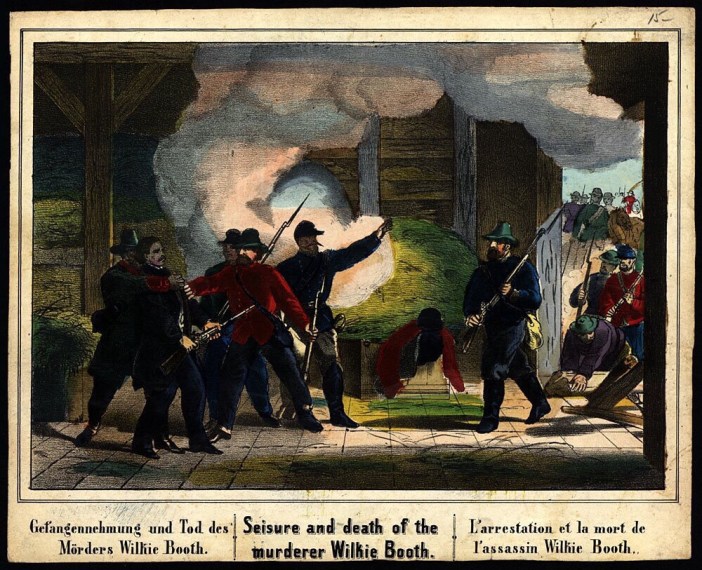
Union Army forces track down John Wilkes Booth 12 days after he assassinated President Lincoln. In the meantime, he had been hidden by Confederates, treated by Doctor Samuel Mudd (your name is mud) and hidden in a barn on the Garrett farm in Virginia, where he was found.

The barn was set afire and his associate surrendered. Booth refused…a Union soldier, Boston Corbett, saw Booth inside the barn and fired his Colt revolver…causing a mortal wound to Booth.

Many Confederates saw Booth as a hero. However many Southerners wept openly at Lincoln’s death, and Confederate Generals, including Lee and Johnston, denounced Booth’s actions.

Fortunately, in the interim between his deed and his death, Booth was able to see news accounts that recorded his hero’s denunciation of his act. So when he died, he knew what he was.

Confederate Big Easy Defenseless

Today in History, April 25, 1862:

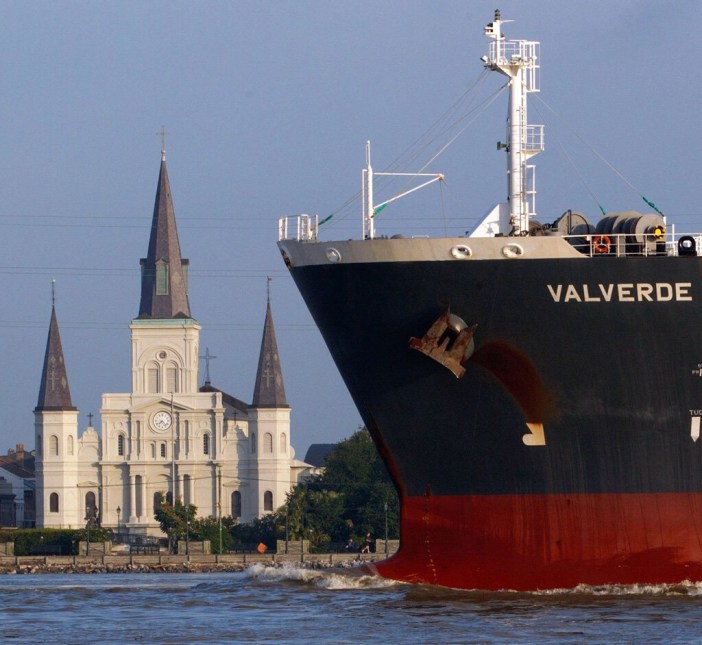
Have you ever walked along the levee in the French Quarter in New Orleans, Louisiana? If you have, it’s difficult not to be awed when you look UP at the top of the levee and see a ship floating across the water…well above you.

The view makes it very obvious how incredibly vulnerable the city is to the Mighty Mississippi and the massive ships sailing her channel.

On this date in 1862 Union Admiral David Farragut had already led his fleet of US Navy ships past Ft. Jackson and Ft. St. Phillips below the Crescent City, he and his crews blew past nascent the Confederate “Navy” and placed their heavy guns off of New Orleans.

The New Orleans military, government and citizens were told…it was obvious…if they didn’t surrender, the US Navy would fire DOWN into the wooden structures of the Quarter….they may, if necessary, blast a hole in the levee and simply let nature flood out the defenders.

Confederate General Mansfield Lovell told Major Moore what would happen if resisted. So they stalled while Lovell shipped his troops and equipment north by rail to Vicksburg.

Finally on April 29 the residents folded. By May 2 the Confederates relinquished the largest, most industrial, cosmopolitan city in the Confederacy. Remember the rivers were the thoroughfares in the 1800’s.

The Union now had control of NOLA’S resources, and now the Union could ship supplies north from the Gulf as far as Vicksburg and north to south.

The War had seen a major change. And the citizens of New Orleans would find peace with General Butler worse than war with Farragut. But thats a different story.

Appomattox

Today in History, April 9, 1865:

After years of foiling every move the Union made, Confederate Gen. Robert E. Lee had finally been run to ground. Several Yankee Generals had been bested by him, but he had finally met his match…not tactically, but in determination, by Lt. Gen. Ulysses S. Grant.

At Appomattox Courthouse, Virginia, Lee, his army starving and with nowhere else to run, in spite of the fact that he would “rather die a thousand deaths”, agreed to surrender the Army of Northern Virginia to Grant.

Lee arrived in his best uniform; Grant, typically, arrived in a muddy private’s uniform. Grant offered terms that included Confederate officers keeping their horses and sidearms, enlisted men keeping their horses so that they could farm their land, as long as they agreed to abide by their paroles and obey the laws of the land. Lee was very appreciative of these terms, saying they would be helpful to his army, men he loved.

As Lee mounted his horse and left the site of the surrender, Union soldiers began to cheer. Grant quickly silenced them, reminding them that the Confederates were once again their countrymen.

The surrender document was signed in the home of Wilmer McLean. Ironically, in the first battle of the war, First Bull Run, or First Manassas if you are from the South, Confederate Gen. P.G.T. Beauregard’s headquarters were in McLean’s home in Manassas, where cannon shot destroyed part of the house. McLean moved south to Appomattox Courthouse to keep his family safe. So, as is said, the Civil War began in Wilmer McLean’s front yard, and ended in his parlor.

McLean’s home was almost completely stripped of furniture by Union officers seeking momentos of the occasion.

Lee was given the opportunity by Grant to allow one of his subordinates to accept the surrender…to avoid humiliation. Lee refused…his FATHER, Light Horse Harry Lee, had been with Washington at Yorktown and witnessed the ungentlemanly act of British Gen. Lord Cornwallis sending a subordinate to surrender his sword to Washington. Lee refused to dishonor his family name by repeating the act. Grant did not require Lee to surrender his sword, but Lee was the man that represented his army at Appomattox Courthouse. Both gentlemen, North and South, maintained their honor.

Shiloh

Today in History, April 7, 1862:

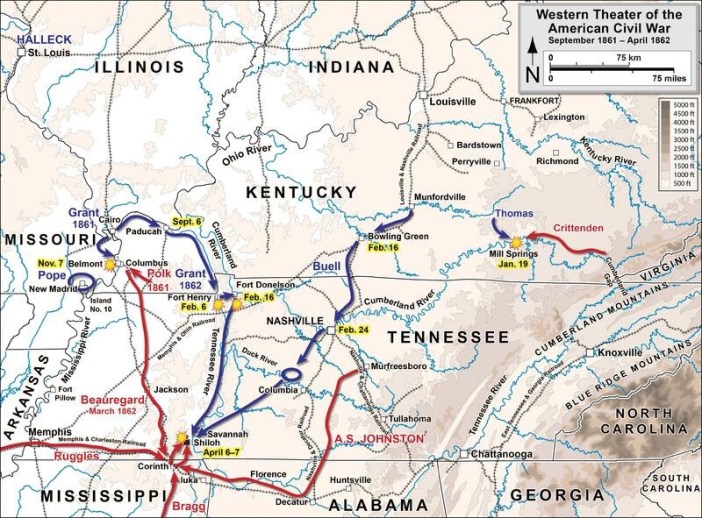
The Battle of Shiloh comes to and end with a Union “Victory”. Union Gen. US Grant had moved his army into Tennessee and was preparing his next campaign.

But Confederate Gen. Albert Sidney Johnston, considered second only to Robert E. Lee by both armies, had different ideas. His troops, in addition to those of CSA Gen. Pierre G. T. Beauregard almost literally caught the Northern Army sleeping….attacking in the morning and routing the Yankees.

The Confederates, always hungry due to their lack of supplies, actually stopped to eat the breakfasts the Union soldiers left in flight. The battle was vicious all through the day. But by the morning of the 7th, Grant had been reinforced by Gen. Buell’s Corps, and Grant quickly turned the rebels back. Shiloh was not so much a victory as a recovery for the North.

But the North nearly lost it’s best commander in the aftermath, as the press excoriated Grant as a drunk who was asleep at the wheel. President Lincoln answered the charges by saying that he could not spare Grant, “he fights” and offering to buy his other generals the brand of whiskey Grant used. In truth Grant had taken to drink when missing his family during his pre-war assignment in California, but was always focused during the Civil War Campaigns.

During the battle, Albert Sydney Johnston was mortally wounded. He died looking in fascination at the sky above.

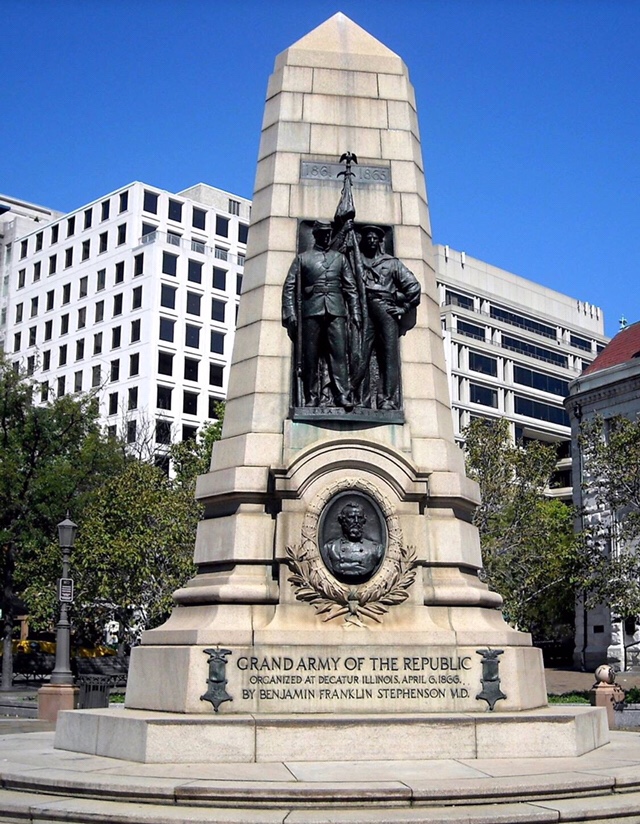
The Grand Army of the Republic

Today in History, April 6, 1866:

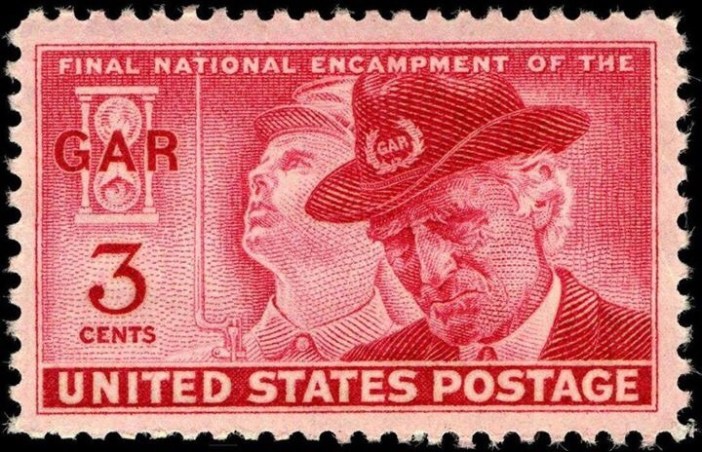
Fraternity, Charity and Loyalty.” The Grand Army of the Republic is formed in Decatur, Illinois, bringing together a Fraternal organization of veterans of the Union (US) Army, Navy, Marines, and “Revenue Cutter Service” (Coast Guard) from the Civil War.

Admittedly an arm of the Republican Party, the GAR was one of the first bi-racial fraternal organizations in the US…white and black veterans worked together to gain veteran’s pensions, elect Republican Presidents Grant, Hayes, Garfield, Harrison and McKinley, all Civil War veterans.

At it’s high point, the organization had 490,000 members; it passed with it’s last member’s death in 1956, to be replaced by the “Sons of Union Veterans of the Civil War.

Victory and Assassination

Today in History, April 4: 1865:

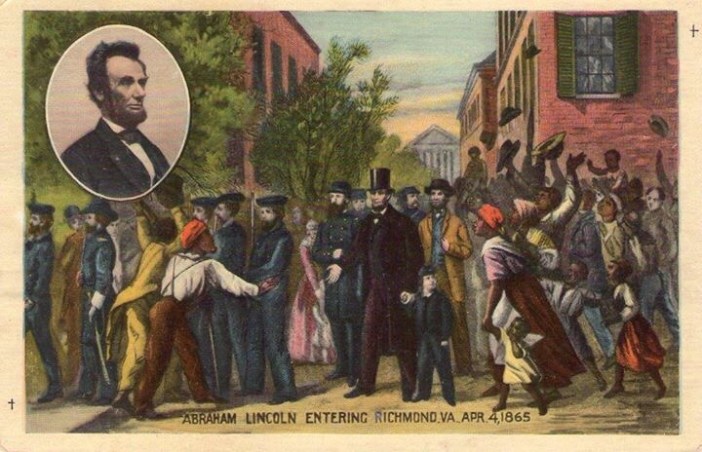
150 years ago today. President Lincoln enters Richmond, the Confederate Capitol. Lincoln had been at City Point when informed that Richmond had been taken the day before by Union Army forces.

He immediately sailed on the USS Malvern, Flag Officer David Dixon Porter’s flagship for Richmond. After he disembarked, he was initially escorted through crowds by a contingent of sailors, who were very relieved when they were met by a group of Union Cavalry to assist in escorting the President to the home of Confederate President Jefferson Davis.

Many former slaves attempted to pay homage to Lincoln, who would not allow it. Onlookers watched from the windows and street corners.

At Davis’ house, Lincoln sat in Davis’ chair, then toured the house.

When later asked by Union Gen. Weitzel how the conquered rebels should be treated, Lincoln indicated that he would not give an order in that regard, but that his advice would be to, “Let them up easy….let them up easy”.

As for the nervous sailors and cavalrymen that escorted him? As it turns out, Lincoln was safer in the Confederate capitol that his own. He had only ten days until he would be assassinated.

103 years later to the day, another man dedicated to civil rights and the advancement of justice, Dr. Martin Luther King, Jr. would be assassinated in Memphis, Tennessee.

April is a Historic month with many stories to tell.

The Cooper Union Speech

Today in History, February 27: 1860:

“One of the most happiest and most convincing political arguments ever made in this City … No man ever made such an impression on his first appeal to a New-York audience.”

— Horace Greeley in his paper regarding “The Cooper Union Speech” by Abraham Lincoln.

A former Congressman and Illinois lawyer, Lincoln had been launched to the national stage by his debates with Stephen Douglas over the slavery question 2 years before, but he was still mostly unknown in the east.

A young Republican’s group in New York invited him to speak at Cooper Union’s Great Hall. The hall was not filled for the speech, but the text of it was given to Greeley’s and other’s papers; from there it was broadly published across the nation in pamphlet form.

Lincoln made convincing arguments that the Founding Fathers were against the expansion of slavery and desired it’s eventual end. At the same time he tried to convince Southerners that the Republican party did not wish to interfere in their affairs.

While in New York he had his photo taken by Matthew Brady, and the photo was used along with the pamphlet to broaden his recognition.

It is widely believed that the speech is what launched him into the Presidency.

He closed with a message to his colleagues:

“Neither let us be slandered from our duty by false accusations against us, nor frightened from it by menaces of destruction to the Government nor of dungeons to ourselves. Let us have faith that right makes might, and in that faith, let us, to the end, dare to do our duty as we understand it.”

Honorable Brothers and Enemies at the Same Time…

Today in History, February 18, 1862:

“I know you are separated from your people, and perhaps you need funds.  My purse is at your disposal.”  Union General Ulysses Grant to Confederate General Simon Bolivar Buckner as Buckner prepared to board a river boat taking him north to a Yankee prison.

On February 16, 1862 after a hard-fought battle and investment, Confederate Fort Donelson in Tennessee had surrendered to Union forces.

Tennessee was a strategic area in the Civil War, providing resources, people and a launching point to move against the rest of the South.

General U.S. Grant had been little known to the public before this battle, but the victory would change all that.  He coordinated with the US Navy to bombard Ft. Donelson and surround the 12,000 men there.  After assaults and counter assaults, the Confederate commanders came to the realization loss of the fort was a foregone conclusion, a tragedy for the South.

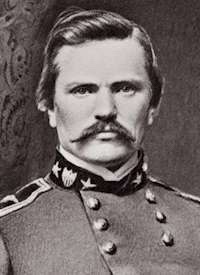
Gen. Simon Bolivar Buckner was actually third in command.  His superiors resigned their positions so they could sneak out and escape.  Col. Nathan Bedford Forrest took some of his Cavalry and fled also, leaving Buckner to stay with his men and surrender.

Buckner sent a note through the lines asking Grant for terms.  And here is where Grant became famous.  He wrote out his response for delivery to Buckner,

No terms except unconditional and imme­diate surrender can be accepted. I propose to move immediately upon your works.

In a time when furloughs and prisoner exchanges were common in battle, Buckner found the response to be “ungenerous and unchivalrous.”  Yet he had no choice, his only option was surrender.  Having had little but bad news for some time, the Northern papers seized upon the victory.

They used Grant’s initials to rename him “Unconditional Surrender Grant.”  Turns out it wasn’t the first time others had changed his name for him, but that’s another story.

The public was finding out something those serving with Grant had learned…he was unpretentious, unceremonious and tenacious.  He got results.  President Lincoln would eventually say of him, “I can’t spare this man; he fights” in defense of Grant’s reported drinking problem.

If you want History to be more than dates on a page, watch out for the back stories…the facts that bring out the humanity in what you’re reading.

The story reads good already.  But lets dig further.

When Grant was younger, he wanted an education.  His father worked hard and secured him an appointment to West Point.  Initially, Grant didn’t want to go.  But once in, he liked it.  His uncanny horsemanship impressed fellow cadets and instructors.  And he made friends among the other cadets, including Simon Bolivar Buckner, who was attending at the same time.

Grant and Buckner, among many other officers in the US Army, served together and performed heroics in the Mexican-American War of 1846-1848.

After that conflict Grant found himself assigned to the frontier in California, where he missed his family grievously and took to drink.  In July of 1854 he suddenly resigned his commission from the Army and sought transport home.

Grant found himself in New York without even enough money to get a meal or pay for a room.  And then he happened upon an old classmate and friend, Simon Bolivar Buckner.

The two enjoyed a visit, talked old times and Buckner, who was doing much better financially, paid for his friend’s room and board.

In the intervening years until 1861 and the beginning of the Civil War, Grant was somewhat of a hard luck case.  He tried farming, he tried real estate, nothing worked.  When the war began he was working for his brothers and his father in a store as a clerk.

When Southern states began seceding many in the US Army that were from those states, resigned their commissions and joined the Confederate Army, including Buckner.  Thus the old friends found themselves on opposite sides.

Thus, after the Battle at Fort Dolelson, Grant sought out Buckner before Buckner boarded the boat taking him off to prison in an attempt to return an old favor. Buckner, ever the gentleman, politely refused the return of the kindness.

Grant, of course, would become commander of all Union Armies and eventually President.

Buckner would eventually be exchanged for a Union general officer and continue to serve in the Confederate Army.

He surrendered in New Orleans in 1865 for a second time.  He would become Governor of Kentucky among other political successes.

In 1904 he visited the White House and asked President Theodore Roosevelt to appoint his son to West Point.  TR quickly agreed.

His son, Gen. Simon Bolivar Buckner Jr would be killed at Okinawa in WWII, the highest ranking officer killed by enemy fire in WWII.