“Get off my Lawn!!” – The Roosevelt Corollary

Today in History, December 6, 1904:

The Roosevelt Corollary to the Monroe Doctrine. The Monroe Doctrine had been established to tell European powers to stay out…no Emperialism in the Western Hemisphere. When it was declared, the US didn’t really have the forces to back it up. But, conveniently the Royal Navy agreed and enforced it for their former adversaries.

In 1904 President Roosevelt made an addition to the Doctrine. There had been recent incidents in which European powers threatened actions against South American nations that they felt owed them money. In his annual message to the Congress, TR stated that, should any developing nations in the Western Hemisphere require intervention due to unrest or an inability to handle their financial affairs, it would be the US that would intervene, not foreign nations. This time TR had the Navy to back it up.

Many criticize Roosevelt’s assumption of police powers in the Americas as expansionist, and with the events surrounding the building of the Panama Canal, there is likely some validity to that view. However the primary objective was to ensure that foreign powers knew the US would not tolerate their use of military force in our backyard. And it kept the big kids from taking advantage of the still developing countries in the Western Hemisphere.

http://www.theodoreroosevelt.org/life/rooseveltcorollary.htm

Shoot First, Ask Questions Later…

Today in History, November 28: 1941 –

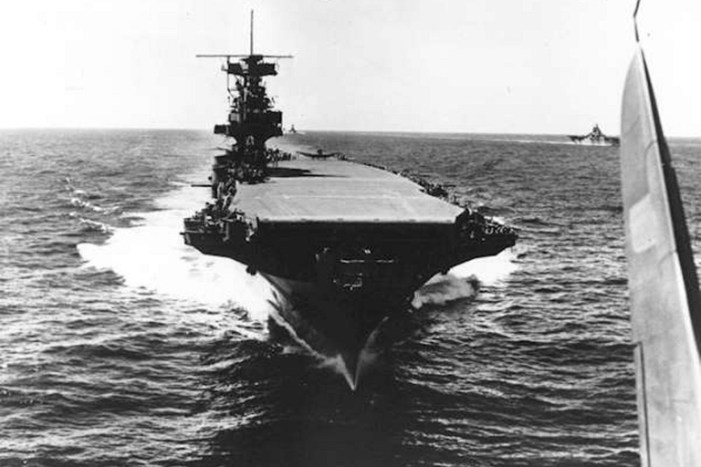
Ten days before the Japanese attack on Pearl Harbor, a Task Force built around the aircraft carrier USS Enterprise (CV-6) sailed from Pearl Harbor bound for Wake Island.

In response to a “war warning” the Enterprise had taken aboard a squadron of US Marine F4F Wildcat fighter planes and their pilots, with orders to deliver them to Wake to bolster the island’s defenses.

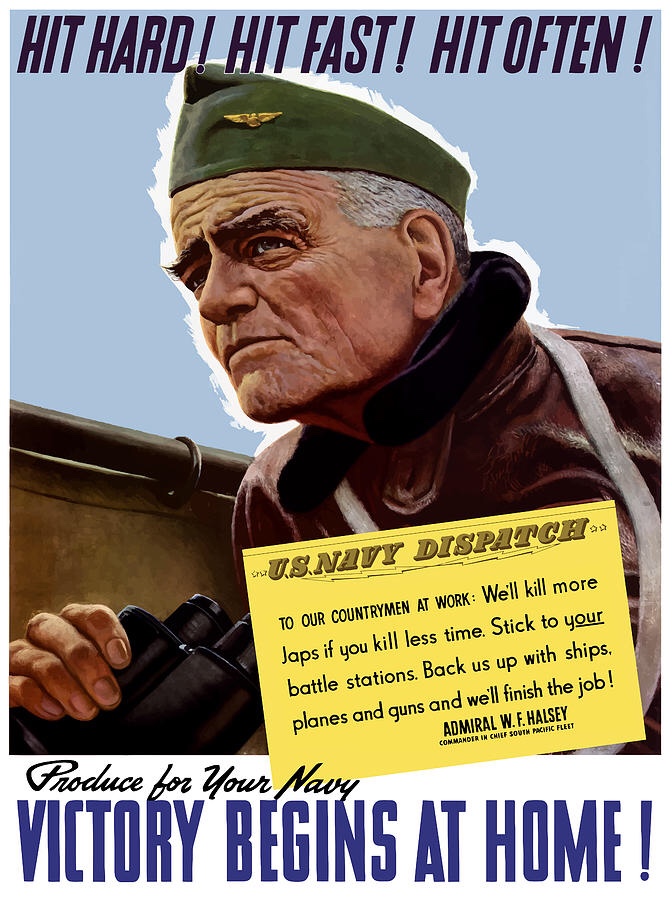
Once they were at sea, the TF commander, Admiral William F. (Bull) Halsey signed off on Battle Order #1, which put the Enterprise and her supporting Cruisers and Destroyers on a war footing.

The crew began adding armor behind the pilot’s position’s in the ship’s fighters, painting them in combat colors, and arming them for combat.

More than a week before the Japanese attacked, the Enterprise TF had orders to shoot first and ask questions later should they encounter any foreign ships or planes. The CAP (Combat Air Patrol) kept watch overhead.

The Big E would deliver the Marines and return to Pearl on Sunday, December 7. Her scout plane pilots would fly ahead, ending up right in the middle of the air raid. But that’s another story.

But on this date, Admiral Halsey and Captain Murray closed by telling their sailors “Steady nerves and stout hearts are needed now.”

USS Oklahoma

Today in History, November 3: 1943 – The USS Oklahoma (BB-37) is re-floated at Pearl Harbor, Hawaii after a months long salvage operation. She had been on Battleship Row on December 7, 1941 when Japanese torpedoes caused her to capsize quickly. After being decommissioned, the ship was sold for scrap, being too old and too damaged for further service. En route from Pearl to San Francisco, the Oklahoma slipped the line from her tow ship and sank to the bottom of the Pacific. I guess she didn’t want to end up in a scrap yard.

https://www.militarytimes.com/2015/07/27/remains-of-pearl-harbor-victims-exhumed-for-identification/

Oklahoma Proud – The Battle Off Samar

Today in History, October 25, 1944:

A desperate fight for survival, The Battle off Samar.

The Battle off Samar was only one of several major naval conflicts that constituted the Battles of Leyte Gulf. A few days previous, Gen. Douglas MacArthur had returned to the Philippines and invaded Leyte. His invasion was supported by what is likely the largest assembled fleet in history.

In the days since the invasion began, the Japanese Navy had sent 3 battle groups to intercede. One group of Battleships, cruisers and destroyers were to approach the landing forces in Leyte Gulf through Surigao Strait, another built around the massive IJN Yamato was to approach via San Bernadino Strait, and the last, built around Fleet Carriers with few planes left, was to sail far to the north and make sure they were seen, so that major US forces defending the thin skinned landing ships would leave them unprotected.

The Japanese fleet approaching through Surigao Strait was decimated by American Battleships raised from the mud of Pearl Harbor in the last Battleship vs Battleship engagement in history (US Cruisers and Destroyers were key also).

Admiral Kurita’s force around Yamato was bombed on the 24th and turned back.

Admiral William F. Halsey, known to Americans and Japanese for his aggressive nature (By the time we’re done, the Japanese language will be spoken only in hell) commanded the US 3rd fleet…4 battle groups of 4 fast carriers each, and another of fast battleships.

He took the bait, going after the Japanese carriers that were actually playing no combative part in the battle.

This left only cargo ships, small combatants, and “Jeep Carriers”, or Escort Carriers…basically cargo ships with a flight deck built atop their small, thin hulls. The escort carriers were tasked with close support for troops ashore, and were not equipped for a sea battle.

So far, I’ve just set the stage for the events of the Battle off Samar Island…now for the good part. There were 3 small escort carrier task forces left in Leyte Gulf…Taffy 1, Taffy 2 and Taffy 3. As they began operations on the morning of the 25th, Admiral Clifton “Ziggy” Sprague and the men of Taffy 3 were shocked to find that IJN Admiral Kurita’s task force of fast battleships, cruisers and destroyers, who had turned around in the night, bearing down on them. I recently finished “Last Stand of the Tincan Sailors” by James Hornfischer, and although I knew about this battle, I found out much more, and Oklahoma connections.

The entirety of Taffy 3…6 jeep carriers, 2 Fletcher class destroyers and 3 destroyer escorts…did not match the tonnage of the Yamato alone. And Yamato was joined by several other Battleships, Cruisers and destroyer task forces. The Japanese could manage much more speed than the small American ships, and their guns (18 inch for the Yamato, 14 and 8 inch for the others, out-ranged the American’s 5 inch guns by MILES. As the long range rifles (22 miles avg) began dropping shells around the carriers and destroyers, Admiral Sprague ordered the small destroyers and destroyer escorts to lay smoke and attempt to delay the inevitable. Oklahoman Harold Kite, loading a 5 inch gun on the stern of the carrier USS Fanshaw Bay, watched the tiny escort ships turning to race towards the huge enemy ships, and likened them to the horses that had raced across the plains of central Oklahoma as he was growing up, and marveled at their courage.

The closest escort ship to the Japanese fleet, the USS Johnston, was commanded by another Oklahoman…Commander Ernest E. Evans, known to his Annapolis classmates as “Chief” for his Cherokee heritage. His crew knew what they were in for. Cmdr. Evans had been there for the American defeat during the Guadalcanal campaign, and took his warrior heritage seriously.

When he took command of the Johnston, he told her crew, “This is going to be a fighting ship. I intend to go in harm’s way, and anyone who doesn’t want to go along had better get off right now. Now that I have command of a fighting ship, I will never retreat from an enemy force.”

And he didn’t. Under the fire of longer range, larger guns and other fast destroyers, he raced in close, ordering his gun crews to fire constantly, which they did with amazing effect, and launched his small ship’s torpedoes against the enemy, achieving strikes that disabled cruisers. Fighting to the end, Evans was looking after the survivors of his sinking ship when a Japanese shell destroyed the part of the superstructure he was in, and he went down with his ship.

The other American destroyers and destroyer escorts (even smaller) followed suit, delaying the Japanese ships and confusing them to the point that the Japanese thought they were actually fighting American cruisers and fast carriers…heavies in Navy parlance.

The Jeep carrier’s aircrews were launched in desperation as the battle began…armed with whatever they had…depth charges, anti-personnel bombs, but nothing that was designed to sink ships. The aircrews, flying torpedo bombers, dive bombers and fighter planes, attacked the Japanese ships with desperate ferocity. They dropped the depth charges as best they could beneath enemy ships, dropped their bombs, then came back and made runs against the enemy ships without arms because it would mean the IJN ships had to evade (and slow down) since they didn’t know there were no torpedoes or bombs on the American aircraft. One pilot, out of ammunition, flew alongside a Japanese heavy, opened his canopy, and emptied his .38 revolver into the ship’s bridge to the amazement of her crew.

The flyers then flew to a land base on Leyte and re-armed to attack again. In the end, Admiral Kurita, believing he was attacking a much larger force, ordered his massive force to turn about and retreat.

As for Halsey, who couldn’t leave even his Battleships, or even 4 of his 16 Carriers to defend the Taffy’s and the all but defenseless cargo ships in Leyte Gulf….he received a dispatch from his boss, Admiral Chester W. Nimitz, asking, “Where is Task Force 34? All the world wonders.” The story is that “all the world wonders” was just jibberish added to transmissions to confuse the enemy…but the result was an angry Halsey throwing his cap to the deck and spewing a string of invectives. Of the destroyers, including the Johnston and the Samuel B. Roberts that went down in the battle? Amazingly, many of their crew were lost to sharks before they were rescued in the days hence, the result of faulty reports of their locations. So many brave heroes.

Halsey Takes Command – Its All About Attitude

Today in History, October 18, 1942:

Vice Admiral William “Bull” Halsey is named commander of the South Pacific forces.

Things had not been going well after the invasion of Guadalcanal; a series of losses due to indecision by the previous commander, Admiral Ghormley, had left the troops demoralized.

CINCPAC (Commander in Chief, Pacific) Chester Nimitz knew the man for the job and appointed Halsey. Halsey was a no nonsense, get er done leader.

He had issued orders to his task force to shoot first and ask questions later if they spotted Japanese ships or aircraft…on November 28, 1941, ten days before the Japanese attack at Pearl Harbor.

He was famously quoted as saying, “Before we’re done with ’em, the Japanese language will be spoken only in hell.” His operational order for his command was simple: “Kill Japs, Kill Japs, Kill more Japs!” In retrospect, this attitude made be considered harsh or even racist. But during the largest conflict in human history, it was all about winning.

The demoralized Sailors and Marines serving on and around Guadalcanal had a sudden burst of confidence when they heard Halsey was their new boss. Things turned around almost immediately. The people under Halsey’s command knew he was willing to take chances for them, and they returned the sentiment.

PT-109

Today in History, August 1-2, 1943:

PT-109 (Patrol Torpedo) is patrolling Blackett Strait in the Solomon Islands when it is rammed and cut in half by Japanese Destroyer Amagiri.

Two of the crew are killed outright, but 11 others survive, although some are badly injured/burned. Their very young commander carried one of the injured on his back in the mile + swim to a nearby island. He then took turns with the boat’s exec swimming back out into the channel attempting to signal other PT’s at night while avoiding Japanese patrols.

Finally they were rescued thanks to natives working for an Australian coast watcher. Lt. John Fitzgerald Kennedy, who could have easily sat out the war due to his wealth, displayed incredible courage and loyalty to his crew.

One question not asked in the propaganda of his Presidential campaign was, how does a craft that is basically a speedboat, navigated by an experienced sailor, get rammed by a slow moving man-of-war? That aside, nobody can deny President Kennedy’s courage.

A Family of Heroes

Today in History, July 16, 1862:

In spite of naval heroes like Capt. John Paul Jones, the first Rear Admiral in the US Navy is commissioned on this date…Rear Admiral David Farragut.

What an amazingly important family! Farragut had been orphaned at the age of nine, when his mother died from yellow fever.

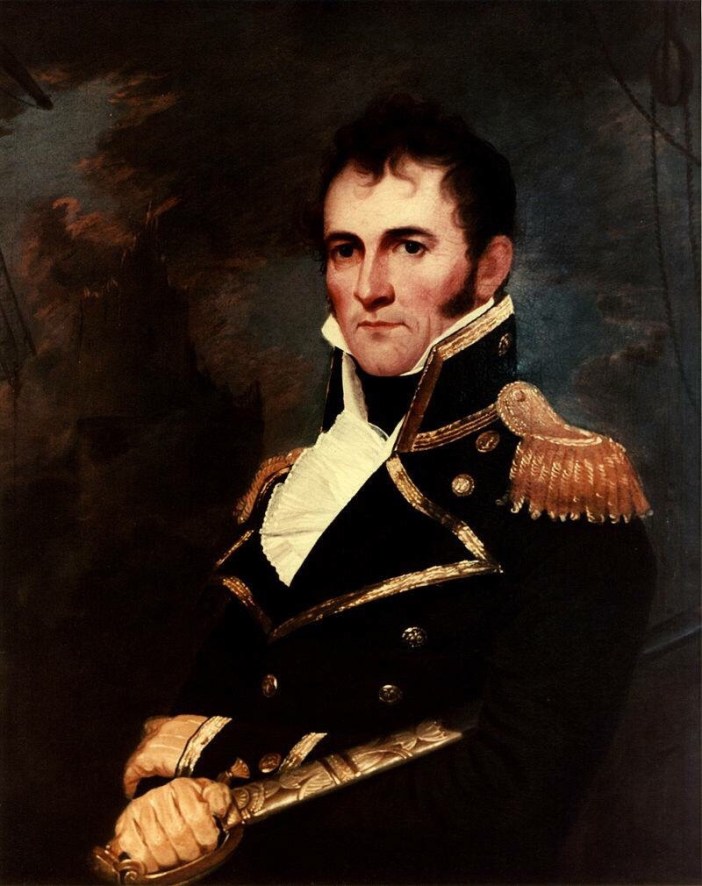
Navy Capt. David Porter took him in, and at the age of 9, Farragut was at sea as a midshipman. He served in the Pacific, commanded a captured ship at the age of 12…wounded at Val Paraiso, Chile in a battle…fought in the War of 1812 as a boy….fought pirates in the West Indies, and was the famous Captain who at Mobile Bay during the Civil War, while standing on the rigging of his ship, shouted, “Damn the Torpedoes, Full Speed Ahead!” His foster father, David Porter, foster brothers David Dixon Porter and William Porter would also be Naval war heroes.

The USS Kearsarge Ends CSS Alabama’s Run

Today in History, June 19, 1864:

The Battle off Cherbourg. In 1861 the screw sloop CSS Alabama was launched in England, which was just the beginning of the intrigue involving the Confederate cruiser that wreaked havoc on Union shipping until her demise on this date in 1864.

The British gov’t had ordered no ships be built or sold to the rebels, but the company that built the Alabama did so clandestinely. During the intervening years the Alabama, which had both steam engines and sails, circled the globe sinking Union merchant shipping (60 at least) and a Union warship.

She had put in at Cherbourg, France for much needed repairs, but was rebuffed. Before she could leave, the Union screw sloop USS Kearsarge arrived outside the harbor.

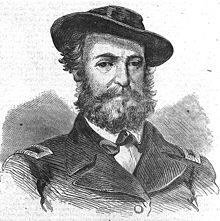
Capt. Charles Pickering and many other Union Captains had been searching for the infamous Alabama and Capt. Raphael Semmes for years. Semmes set out to engage the Kearsarge, firing the first shot. The two ships parried, but the Kearsarge had some advantages; powerful new “Dahlgren” guns and chains draped over her sides for protection. Within an hour the Kearsarge’s crew sent the Alabama to the bottom. Semmes escaped on a passing British ship to England with 41 of his crew.

The Great Marianas Turkey Shoot

Today in History, June 19, 1944:

Reversal of Fortunes, exhibited by “The Great Marianas Turkey Shoot”, or the First Battle of the Philippine Sea.

US Marines, supported by their parent service, the US Navy, are invading Saipan and other islands in the Marianas Islands, which is such a threat to Japan that the Imperial Japanese Navy finally comes out to fight a definitive battle.

When the war began the Japanese had the most advanced aircraft available, while the US Navy lagged sorely behind. The Japanese Zero, for example, was much faster and more maneuverable than the American Wildcat fighter. But by 1944 the American industrial complex had engaged fully. As late as 1943 the USS Enterprise stood alone in the Pacific against numerous IJN Carriers.

But by June of 1944 the Americans put to sea 15 Aircraft Carriers in 4 Task Groups equipped with modern aircraft that far out matched Japan’s aircraft, which had not been updated since the war began. In addition, Japan’s air service had lost nearly all of it’s experienced pilots, while the Americans had thousands of combat hardened, well-trained pilots and crews.

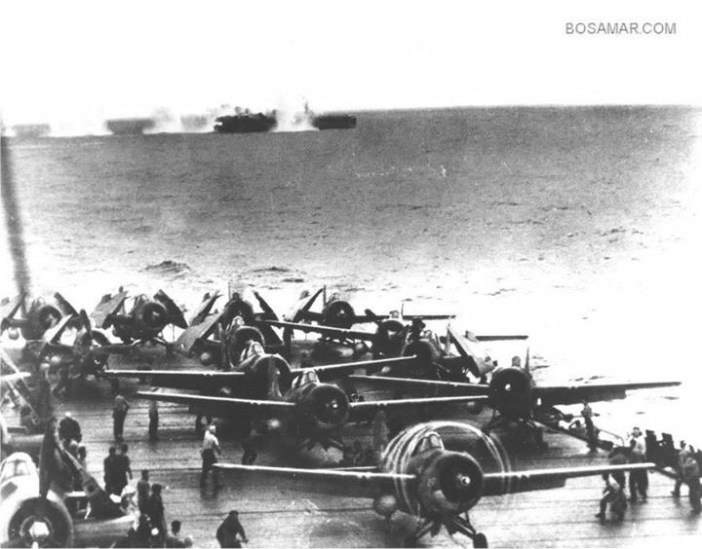
When the IJN sent it’s carriers and their crews against TF 58, they were massacred. In two days the Japanese lost over 400 aircraft and their crews, 3 aircraft carriers they could not spare, and the Americans lost 29 aircraft (some of the crews were rescued) and no ships. So many Japanese aircraft fell from the skies that a Lexington pilot referred to it as an old time turkey shoot, and the name stuck.

The air crews of the task force had been launched late in the day on the 20th to attack the Japanese fleet. When they returned, it was well after dark and they began landing their planes in the sea, unable to see the carriers well enough for landings aboard.

With the threat from enemy submarines and aircraft during the war, blackout conditions were the rule. Admiral Marc Mitscher wasn’t going to lose his boys and their planes, however. With his order the fleet lit up, and the planes began landing on fumes.

Women’s Army Corps

Today in History, May 15, 1942:

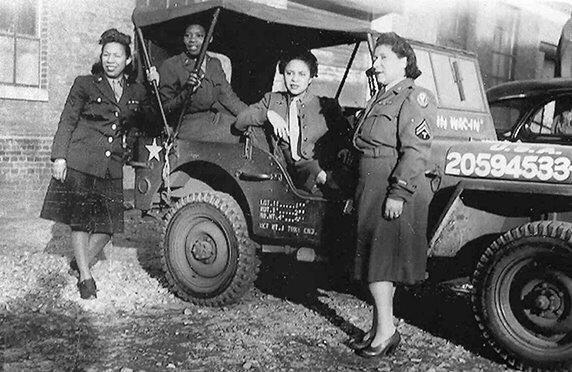
President Franklin Roosevelt signs a bill passed the previous day creating the Women’s Army Auxiliary Corps.

The bill had been put forward by Massachusetts Representative Edith Nourse Rogers in mid-1941, who had seen women volunteer in the first World War…on their own dime and without compensation or benefits. The bill lingered until after the attack on Pearl Harbor, when it was taken more seriously.

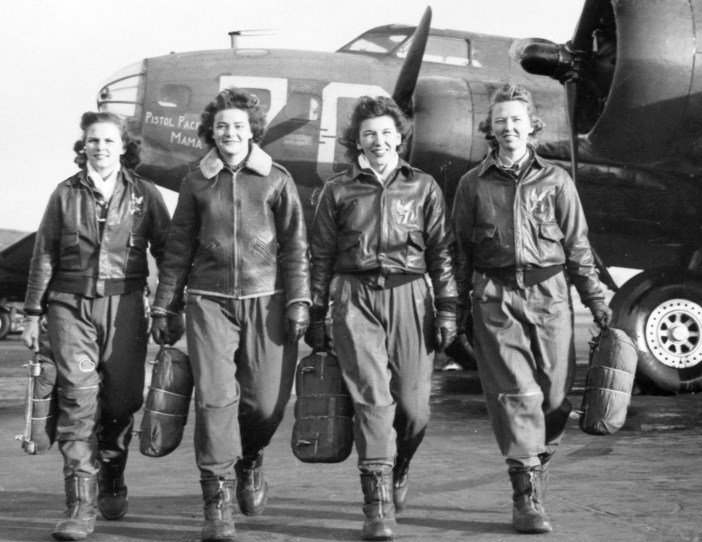
The many women who served as WACS and WAVES (Navy) during WWII were paid and received benefits, although not as much as the men. It would be decades before they received pensions.

Their service was to be in non-combat roles…secretarial, air traffic control, ferrying aircraft, and hundreds of other positions.

While the inclusion of the hundreds of thousands of women in the military was a huge step forward for a nation which had only given women the vote two decades before, it was still repleat with gender bias. Women could not command men.

The move also was born of necessity, rather than revolutionary thinking. It had the full support of the Army’s commanding General, George C. Marshall, who testified before Comgress on behalf of the legislation.

Marshall expected the “Two-Ocean War” to quickly overwhelm the nation’s ability to provide “manpower”. He believed women already trained in administrative jobs would be more efficient and effective than men.

While the women served in “non-combat” roles as operators, etc, you can’t serve in a combat zone without the risks of combat. WACS were killed in action. One source indicated 16.