Victory and Assassination

Today in History, April 4: 1865:

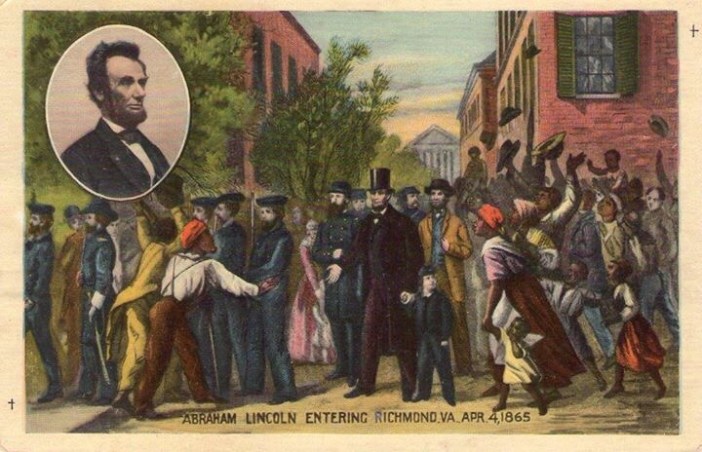
150 years ago today. President Lincoln enters Richmond, the Confederate Capitol. Lincoln had been at City Point when informed that Richmond had been taken the day before by Union Army forces.

He immediately sailed on the USS Malvern, Flag Officer David Dixon Porter’s flagship for Richmond. After he disembarked, he was initially escorted through crowds by a contingent of sailors, who were very relieved when they were met by a group of Union Cavalry to assist in escorting the President to the home of Confederate President Jefferson Davis.

Many former slaves attempted to pay homage to Lincoln, who would not allow it. Onlookers watched from the windows and street corners.

At Davis’ house, Lincoln sat in Davis’ chair, then toured the house.

When later asked by Union Gen. Weitzel how the conquered rebels should be treated, Lincoln indicated that he would not give an order in that regard, but that his advice would be to, “Let them up easy….let them up easy”.

As for the nervous sailors and cavalrymen that escorted him? As it turns out, Lincoln was safer in the Confederate capitol that his own. He had only ten days until he would be assassinated.

103 years later to the day, another man dedicated to civil rights and the advancement of justice, Dr. Martin Luther King, Jr. would be assassinated in Memphis, Tennessee.

April is a Historic month with many stories to tell.

Six Frigates…The US Navy Makes a Name for Itself

Today in History, March 27: 1794:

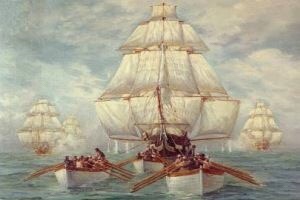
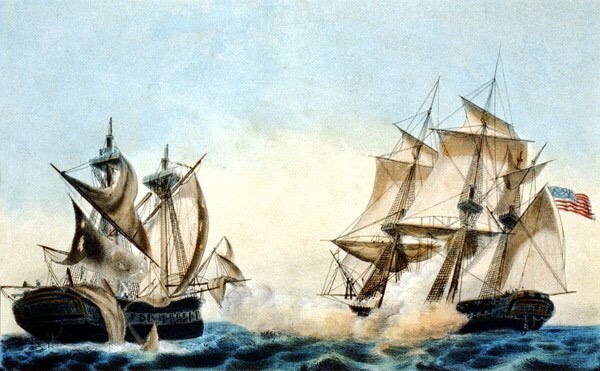
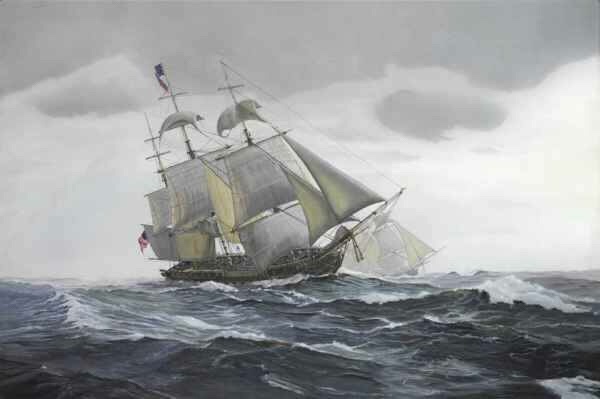
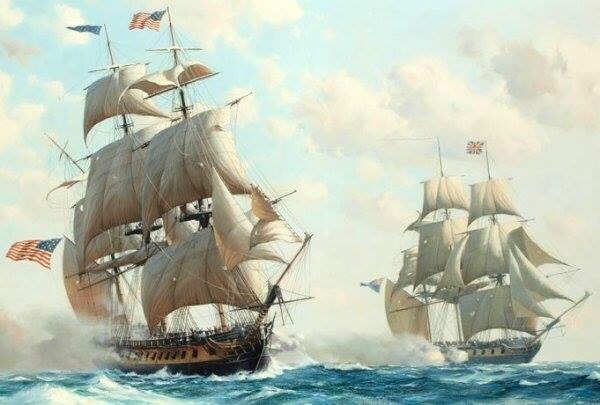
President Washington signs the Naval Act of 1794, ordering the construction of 6 Frigates capable of high speed and of holding their own against “ships of the line.”

After the Revolutionary War, America didn’t feel it needed a navy; after having several ships seized by Barbary pirates, and after abuses by the Royal Navy, the administration and Congress came to the realization that America needed a navy to protect it’s shipping.

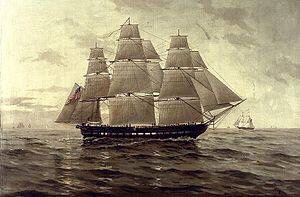
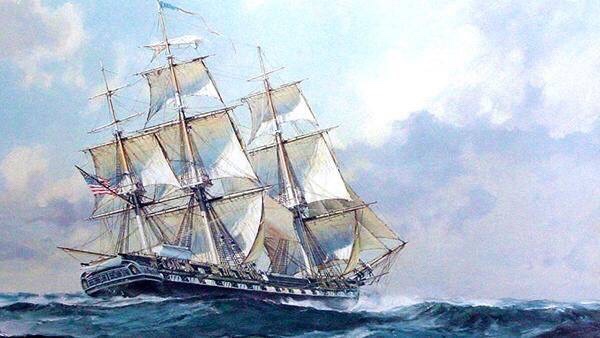
Thus the USS Constitution (Old Ironsides, oldest commissioned US Navy vessel), USS Constellation, USS President, USS Congress, USS United States and the USS Chesapeake began their illustrious Naval careers.

“You May Cast Off, Buck, When You Are Ready.”

ron5-3MacArthur's_Escapept32220px-USS_Olympia_with_Dewey_at_Battle_of_Manila_bay_DSCN4191_at_Vermont_Statemanila bay


Today in History, March 11, 1942:

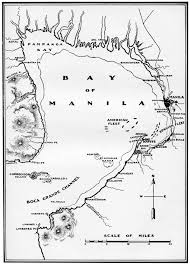
General Douglas MacArthur is evacuated from the Philippines at the order of President Franklin Roosevelt.  At the beginning of WWII the previous December the Japanese had invaded the Philippines; the American and Filipino forces, commanded by MacArthur, had been fighting off persistent advances ever since.  At the outset the American air forces had been almost completely destroyed on the ground, caught by surprise by the initial attacks.  Now they had been backed up to the peninsula of Bataan, and in the middle of the bay, the island of Corregidor.

General MacArthur was already quite famous when the war began; his father Arthur was also a noted American general, Douglas served in WWI and was in command in Washington, DC when protesting WWI veterans were dispersed during the Depression.  He and his father would become the first father and son to be awarded the Medal of Honor.

American morale was already suffering, and the President did not want an additional blow of MacArthur being taken prisoner when the Philippines fell, which was a foregone conclusion at this point.  So he ordered MacArthur to evacuate to Australia, leaving General Jonathan Wainwright in command of the fall.

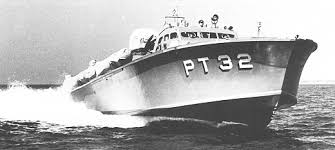
MacArthur had the choice to leave by submarine, aircraft, or by PT (patrol torpedo) boat.  He knew and trusted the commander of PT squadron 3, Lieutenant John D. Bulkeley, so he chose to leave by boat.

On the evening of March 11, 1942, Lt. Bulkeley’s PT-41 was alongside the north pier at Corregidor with General MacArthur and his family aboard, when the General looked to the Lieutenant and said, “You may cast off, Buck, when you are ready.”  Thus began a 600 mile run to Mindanao through minefields and enemy infested waters which MacArthur would later liken to a ride in a cement mixer.  Almost everyone was seasick.  Bulkeley would meet up with the remainder of his PT squadron, their decks filled with gasoline drums so they could make the trip.  It was a harrowing journey; from Mindanao MacArthur and his staff would continue the journey by air.

The journey, how it came to be, and it’s aftermath are all worth more detail.  But for this post, I can’t help but focus on MacArthur’s words as he set sail from his defeat in Manila Bay…

“You may cast off, Buck, when you are ready.”

General MacArthur was an intelligent, educated man, a West Point graduate and a fast climber through the ranks.  What was in his mind as he escaped one of the worst military defeats in American history that day?  The MacArthur family was also already a significant part of Philippine history.  Nearly forty-four years earlier, in 1898 during the Spanish-American War, Arthur MacArthur had been victorious during the Battle of Manila.  He would then command during the Philippine-American War and become the Military Governor General of the Philippines until he got sideways when the Civilian Governor of the Philippines, William Howard Taft.

At the outset of the Spanish-American War, the Philippines were a Spanish possession.  The war was significant because with it, America would become a player on the world stage, defeating one of the European colonial powers.

With the Battle of Manila Bay on May 1, 1898, the US Navy would show it’s mettle in easily defeating the Spanish fleet stationed there.  Admiral George Dewey commanded the US Asiatic Fleet from the bridge of his flagship, the USS Olympia.  As they approached the Spanish ships, Dewey spoke a now famous phrase to the commander of the Olympia, Captain Charles Gridley…

“You may fire when ready, Gridley.”

To enter Manila Bay from the South China Sea, Admiral Dewey and his fleet would have sailed past the island which guarded the entrance to the bay, Corregidor.  Hours before his famous victory, Admiral Dewey would have sailed within a few hundred yards of where MacArthur would stand in 1942, having lost all Dewey had gained.  In his mind’s eye, was he watching the Olympia pass by?

“You may cast off, Buck, when you are ready.”
“The Way to Disarm is to Disarm” -US Sec of State Charles Evans Hughes

Today in History, February 6, 1922:

The Washington Naval Treaty of 1922 is agreed to by the remaining Navy powers from WWI. It would be a year until all the signatories had done so, but their representatives in DC made the agreement today.

It should have been perfect, as it had that one thing necessary for a successful negotiation: Everyone agreed, nobody was happy.

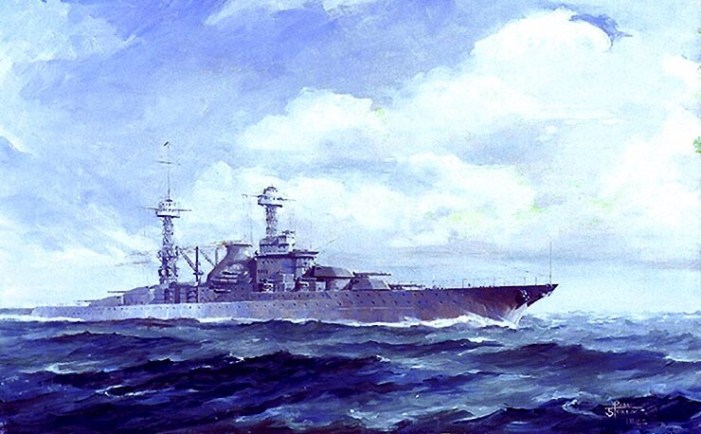
It agreed that certain capital ships would be limited by number and tonnage. Battleships and Battlecruisers would be limited.

The ratio of Navy size would be 5-5-3-1.75-1.75…England-US-Japan-France-Italy. So you can see why nobody was happy.

This was the nuclear limitations treaty of the 20’s.

Here are the many consequences of the treaty:

New Battleships could only be of a certain tonnage with guns no more than 16 in. In the mid 30’s Japan began ignoring the limitations, so for the beginning of WWII, American BB’s were seriously undersized compared to the monsters Yamato and Musashi. But that wouldn’t last long.

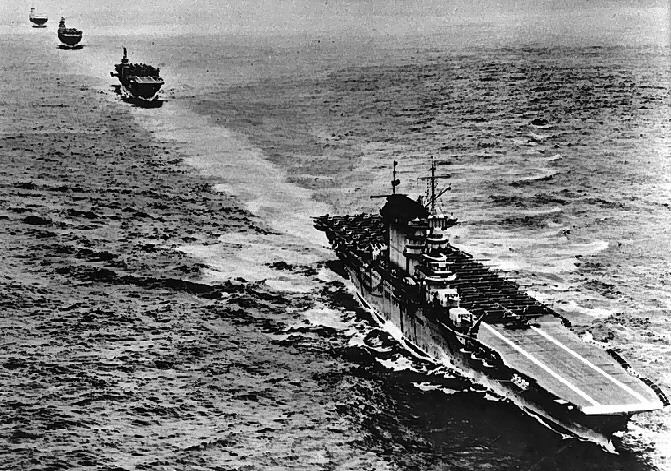
After WWI several of the nations had battlecruisers under construction…they could either scrap them or convert them to “less valuable” warships…Aircraft Carriers. This were born Akagi, Kaga, Lexington and Saratoga. More carriers of limited tonnage could be buit…this were born the Ranger, Yorktown, Enterprise and Hornet; Shokaku, Zuikaku and others.

After nearly two decades of intrigue, cheating, etc, as a result of the Washington Naval Treaty, Japanese flyers sank obsolete Battleships at Pearl Harbor, with planes from carriers.

The American carriers who amswered back, and unfortunately the USN and IJN traded losses fairly evenly…until only one US Carrier was left to counter the Japanese fleet in the Pacific.

But as the Japanese sailors in DC in 1922 had predicted, due to massive American industrial might, within a year of that carrier finding herself alone, the Enterprise was joined bu over a dozen modern, huge carriers of the Essex class and fast new Battleships.

The Importance of Being Thorough…

Today in History, February 1, 1942:

Less than two months after the bombing of Pearl Harbor, the US Navy strikes back.

Task Forces built around the USS Yorktown (CV-5) and USS Enterprise (CV-6) sped in quickly in cover of darkness, then struck at Japanese air bases and shipping in the Marshall Islands. The US aircrews made repeated sorties against the islands throughout the day, until Admiral William Halsey decided they had pressed their luck enough and ordered a withdrawal…the carriers and their support ships were valuable and in short supply.

The air raid did little damage…however it was a tremendous morale booster for the military and the folks at home, and brought home the realization to the Japanese that they could be “touched.”

Now for a History link…I love those. While the US had significant facilities in parts of the Pacific, they had spent little in Japanese held areas before the war.

The command staff and they flyers involved were using the very latest charts and maps they had of Kwajalein Atoll and the Marshall Islands…they were at least 100 years old in 1942.

In 1838, wanting to join the scientific communities of the European nations, the United States authorized and supplied six ships commanded by Lt. Charles Wilkes to explore the Antarctic region, the Northwest and Western coastal regions of the US and the Pacific.

During a more than 3 year circumnavigation of the world, the “US Ex Ex”, or US Exploring Expedition collected more than 4,000 scientific samples, documented their contacts with peoples along their route, and meticulously charted the many islands, bays, inlets, etc they found. Wilkes was very dedicated to this portion of the Expedition, much to the annoyance of the scientists aboard.

Wilkes lengthy US Navy career would bring him to fame again during the Civil War with the Trent Affair…but that’s another story.

As he was charting the Marshalls, his intent was for whalers and other ships to make use of his efforts…he almost certainly couldn’t imagine massive ships carrying aircraft which would drop explosives on the Pacific paradise 100 years hence.

Death had to take Roosevelt sleeping, for if he had been awake, there would have been a fight.” -Vice President Thomas Marshall

Today in History, January 6: 1919 –

“Death had to take Roosevelt sleeping, for if he had been awake, there would have been a fight.” -Vice President Thomas Marshall. President Theodore Roosevelt dies at Sagamore Hill, Oyster Bay, New York in his sleep of a heart attack. “Teddy” had taken every last drop of adventure and worthiness that he could squeeze out of life in the preceding 60 years.

Roosevelt had been a sickly child; constantly plagued by breathing problems, he could rarely play with the other children. His father, Theodore Sr., a remarkable man himself, told “Teedie” that if he wanted to have a successful life, he would have to take charge and force his body into the form he needed to match his intellect. Roosevelt did just that. He took exercise as his “raison detre” until he was barrel chested and of vigorous health. Each time he became sick during his life, he would simply work through it.

As a young man, while serving in the New York Assembly, Roosevelt’s wife and mother died on the same day…February 14, 1884. Roosevelt fled into the west, becoming a rancher and for a time a lawman in the Dakota Territory. The experience would strengthen him and give him a background people respected.

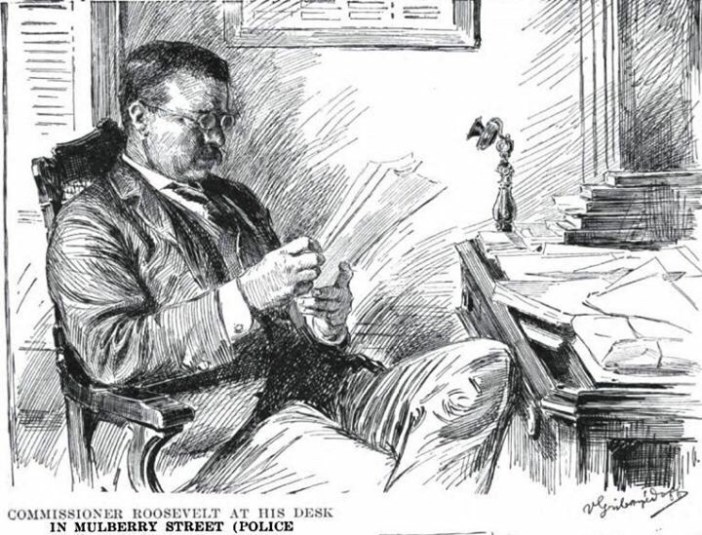
During his life he was a state rep from New York, the Police Commissioner for New York City, Governor of New York, the Assistant Secretary of the Navy (he oversaw the building of a modern US Navy while his boss was not paying attention), he led the “Rough Riders” (1st Volunteer US Cavalry) up San Juan Hill in the Spanish-American War, became Vice President, and the President after President McKinley was assassinated.

As President he defined the modern presidency, breaking up monopolies, seeing that mistreated workers got a fair shake, sent the “Great White Fleet” around the world establishing American as a world influence, saw the Panama Canal built, saw the establishment of the National Parks Service, and countless other accomplishments.

He worked tirelessly for the American people. After the Presidency he traveled extensively, going on an African Safari, and exploring an unknown region of South America, “The River of Doubt”; a region so treacherous that it was considered a no-man’s land. He nearly died in the mapping of the river, now called “Rio Roosevelt” in his honor.

All of his male children fought in WWI, and the only reason Teddy didn’t was because the Democrat President (Wilson) refused to let him, afraid Roosevelt would run against him in the next election and win. One of his sons, Quentin, would be shot down over France and be killed. That was the last straw for the “Old Lion”. He mourned dreadfully until his death.

One of his other children, Theodore Roosevelt, Jr., would be the only General to go ashore with the troops at D-Day in WWII; Teddy Jr would die of a heart attack himself several weeks after the Normandy invasion. The entire world would mourn President Roosevelt’s passing; he had become larger that life, a hero to people the world over. The quintessential American. And in case you couldn’t tell, my favorite Hero.

“Before We’re Through With ‘em, the Japanese Language Will be Spoken Only in Hell!” -Adm. William F. Halsey

Today in History, December 8: 1941 –

The US Navy Task Force focused around the USS Enterprise (CV-6) aircraft carrier, short on supplies and fuel, enters Pearl Harbor in the dark of night to re-provision as quickly as possible. Uncertainty reigns; nobody knows if the surprise attack by Japanese aircraft was the precursor to an invasion…

The men of the Task Force are horrified by the destruction they are witnessing; mighty ships they had seen just days before lay smoldering and efforts to rescue untold numbers of their friends trapped in the ships were ongoing. The stench of burning oil and bodies permeates the night air.

The commander of the Task Force, Vice Admiral William Halsey observes the carnage from the bridge of the Enterprise and angrily utters one of what will be many memorable quotes from him during the war, “Before we’re through with ’em, the Japanese language will be spoken only in hell!”

Today, of course, Japan is one of our closest and most faithful allies. But on December 8, 1941, and for years to come, the surprise attack on Pearl Harbor and other allied basis left no room for anything but battle.

Pearl Harbor…An Unmitigated Failure for Japan

Today in History, December 7: 1941 –

Did you know that the Japanese surprise attack on the bases at Pearl Harbor, Hawaii was…a tremendous failure? In spite of the horrific losses in lives and the loss of combatant ships and aircraft, the Japanese Task Force missed their primary targets. The battleships and most of the aircraft they destroyed were obsolete…and they knew it.

They were after the American aircraft carriers, which they recognized as the next generation capital ships. Their intelligence was that the American carriers were in port at their berths, but the Kawanishi flying boat that provided that info couldn’t catch that the carriers left soon after it’s recon mission.

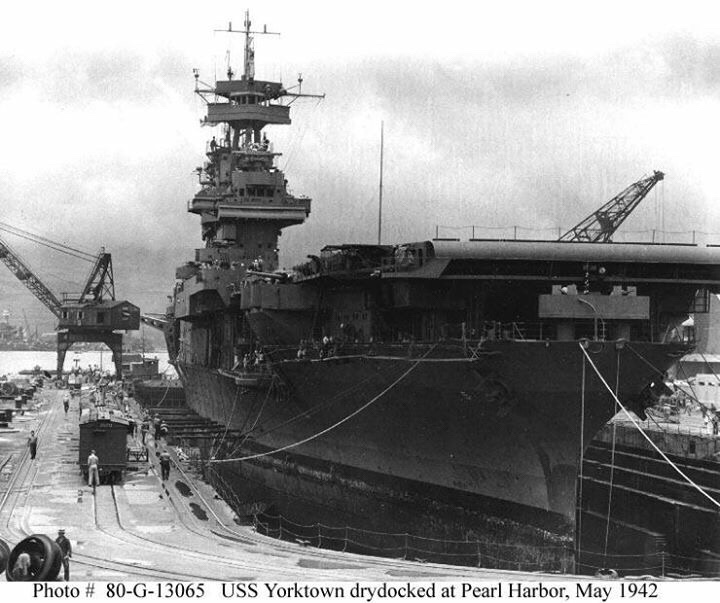
The Japanese aircraft failed to destroy the dry dock facilities at Pearl…allowing the repair of many of the ships damaged during the attack, and importantly, the USS Yorktown after the Battle of the Coral Sea, allowing her to take part in the tide-turning Battle of Midway.

And due to Admiral Nagumo’s decision to cancel another sortee, the attack failed to destroy or damage the fuel storage depot at Pearl. Had they done so, the entire fleet would have been forced to retreat the 2500 miles to San Diego (if they could make it there). The US fleet could not have operated from Pearl for nearly a year if they had lost that fuel depot. So while the attack was a flashy victory for the Empire, it was a tactical loss. America’s industrial capacity quickly replaced the losses. God bless our heroes that lost their lives that day.

What was supposed to be the backbone of the US Pacific Fleet, several Battleships, were either completely destroyed or so badly damaged that it would take years before they could put to sea again. the Arizona was virtually blown apart by a direct hit that ignited her magazines (her ammunition stores); the Oklahoma rolled over and capsized; only one of the behemoths managed to get steam up and make a run for the sea. But her commander wisely beached her, fearful that she might be sunk in the channel and put the entire harbor out of commission for months.

The Army commander, more worried about sabotage than air attacks, had ordered all of the Army Air Corps’ aircraft lined up wingtip to wingtip so they could be more easily guarded. They made easy targets for strafing Japanese fighters. Only two Army fighters made it into the air to do battle with the enemy (my father grew up with one of the pilots).

Sacrifices Avenged…One Last Attempt by the IJN

Today in History, November 14: 1942 –

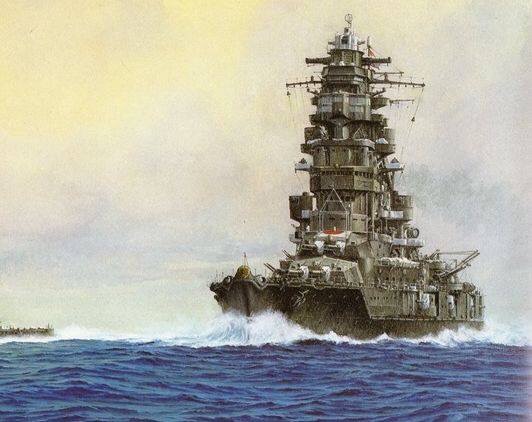
The Second Battle of Guadalcanal. Late on the 14th, early on the 15th, IJN Admiral Kondo was sent with a force of cruisers and destroyers built around the battleship Kirishima to take another shot at Henderson Field and the transports off shore.

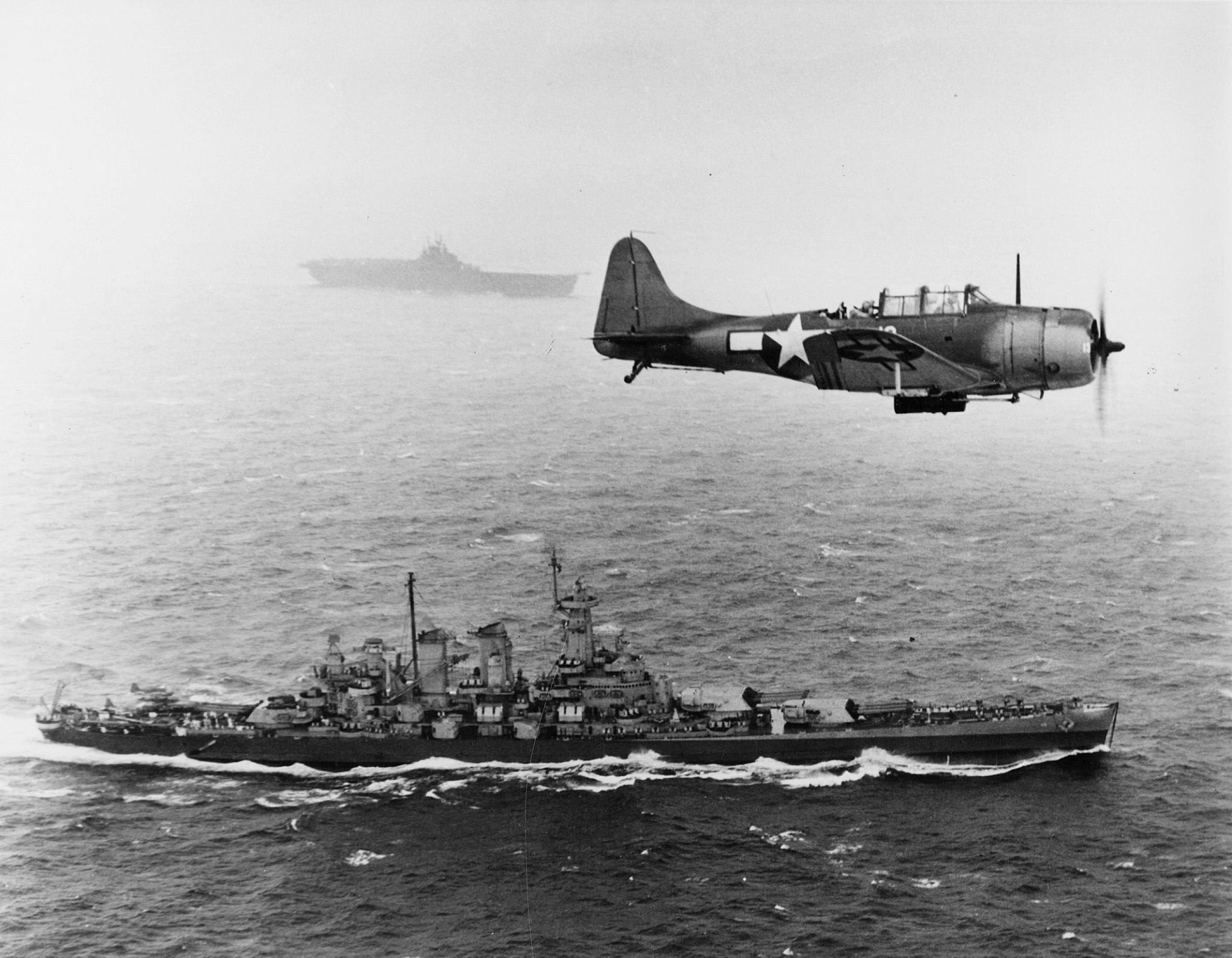
Most of the effective American combatants had been either sunk or put out of commission in the first battle, so Admiral Halsey detached a significant portion of the screening force for the USS Enterprise to protect the airfield and the transports. The Battleships USS Washington and USS South Dakota, along with the 4 destroyers with the most fuel took the job.

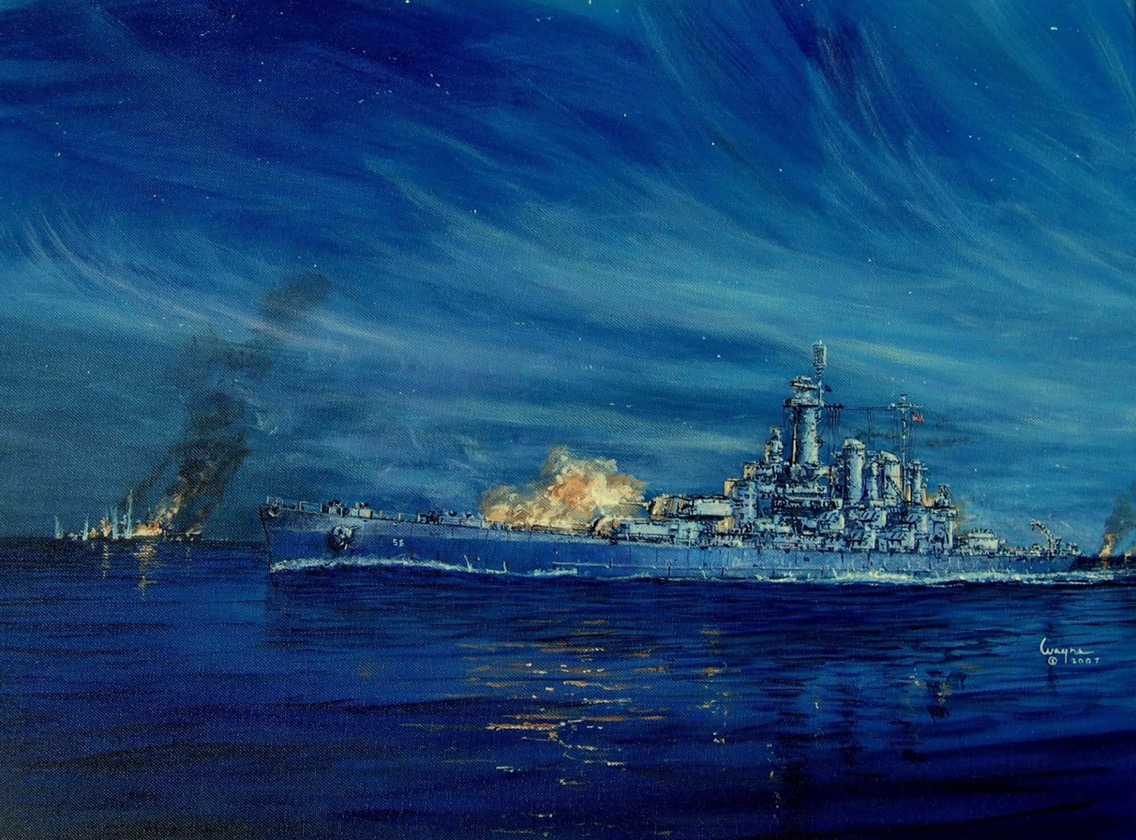
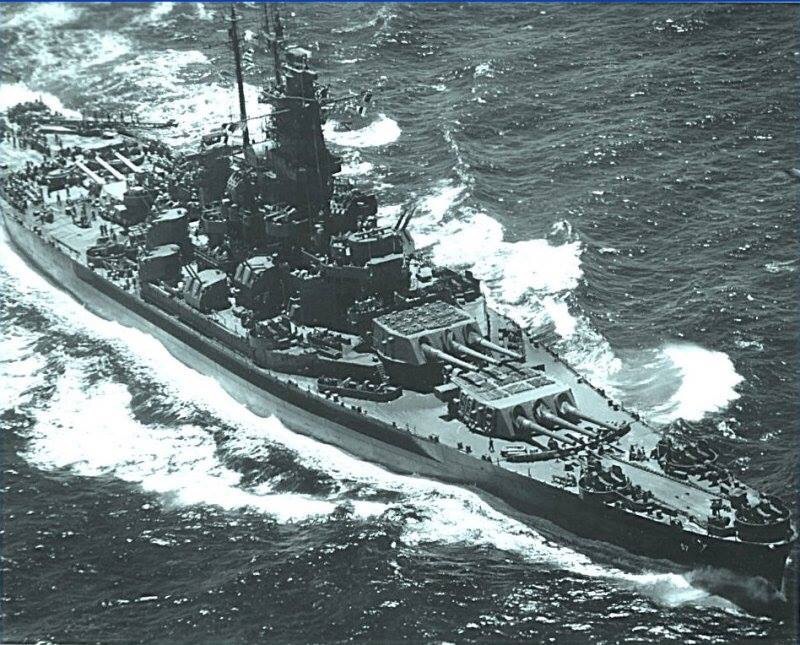
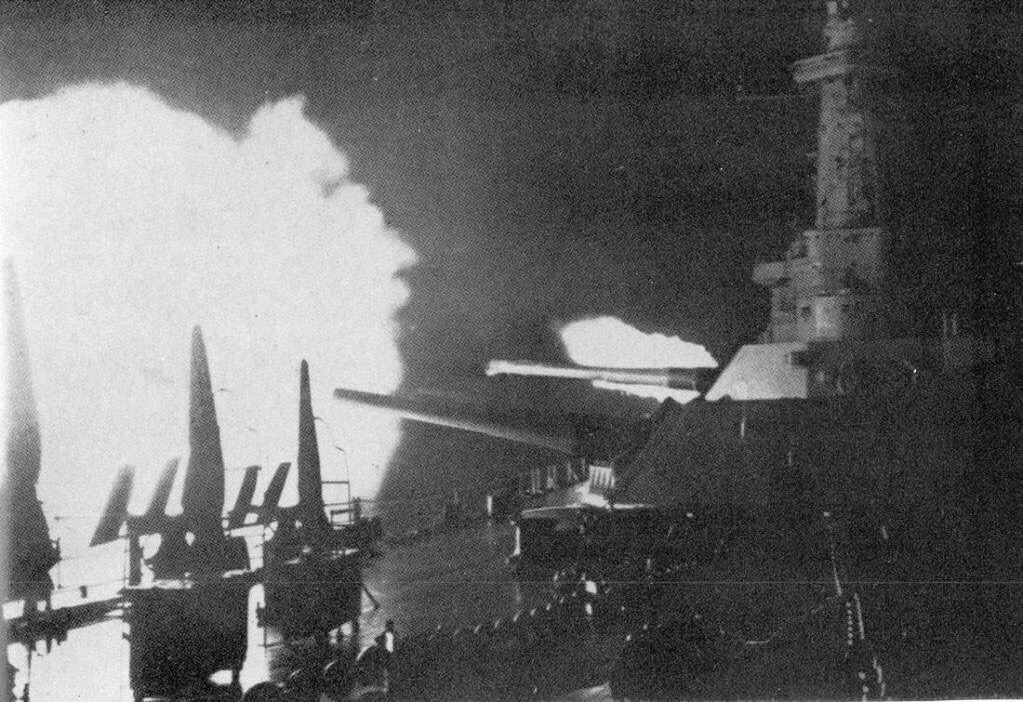
This US Task Force made better use of their radar and spotted the Japanese ships first. The American destroyers sacrificed themselves to fight off Japanese cruisers and destroyers; the South Dakota had nothing but trouble after losing her electrical systems. As the Kirishima and others focused on the nearly defenseless South Dakota, the Washington closed within 9,000 yards of the Kirishima and tore her apart with her main and secondary batteries.

Kondo ordered a retreat. Some IJN supply ships beached and began unloading, but when the sun came up, they were exposed to American aircraft. By the time US aircraft and an American destroyer were done with them, only about 3,000 troops were ashore…without any supplies, munitions or food…making them more of a detriment than a help.

The major significance of this battle is that it was the last time the IJN attempted an all out assault on Guadalcanal by sea; now they would only offer meager supplies with the use of the “Tokyo Express” up the “Slot”…not enough to support their armies on Guadalcanal. By December 31st the Emperor had agreed to abandon Guadalcanal to the Allies.

The most amazing thing to me is that in ’42 the Americans won or lost by scraping together a few ships to fight…at this point Enterprise was the only US Carrier in the Pacific…by this time in ’44, American combat ships were numerous and almost invincible.

Today in History, November 13: 1942 –

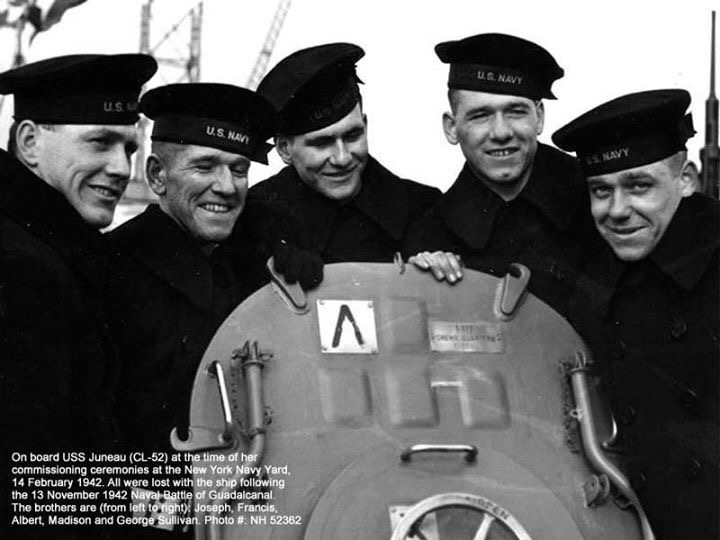
The First Naval Battle of Guadalcanal takes place in what would become known as “Ironbottom Sound” off Guadalcanal. US intelligence had warned US Navy forces that the IJN planned to bombard Henderson Field and land reinforcements on the embattled island. Admirals Callahan and Scott took their forces to interdict IJN Admiral Abe’s forces. In a fierce, confusing, intense night action the Japanese won a tactical victory by sinking more American ships, while the Americans won a strategic victory…Henderson was not bombarded and the American troop ships remained undamaged. But it came at a heavy cost for both sides. Admirals Callahan and Scott would be the only US Admirals to be killed in direct ship to ship combat in the war, and aboard the USS Juneau, the five “Fighting Sullivan” brothers would all be lost.

For the Japanese; surviving battleship Hiei, among others, would fall prey to repeated air attacks from Henderson, Espirito Santo, and the USS Enterprise when the sun came up. And this was only the beginning of the battle.